
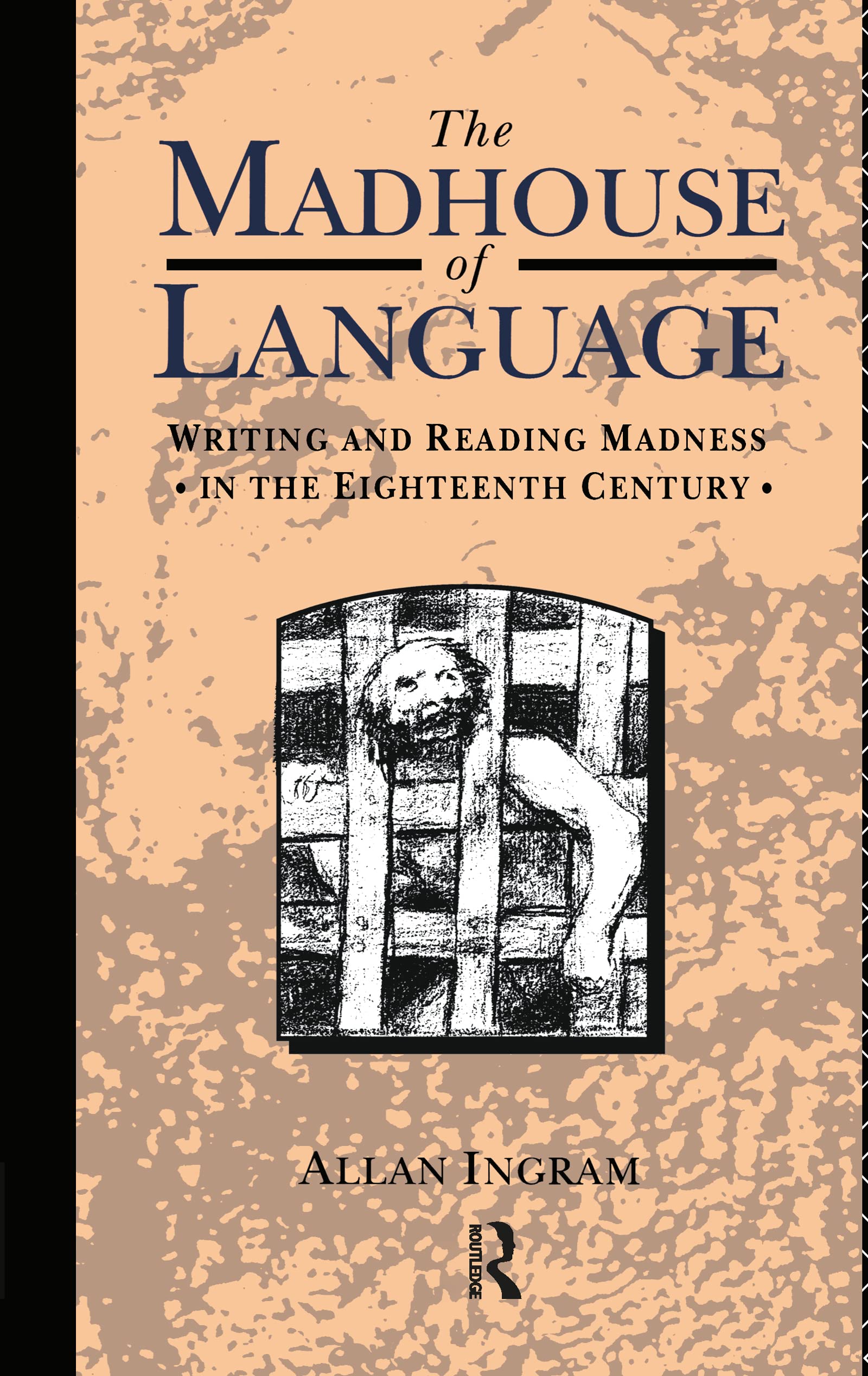
The Madhouse of Language: Writing and Reading Madness in the Eighteenth Century by Allan Ingram – A Deep Dive into Langu
Inclusive of all applicable taxes. FREE shipping on all orders.
Available Offers
- 🚚Free Delivery — Free shipping on all orders
- 💵Cash on Delivery — Pay when your order arrives
- ↩️15-Day Easy Returns — Hassle-free return policy
- 🔒Cash on Delivery — Pay safely when your order arrives
Check Delivery
Product Description
Introduction
The Madhouse of Language: Writing and Reading Madness in the Eighteenth Century by Allan Ingram is a groundbreaking scholarly work that delves into the intricate relationship between language and madness during the eighteenth century. Published by Routledge, this hardcover volume offers a meticulous exploration of how madness was expressed, interpreted, and controlled through written and spoken words. For students and researchers in linguistics, literary studies, and the history of psychology, this book provides an indispensable resource that bridges the gap between medical discourse and literary creativity. Ingram’s analysis reveals how language served as both a tool of confinement and a means of liberation for those deemed mad, making this a vital read for anyone interested in the cultural and intellectual history of the period.
Book Overview
This book examines the period from the late seventeenth to the early nineteenth centuries, a time when attitudes toward madness underwent significant transformation. Ingram focuses on the linguistic dimensions of madness, analyzing medical records, asylum documents, and the writings of individuals who were considered insane. He argues that language was not merely a reflection of mental states but an active force in shaping perceptions of sanity and insanity. By juxtaposing the clinical observations of physicians with the personal narratives of mad patients, Ingram uncovers a complex dialogue between authority and resistance. The book challenges conventional notions of rationality, showing how mad writers used language creatively to assert their identity and challenge societal norms. The Madhouse of Language is a pioneering study that redefines our understanding of madness as a linguistic phenomenon.
Key Highlights
- Original Research: Based on extensive archival work, including rare medical texts and asylum records.
- Interdisciplinary Approach: Combines insights from linguistics, literary criticism, history, and psychiatry.
- Focus on Patient Voices: Gives prominence to the writings of individuals diagnosed as mad, offering a rare perspective from within.
- Critical Analysis: Examines how sane authors, such as novelists and poets, appropriated the language of madness for literary effect.
- Historical Context: Situates the discussion within the broader cultural and intellectual currents of the Enlightenment.
Inside the Book
The book is structured around close readings of primary sources. Ingram begins by exploring the medical language used by doctors to classify and describe madness, revealing how terminology often reinforced power hierarchies. He then turns to the writings of mad patients, analyzing their letters, poems, and autobiographies for signs of resistance and creativity. The final sections examine literary works by canonical authors who used mad characters or mad language to critique society. Throughout, Ingram pays careful attention to the rhetorical strategies employed by both medical professionals and patients, showing how language could be a site of struggle. The book includes detailed footnotes and a comprehensive bibliography, making it an excellent reference for further study.
Key Topics
- Language as a marker of sanity and madness
- Medical discourse on mental illness in the eighteenth century
- Patient narratives and self-expression
- The appropriation of mad language by sane writers
- Literary representations of madness in novels and poetry
- The politics of diagnosis and confinement
- Linguistic creativity and psychological distress
Reader Benefits
This book offers readers a unique lens through which to understand the historical roots of modern attitudes toward mental health. It enriches one’s appreciation of eighteenth-century literature by revealing the hidden dialogues between medical texts and creative works. Students of linguistics will gain insights into the social construction of meaning, while those studying history will see how language shaped institutional practices. The book also encourages empathy by giving voice to marginalized individuals, challenging readers to reconsider who gets to define reality. For Indian readers, the parallels with colonial and postcolonial contexts of language and power add an extra layer of relevance.
Learning Outcomes
After reading this book, you will be able to:
- Analyze the linguistic features of medical and literary texts about madness
- Understand the historical evolution of concepts of insanity
- Critically evaluate the role of language in social control
- Identify strategies of resistance in marginalized writings
- Appreciate the complexity of the relationship between language and mental states
Who Should Read
This book is ideal for students and scholars of English literature, linguistics, cultural studies, and the history of medicine. It is also highly recommended for mental health professionals interested in the historical context of their field, as well as general readers fascinated by the intersection of language, psychology, and society. Those studying the eighteenth century or the Enlightenment will find it an essential addition to their library. Indian readers with an interest in postcolonial studies will discover valuable parallels regarding the use of language as a tool of power and resistance.
About the Author
Allan Ingram is a renowned scholar of eighteenth-century literature and culture, with a particular focus on the history of madness. He has published extensively on the subject, including works on Swift, Pope, and other writers of the period. Ingram’s research is characterized by its rigorous archival work and its sensitivity to marginalized voices. He is professor emeritus at the University of Northumbria, where he taught for many years. His contributions have shaped the field of mad studies and continue to influence contemporary debates about language and mental health.
About the Publisher
Routledge is a leading academic publisher with a long history of producing high-quality scholarly works in the humanities and social sciences. Known for its rigorous editorial standards and wide-ranging catalog, Routledge publishes books that are essential for research and teaching worldwide. This hardcover edition is crafted to meet the needs of serious readers, with durable binding and clear typography that enhances the reading experience.
Conclusion
The Madhouse of Language: Writing and Reading Madness in the Eighteenth Century is a masterful study that illuminates the profound connections between language, power, and mental health. Allan Ingram’s insightful analysis and compassionate approach make this book a must-read for anyone seeking a deeper understanding of how words can both confine and liberate. Whether you are a student, researcher, or curious reader, this volume will transform the way you think about madness, literature, and the human condition. Order your copy today from Bookshops.in and add this essential work to your collection.
Quick Summary
The Madhouse of Language by Allan Ingram is a groundbreaking academic work that dissects the relationship between madness and language during the long 18th century. The book examines both medical records and the writings of individuals deemed mad, showing how language was used as a tool to define, diagnose, and sometimes liberate those on the margins of sanity. Ingram argues that language itself became a battleground where social, ideological, and psychological norms were contested. Readers will learn how sane writers appropriated the forms of 'mad' language for literary effect, while mad patients struggled to express themselves within the constraints of a language that often labelled them. This book is essential for Indian postgraduate students and researchers in English literature, linguistics, cultural studies, and the history of psychology. It offers a unique lens through which to understand how societies have historically policed the boundaries of reason. Buying from Bookshops.in ensures you receive an authentic Routledge hardcover, perfect for academic libraries and personal collections.
Book Highlights
Book Specifications
| ISBN-13 | 9780415031905 |
| ISBN-10 | 0415031907 |
| Publisher | Routledge |
| Language | English |
| Dimensions | 14.61 x 2.54 x 22.23 cm |
| Weight | 386 g |
| Category | Foreign Languages › German |
| Genre | Non-fiction |
| Reading Age | Adult |
| Original Language | English |
Frequently Asked Questions
What is The Madhouse of Language about?
Who is the author of this book?
Is this book suitable for Indian students?
What is the binding of this edition?
Does the book include primary sources?
What disciplines does this book cover?
Is this book available in paperback?
Can I use this for my PhD research?
What is the ISBN?
Is the language English?
What is the price?
Why should I buy from Bookshops.in?
Readers Also Search For
Customers Also Bought

Journalism
Rock Critic Law (English, Michael Azerrad)
Journalism
What Is Sustainable Journalism?: Integrating the Environmental, Social, and Economic Challenges of Journalism

Journalism
The Power of Sports: Media and Spectacle in American Culture: 23 (Postmillennial Pop)

Journalism
Research Guide to People's Daily Editorials, 1949-1975
Vocabulary
Prince Edward Island Sayings (Heritage)
Vocabulary
Grammar Survival for Primary Teachers: A Practical Toolkit by Jo Shackleton
Related Products
View All
Language, Linguistics & Writing
The Language of Turn and Sequence | by Cecilia E. Ford | Barbara A. Fox | Sandra A. Thompson | Oxford University Press | by Cecilia E. Ford | Barbara A. Fox | Sandra A. Thompson | Oxford University Press | by Cecilia E. Ford | Barbara A. Fox | Sandra A. Thompson | Oxford University Press | by Cecilia E. Ford | Barbara A. Fox | Sandra A. Thompson | Oxford University Press | by Cecilia E. Ford | Barbara A. Fox | Sandra A. Thompson | Oxford University Press | by Cecilia E. Ford | Barbara A. Fox | S
Language, Linguistics & Writing
Handbook of Color Psychology by Andrew J. Elliot
Language, Linguistics & Writing
The Language of Postcolonial Literatures (English, Ismail S. Talib)
Language, Linguistics & Writing
The Other Side of Language | by Gemma Corradi Fiumara | Routledge | by Gemma Corradi Fiumara | Routledge | by Gemma Corradi Fiumara | Routledge | by Gemma Corradi Fiumara | Routledge | by Gemma Corradi Fiumara | Routledge | by Gemma Corradi Fiumara | Routledge | by Gemma Corradi Fiumara | Routledge | by Gemma Corradi Fiumara | Routledge | by Gemma Corradi Fiumara | Routledge | by Gemma Corradi Fiumara | Routledge | by Gemma Corradi Fiumara | Routledge | by Gemma Corradi Fiumara | Routledge | by
Language, Linguistics & Writing
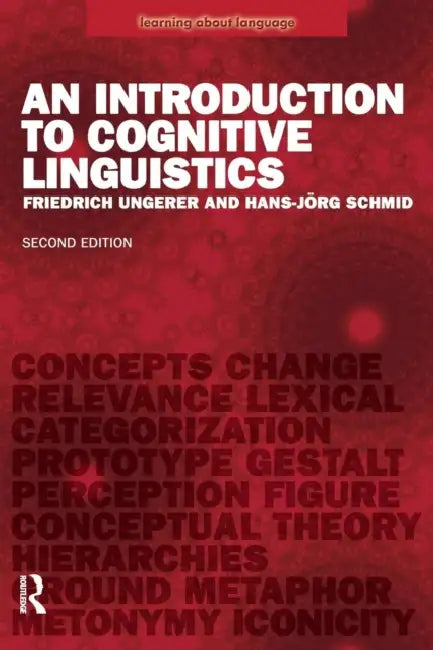
An Introduction to Cognitive Linguistics | by Friedrich Ungerer | Hans-Jorg Schmid | Routledge | by Friedrich Ungerer | Hans-Jorg Schmid | Routledge | by Friedrich Ungerer | Hans-Jorg Schmid | Routledge | by Friedrich Ungerer | Hans-Jorg Schmid | Routledge | by Friedrich Ungerer | Hans-Jorg Schmid | Routledge | by Friedrich Ungerer | Hans-Jorg Schmid | Routledge | by Friedrich Ungerer | Hans-Jorg Schmid | Routledge | by Friedrich Ungerer | Hans-Jorg Schmid | Routledge | by Friedrich Ungerer | Ha
Language, Linguistics & Writing