
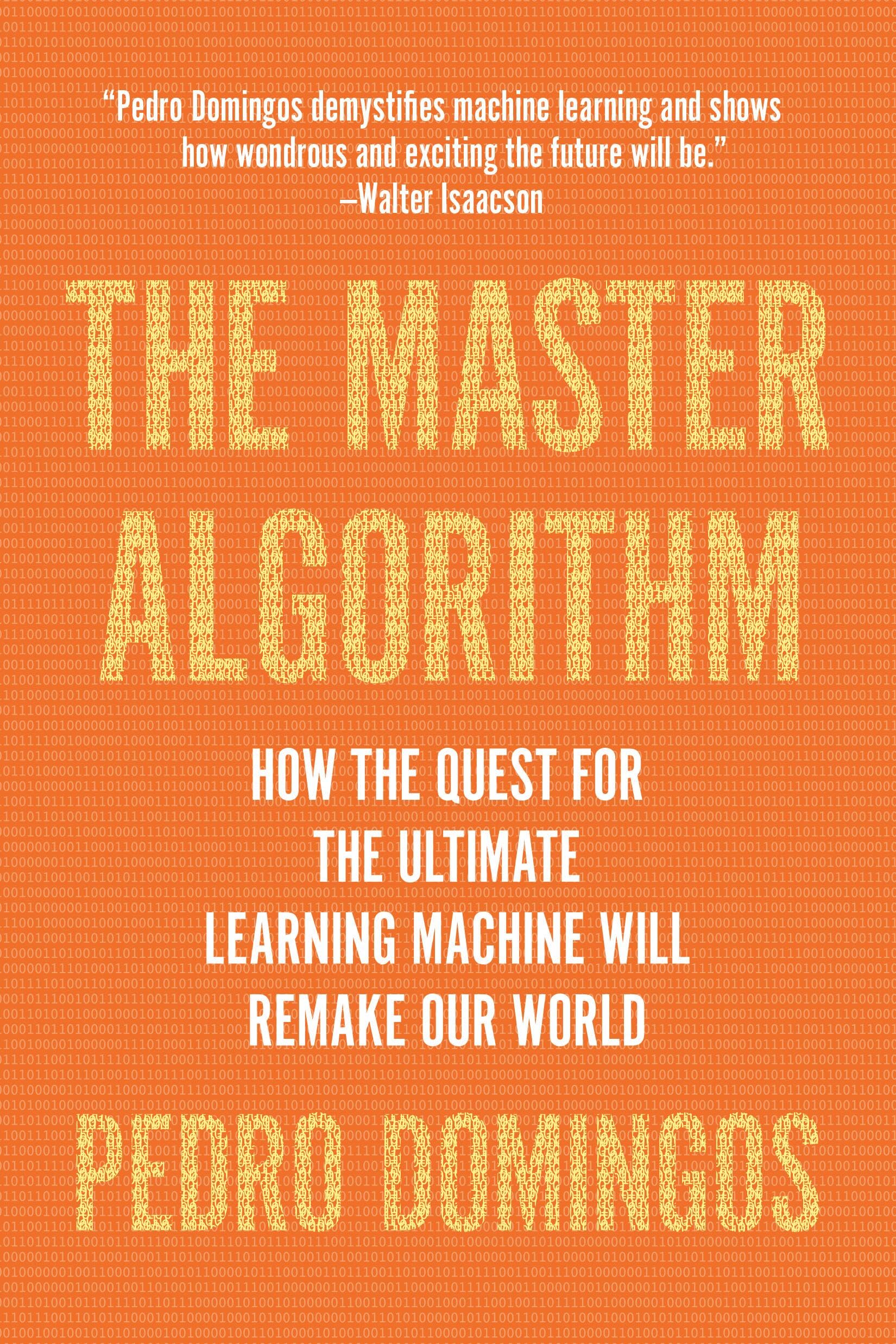
The Master Algorithm: How the Quest for the Ultimate Learning Machine Will Remake Our World
Inclusive of all applicable taxes. FREE shipping on all orders.
Available Offers
- 🚚Free Delivery — Free shipping on all orders
- 💵Cash on Delivery — Pay when your order arrives
- ↩️15-Day Easy Returns — Hassle-free return policy
- 🔒Cash on Delivery — Pay safely when your order arrives
Check Delivery
Product Description
Introduction
In an era where data is the new oil and algorithms govern our daily lives, Pedro Domingos’ The Master Algorithm stands as a brilliant, accessible guide to the science that is quietly reshaping our world. This book is not just for programmers or data scientists—it is for every curious mind in India who wants to understand how machines learn, why they matter, and what the future holds when we finally build the ultimate learning machine.
Book Overview
The Master Algorithm is a captivating journey into the heart of machine learning. Pedro Domingos, a leading AI researcher, demystifies the five major schools of machine learning—symbolists, connectionists, evolutionaries, Bayesians, and analogizers—and shows how each tribe is racing to create a single, universal algorithm capable of learning anything from data. He argues that this Master Algorithm will revolutionise everything from healthcare and education to business and governance, making our world smarter, more efficient, and more equitable. The book is a thought-provoking blend of history, science, and philosophy, written with clarity and wit.
Key Highlights
- Recommended by Bill Gates – A must-read for anyone serious about understanding the future of technology.
- Five Tribes of Machine Learning – Explains the competing approaches that drive modern AI, from neural networks to Bayesian reasoning.
- Real-World Impact – Shows how algorithms power Google, Amazon, Netflix, and even your smartphone.
- Visionary yet Practical – Balances big-picture ideas with actionable insights for students, professionals, and entrepreneurs.
- Indian Context – The principles discussed are directly applicable to India’s booming tech sector, data-driven startups, and digital transformation initiatives.
Inside the Book
The book is structured as a compelling narrative, starting with the question: Can we build a single algorithm that learns everything? Domingos takes you inside the labs where the race is underway, introduces you to the brilliant minds behind each school, and reveals the strengths and weaknesses of their approaches. You will learn how decision trees, neural networks, genetic algorithms, Bayesian networks, and support vector machines work—and how they can be combined. The final chapters explore the societal implications of the Master Algorithm, including its potential to reduce inequality, improve education, and reshape democracy.
Key Topics
- The five schools of machine learning and their founding principles
- How algorithms learn from data without explicit programming
- The quest for a universal learner that can master any domain
- Applications in medicine, finance, marketing, and social media
- Ethical challenges: bias, privacy, and the future of work
- Why India’s data revolution makes this book essential reading
Reader Benefits
By reading The Master Algorithm, you will gain a deep, intuitive understanding of machine learning without needing a PhD. You will learn to think like a data scientist, spot opportunities to apply algorithms in your own work, and understand the forces shaping the next wave of innovation. Whether you are a student in Bangalore, a professional in Mumbai, or an entrepreneur in Delhi, this book will equip you with the knowledge to navigate the age of data-ism with confidence and curiosity.
Learning Outcomes
- Understand the core concepts of machine learning in plain English
- Identify the five major paradigms and their real-world applications
- Recognise the trade-offs between different learning algorithms
- Appreciate the philosophical and ethical dimensions of AI
- Gain a framework to evaluate new AI tools and technologies
- Prepare for the coming revolution in intelligent systems
Who Should Read
This book is ideal for students of computer science, engineering, and data science; professionals in IT, analytics, and product management; entrepreneurs building data-driven businesses; policy makers and educators interested in technology’s societal impact; and anyone who uses Google, Amazon, or social media and wonders how they work. If you have ever been curious about artificial intelligence but felt intimidated by the jargon, The Master Algorithm is your perfect starting point.
About the Author
Pedro Domingos is a professor of computer science at the University of Washington and a leading researcher in machine learning and data mining. He is a winner of the SIGKDD Innovation Award, the highest honour in data science, and his work has been featured in The New York Times, The Wall Street Journal, and Wired. Domingos is known for his ability to explain complex ideas with clarity and humour, making him one of the most sought-after voices in AI today.
About the Publisher
Basic Books is a prestigious American publisher known for publishing influential works in science, history, and technology. With a legacy of bringing groundbreaking ideas to general readers, Basic Books has been home to authors like Albert Einstein, Richard Feynman, and Steven Pinker. The Master Algorithm is part of their commitment to making cutting-edge research accessible to a global audience.
Conclusion
The Master Algorithm is more than a book—it is a roadmap to the future. As India continues to embrace digital transformation, understanding machine learning is no longer optional; it is essential. Pedro Domingos offers a masterful blend of science, story, and vision that will inspire you to think differently about data, learning, and the world we are building. Whether you are a student, a professional, or simply a curious reader, this hardcover edition from Bookshops.in belongs on your shelf.
Quick Summary
The Master Algorithm by Pedro Domingos is a groundbreaking exploration of machine learning and the race to build a universal learning algorithm that can master any task from data. Written for Indian students, tech professionals, and curious minds, this book demystifies complex AI concepts through engaging storytelling and real-world examples from companies like Google and Amazon. Readers will learn about the five major tribes of machine learning—symbolists, connectionists, evolutionaries, Bayesians, and analogizers—and how they converge toward a single master algorithm. The book also delves into the philosophical implications of dataism and the societal impact of AI. By purchasing from Bookshops.in, you get a premium hardcover edition at a competitive price, with fast delivery across India. Whether you are starting your journey in data science or seeking a deeper understanding of AI, this book is an invaluable resource that will transform how you think about learning machines.
Book Highlights
Book Specifications
| ISBN-13 | 9780465094271 |
| ISBN-10 | 0465094279 |
| Publisher | Basic Civitas Books |
| Language | English |
| Dimensions | 13.84 x 3.05 x 20.96 cm |
| Weight | 290 g |
| Country | United Kingdom |
| Category | Mechanical Engineering › Machinery |
| Genre | Nonfiction |
| Reading Age | Adult |
| Original Language | English |
Frequently Asked Questions
What is The Master Algorithm about?
Who is the author of The Master Algorithm?
Is this book suitable for beginners?
Does the book include practical examples?
What are the five tribes of machine learning?
Is this book relevant for Indian readers?
What is the price of The Master Algorithm on Bookshops.in?
Who recommended this book?
What is dataism?
Can I use this book for academic reference?
Does the book cover deep learning?
Is there a sequel to this book?
How is this book different from other AI books?
Readers Also Search For
Customers Also Bought

Programming
Algorithmische Sprache Und Programmentwicklung | by H. Partsch | F. L. Bauer | P. Pepper | Springer | by H. Partsch | F. L. Bauer | P. Pepper | Springer | by H. Partsch | F. L. Bauer | P. Pepper | Springer | by H. Partsch | F. L. Bauer | P. Pepper | Springer | by H. Partsch | F. L. Bauer | P. Pepper | Springer | by H. Partsch | F. L. Bauer | P. Pepper | Springer | by H. Partsch | F. L. Bauer | P. Pepper | Springer | by H. Partsch | F. L. Bauer | P. Pepper | Springer | by H. Partsch | F. L. Bauer
Programming
Distributed Algorithms | by Jean-Claude Bermond | Michel Raynal | Springer | by Jean-Claude Bermond | Michel Raynal | Springer | by Jean-Claude Bermond | Michel Raynal | Springer | by Jean-Claude Bermond | Michel Raynal | Springer | by Jean-Claude Bermond | Michel Raynal | Springer | by Jean-Claude Bermond | Michel Raynal | Springer | by Jean-Claude Bermond | Michel Raynal | Springer | by Jean-Claude Bermond | Michel Raynal | Springer | by Jean-Claude Bermond | Michel Raynal | Springer | by Jean
Programming
Meta-Level Control for Deductive Database Systems | by Helmut Schmidt | Springer | by Helmut Schmidt | Springer | by Helmut Schmidt | Springer | by Helmut Schmidt | Springer | by Helmut Schmidt | Springer | by Helmut Schmidt | Springer | by Helmut Schmidt | Springer | by Helmut Schmidt | Springer | by Helmut Schmidt | Springer | by Helmut Schmidt | Springer | by Helmut Schmidt | Springer | by Helmut Schmidt | Springer | by Helmut Schmidt | Springer | by Helmut Schmidt | Springer | by Helmut Schm
Programming
Java Web Services | by David A. Chappell | Tyler Jewell | O'Reilly Media | by David A. Chappell | Tyler Jewell | O'Reilly Media | by David A. Chappell | Tyler Jewell | O'Reilly Media | by David A. Chappell | Tyler Jewell | O'Reilly Media | by David A. Chappell | Tyler Jewell | O'Reilly Media | by David A. Chappell | Tyler Jewell | O'Reilly Media | by David A. Chappell | Tyler Jewell | O'Reilly Media | by David A. Chappell | Tyler Jewell | O'Reilly Media | by David A. Chappell | Tyler Jewell | O'
Programming
Database in Depth | by Chris J. Date | O'Reilly Media | by Chris J. Date | O'Reilly Media | by Chris J. Date | O'Reilly Media | by Chris J. Date | O'Reilly Media | by Chris J. Date | O'Reilly Media | by Chris J. Date | O'Reilly Media | by Chris J. Date | O'Reilly Media | by Chris J. Date | O'Reilly Media | by Chris J. Date | O'Reilly Media | by Chris J. Date | O'Reilly Media | by Chris J. Date | O'Reilly Media | by Chris J. Date | O'Reilly Media | by Chris J. Date | O'Reilly Media | by Chris J.
Programming
Integration of AI and OR Techniques in Constraint Programming for Combinatorial Optimization Problem | by Nicolas Beldiceanu | Narendra Jussien | Eric Pinson | Springer | by Nicolas Beldiceanu | Narendra Jussien | Eric Pinson | Springer | by Nicolas Beldiceanu | Narendra Jussien | Eric Pinson | Springer | by Nicolas Beldiceanu | Narendra Jussien | Eric Pinson | Springer | by Nicolas Beldiceanu | Narendra Jussien | Eric Pinson | Springer | by Nicolas Beldiceanu | Narendra Jussien | Eric Pinson |
Related Products
View AllProgramming
Algorithmische Sprache Und Programmentwicklung | by H. Partsch | F. L. Bauer | P. Pepper | Springer | by H. Partsch | F. L. Bauer | P. Pepper | Springer | by H. Partsch | F. L. Bauer | P. Pepper | Springer | by H. Partsch | F. L. Bauer | P. Pepper | Springer | by H. Partsch | F. L. Bauer | P. Pepper | Springer | by H. Partsch | F. L. Bauer | P. Pepper | Springer | by H. Partsch | F. L. Bauer | P. Pepper | Springer | by H. Partsch | F. L. Bauer | P. Pepper | Springer | by H. Partsch | F. L. Bauer
Programming
Distributed Algorithms | by Jean-Claude Bermond | Michel Raynal | Springer | by Jean-Claude Bermond | Michel Raynal | Springer | by Jean-Claude Bermond | Michel Raynal | Springer | by Jean-Claude Bermond | Michel Raynal | Springer | by Jean-Claude Bermond | Michel Raynal | Springer | by Jean-Claude Bermond | Michel Raynal | Springer | by Jean-Claude Bermond | Michel Raynal | Springer | by Jean-Claude Bermond | Michel Raynal | Springer | by Jean-Claude Bermond | Michel Raynal | Springer | by Jean
Programming
Meta-Level Control for Deductive Database Systems | by Helmut Schmidt | Springer | by Helmut Schmidt | Springer | by Helmut Schmidt | Springer | by Helmut Schmidt | Springer | by Helmut Schmidt | Springer | by Helmut Schmidt | Springer | by Helmut Schmidt | Springer | by Helmut Schmidt | Springer | by Helmut Schmidt | Springer | by Helmut Schmidt | Springer | by Helmut Schmidt | Springer | by Helmut Schmidt | Springer | by Helmut Schmidt | Springer | by Helmut Schmidt | Springer | by Helmut Schm
Programming
Java Web Services | by David A. Chappell | Tyler Jewell | O'Reilly Media | by David A. Chappell | Tyler Jewell | O'Reilly Media | by David A. Chappell | Tyler Jewell | O'Reilly Media | by David A. Chappell | Tyler Jewell | O'Reilly Media | by David A. Chappell | Tyler Jewell | O'Reilly Media | by David A. Chappell | Tyler Jewell | O'Reilly Media | by David A. Chappell | Tyler Jewell | O'Reilly Media | by David A. Chappell | Tyler Jewell | O'Reilly Media | by David A. Chappell | Tyler Jewell | O'
Programming
Database in Depth | by Chris J. Date | O'Reilly Media | by Chris J. Date | O'Reilly Media | by Chris J. Date | O'Reilly Media | by Chris J. Date | O'Reilly Media | by Chris J. Date | O'Reilly Media | by Chris J. Date | O'Reilly Media | by Chris J. Date | O'Reilly Media | by Chris J. Date | O'Reilly Media | by Chris J. Date | O'Reilly Media | by Chris J. Date | O'Reilly Media | by Chris J. Date | O'Reilly Media | by Chris J. Date | O'Reilly Media | by Chris J. Date | O'Reilly Media | by Chris J.
Programming