
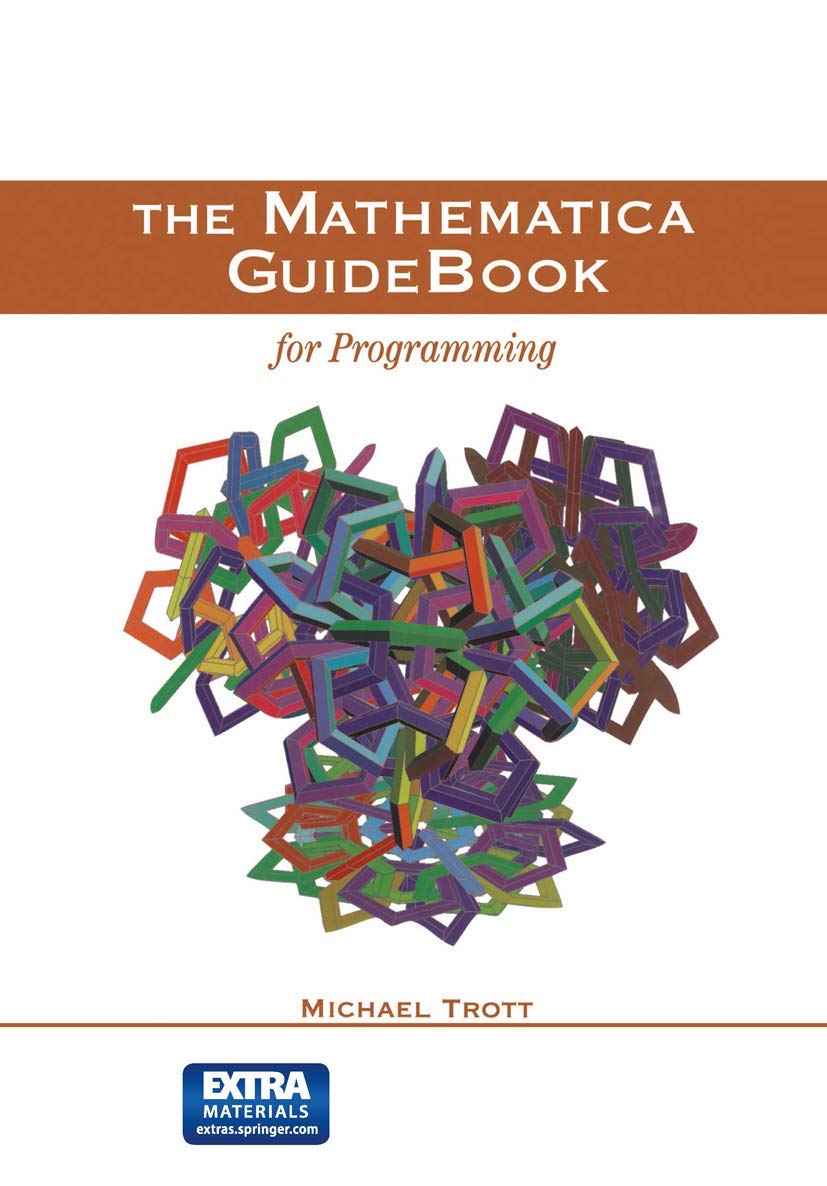
The Mathematica Guidebook for Programming by Michael Trott – A Complete Reference for Mathematica Language, Algorithms,
Inclusive of all applicable taxes. FREE shipping on all orders.
Available Offers
- 🚚Free Delivery — Free shipping on all orders
- 💵Cash on Delivery — Pay when your order arrives
- ↩️15-Day Easy Returns — Hassle-free return policy
- 🔒Cash on Delivery — Pay safely when your order arrives
Check Delivery
Product Description
Introduction
The Mathematica Guidebook for Programming by Michael Trott is an authoritative and comprehensive resource that demystifies the art of programming using Mathematica. Published by Springer, this hardcover edition is an essential companion for students, researchers, and professionals who wish to harness the full potential of Mathematica's programming capabilities. Whether you are a beginner eager to learn or an experienced programmer seeking advanced techniques, this book offers a structured and insightful journey into the world of computational thinking and symbolic programming.
Book Overview
This volume serves as a complete guide to programming within the Mathematica environment, covering everything from basic syntax to complex algorithmic design. Michael Trott, a renowned expert in the field, presents material that is both rigorous and accessible. The book is part of the acclaimed Mathematica Guidebook series and is designed to bridge the gap between theoretical concepts and practical implementation. With over 700 pages of detailed explanations, code examples, and exercises, it is a treasure trove of knowledge for anyone serious about mastering Mathematica programming.
Key Highlights
- Comprehensive coverage of Mathematica's programming language, including functional, procedural, and rule-based programming.
- Over 300 ready-to-use code examples that illustrate key concepts and techniques.
- Detailed explanations of Mathematica's built-in functions and their applications in real-world scenarios.
- Focus on efficient coding practices, debugging, and performance optimization.
- Includes advanced topics such as dynamic programming, recursion, and symbolic computations.
- Hardcover binding ensures durability for long-term use in libraries, labs, and personal collections.
Inside the Book
The book is organized into well-structured chapters that gradually build your programming skills. It begins with the fundamentals of Mathematica's syntax and expression evaluation, then moves into more complex areas such as list manipulation, pattern matching, and functional programming. Later chapters delve into procedural programming, debugging techniques, and the creation of custom functions and packages. Each topic is accompanied by clear examples and exercises that reinforce learning. The author also provides insights into the internal workings of Mathematica, helping readers understand not just how to code, but why certain approaches work best.
Key Topics
- Mathematica programming paradigms: functional, procedural, and rule-based approaches.
- Pattern matching and transformation rules for advanced data manipulation.
- List and matrix operations, including efficient data structures.
- Recursion, iteration, and dynamic programming techniques.
- String manipulation, file I/O, and external program integration.
- Creating and managing packages for code reuse and modularity.
- Debugging, profiling, and optimizing Mathematica code.
- Symbolic computation and algebraic manipulations.
Reader Benefits
By working through this guidebook, readers will gain a deep understanding of Mathematica's programming language, enabling them to write efficient, readable, and maintainable code. The book emphasizes practical problem-solving, making it ideal for students tackling assignments, researchers analyzing data, or professionals developing algorithms. The hands-on approach ensures that you can immediately apply what you learn to your own projects. Additionally, the book's focus on best practices helps avoid common pitfalls, saving time and effort in the long run.
Learning Outcomes
- Master the syntax and semantics of Mathematica programming.
- Develop the ability to choose the right programming paradigm for a given task.
- Learn to write optimized code that leverages Mathematica's built-in functions.
- Gain proficiency in debugging and testing Mathematica programs.
- Acquire skills to create reusable packages and modules.
- Understand advanced concepts like symbolic programming and dynamic evaluation.
Who Should Read
This book is ideal for students of mathematics, physics, engineering, and computer science who use Mathematica in their coursework or research. It is also highly valuable for professionals in data science, finance, and academia who rely on Mathematica for complex computations. Educators teaching programming or computational mathematics will find it a superb reference. Even hobbyists with a curiosity for symbolic programming will benefit from its clear and methodical presentation. Prior experience with Mathematica is helpful but not required, as the book starts from the basics.
About the Author
Michael Trott is a distinguished mathematician and computer scientist with decades of experience in symbolic computation. He is a senior researcher at Wolfram Research, the creators of Mathematica, and has contributed extensively to the development of the software. Trott is also the author of the multi-volume Mathematica Guidebook series, which is widely regarded as a definitive resource for Mathematica users. His writing style is clear, precise, and enriched with practical examples drawn from his vast experience. He holds a PhD in theoretical physics and has published numerous papers on computational science.
About the Publisher
Springer is a leading global publisher of scientific, technical, and medical content. With a history spanning over 175 years, Springer is renowned for its high-quality academic books and journals. This hardcover edition is produced to the exacting standards that Springer is known for, ensuring excellent print quality, durable binding, and clear typography. For Indian readers, Springer's distribution network makes this book readily available through trusted retailers like Bookshops.in.
Conclusion
The Mathematica Guidebook for Programming is more than just a manual; it is a mentorship in print. Michael Trott's expertise and pedagogical skill make this book an indispensable resource for anyone looking to unlock the full power of Mathematica. Whether you are a student in an Indian university, a researcher at an institute, or a professional in industry, this book will elevate your programming skills and deepen your understanding of computational mathematics. Add this hardcover edition to your library today and embark on a rewarding journey into the world of Mathematica programming.
Quick Summary
The Mathematica Guidebook for Programming by Michael Trott is an authoritative and comprehensive reference for anyone looking to master the Mathematica programming language. This Springer hardcover edition covers the entire spectrum of Mathematica programming, from basic syntax and data structures to advanced topics like pattern matching, functional programming, symbolic computation, and 2D/3D graphics. The book is packed with over a thousand examples and exercises, making it ideal for self-study or as a classroom textbook. It is designed for students, researchers, and professionals in mathematics, physics, engineering, and computer science who want to leverage Mathematica for problem-solving, simulation, and visualization. Readers will learn to write efficient, elegant code and develop a deep understanding of the Wolfram Language. By purchasing from Bookshops.in, you get a genuine, high-quality hardcover edition at a competitive price with reliable delivery across India. Whether you are a beginner or an experienced programmer, this book will become an indispensable part of your library.
Book Highlights
Book Specifications
| ISBN-13 | 9780387942827 |
| ISBN-10 | 0387942823 |
| Publisher | SPRINGER |
| Language | English |
| Dimensions | 18.54 x 5.33 x 24.13 cm |
| Weight | 215 g |
| Country | USA |
| Category | Programming & Software Development › Algorithms |
| Series | Mathematica Guidebook |
| Genre | Non-fiction |
| Reading Age | 18+ |
| Original Language | English |
Frequently Asked Questions
What is The Mathematica Guidebook for Programming about?
Who is the author of this book?
Is this book suitable for beginners?
Is this a hardcover or paperback?
What is the ISBN?
Can I use this book for self-study?
Does the book cover graphics and visualization?
Is this book useful for researchers?
What programming paradigms are covered?
Does the book include exercises?
Is this book still relevant today?
How is this book different from online tutorials?
Where can I buy this book in India?
Readers Also Search For
Customers Also Bought

Programming
Algorithmische Sprache Und Programmentwicklung | by H. Partsch | F. L. Bauer | P. Pepper | Springer | by H. Partsch | F. L. Bauer | P. Pepper | Springer | by H. Partsch | F. L. Bauer | P. Pepper | Springer | by H. Partsch | F. L. Bauer | P. Pepper | Springer | by H. Partsch | F. L. Bauer | P. Pepper | Springer | by H. Partsch | F. L. Bauer | P. Pepper | Springer | by H. Partsch | F. L. Bauer | P. Pepper | Springer | by H. Partsch | F. L. Bauer | P. Pepper | Springer | by H. Partsch | F. L. Bauer
Programming
Distributed Algorithms | by Jean-Claude Bermond | Michel Raynal | Springer | by Jean-Claude Bermond | Michel Raynal | Springer | by Jean-Claude Bermond | Michel Raynal | Springer | by Jean-Claude Bermond | Michel Raynal | Springer | by Jean-Claude Bermond | Michel Raynal | Springer | by Jean-Claude Bermond | Michel Raynal | Springer | by Jean-Claude Bermond | Michel Raynal | Springer | by Jean-Claude Bermond | Michel Raynal | Springer | by Jean-Claude Bermond | Michel Raynal | Springer | by Jean
Programming
Meta-Level Control for Deductive Database Systems | by Helmut Schmidt | Springer | by Helmut Schmidt | Springer | by Helmut Schmidt | Springer | by Helmut Schmidt | Springer | by Helmut Schmidt | Springer | by Helmut Schmidt | Springer | by Helmut Schmidt | Springer | by Helmut Schmidt | Springer | by Helmut Schmidt | Springer | by Helmut Schmidt | Springer | by Helmut Schmidt | Springer | by Helmut Schmidt | Springer | by Helmut Schmidt | Springer | by Helmut Schmidt | Springer | by Helmut Schm
Programming
Java Web Services | by David A. Chappell | Tyler Jewell | O'Reilly Media | by David A. Chappell | Tyler Jewell | O'Reilly Media | by David A. Chappell | Tyler Jewell | O'Reilly Media | by David A. Chappell | Tyler Jewell | O'Reilly Media | by David A. Chappell | Tyler Jewell | O'Reilly Media | by David A. Chappell | Tyler Jewell | O'Reilly Media | by David A. Chappell | Tyler Jewell | O'Reilly Media | by David A. Chappell | Tyler Jewell | O'Reilly Media | by David A. Chappell | Tyler Jewell | O'
Programming
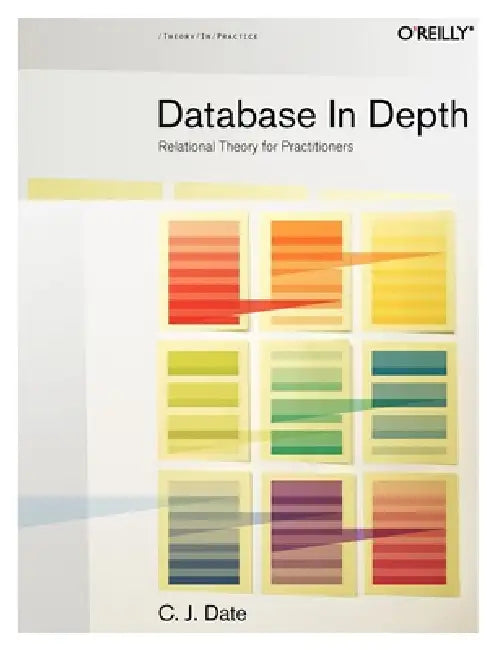
Database in Depth | by Chris J. Date | O'Reilly Media | by Chris J. Date | O'Reilly Media | by Chris J. Date | O'Reilly Media | by Chris J. Date | O'Reilly Media | by Chris J. Date | O'Reilly Media | by Chris J. Date | O'Reilly Media | by Chris J. Date | O'Reilly Media | by Chris J. Date | O'Reilly Media | by Chris J. Date | O'Reilly Media | by Chris J. Date | O'Reilly Media | by Chris J. Date | O'Reilly Media | by Chris J. Date | O'Reilly Media | by Chris J. Date | O'Reilly Media | by Chris J.
Programming
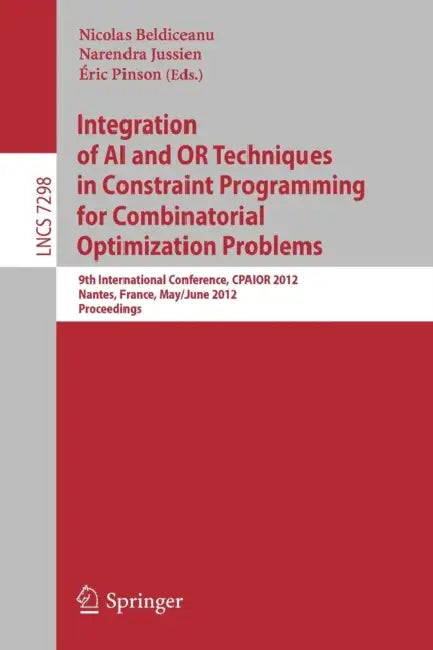
Integration of AI and OR Techniques in Constraint Programming for Combinatorial Optimization Problem | by Nicolas Beldiceanu | Narendra Jussien | Eric Pinson | Springer | by Nicolas Beldiceanu | Narendra Jussien | Eric Pinson | Springer | by Nicolas Beldiceanu | Narendra Jussien | Eric Pinson | Springer | by Nicolas Beldiceanu | Narendra Jussien | Eric Pinson | Springer | by Nicolas Beldiceanu | Narendra Jussien | Eric Pinson | Springer | by Nicolas Beldiceanu | Narendra Jussien | Eric Pinson |
Related Products
View All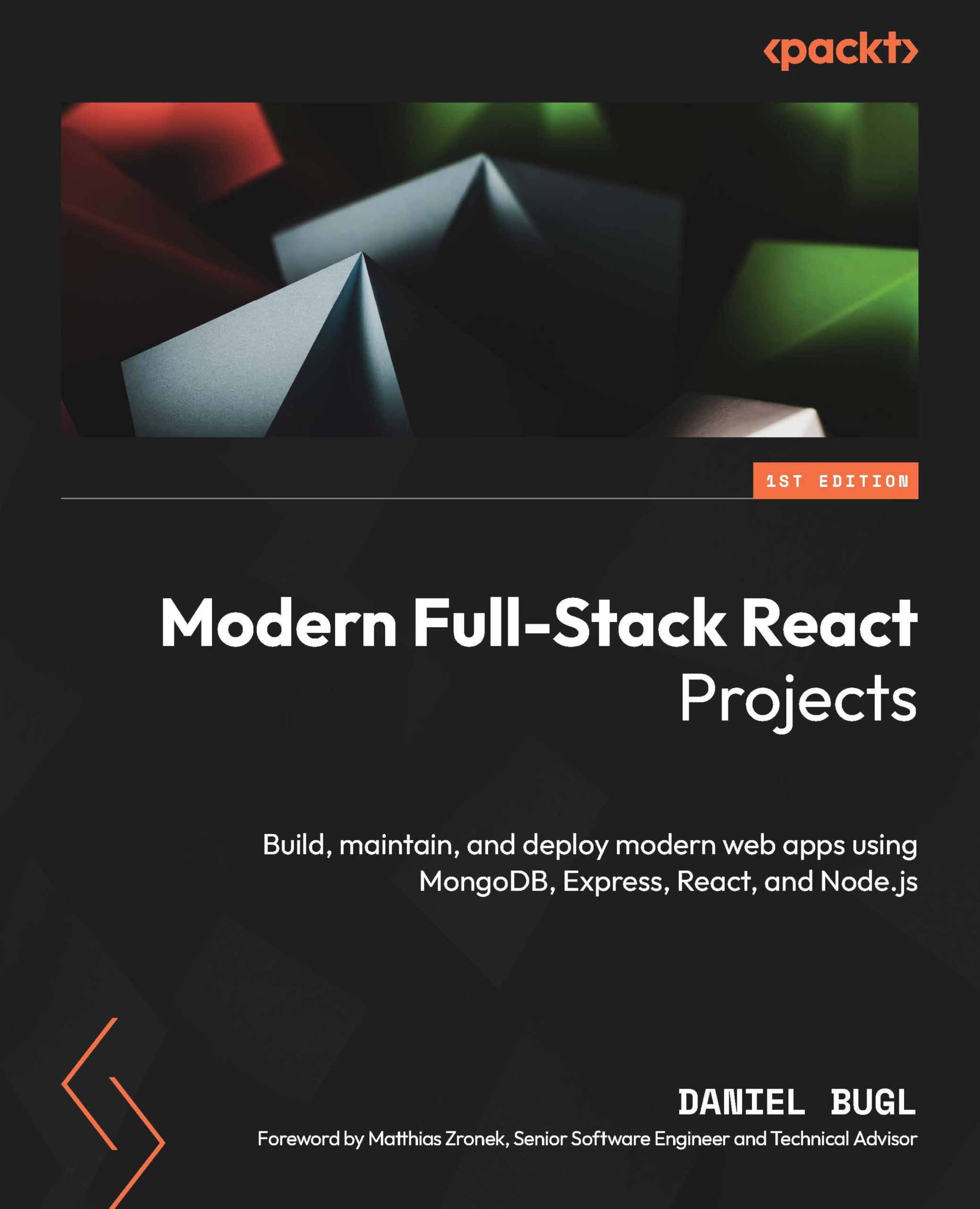
Computers & Internet
Modern Full-Stack React Projects by Daniel Bugl
Computers & Internet
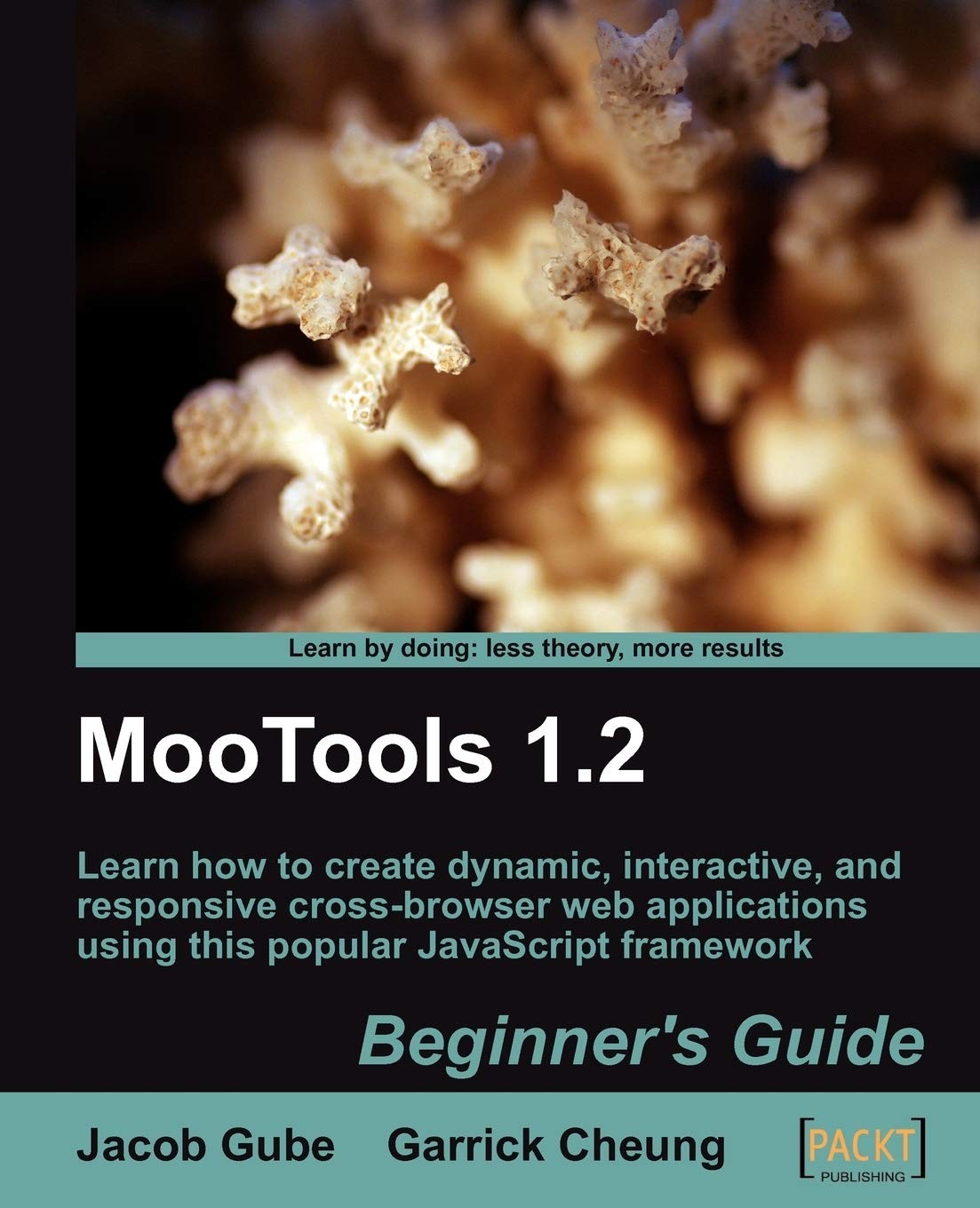
Mootools 1.2 Beginner's Guide (English, Jacob Gube)
Computers & Internet
Contemporary Methods for Speech Parameterization (Springerbriefs in Electrical and Computer Engineering / Springerbriefs in Speech Technology)

Computers & Internet
Information Technology and Lawyers | by Arno R. Lodder | Anja Oskamp | Springer | by Arno R. Lodder | Anja Oskamp | Springer | by Arno R. Lodder | Anja Oskamp | Springer | by Arno R. Lodder | Anja Oskamp | Springer | by Arno R. Lodder | Anja Oskamp | Springer | by Arno R. Lodder | Anja Oskamp | Springer | by Arno R. Lodder | Anja Oskamp | Springer | by Arno R. Lodder | Anja Oskamp | Springer | by Arno R. Lodder | Anja Oskamp | Springer | by Arno R. Lodder | Anja Oskamp | Springer | by Arno R. Lo

Computers & Internet
Digital Analysis of Remotely Sensed Imagery | by Jay Gao | McGraw-Hill Companies | by Jay Gao | McGraw-Hill Companies | by Jay Gao | McGraw-Hill Companies | by Jay Gao | McGraw-Hill Companies | by Jay Gao | McGraw-Hill Companies | by Jay Gao | McGraw-Hill Companies | by Jay Gao | McGraw-Hill Companies | by Jay Gao | McGraw-Hill Companies | by Jay Gao | McGraw-Hill Companies | by Jay Gao | McGraw-Hill Companies | by Jay Gao | McGraw-Hill Companies | by Jay Gao | McGraw-Hill Companies | by Jay Gao
Computers & Internet