
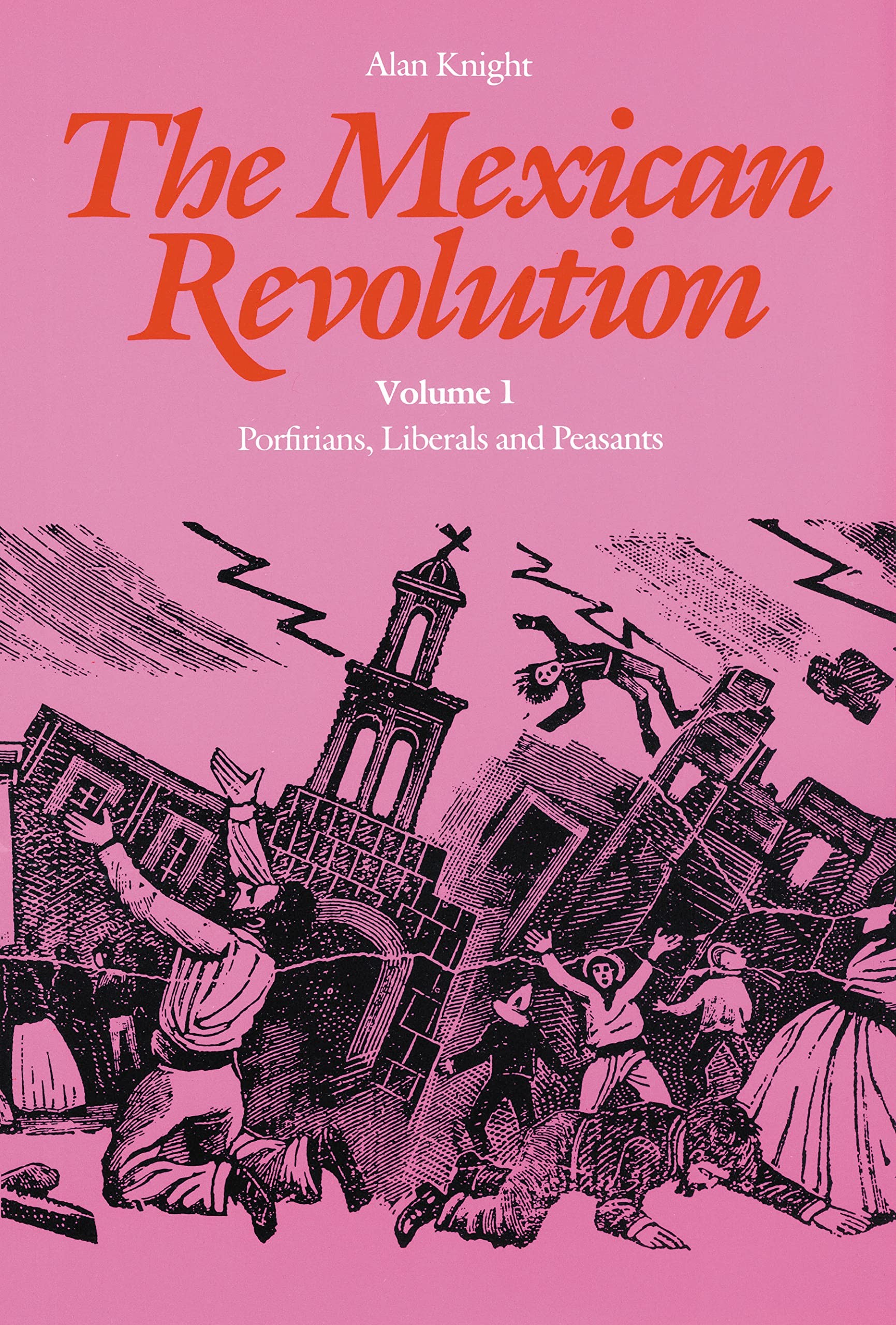
The Mexican Revolution: Porfirians, Liberals and Peasants by Alan Knight – A Scholarly Examination of Mexico's Populist
Inclusive of all applicable taxes. FREE shipping on all orders.
Available Offers
- 🚚Free Delivery — Free shipping on all orders
- 💵Cash on Delivery — Pay when your order arrives
- ↩️15-Day Easy Returns — Hassle-free return policy
- 🔒Cash on Delivery — Pay safely when your order arrives
Check Delivery
Product Description
Introduction
The Mexican Revolution stands as one of the most extraordinary upheavals of the twentieth century—a sprawling, chaotic, and deeply human struggle that defied easy labels. Alan Knight’s The Mexican Revolution: Porfirians, Liberals and Peasants offers a masterful, ground-level account of this seismic event. Published by the University of Nebraska Press, this hardcover edition is an essential resource for students, historians, and anyone fascinated by revolutionary movements. Knight strips away convenient myths to reveal a revolution driven not by a single ideology or party, but by the raw energy of ordinary people—peasants, liberals, and local leaders—who rose against the long dictatorship of Porfirio Díaz. This volume, the first of two, traces the dramatic rise and fall of Francisco Madero, the uneasy alliance of urban reformers and rural insurgents, and the counter-revolutionary forces that reshaped Mexico. It is a work of rigorous scholarship that reads like a vivid narrative, making complex history accessible and compelling.
Book Overview
Alan Knight challenges both Marxist and revisionist interpretations, arguing that the Mexican Revolution was fundamentally a populist uprising. Unlike other revolutions, it had no vanguard party, no unified ideology, and no grand international ambitions. Instead, it was a deeply local, often contradictory movement that ultimately reinforced many features of the old regime it sought to overthrow. This book is not a dry academic treatise; it is a rich, detailed exploration of how the mass of the people—peasants, miners, and workers—forced change from below. Knight’s narrative weaves together political intrigue, social conflict, and economic pressures, offering a panoramic view of Mexico from 1910 to the early years of the revolution. The hardcover edition is well-bound and printed on quality paper, ideal for serious reading and reference.
Key Highlights
- Fresh Perspective: Rejects fashionable Marxist and revisionist theories, offering a balanced, evidence-based interpretation.
- Focus on Ordinary People: Emphasizes the role of peasants and local communities in shaping the revolution’s course.
- Detailed Analysis: Covers the Porfirian regime, liberal opposition, and the rise of Francisco Madero.
- Counter-Revolutionary Forces: Explains why Madero’s constitutional democracy failed against entrenched interests.
- Volume One: First part of a definitive two-volume set, providing a strong foundation for further study.
Inside the Book
The book is structured to guide readers through the revolution’s complexity. Early chapters examine the long dictatorship of Porfirio Díaz—his economic modernization, social inequalities, and political repression. Knight then traces the emergence of liberal reformers and the explosive peasant discontent that erupted in 1910. The narrative follows the fragile alliance between urban intellectuals and rural fighters, the brief presidency of Francisco Madero, and the violent backlash from conservative forces. Each chapter is grounded in primary sources, local case studies, and comparative analysis. Knight’s writing is clear and engaging, avoiding jargon without sacrificing depth. Maps and tables (where included) help readers follow regional dynamics, while the extensive bibliography points to further research.
Key Topics
- The Porfiriato: dictatorship, modernization, and social costs
- Liberal opposition and the role of intellectuals
- Peasant grievances and rural uprisings
- The 1910 election and the fall of Díaz
- Francisco Madero’s presidency and its challenges
- Counter-revolutionary movements and foreign interests
- Regional variations in revolutionary experience
- Land reform, labor struggles, and nationalism
Reader Benefits
This book is more than a history lesson. It helps readers understand how revolutions actually work—messy, unpredictable, and shaped by ordinary people. For students, it provides a model of rigorous historical analysis that questions easy assumptions. For general readers, it offers a gripping story of courage, betrayal, and resilience. The hardcover format ensures durability for repeated reading, while Knight’s clear prose makes complex ideas easy to grasp. Indian readers will find parallels in struggles against colonial and authoritarian rule, making the Mexican experience both distant and strangely familiar. The book also challenges the notion that revolutions must be led by a single party or ideology, opening up new ways to think about social change.
Learning Outcomes
- Understand the causes and course of the Mexican Revolution from a non-dogmatic perspective
- Analyze the roles of different social groups—peasants, liberals, elites—in revolutionary change
- Critically evaluate Marxist and revisionist interpretations of history
- Identify the structural factors that led to the failure of Madero’s constitutional experiment
- Gain insight into the relationship between local movements and national politics
- Develop skills in comparative historical analysis relevant to other revolutions
Who Should Read
This book is ideal for university students of history, political science, and Latin American studies. It is also perfect for postgraduate researchers seeking a nuanced, well-argued account of the revolution. General readers with an interest in world history, social movements, or Mexico’s cultural heritage will find it deeply rewarding. Teachers and professors can use it as a core text for courses on revolutions or modern Latin America. Even readers who simply love a well-told story of human struggle will be captivated by Knight’s narrative. The book assumes no prior knowledge of Mexico, making it accessible to newcomers while still offering fresh insights to specialists.
About the Author
Alan Knight is a renowned historian of Latin America, particularly Mexico. He is a professor emeritus at the University of Oxford, where he taught for decades. Knight is known for his rigorous, empirically grounded scholarship and his ability to challenge prevailing orthodoxies. His work on the Mexican Revolution is considered among the most important in the field, praised for its depth, balance, and readability. He has also written extensively on Mexican politics, oil, and agrarian history. This book reflects his lifelong commitment to understanding the revolution from the ground up.
About the Publisher
The University of Nebraska Press is a distinguished academic publisher known for its strong lists in history, Latin American studies, and the humanities. Founded in 1941, it has earned a reputation for producing high-quality, well-edited scholarly works that reach both academic and general audiences. This hardcover edition reflects the press’s commitment to durable, beautifully produced books that will last for years on any library shelf.
Conclusion
The Mexican Revolution: Porfirians, Liberals and Peasants is a landmark work that redefines how we understand one of history’s most remarkable upheavals. Alan Knight’s clear-eyed, populist interpretation gives voice to the peasants and ordinary citizens who made the revolution, while never losing sight of the elites who tried to control it. Whether you are a student, a scholar, or a curious reader, this book will deepen your understanding of revolution, power, and human resilience. Order your hardcover copy today from Bookshops.in and add a classic of historical scholarship to your collection.
Quick Summary
The Mexican Revolution: Porfirians, Liberals and Peasants by Alan Knight is a landmark historical study that reinterprets one of the 20th century's most significant populist uprisings. Knight argues that the revolution was not driven by a vanguard party or coherent ideology but by the mass mobilization of peasants and urban liberals who allied to overthrow the longtime dictator Porfirio Díaz. The book meticulously examines how this fragile coalition installed Francisco Madero as president, only to see his constitutional reforms crushed by counter-revolutionary forces. Readers will gain deep insights into the dynamics of grassroots rebellion, the complexities of political alliances, and the paradox of a revolution that ultimately reinforced many aspects of the old regime. This volume is essential for university students, history scholars, and anyone fascinated by revolutionary movements. By purchasing from Bookshops.in, Indian readers receive a premium hardcover edition with fast, reliable delivery and excellent customer service.
Book Highlights
Book Specifications
| ISBN-13 | 9780803277700 |
| ISBN-10 | 0803277709 |
| Publisher | Univ of Nebraska Pr |
| Language | English |
| Dimensions | 15.24 x 3.99 x 23.22 cm |
| Weight | 839 g |
| Country | India |
| Category | Americas › United States |
| Series | The Mexican Revolution |
| Genre | History |
| Reading Age | Adult |
| Original Language | English |
Frequently Asked Questions
What is The Mexican Revolution: Porfirians, Liberals and Peasants about?
Who is the author Alan Knight?
Is this book suitable for Indian readers?
What is the binding of this book?
What is the ISBN-13?
Is this the complete work or part of a series?
What language is the book in?
What is the price of this book on Bookshops.in?
Does this book cover the entire Mexican Revolution?
What makes this book different from other histories of the Mexican Revolution?
Can I use this book for academic research?
Is this book available in paperback?
Readers Also Search For
Related Products
View All
History
The Information Revolution: Transforming the World Through Technology (World History)
History
Human Nature and the French Revolution: From the Enlightenment to the Napoleonic Code: 3 (Polygons: Cultural Diversities and Intersections, 3)
History
The Unmaking of Home in Contemporary Art (Cultural Spaces)

History
Handbook to Life in Medieval and Early Modern Japan | by William E. Deal | Oxford University Press | by William E. Deal | Oxford University Press | by William E. Deal | Oxford University Press | by William E. Deal | Oxford University Press | by William E. Deal | Oxford University Press | by William E. Deal | Oxford University Press | by William E. Deal | Oxford University Press | by William E. Deal | Oxford University Press | by William E. Deal | Oxford University Press | by William E. Deal | Ox

History
The Narrators of Barbarian History (A.D. 550-800) | by Walter Goffart | University of Notre Dame Press | by Walter Goffart | University of Notre Dame Press | by Walter Goffart | University of Notre Dame Press | by Walter Goffart | University of Notre Dame Press | by Walter Goffart | University of Notre Dame Press | by Walter Goffart | University of Notre Dame Press | by Walter Goffart | University of Notre Dame Press | by Walter Goffart | University of Notre Dame Press | by Walter Goffart | Univ

History