
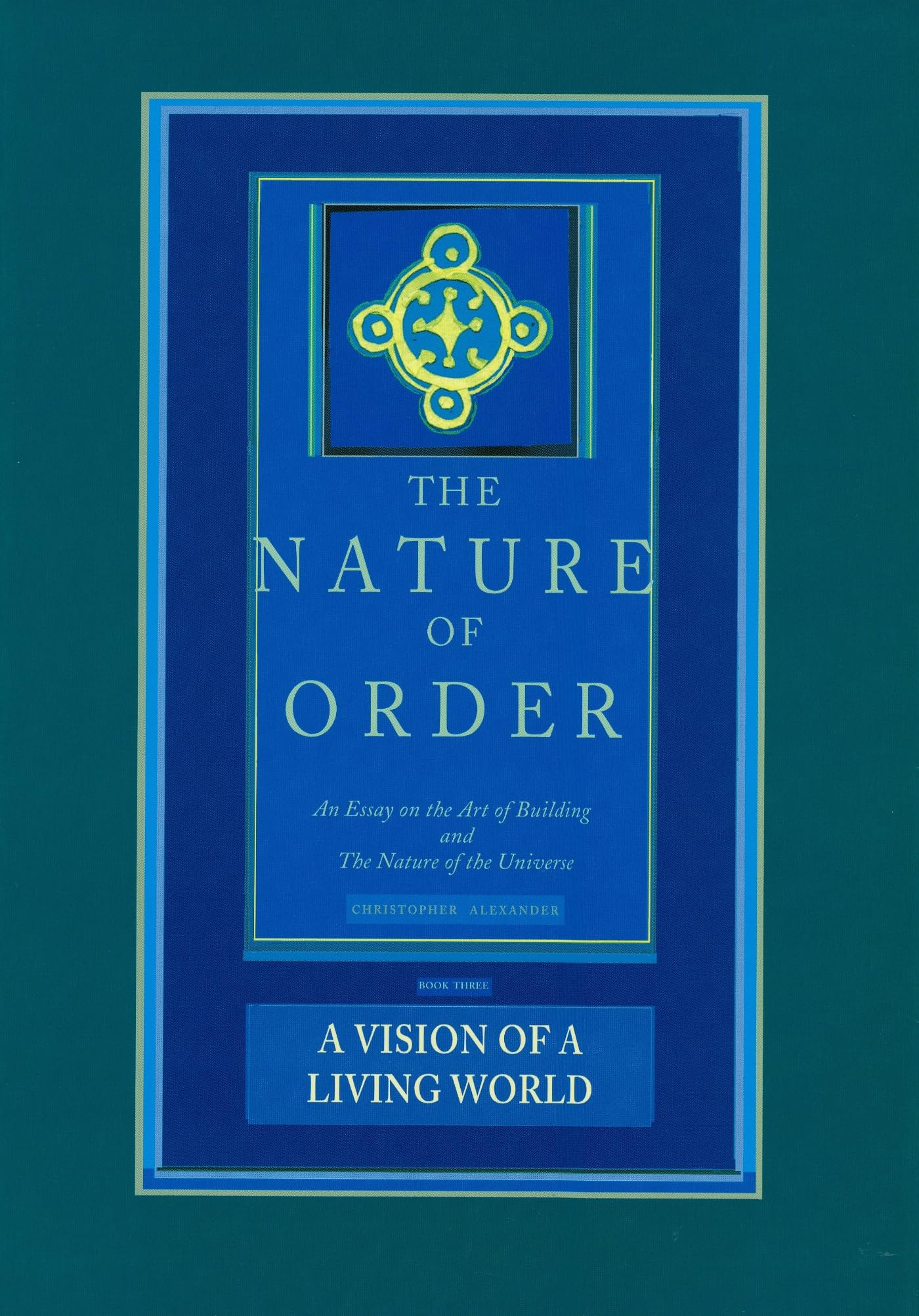
A Vision of a Living World: Architecture and Natural Order by Christopher Alexander – A Comprehensive Guide to Living Pr
Inclusive of all applicable taxes. FREE shipping on all orders.
Available Offers
- 🚚Free Delivery — Free shipping on all orders
- 💵Cash on Delivery — Pay when your order arrives
- ↩️15-Day Easy Returns — Hassle-free return policy
- 🔒Cash on Delivery — Pay safely when your order arrives
Check Delivery
Product Description
Introduction
In the vast tapestry of architectural theory and practice, few works have dared to challenge the very foundations of how we conceive, design, and inhabit the built environment. Christopher Alexander’s A Vision of a Living World: The Nature of Order, Book 3 stands as a monumental achievement, offering a radical yet deeply humane vision for creating spaces that nurture life, community, and ecological harmony. This hardcover volume, published by the Center for Environmental Structure, invites Indian readers—students, architects, and urban planners alike—to rethink the relationship between human experience and the structures we build.
Book Overview
As the third installment in Alexander’s landmark four-volume series The Nature of Order, this book moves beyond abstract theory into the realm of tangible, built reality. Spanning nearly seven hundred pages, it presents a rich collection of projects designed and constructed over three decades across multiple countries. Through hundreds of photographs, drawings, and detailed case studies, Alexander illustrates how his concept of “living process” can be applied to create buildings, neighbourhoods, public spaces, gardens, and even ornamental details that resonate with natural and human vitality. The book is both a manifesto and a practical guide, showing how architecture can become a living, breathing extension of the world around us.
Key Highlights
- Over 600 pages of real-world projects – Includes public buildings, housing, urban spaces, and private residences built using living process methods.
- Thirty years of practice – Showcases Alexander’s own work alongside that of contemporary architects who share his vision.
- Integration of ecology and geometry – Demonstrates how natural forms and sustainable practices can shape beautiful, functional structures.
- Practical reusability – Offers methods and insights that can be adapted by architects, students, and community builders in India and beyond.
Inside the Book
Readers will find a visually stunning journey through completed and planned projects, from intimate rooms and gardens to entire neighbourhoods and public squares. Alexander provides detailed construction innovations, colour palettes, ornamentation techniques, and structural details that bring his theory to life. Each project is accompanied by explanatory text that reveals the decision-making process, the challenges faced, and the lessons learned. The book also explores the ecological and natural character of living structure, emphasizing how buildings can harmonize with their surroundings rather than dominate them.
Key Topics
- Living process in architecture and urban design
- Generating living structure in communities
- Ecological and natural building methods
- Geometry of nature and its application to design
- Construction innovation and craftsmanship
- Public space, housing, and ornament design
Reader Benefits
This book empowers Indian architects, students, and urban enthusiasts with a fresh perspective that prioritizes human well-being and environmental stewardship. It offers a counterpoint to sterile, mass-produced architecture, providing tools to create spaces that feel alive, welcoming, and deeply connected to local culture and nature. Readers will gain insight into how buildings can foster community, enhance mental health, and reduce ecological impact—all while being aesthetically inspiring.
Learning Outcomes
- Understand the principles of living process and how to apply them in design.
- Learn to evaluate and create buildings that generate positive emotional and social responses.
- Acquire practical knowledge of construction techniques that align with natural systems.
- Develop a vocabulary for discussing and critiquing architecture in terms of life and wholeness.
- Gain inspiration from real-world examples that bridge theory and practice.
Who Should Read
This volume is essential for architecture students, practicing architects, urban planners, landscape designers, interior designers, and anyone passionate about creating meaningful spaces. It is also highly relevant for Indian readers interested in sustainable development, vernacular architecture, and community-driven design. Those studying environmental psychology, art, or philosophy will find Alexander’s insights equally valuable.
About the Author
Christopher Alexander (1936–2022) was a renowned architect, mathematician, and design theorist whose work reshaped modern architecture. A professor at the University of California, Berkeley, he authored seminal books like A Pattern Language and The Timeless Way of Building. His lifelong quest was to uncover the fundamental principles that make buildings and cities alive, humane, and beautiful. Alexander’s ideas continue to influence architects worldwide, including in India, where his patterns have been adapted for local contexts.
About the Publisher
The Center for Environmental Structure (CES) is a non-profit organization founded by Christopher Alexander to promote research and practice in architecture that enhances human well-being and ecological balance. Based in California, CES publishes works that bridge theory, design, and construction, with a focus on creating living structure in the built environment. This book is part of their ongoing commitment to transforming how we build and inhabit the world.
Conclusion
A Vision of a Living World is not merely a book; it is an invitation to see architecture as a vital, evolving art that can heal and enrich our lives. For Indian readers grappling with rapid urbanization and cultural change, Alexander’s vision offers a path toward spaces that honour tradition, embrace nature, and foster genuine community. Whether you are a student sketching your first design or a professional seeking new inspiration, this volume will deepen your understanding of what it means to build a living world.
Quick Summary
A Vision of a Living World is the third volume of Christopher Alexander's profound exploration of architecture and natural order. This hardcover book presents hundreds of actual built and planned projects from around the world, spanning public buildings, neighbourhoods, housing, gardens, and intricate construction details. Alexander demonstrates how living process—a method of design that respects ecological and human needs—can generate spaces that feel alive and harmonious. The book is richly illustrated, offering readers an intuitive understanding of the geometry, ornament, and character needed to create vibrant communities. It is written for architects, urban planners, students, and anyone fascinated by the intersection of building and nature. By studying these examples, readers learn to apply generative design principles that foster sustainability and beauty. A Vision of a Living World is not just a theoretical treatise but a practical guide filled with inspiring projects. Buy this hardcover from Bookshops.in to own a cornerstone work on holistic architecture.
Book Highlights
Book Specifications
| ISBN-13 | 9780972652933 |
| ISBN-10 | 0972652930 |
| Publisher | Routledge |
| Language | English |
| Dimensions | 19.3 x 3.56 x 27.99 cm |
| Weight | 1 kg 770 g |
| Category | Arts, Film & Photography › Architecture |
| Series | The Nature of Order |
| Genre | Nonfiction |
| Reading Age | Adult |
| Translator | None |
| Original Language | English |
Frequently Asked Questions
What is A Vision of a Living World about?
Who is the author of this book?
Is this book part of a series?
What kind of projects are included?
Is this book suitable for students?
Does the book include colour images?
What is the main concept of the book?
Can this book help with practical building design?
What is the price in India?
Is the book available in English?
What is the ISBN?
Why should I buy from Bookshops.in?
Readers Also Search For
Customers Also Bought
Art History
The Italian Renaissance in Art

Art History
Photovoltaic Design & Installation For Dummies | by Mayfield | ForDummies | by Mayfield | ForDummies | by Mayfield | ForDummies | by Mayfield | ForDummies | by Mayfield | ForDummies | by Mayfield | ForDummies | by Mayfield | ForDummies | by Mayfield | ForDummies | by Mayfield | ForDummies | by Mayfield | ForDummies | by Mayfield | ForDummies | by Mayfield | ForDummies | by Mayfield | ForDummies | by Mayfield | ForDummies | by Mayfield | ForDummies | by Mayfield | ForDummies | by Mayfield | ForDu
Art History
Designing School Systems for All Students (English, Robert J. Manley | Richard J. Hawkins)
Art History
Routledge Library Editions: Art and Culture in the Nineteenth Century
Art History
An Errant Design (English, S. H. Long)
Art History
Distributed System Design | by Jie Wu | CRC Press | by Jie Wu | CRC Press | by Jie Wu | CRC Press | by Jie Wu | CRC Press | by Jie Wu | CRC Press | by Jie Wu | CRC Press | by Jie Wu | CRC Press | by Jie Wu | CRC Press | by Jie Wu | CRC Press | by Jie Wu | CRC Press | by Jie Wu | CRC Press | by Jie Wu | CRC Press | by Jie Wu | CRC Press | by Jie Wu | CRC Press | by Jie Wu | CRC Press | by Jie Wu | CRC Press | by Jie Wu | CRC Press | by Jie Wu | CRC Press | by Jie Wu | CRC Press | by Jie Wu | CRC
Related Products
View All
Architecture
Literatur Und Buhn: Tamil Literature: 2 (Hanbuch Der Orientalistik - Abeilung - Indien, Vol 2/1)
Architecture
Handbook of Synagogue Architecture: 29 (Brown Judaic Studies)

Architecture
Houses, Cottages & Bungalows: A Selection of Representative Examples ... Edited by F. Chatterton. Illustrations and Plans, With Explanatory Text
Architecture
Sport and Architecture (Frontiers of Sport)
Architecture
Britain's New Towns: an Experiment in Living

Architecture