
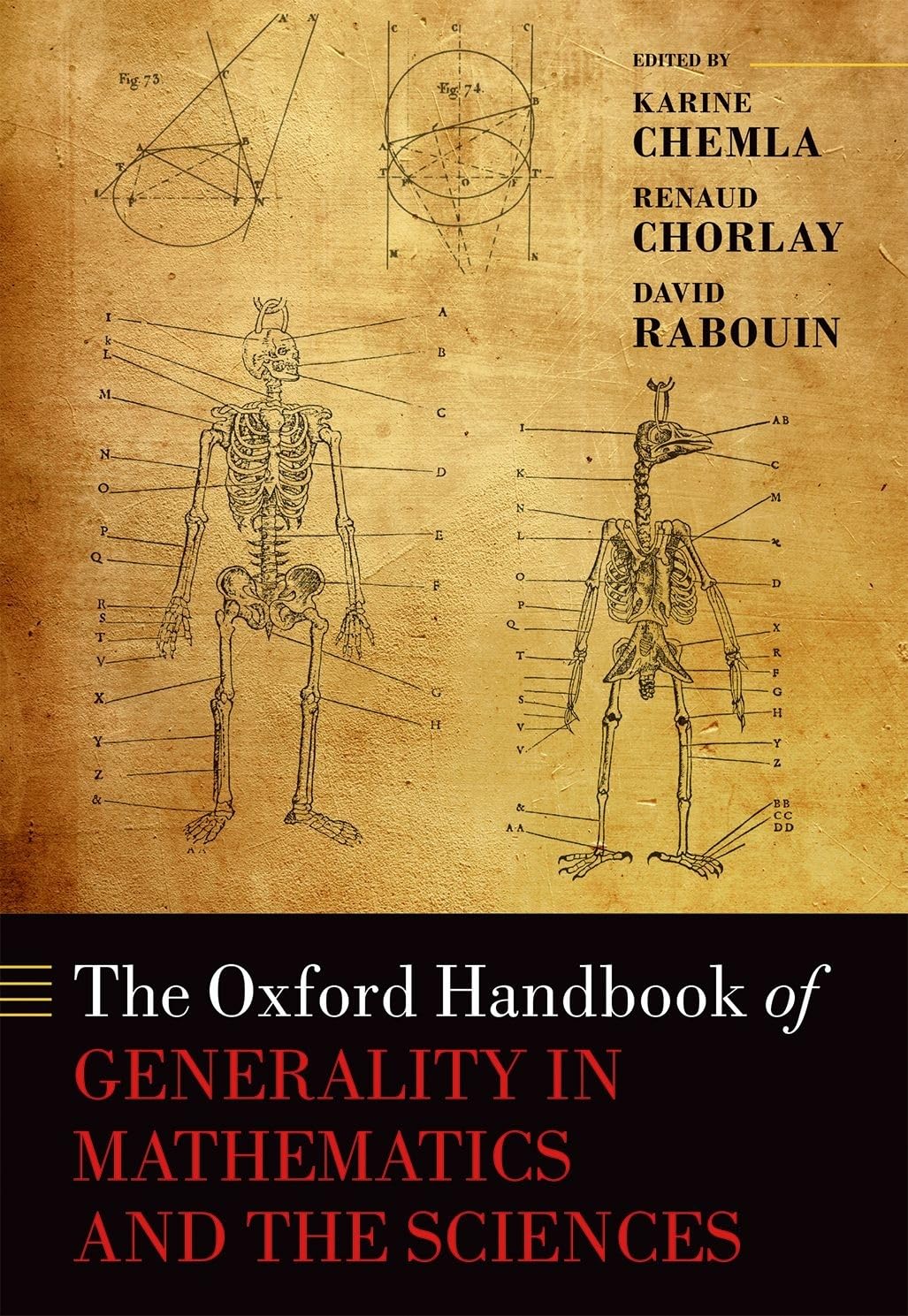
The Oxford Handbook of Generality in Mathematics and the Sciences by Karine Chemla – A Deep Dive into Historical Epistem
Inclusive of all applicable taxes. FREE shipping on all orders.
Available Offers
- 🚚Free Delivery — Free shipping on all orders
- 💵Cash on Delivery — Pay when your order arrives
- ↩️15-Day Easy Returns — Hassle-free return policy
- 🔒Cash on Delivery — Pay safely when your order arrives
Check Delivery
Product Description
Introduction
What does it mean for a mathematical statement or a scientific theory to be 'general'? This question has intrigued scholars for centuries, yet its answer is far from simple. The Oxford Handbook of Generality in Mathematics and the Sciences, edited by the eminent historian of mathematics Karine Chemla, offers a deep and original exploration of this foundational concept. Published by Oxford University Press, this hardbound volume brings together leading researchers to examine how generality has been understood, valued, and deployed across different cultures, periods, and disciplines. For Indian students and academics engaged in the philosophy and history of science, this handbook is an indispensable resource that challenges conventional assumptions and opens new avenues of inquiry.
Book Overview
This handbook is not a mere collection of essays; it is a carefully curated dialogue between history and philosophy. Moving beyond abstract definitions, the book investigates how scientists and mathematicians have actually practiced generality—from ancient Chinese algebra to modern physics. Through a series of original case studies, the volume reveals that generality is not a single, fixed property but a dynamic value shaped by social, textual, and instrumental contexts. The work connects two vibrant research traditions: historical epistemology, which studies how scientific values like 'objectivity' and 'accuracy' evolve over time, and the philosophy of scientific practice, which looks at how ideas emerge from concrete activities. The result is a rich, nuanced portrait of a concept that lies at the very heart of scientific reasoning.
Key Highlights
- Interdisciplinary Scope: Covers mathematics, physics, and the life sciences, offering a truly comparative perspective.
- Historical Depth: Spans from ancient Greek geometry and medieval Indian astronomy to 20th-century theoretical physics.
- Original Research: Each chapter presents fresh, unpublished findings from leading international scholars.
- Methodological Innovation: Integrates historical analysis with philosophy of practice, moving beyond traditional textbook narratives.
- Critical Engagement: Challenges the assumption that generality is always a positive or neutral ideal, revealing its contested nature.
Inside the Book
The handbook is structured around diverse case studies that bring the theme of generality to life. Readers will encounter detailed analyses of how ancient Chinese mathematicians used general procedures to solve families of problems, how 17th-century natural philosophers debated the scope of universal laws, and how modern biologists grapple with the generality of evolutionary models. The chapters are self-contained yet thematically linked, making the book suitable for both selective reading and comprehensive study. Each contribution includes rich footnotes, references, and, where appropriate, mathematical or scientific illustrations that clarify complex arguments.
Key Topics
- Historical meanings of generality in mathematics (Euclid, al-Khwārizmī, Liu Hui)
- Generality and the rise of modern physics (Newton, Einstein, quantum mechanics)
- Generality in biological classification and evolutionary theory
- The role of notation, diagrams, and algorithms in shaping general knowledge
- Generality as a social and institutional value in scientific communities
- Comparative perspectives: Chinese, Indian, Islamic, and European traditions
- Philosophical debates on the nature of general laws and universal statements
Reader Benefits
- Deepen Your Understanding: Gain a sophisticated grasp of a core concept that underpins all scientific and mathematical thinking.
- Enhance Research Skills: Learn how to analyze scientific values historically, a skill applicable to any field of study.
- Bridge Disciplines: Connect history, philosophy, and the sciences in a way that enriches your own work, whether you are a student, teacher, or researcher.
- Accessible Scholarship: Despite its advanced content, the writing is clear and engaging, with each chapter designed to be approachable for non-specialists.
- Authoritative Reference: The handbook serves as a go-to resource for essays, seminars, and lectures on the history and philosophy of science.
Learning Outcomes
By engaging with this handbook, readers will be able to: (1) identify different historical and cultural conceptions of generality; (2) critically evaluate the role of generality in scientific arguments and mathematical proofs; (3) apply insights from historical epistemology to contemporary scientific debates; (4) appreciate how textual, instrumental, and social practices shape scientific values; and (5) develop a more nuanced understanding of what it means for a claim to be 'general' in different contexts. These outcomes are invaluable for anyone pursuing advanced studies in the history, philosophy, or sociology of science.
Who Should Read
This book is ideal for postgraduate students and researchers in history of science, philosophy of science, and mathematics education. It is also highly relevant for practising scientists and mathematicians who wish to reflect on the conceptual foundations of their work. Indian readers with an interest in non-Western scientific traditions—such as Indian, Chinese, or Islamic mathematics—will find the comparative chapters particularly enlightening. University libraries, research centres, and departments of mathematics, physics, and philosophy will benefit from adding this volume to their collections.
About the Author
Karine Chemla is a senior researcher at the French National Centre for Scientific Research (CNRS) and a leading authority on the history of Chinese mathematics. Her work has fundamentally reshaped our understanding of how mathematical knowledge was created and transmitted across cultures. She is the author of numerous books and articles on ancient and medieval mathematics, and she has received international acclaim for her meticulous scholarship and innovative methodological approaches. For this handbook, she has assembled a stellar team of contributors from around the world, ensuring a diversity of voices and perspectives.
About the Publisher
Oxford University Press (OUP) is the world's largest university press, with a distinguished history of publishing authoritative academic works. The Oxford Handbooks series is renowned for its comprehensive coverage of key topics across the humanities, social sciences, and sciences. Each volume is designed to provide state-of-the-art overviews and original research, making them essential resources for scholars and students alike. OUP's commitment to quality, rigour, and accessibility ensures that this handbook meets the highest standards of academic publishing.
Conclusion
The Oxford Handbook of Generality in Mathematics and the Sciences is a landmark publication that redefines how we think about one of the most fundamental concepts in human knowledge. By bringing together history, philosophy, and practice, it offers a fresh and compelling perspective that will appeal to anyone curious about the nature of scientific reasoning. Whether you are a seasoned academic or a curious student, this handbook will challenge your assumptions and expand your intellectual horizons. Order your copy today from Bookshops.in and add this essential volume to your library.
Quick Summary
The Oxford Handbook of Generality in Mathematics and the Sciences, edited by Karine Chemla, is a seminal academic work that investigates the concept of generality as a key value in scientific discourses and practices throughout history. Rather than treating generality as a single, fixed idea, the book presents a rich collection of original essays that demonstrate how different scientific communities have understood and employed generality in various contexts. Through carefully selected case studies from mathematics, physics, and the life sciences, readers encounter general entities, procedures, and arguments that shaped knowledge production across eras and cultures. The handbook connects the history and philosophy of science through the lens of historical epistemology, examining how values such as objectivity and accuracy intersect with generality. It is designed for researchers, graduate students, and academics in history of science, philosophy of science, mathematics, and related fields. Readers will gain a nuanced understanding of how scientific knowledge is constructed and validated. Buying from Bookshops.in ensures you receive an authentic hardcover edition with reliable delivery across India.
Book Highlights
Book Specifications
| ISBN-13 | 9780198777267 |
| ISBN-10 | 0198777264 |
| Publisher | Oxford Univ Pr |
| Language | English |
| Dimensions | 24.89 x 3.56 x 16.76 cm |
| Weight | 1 kg 90 g |
| Category | Philosophy › Epistemology |
| Genre | Non-fiction |
| Reading Age | Adult |
| Original Language | English |
Frequently Asked Questions
What is the main theme of The Oxford Handbook of Generality in Mathematics and the Sciences?
Who edited this handbook?
Is this book suitable for undergraduate students?
Does the book cover only Western science?
What is historical epistemology?
How many essays are in this handbook?
Can I use this book for my PhD research?
Is the book available in paperback?
Is this book relevant to Indian students?
Does the book include case studies from physics?
What is the ISBN of this book?
How is this book different from other handbooks on generality?
Can I order this book from Bookshops.in?
Readers Also Search For
Related Products
View All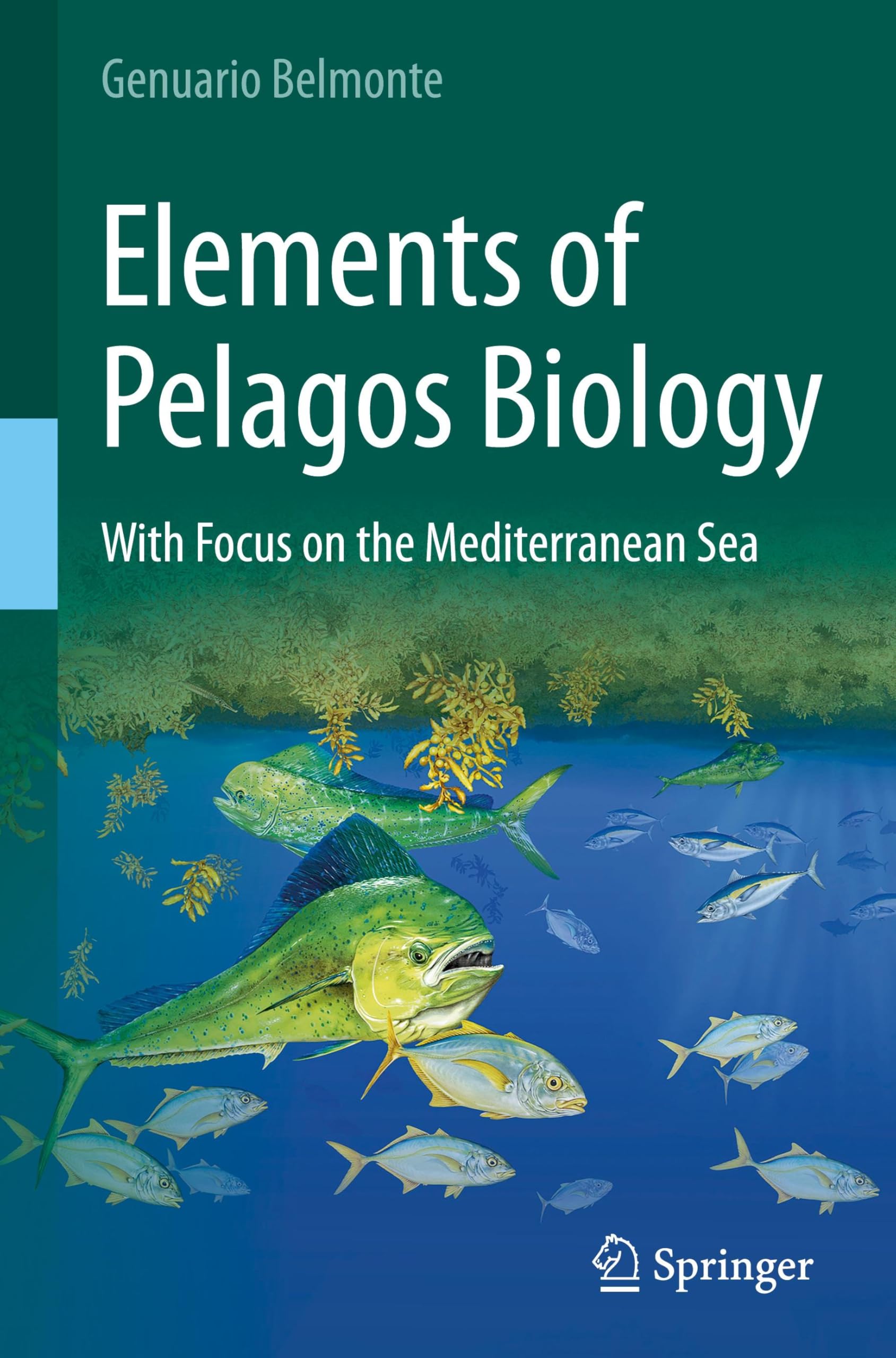
Science & Mathematics
Elements of Pelagos Biology: With Focus on the Mediterranean Sea
Science & Mathematics
Mathematical Theory of Optimal Processes (Classics of Soviet Mathematics)
Science & Mathematics
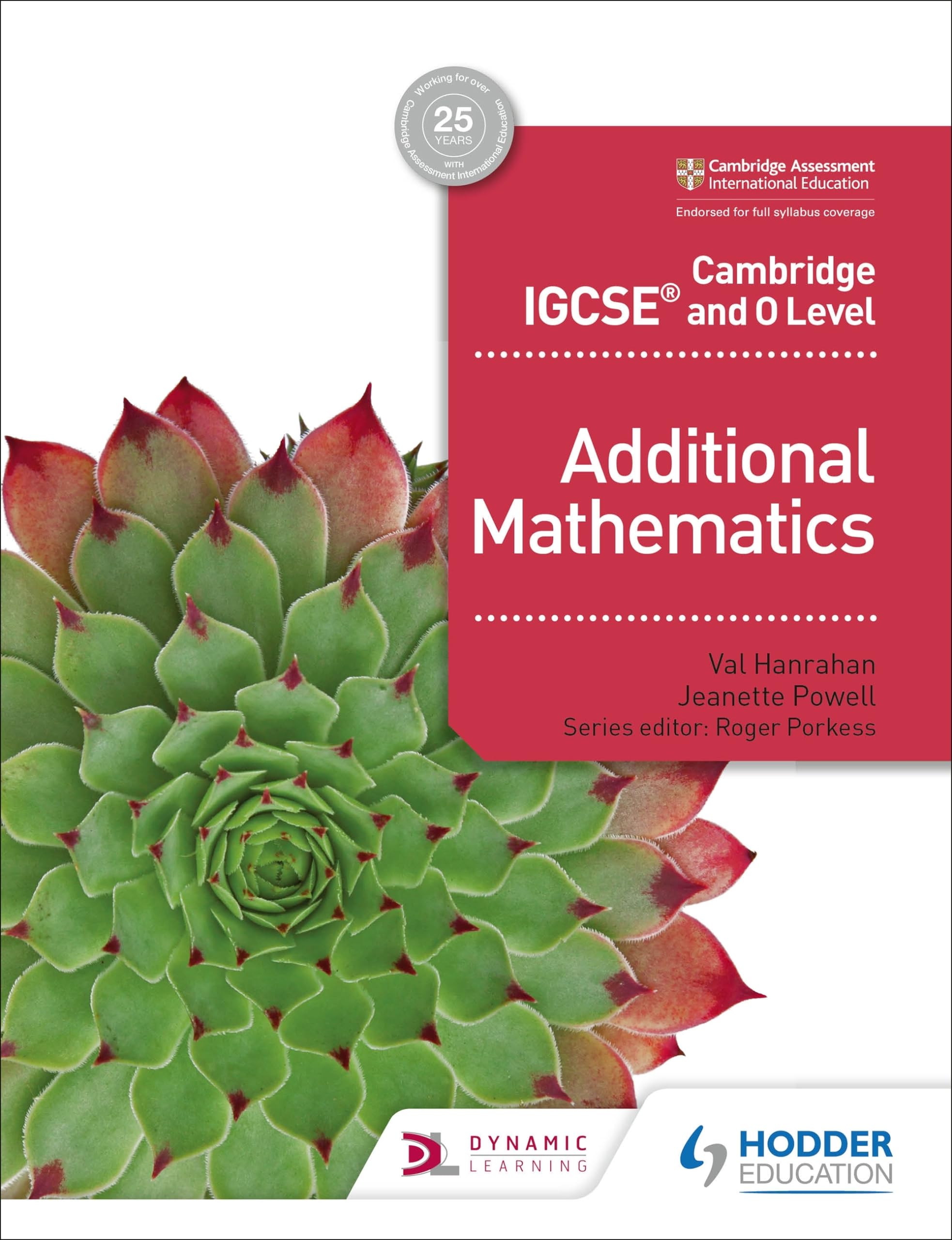
Cambridge IGCSE and O Level Additional Mathematics by Val Hanrahan – Textbook for 0606/4037

Science & Mathematics
Squid - Superconducting Quantum Interference Devices and Their Applications: Proceedings of the International Conference on Superconducting Quantum Devices, Berlin-west, October 4-8, 1976

Science & Mathematics
Concise Encyclopedia of Biochemistry
Science & Mathematics