
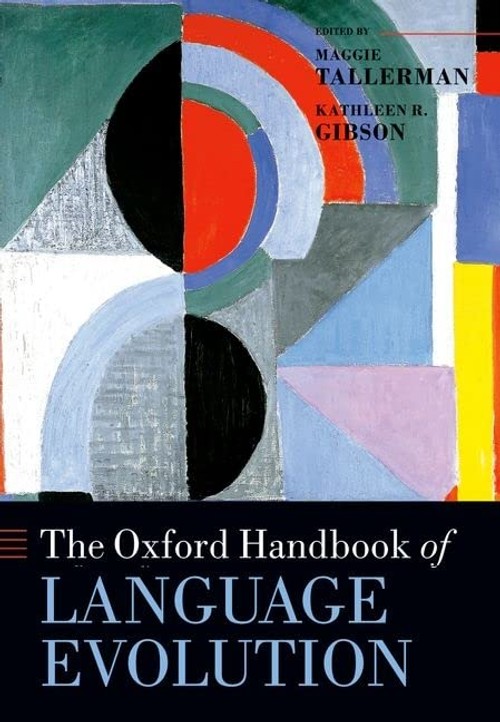
The Oxford Handbook of Language Evolution by Maggie Tallerman and Kathleen R. Gibson – A Comprehensive Reference on the
Inclusive of all applicable taxes. FREE shipping on all orders.
Available Offers
- 🚚Free Delivery — Free shipping on all orders
- 💵Cash on Delivery — Pay when your order arrives
- ↩️15-Day Easy Returns — Hassle-free return policy
- 🔒Cash on Delivery — Pay safely when your order arrives
Check Delivery
Product Description
Introduction
The mystery of how human language emerged from the primal calls of our ancestors has captivated scholars for centuries. The Oxford Handbook of Language Evolution, edited by leading experts Maggie Tallerman and Kathleen R. Gibson, brings together sixty of the world's foremost researchers to offer a definitive, interdisciplinary exploration of this profound question. Published by Oxford University Press in a durable hardcover edition, this comprehensive volume is an essential resource for anyone fascinated by the origins of our most defining cognitive ability. Whether you are a student of linguistics, a researcher in evolutionary biology, or simply a curious reader, this handbook provides a rigorous yet accessible journey into the deep history of human communication.
Book Overview
This handbook is not merely a collection of essays; it is a carefully curated synthesis of decades of research across multiple disciplines. The work is structured into five major parts, each addressing a critical dimension of language evolution. The first part draws on comparative animal behaviour, examining what the communication systems of other species can tell us about our own. The second part delves into the biological underpinnings—anatomy, genetics, and neurology—that make language possible. The third part explores the prehistory of language, asking when and why our ancestors first began to speak. The fourth part investigates the development of a linguistic species, focusing on how language emerges in individuals and populations. Finally, the fifth part examines language creation, transmission, and change over time, including the emergence of new sign languages and the dynamics of language evolution in modern contexts.
Key Highlights
- Interdisciplinary Authority: Contributions from sixty leading scholars across linguistics, anthropology, neuroscience, genetics, and primatology ensure a holistic understanding.
- Structured for Depth: Five logically organized parts guide the reader from animal communication to modern language change, building a coherent narrative.
- Cutting-Edge Research: Covers the latest advances in evolutionary biology, brain imaging, and genetic studies that have revolutionized the field over the last three decades.
- Global Perspective: Includes cross-cultural and cross-species comparisons, offering insights into language universals and unique human adaptations.
- Critical Analysis: Each chapter presents not only established knowledge but also ongoing debates and future research directions, encouraging critical thinking.
Inside the Book
Opening this hardcover volume, readers will find a wealth of detailed chapters that balance theoretical frameworks with empirical evidence. The handbook begins with an introduction to the core questions and methodological challenges of studying language evolution. From there, it moves into comparative studies of primate vocalizations, bird song, and the cognitive abilities of dolphins and elephants, providing a foundation for understanding what is uniquely human. Later sections explore the fossil record of hominid anatomy, the role of the FOXP2 gene, and the neural circuits underlying syntax and semantics. The book also addresses the emergence of grammatical structures, the evolution of speech, and the social and cognitive prerequisites for language. Each chapter is self-contained yet cross-referenced, allowing readers to dive into specific topics or read the entire volume sequentially.
Key Topics
- Comparative animal communication and cognition
- Anatomical evolution of the vocal tract and brain
- Genetic foundations of language (e.g., FOXP2)
- Neurological correlates of syntax and meaning
- Prehistory of language: timelines and driving forces
- Language acquisition in children and its evolutionary parallels
- Emergence of new sign languages and creoles
- Language change and cultural transmission
- The role of gesture and mimesis in language origins
- Social intelligence and theory of mind
Reader Benefits
This handbook offers immense value to Indian readers and students who seek a deep, scholarly understanding of language evolution. It serves as a one-stop reference that saves hours of searching through scattered journal articles. The clear structure and accessible writing make complex topics understandable for advanced undergraduates, while the depth satisfies doctoral researchers and faculty. Indian students of linguistics, anthropology, and psychology will find the cross-cultural perspectives particularly enriching, as the book discusses language diversity and universal patterns that resonate with India's multilingual heritage. Furthermore, the hardcover binding ensures durability for frequent use in libraries and personal collections. By engaging with this volume, readers gain not just facts but a framework for thinking about one of science's greatest puzzles.
Learning Outcomes
- Understand the major theories and evidence for how language evolved in the human lineage.
- Analyze the similarities and differences between human language and animal communication systems.
- Evaluate the roles of genetics, anatomy, and neurology in shaping language capabilities.
- Trace the evolutionary timeline of language from early hominids to modern humans.
- Critically assess interdisciplinary methods used in language evolution research.
- Apply insights from language evolution to broader questions about human cognition and culture.
Who Should Read
This book is ideal for undergraduate and postgraduate students of linguistics, anthropology, cognitive science, psychology, and evolutionary biology. It is also a vital resource for researchers and faculty members who require a comprehensive, up-to-date reference. Additionally, educators teaching courses on human evolution or the origins of language will find it invaluable for lecture preparation. Finally, intellectually curious general readers with a background in science will appreciate the clear explanations and fascinating insights into what makes us uniquely human.
About the Author
Maggie Tallerman is a Professor of Linguistics at Newcastle University, UK. Her research focuses on the evolution of syntax, language typology, and the nature of grammatical categories. She has authored and edited several influential works, including Understanding Syntax and Language Origins: Perspectives on Evolution. Kathleen R. Gibson is a Professor of Neurobiology and Anatomy at the University of Texas Health Science Center at Houston. Her work bridges neuroscience and anthropology, exploring the evolution of the human brain, cognition, and language. Together, they bring unparalleled expertise to this handbook, ensuring it remains a gold standard in the field.
About the Publisher
Oxford University Press (OUP) is a globally respected academic publisher with a legacy spanning over five centuries. Known for its rigorous peer-review process and commitment to scholarly excellence, OUP produces authoritative reference works, textbooks, and research monographs. This handbook is part of the prestigious Oxford Handbooks series, which offers comprehensive coverage of major academic disciplines. Indian readers can trust the quality and accuracy of every volume bearing the OUP imprint.
Conclusion
The Oxford Handbook of Language Evolution is more than a book—it is a gateway to understanding one of humanity's greatest achievements. By synthesizing decades of research from diverse fields, it provides a panoramic view of how language emerged, developed, and continues to shape our world. For Indian students and scholars, this hardcover edition represents an investment in knowledge that will deepen your appreciation of language, cognition, and our shared evolutionary heritage. Add this indispensable volume to your library today and embark on a journey to the very origins of human expression.
Quick Summary
The Oxford Handbook of Language Evolution is a definitive, multi-authored reference work that synthesizes decades of interdisciplinary research on the origins of human language. Edited by Maggie Tallerman and Kathleen R. Gibson, the volume brings together sixty leading scholars from linguistics, anthropology, psychology, biology, and neuroscience. The book is structured into five parts: comparative animal behaviour, the biology of language evolution (including anatomy, genetics, and neurology), the prehistory of language (when and why language evolved), the development of a linguistic species, and language creation, transmission, and change. Readers will gain a deep understanding of how language emerged from primate communication systems, the genetic and neural underpinnings of language, and the cultural processes that shape linguistic diversity. This handbook is ideal for graduate students, researchers, and advanced undergraduates in linguistics, cognitive science, and evolutionary anthropology. By purchasing from Bookshops.in, Indian readers receive a genuine hardcover edition with fast delivery and excellent customer service, making it a valuable addition to any academic library.
Book Highlights
Book Specifications
| ISBN-13 | 9780199541119 |
| ISBN-10 | 0199541116 |
| Publisher | Oxford University Press |
| Language | English |
| Dimensions | 24.89 x 4.83 x 18.03 cm |
| Weight | 671 g |
| Country | India |
| Category | Biology & Life Sciences › Biology |
| Series | Oxford Handbooks |
| Genre | Academic Reference |
| Original Language | English |
Frequently Asked Questions
What is The Oxford Handbook of Language Evolution about?
Who edited this handbook?
How many chapters does the book contain?
Is this book suitable for undergraduate students?
Does the book cover genetics of language?
What disciplines does the book draw from?
Is the book focused only on human language?
Who is the publisher?
Does the book include research on language change?
What is the ISBN of this book?
Can I use this book for my research paper?
Is the book available in hardcover?
What reading level is required?
Why should I buy from Bookshops.in?
Readers Also Search For
Related Products
View All
Science & Mathematics
Stereotype Spaces and Algebras: 73 (De Gruyter Expositions in Mathematics, 73)
Science & Mathematics
Elements of Pelagos Biology: With Focus on the Mediterranean Sea
Science & Mathematics
Mathematical Theory of Optimal Processes (Classics of Soviet Mathematics)
Science & Mathematics
Cambridge IGCSE and O Level Additional Mathematics by Val Hanrahan – Textbook for 0606/4037

Science & Mathematics
Theorie der algebraischen Gleichungen: 9 (Gschens Lehrbcherei/ Gruppe I: Reine Und Angewandte Mathematik)

Science & Mathematics