
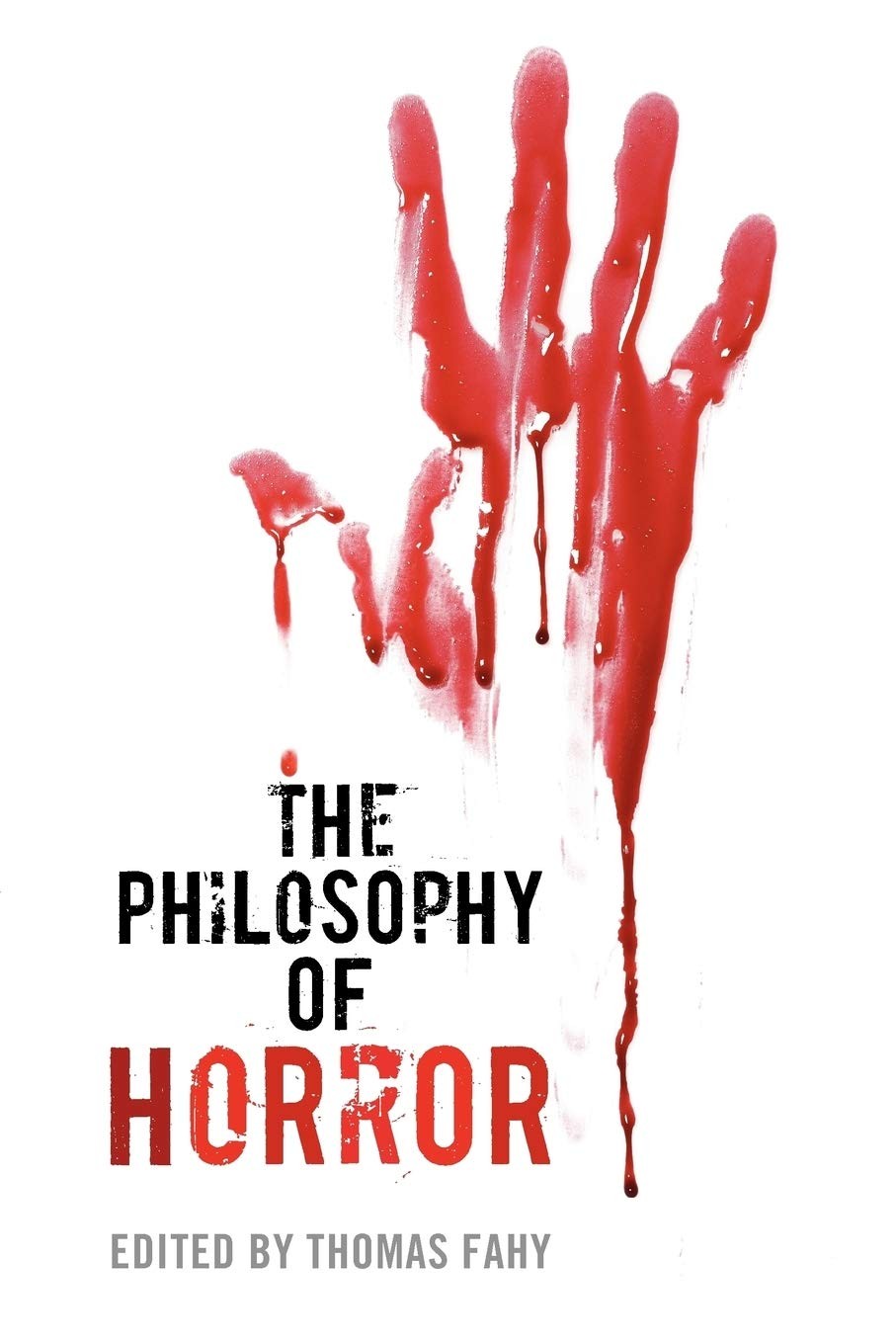
The Philosophy of Horror: Unraveling Fear, Justice, and Suffering in Horror Narratives by Thomas Fahy
Inclusive of all applicable taxes. FREE shipping on all orders.
Available Offers
- 🚚Free Delivery — Free shipping on all orders
- 💵Cash on Delivery — Pay when your order arrives
- ↩️15-Day Easy Returns — Hassle-free return policy
- 🔒Cash on Delivery — Pay safely when your order arrives
Check Delivery
Product Description
Introduction
Why do we love to be scared? From the flickering shadows of a midnight movie to the spine-tingling pages of a classic novel, horror has an irresistible pull on our imagination. In The Philosophy of Horror, edited by Thomas Fahy, readers are invited to peel back the layers of terror and explore what lies beneath our fascination with fear. This compelling volume, published by the University Press of Kentucky, brings together thirteen scholars who dissect the genre’s deepest questions about mortality, justice, and the human condition. Perfect for Indian students of literature, film, and philosophy, this hardcover edition offers a rigorous yet accessible journey into the dark heart of horror.
Book Overview
The Philosophy of Horror is not just a collection of essays—it is a roadmap to understanding how horror shapes our culture and psyche. The book examines iconic works from Mary Shelley’s Frankenstein (1818) to Alfred Hitchcock’s Psycho (1960) and Stanley Kubrick’s The Shining (1980), along with Stephen King’s novels and 1930s horror films. Each chapter digs into themes of fear, safety, suffering, and the supernatural, revealing how horror reflects societal anxieties and moral dilemmas. Whether you are a student writing a thesis or a curious reader seeking deeper meaning in your favourite scary stories, this book provides the intellectual tools to think critically about the genre.
Key Highlights
- Interdisciplinary approach: Combines philosophy, film studies, literary analysis, and cultural criticism.
- Classic and contemporary works: Covers everything from Gothic literature to modern horror cinema.
- Original insights: Thirteen scholars offer fresh perspectives on well-known and obscure horror texts.
- Accessible language: Written for both academic and general readers, with clear explanations of complex ideas.
- Hardcover quality: Durable binding makes it a lasting addition to any library.
Inside the Book
Readers will journey through chapters that tackle questions such as: What makes something truly terrifying? Why do we seek out experiences that frighten us? How does horror confront our deepest fears about death, identity, and the unknown? The book explores the evolution of horror from oral traditions and urban legends to blockbuster films and television series. Each essay is carefully crafted to blend philosophical inquiry with vivid examples, making abstract concepts tangible. You will encounter detailed analyses of the monster as a symbol of societal otherness, the role of suspense in building dread, and the ethical implications of depicting violence and suffering.
Key Topics
- The philosophy of fear and the aesthetics of terror
- Horror as a mirror of cultural anxieties (e.g., war, disease, technology)
- The monster as a metaphor for the marginalized or oppressed
- Moral questions in horror: justice, punishment, and catharsis
- Narrative techniques: suspense, shock, and the uncanny
- Gender and race in horror narratives
- The psychological impact of horror on audiences
Reader Benefits
By reading The Philosophy of Horror, you will gain a richer appreciation for the stories that haunt us. This book helps you move beyond surface-level scares to understand the profound ideas that drive the genre. It sharpens your analytical skills, enabling you to deconstruct films and books with a critical eye. For Indian readers, the book’s global perspective—including references to folklore and cross-cultural horror—offers a framework to examine local traditions of ghost stories and mythological terror. Whether you are preparing for exams, writing research papers, or simply love horror, this volume deepens your engagement with the material.
Learning Outcomes
- Understand key philosophical concepts related to fear, suffering, and the sublime.
- Analyze horror texts using theoretical frameworks from philosophy and cultural studies.
- Identify recurring themes and tropes in horror across different media and eras.
- Critically evaluate the ethical dimensions of horror, including representation and audience response.
- Connect horror to broader social and historical contexts, from colonialism to modern crises.
Who Should Read
This book is ideal for undergraduate and postgraduate students in literature, film studies, philosophy, and sociology. It also appeals to educators designing courses on popular culture or genre studies. Horror enthusiasts who want to explore the intellectual side of their passion will find it equally rewarding. Book clubs, film societies, and anyone curious about why we love to be scared will discover thought-provoking discussions within these pages.
About the Author
Thomas Fahy is a professor of English and the director of the American Studies program at a leading university. He has authored several books on American literature, film, and culture, with a special focus on horror and the Gothic. His scholarship combines rigorous research with accessible writing, making complex ideas available to a wide audience. Fahy’s expertise ensures that The Philosophy of Horror is both authoritative and engaging.
About the Publisher
University Press of Kentucky is a renowned academic publisher known for its high-quality works in the humanities and social sciences. With a commitment to scholarly excellence, the press produces books that bridge the gap between academic research and public readership. This hardcover edition reflects their dedication to durable, beautifully produced volumes that stand the test of time.
Conclusion
The Philosophy of Horror is an essential read for anyone who has ever wondered why we are drawn to the macabre. It transforms the way we see horror—not as mere entertainment, but as a profound exploration of what it means to be human. With its blend of scholarly depth and accessible prose, this book is a treasure for Indian readers seeking to understand the dark stories that shape our world. Add this thought-provoking volume to your collection and discover the philosophy behind the fear.
Quick Summary
The Philosophy of Horror by Thomas Fahy is a compelling academic exploration of the horror genre, delving into the profound themes of fear, justice, suffering, and safety that underpin horror literature, film, and television. Featuring contributions from twelve scholars, this book examines how horror thrills audiences while raising deep ethical and philosophical questions. It covers a wide range of media, from classic literature and urban legends to modern film and television series, making it relevant for contemporary Indian students and researchers. Readers will gain a nuanced understanding of how horror reflects societal anxieties and challenges our notions of morality and security. This hardcover edition from University Press of Kentucky is a valuable addition to any academic library. Ideal for students of philosophy, film studies, and literature, the book offers multiple scholarly perspectives in one cohesive volume. Purchase your copy from Bookshops.in, India's trusted online bookstore, to receive a genuine hardcover with prompt delivery.
Book Highlights
Book Specifications
| ISBN-13 | 9780813136554 |
| ISBN-10 | 0813136555 |
| Publisher | Univ Pr of Kentucky |
| Language | English |
| Dimensions | 15.24 x 1.7 x 22.86 cm |
| Weight | 408 g |
| Category | Performing Arts › Film & Television |
| Genre | Nonfiction |
| Reading Age | Adult |
| Original Language | English |
Frequently Asked Questions
What is The Philosophy of Horror about?
Who is the author of The Philosophy of Horror?
Is this book suitable for Indian students?
Does the book cover horror films only?
What themes are analyzed in this book?
How many chapters are in the book?
Is this book a textbook?
What is the ISBN of this book?
Can I use this book for research?
Does the book include modern horror examples?
Why should I buy from Bookshops.in?
Is the book written in simple language?
What is the price of this book?
Readers Also Search For
Customers Also Bought

Sociology
Imagination Beyond Nation: Latin American Popular Culture: 349 (Pitt Latin American Series)

Sociology
Boomer Volunteer Engagement: Facilitator's Tool Kit

Sociology
Making a Success of Marriage: Planning for Happily Ever After

Sociology
Causal Mediation Analysis (Analytical Methods for Social Research)

Sociology
Marriage and the Moral Imagination (New Departures in Anthropology)

Sociology
Social Change, Resistance and Social Practices: 19 (Studies in Critical Social Sciences, 19)
Related Products
View All
Society & Social Sciences
Oxford Studies in Epistemology, Volume 3 | by Tamar Szabo Gendler | John Hawthorne | OUP UK | by Tamar Szabo Gendler | John Hawthorne | OUP UK | by Tamar Szabo Gendler | John Hawthorne | OUP UK | by Tamar Szabo Gendler | John Hawthorne | OUP UK | by Tamar Szabo Gendler | John Hawthorne | OUP UK | by Tamar Szabo Gendler | John Hawthorne | OUP UK | by Tamar Szabo Gendler | John Hawthorne | OUP UK | by Tamar Szabo Gendler | John Hawthorne | OUP UK | by Tamar Szabo Gendler | John Hawthorne | OUP UK
Society & Social Sciences
Sidgwick's Ethics and Victorian Moral Philosophy | by J. B. Schneewind | Jerome B. Schneewind | OUP Oxford | by J. B. Schneewind | Jerome B. Schneewind | OUP Oxford | by J. B. Schneewind | Jerome B. Schneewind | OUP Oxford | by J. B. Schneewind | Jerome B. Schneewind | OUP Oxford | by J. B. Schneewind | Jerome B. Schneewind | OUP Oxford | by J. B. Schneewind | Jerome B. Schneewind | OUP Oxford | by J. B. Schneewind | Jerome B. Schneewind | OUP Oxford | by J. B. Schneewind | Jerome B. Schneewind

Society & Social Sciences
Cognitive Phenomenology | by Tim Bayne | Michelle Montague | OUP UK | by Tim Bayne | Michelle Montague | OUP UK | by Tim Bayne | Michelle Montague | OUP UK | by Tim Bayne | Michelle Montague | OUP UK | by Tim Bayne | Michelle Montague | OUP UK | by Tim Bayne | Michelle Montague | OUP UK | by Tim Bayne | Michelle Montague | OUP UK | by Tim Bayne | Michelle Montague | OUP UK | by Tim Bayne | Michelle Montague | OUP UK | by Tim Bayne | Michelle Montague | OUP UK | by Tim Bayne | Michelle Montague |

Society & Social Sciences
Alasdair MacIntyre on Practical Philosophy | by Kelvin Knight | Peter Wicks | University of Notre Dame Press | by Kelvin Knight | Peter Wicks | University of Notre Dame Press | by Kelvin Knight | Peter Wicks | University of Notre Dame Press | by Kelvin Knight | Peter Wicks | University of Notre Dame Press | by Kelvin Knight | Peter Wicks | University of Notre Dame Press | by Kelvin Knight | Peter Wicks | University of Notre Dame Press | by Kelvin Knight | Peter Wicks | University of Notre Dame P
Society & Social Sciences
Philosophical Historicism and the Betrayal of First Philosophy | by Carl Page | Penn State University Press | by Carl Page | Penn State University Press | by Carl Page | Penn State University Press | by Carl Page | Penn State University Press | by Carl Page | Penn State University Press | by Carl Page | Penn State University Press | by Carl Page | Penn State University Press | by Carl Page | Penn State University Press | by Carl Page | Penn State University Press | by Carl Page | Penn State Univ

Society & Social Sciences