
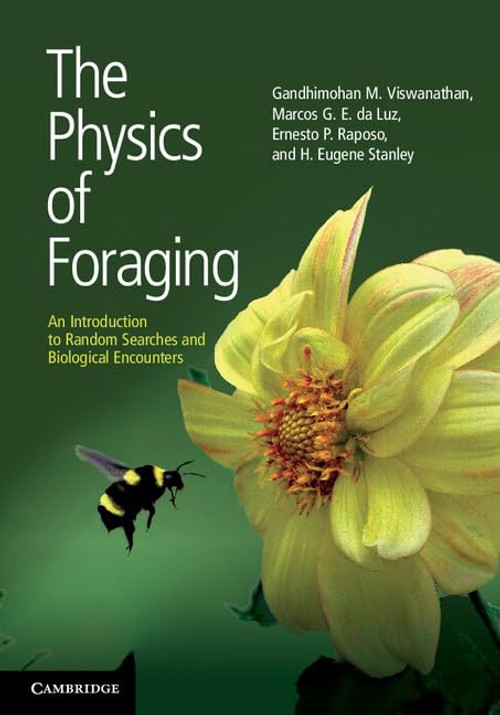
The Physics of Foraging: Understanding Movement Patterns and Random Searches by Gandhimohan M. Viswanathan – A Cambridge
Inclusive of all applicable taxes. FREE shipping on all orders.
Available Offers
- 🚚Free Delivery — Free shipping on all orders
- 💵Cash on Delivery — Pay when your order arrives
- ↩️15-Day Easy Returns — Hassle-free return policy
- 🔒Cash on Delivery — Pay safely when your order arrives
Check Delivery
Product Description
Introduction
In the natural world, every movement—whether of a wandering albatross, a foraging ant, or a human hunter-gatherer—carries a story of survival, efficiency, and mathematical beauty. The Physics of Foraging: An Introduction to Random Searches and Biological Encounters by Gandhimohan M. Viswanathan offers a groundbreaking exploration of how living organisms move and search for resources. Published by Cambridge University Press, this hardbound volume bridges the gap between statistical physics and ecology, presenting a rigorous yet accessible account of the laws that govern animal movement. For Indian students, researchers, and science enthusiasts, this book opens a window into the hidden patterns of nature, from the flight paths of birds to the spread of species across landscapes.
Book Overview
This is the first comprehensive book to systematically introduce the physics of foraging and random search processes. It addresses a fundamental question: Do the movements of animals, including humans, follow simple, quantifiable laws? The author, a leading physicist at the University of Hyderabad, draws on decades of research to show how Lévy flights, Brownian motion, and other stochastic processes shape the behaviour of organisms in search of food, mates, or shelter. The book is written for readers without a prior background in the subject, making it ideal for both newcomers and seasoned scientists. It combines theoretical models with real-world experiments, covering topics such as anomalous diffusion, movement ecology, and the mathematical underpinnings of search strategies.
Key Highlights
- Pioneering synthesis of physics, ecology, and biology under one cohesive framework
- Accessible language that explains complex concepts like Lévy walks and random searches without jargon overload
- Rich interdisciplinary perspective linking statistical mechanics to ecological phenomena
- Real-world applications including the colonization of Madagascar by Austronesians and the diffusion of genetically modified crops
- Critical review of both theoretical predictions and experimental validations
- Open problems and future directions presented to inspire new research
Inside the Book
The volume is structured to guide the reader from foundational principles to advanced topics. Early chapters introduce random walks, diffusion, and the basics of foraging theory. Subsequent chapters delve into Lévy flight foraging hypothesis, anomalous diffusion, and the role of memory in movement patterns. The book also examines human-related searches, such as how early settlers navigated oceans or how modern pests spread across continents. Each chapter is enriched with illustrative examples, mathematical derivations, and discussions of experimental data. The author does not shy away from philosophical questions, including the intriguing debate about free will and deterministic laws of motion.
Key Topics
- Random walks and Brownian motion in ecological contexts
- Lévy flights and Lévy walk foraging hypothesis
- Anomalous diffusion and its biological significance
- Search strategies and encounter rates in heterogeneous environments
- Movement patterns of insects, birds, mammals, and humans
- Applications to biological invasions, epidemiology, and conservation
- Statistical physics methods for analysing movement data
Reader Benefits
By reading this book, you will gain a deep understanding of how simple physical laws can explain complex biological behaviours. You will learn to analyse movement data using statistical tools and appreciate the elegance of mathematical models in describing nature. The book equips you with the conceptual framework to explore cutting-edge research in movement ecology, and it provides practical insights for fields as diverse as agriculture, urban planning, and wildlife management. For Indian readers, the inclusion of local examples—such as studies on Indian ant species or crop dispersal—adds relevance and immediacy.
Learning Outcomes
- Understand the fundamental principles of random search theory and foraging
- Identify and differentiate between various types of random walks and diffusion processes
- Apply statistical physics concepts to ecological and biological problems
- Critically evaluate experimental evidence for Lévy flight foraging
- Recognize the interdisciplinary connections between physics, biology, and ecology
- Develop the ability to model and simulate movement patterns using mathematical tools
Who Should Read
This book is essential for physicists, ecologists, and biologists interested in movement and behaviour. It is also highly valuable for postgraduate students and researchers in statistical physics, theoretical ecology, and applied mathematics. Undergraduate students with a basic background in calculus and probability will find the material accessible. Additionally, professionals in environmental science, agriculture, and conservation biology will benefit from the practical applications. Indian students preparing for competitive exams or pursuing research in interdisciplinary sciences will find this book a unique resource that connects classroom physics to real-world biology.
About the Author
Gandhimohan M. Viswanathan is a professor of physics at the University of Hyderabad, India. He is a leading figure in the field of anomalous diffusion and movement ecology. His pioneering work on Lévy flight foraging—published in top journals like Nature—has shaped modern understanding of animal movement. With a career spanning over two decades, he has collaborated with ecologists, mathematicians, and physicists worldwide. His teaching and research continue to inspire a new generation of scientists in India and abroad.
About the Publisher
Cambridge University Press is one of the world's oldest and most respected academic publishers. Founded in 1534, it has a long tradition of publishing high-quality scholarly works across all disciplines. This hardcover edition reflects the press's commitment to rigorous editing, clear presentation, and durable production—making it a valuable addition to any library or personal collection.
Conclusion
The Physics of Foraging is more than a textbook; it is an invitation to see the natural world through the lens of physics. Whether you are a student curious about why animals move the way they do, or a researcher seeking a comprehensive reference, this book delivers clarity, depth, and inspiration. With its Indian author and global perspective, it stands as a landmark contribution to science literature. Order your copy today from Bookshops.in and embark on a journey through the mathematical tapestry of life.
Quick Summary
The Physics of Foraging by Gandhimohan M. Viswanathan is a groundbreaking book that delves into the quantitative laws governing the movement of animals and humans. It introduces readers to random searches and foraging theory in an accessible manner, making it suitable for those without a prior background in the subject. The book reviews both theoretical models and experimental evidence, covering topics such as Lévy flights, random walks, and optimal search strategies. It also addresses open problems and future directions, with applications ranging from the colonization of Madagascar by Austronesians to the diffusion of genetically modified crops. This interdisciplinary work bridges physics, ecology, and mathematics, offering valuable insights for Indian students and researchers. By reading this book, learners will understand how simple laws of motion can describe complex biological behaviors, and they will gain a unified framework for studying movement ecology. Purchasing from Bookshops.in ensures you receive a high-quality hardcover edition from a trusted Indian bookstore, with reliable delivery and customer service.
Book Highlights
Book Specifications
| ISBN-13 | 9781107006799 |
| ISBN-10 | 1107006791 |
| Publisher | Cambridge University Press |
| Language | English |
| Dimensions | 17.15 x 1.27 x 24.77 cm |
| Weight | 510 g |
| Category | Biology & Life Sciences › Biology |
| Genre | Non-fiction |
| Reading Age | Adult |
| Original Language | English |
Frequently Asked Questions
What is The Physics of Foraging about?
Who is the author of this book?
Do I need a background in physics to read this book?
What key concepts are covered?
Is this book suitable for Indian students?
What makes this book unique?
Are there real-world examples in the book?
Does the book include experimental data?
Can this book help with research in ecology?
What is the format of the book?
Does the book address philosophical questions?
What are Lévy flights?
Where can I buy this book in India?
Readers Also Search For
Customers Also Bought
Mathematics
Stereotype Spaces and Algebras: 73 (De Gruyter Expositions in Mathematics, 73)

Mathematics
Semigroups in Algebra, Geometry and Analysis: 20 (De Gruyter Expositions in Mathematics, 20)

Mathematics
Geometry from the Pacific Rim: Proceedings of the Pacific Rim Geometry Conference held at National University of Singapore, Republic of Singapore, ... 1994 (De Gruyter Proceedings in Mathematics)

Mathematics
First International Tainan-Moscow Algebra Workshop: Proceedings of the International Conference held at National Cheng Kung University Tainan, Taiwan, ... 1994 (De Gruyter Proceedings in Mathematics)

Mathematics
Group Theory, Algebra, and Number Theory: Colloquium in Memory of Hans Zassenhaus held in Saarbrücken, Germany, June 4-5, 1993
Mathematics
Mathematical Theory of Optimal Processes (Classics of Soviet Mathematics)
Related Products
View All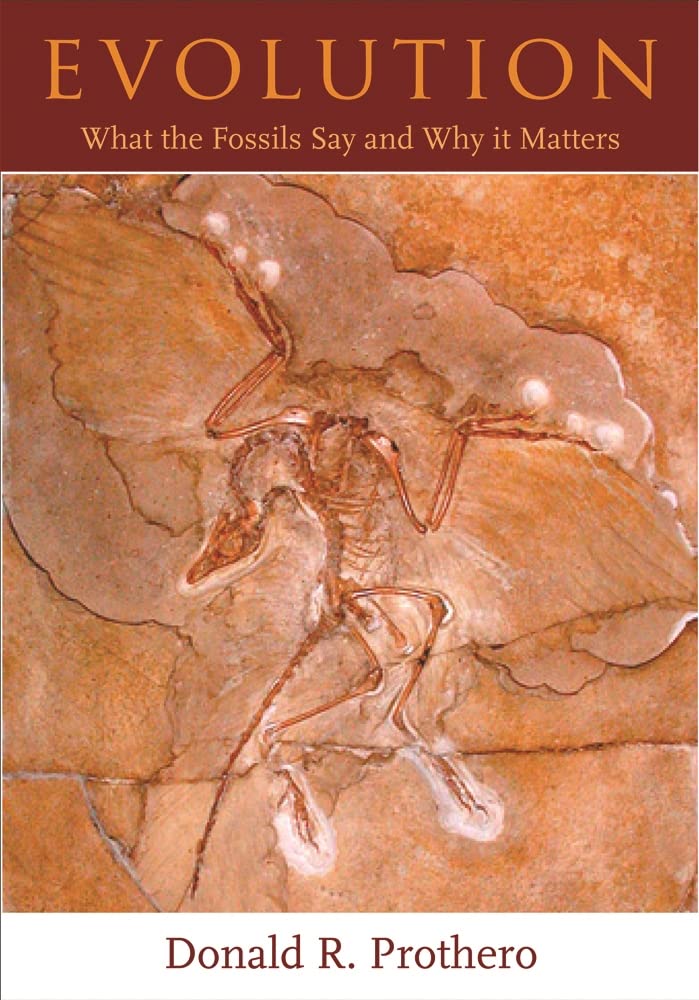
Biology
Evolution: What the Fossils Say and Why It Matters by Donald R. Prothero
Biology
From Taxonomy to Phylogenetics – Life and Work of Willi Hennig

Biology
The Marine Biology of the South China Sea

Biology
Genetics Meets Metabolomics: from Experiment to Systems Biology
Biology
The Elements of Natural or Experimental Philosophy: 2

Biology