
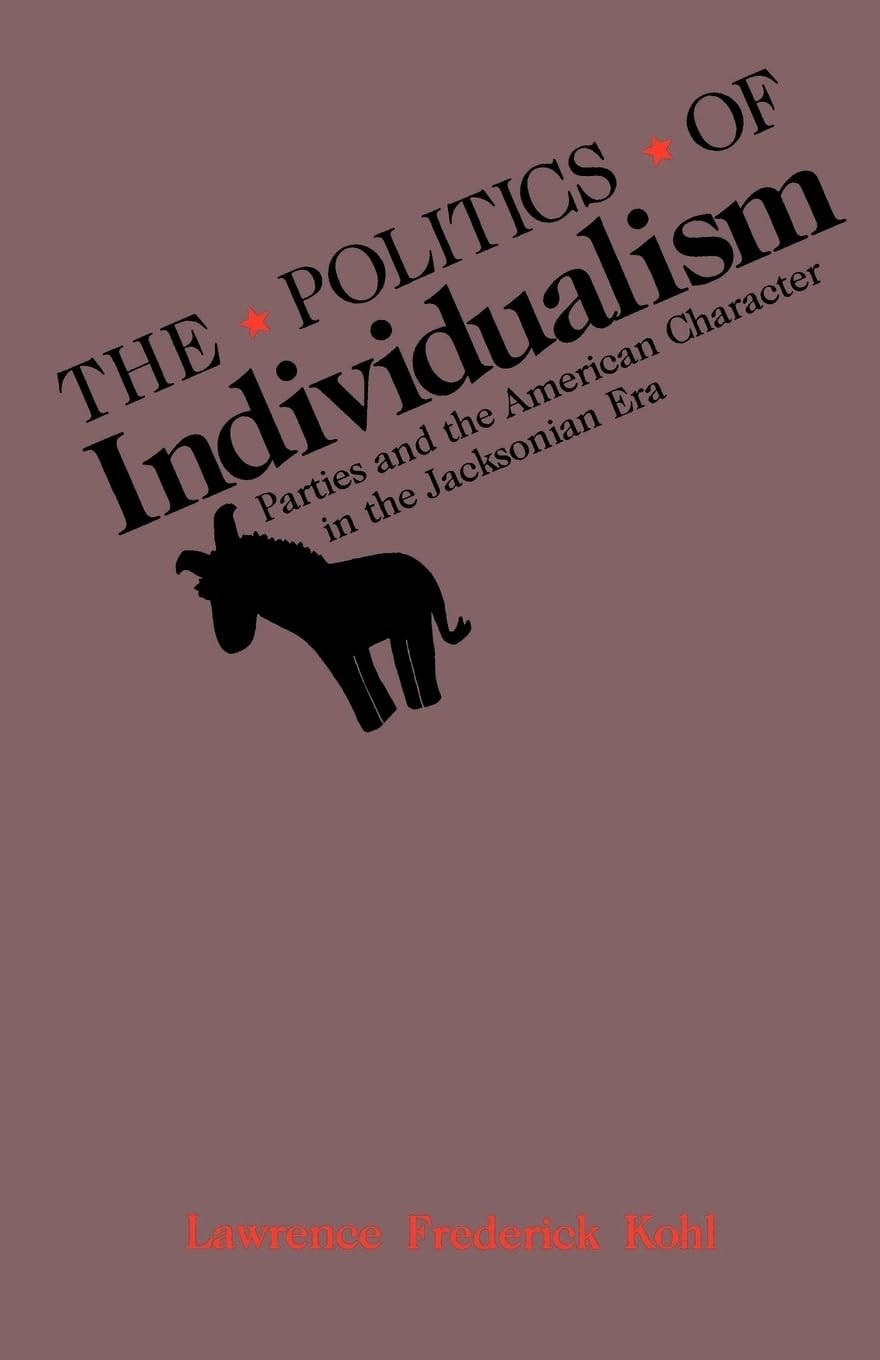
The Politics of Individualism: Parties and the American Character in the Jacksonian Era by Lawrence F. Kohl – A Scholarl
Inclusive of all applicable taxes. FREE shipping on all orders.
Available Offers
- 🚚Free Delivery — Free shipping on all orders
- 💵Cash on Delivery — Pay when your order arrives
- ↩️15-Day Easy Returns — Hassle-free return policy
- 🔒Cash on Delivery — Pay safely when your order arrives
Check Delivery
Product Description
Introduction
The Politics of Individualism: Parties and the American Character in the Jacksonian Era by Lawrence F. Kohl is a compelling exploration of how the rapid social and economic transformations of early 19th-century America shaped the nation’s political identity. This hardcover edition from Oxford University Press offers Indian readers, students, and scholars a deep dive into the psychological and cultural roots of American party politics. Kohl masterfully connects the rise of individualism to the fierce loyalties that defined the Democrats and Whigs, making this book an essential resource for understanding the foundations of modern American democracy.
Book Overview
In the decades following the American Revolution, the United States underwent a staggering metamorphosis: population explosion, westward expansion, industrial growth, and a financial revolution driven by state banks and easy credit. These changes created a society steeped in individualism, equality, and self-reliance. Kohl argues that the political divisions of the Jacksonian era were not merely about policies but reflected deeper psychological responses to this new world. By analyzing speeches, newspapers, periodicals, and pamphlets, he reveals how Democrats and Whigs embodied contrasting attitudes toward change—one embracing the chaos of individualism, the other seeking order and community. This book is a landmark study in political psychology and cultural history.
Key Highlights
- Original Interpretation: Kohl offers a fresh psychological framework, linking party affiliation to individual temperament and social anxiety in a rapidly changing America.
- Rich Primary Sources: Draws extensively from Jacksonian-era rhetoric—political speeches, editorials, and pamphlets—to bring the era’s voices to life.
- Dual Party Analysis: Provides balanced, in-depth coverage of both Democrats and Whigs, avoiding partisan bias while highlighting their core differences.
- Contextual Depth: Places political events within the broader story of economic upheaval, territorial expansion, and cultural transformation.
- Scholarly Yet Accessible: Written with clarity suitable for advanced undergraduates, graduate students, and general readers interested in American history.
Inside the Book
The book is structured to guide readers through the ideological and psychological landscape of Jacksonian America. Kohl begins by setting the stage—describing the explosive growth of the nation and the rise of a market economy. He then examines the Democratic Party’s embrace of individualism, portraying it as a comfort to those who thrived on autonomy and risk. In contrast, the Whigs are shown as advocates for social harmony, moral reform, and government intervention, appealing to those unsettled by rapid change. Through detailed case studies and rhetorical analysis, Kohl demonstrates how these parties shaped the American character. The final chapters reflect on the legacy of this political divide, offering insights into enduring tensions in American politics.
Key Topics
- The social and economic transformation of post-Revolutionary America
- Psychological roots of Democratic and Whig party identities
- Individualism, equality, and self-reliance as political forces
- Role of state banks, credit, and industrialization in shaping politics
- Political rhetoric and its power to reflect cultural anxieties
- Jacksonian democracy vs. Whig visions of order and progress
- The American character as a product of partisan conflict
Reader Benefits
This book enriches your understanding of American political history by moving beyond surface-level events. You will gain a nuanced appreciation for how personal psychology and societal change drive political movements. For Indian students of political science, history, or law, the book offers comparative insights into how emerging democracies grapple with individualism and community—a theme relevant to India’s own political evolution. The rigorous analysis of primary sources also sharpens your critical reading and analytical skills, making it a valuable tool for academic research and essay writing.
Learning Outcomes
- Understand the psychological and cultural foundations of the Jacksonian party system.
- Analyze how economic transformations influence political ideology and voter behavior.
- Evaluate the role of rhetoric in shaping public opinion and party identity.
- Compare the Democratic and Whig visions for America’s future.
- Apply historical insights to contemporary debates on individualism, community, and governance.
Who Should Read
- Undergraduate and postgraduate students of American history, political science, and sociology.
- Law students exploring the historical context of American constitutional and political development.
- Researchers and academics focusing on 19th-century U.S. politics or comparative political psychology.
- General readers with a keen interest in the origins of American political culture and its enduring conflicts.
- Indian readers curious about how nations balance individual freedom with social cohesion during periods of rapid change.
About the Author
Lawrence F. Kohl is a distinguished historian and scholar of American political culture. He has taught at several universities and is known for his interdisciplinary approach, blending history, psychology, and political science. His work has been widely cited in studies of Jacksonian America and the evolution of American political parties. Kohl’s meticulous research and engaging prose make complex ideas accessible, earning him a reputation as a thoughtful and original voice in American historiography.
About the Publisher
Oxford University Press (OUP) is one of the world’s oldest and most respected academic publishers, with a legacy spanning over five centuries. Renowned for its rigorous editorial standards and commitment to scholarly excellence, OUP publishes works that shape intellectual discourse globally. This hardcover edition reflects OUP’s dedication to producing durable, high-quality books that serve students, researchers, and lifelong learners. For Indian readers, OUP titles are a trusted gateway to authoritative knowledge across disciplines, including law, history, and political science.
Conclusion
The Politics of Individualism is more than a history of two parties—it is a profound meditation on how societies navigate the tensions between freedom and belonging, change and stability. Lawrence F. Kohl’s psychological lens offers a timeless lesson: politics is not just about policies, but about who we are and who we fear becoming. For anyone seeking to understand the soul of American democracy, or to reflect on similar dynamics in India’s own political journey, this book is an invaluable companion. Add this Oxford University Press hardcover to your library and step into the minds of a generation that shaped a nation.
Quick Summary
The Politics of Individualism: Parties and the American Character in the Jacksonian Era by Lawrence F. Kohl is a seminal academic work that explores how the explosive social and economic changes of early 19th-century America—population growth, industrialization, banking expansion—transformed political life. Kohl meticulously analyzes the rhetoric of speeches, newspapers, and pamphlets to show that individualism became the defining force behind fierce party loyalties and the emerging American character. This book is ideal for advanced undergraduate and graduate students of American history, political science, and law, as well as Indian readers seeking a comparative understanding of democratic development. Readers will learn how political parties shaped identity, how economic shifts influenced ideology, and how ordinary citizens experienced the birth of modern American politics. By purchasing from Bookshops.in, you get a genuine Oxford University Press hardcover, ensuring a durable reference for your academic or personal library. It is a must-have for anyone serious about understanding the roots of American political culture.
Book Highlights
Book Specifications
| ISBN-13 | 9780195067811 |
| ISBN-10 | 0195067819 |
| Publisher | OUP USA |
| Language | English |
| Dimensions | 13.97 x 1.83 x 20.96 cm |
| Weight | 340 g |
| Category | Americas › United States |
| Genre | Non-fiction |
| Original Language | English |
Frequently Asked Questions
What is The Politics of Individualism about?
Who is the author of this book?
Is this book suitable for Indian students?
What time period does the book cover?
What type of sources does Kohl use?
Is this book only for history majors?
Does the book include any illustrations?
What is the ISBN?
Is this a hardcover edition?
Can I use this book for a research paper?
What is the price in India?
Is the language English?
Where can I buy this book in India?
Readers Also Search For
Related Products
View All
History
The Information Revolution: Transforming the World Through Technology (World History)

History
Human Nature and the French Revolution: From the Enlightenment to the Napoleonic Code: 3 (Polygons: Cultural Diversities and Intersections, 3)

History
The Unmaking of Home in Contemporary Art (Cultural Spaces)

History
Handbook to Life in Medieval and Early Modern Japan | by William E. Deal | Oxford University Press | by William E. Deal | Oxford University Press | by William E. Deal | Oxford University Press | by William E. Deal | Oxford University Press | by William E. Deal | Oxford University Press | by William E. Deal | Oxford University Press | by William E. Deal | Oxford University Press | by William E. Deal | Oxford University Press | by William E. Deal | Oxford University Press | by William E. Deal | Ox

History
The Narrators of Barbarian History (A.D. 550-800) | by Walter Goffart | University of Notre Dame Press | by Walter Goffart | University of Notre Dame Press | by Walter Goffart | University of Notre Dame Press | by Walter Goffart | University of Notre Dame Press | by Walter Goffart | University of Notre Dame Press | by Walter Goffart | University of Notre Dame Press | by Walter Goffart | University of Notre Dame Press | by Walter Goffart | University of Notre Dame Press | by Walter Goffart | Univ

History