
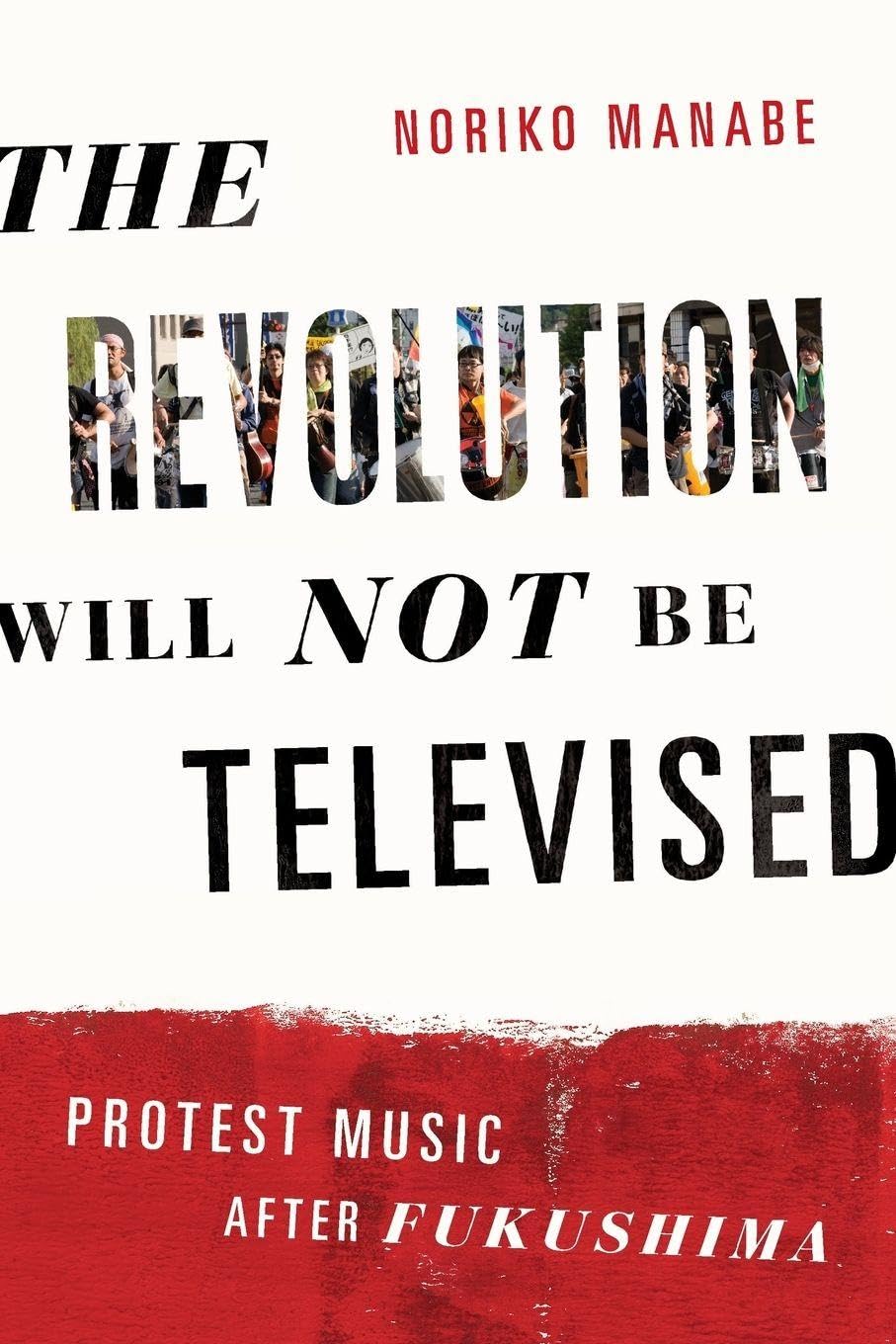
The Revolution Will Not Be Televised: Protest Music After Fukushima by Noriko Manabe – A Study of Music, Activism and So
Inclusive of all applicable taxes. FREE shipping on all orders.
Available Offers
- 🚚Free Delivery — Free shipping on all orders
- 💵Cash on Delivery — Pay when your order arrives
- ↩️15-Day Easy Returns — Hassle-free return policy
- 🔒Cash on Delivery — Pay safely when your order arrives
Check Delivery
Product Description
Introduction
In a world where mainstream narratives often silence dissent, music has emerged as a powerful tool for resistance. The Revolution Will Not Be Televised: Protest Music After Fukushima by Noriko Manabe is a groundbreaking exploration of how protest music shaped the antinuclear movement in Japan following the devastating Fukushima nuclear disaster. This book offers Indian readers a unique lens into the intersection of art, politics, and social change, revealing how music can become a voice for the voiceless in times of crisis.
Book Overview
Published by OUP US, this hardcover volume delves into the role of music in expressing antinuclear sentiments and mobilizing political resistance in post-Fukushima Japan. Combining meticulous musical analysis with ethnographic fieldwork, Noriko Manabe examines the spaces where protest music thrives—cyberspace, demonstrations, festivals, and recordings. The book argues that these four arenas became vital platforms for activists to challenge government propaganda and nuclear industry agendas, creating a vibrant culture of dissent that the mainstream media refused to cover.
Key Highlights
- Original Research: Based on extensive ethnographic participation and interviews with musicians, activists, and fans in Japan.
- Innovative Framework: Introduces a typology of protest music spaces—cyberspace, demonstrations, festivals, and recordings—to analyze how music functions in social movements.
- Cultural Insight: Offers a rare glimpse into Japan's underground music scene and its role in shaping public opinion on nuclear energy.
- Timely Relevance: Addresses global debates about energy policy, environmental justice, and the power of grassroots activism.
Inside the Book
The book is structured around four key spaces of protest music. In cyberspace, artists used platforms like YouTube and social media to bypass traditional media gatekeepers. Demonstrations became live, participatory events where chants and songs unified crowds. Festivals provided safe havens for alternative voices, while recordings preserved the movement's legacy. Manabe analyzes specific songs, performances, and lyrics, showing how musicians blended traditional Japanese sounds with global protest music styles to create a unique sonic resistance.
Key Topics
- Nuclear Politics in Japan: The historical context of nuclear energy and the government's pro-nuclear stance.
- Media Censorship: How mainstream media suppressed antinuclear voices and why protest music filled the gap.
- Music as Activism: The techniques musicians used to convey dissent, from hip-hop to folk to electronic music.
- Space and Sound: How physical and digital spaces shape the message and impact of protest music.
- Global Solidarity: Connections between Japan's antinuclear movement and international protests, including those in India.
Reader Benefits
Indian readers will find this book particularly valuable as it parallels debates around energy security, environmental activism, and freedom of expression in India. The book provides tools to understand how music can amplify marginalized voices, making it relevant for students of sociology, political science, musicology, and environmental studies. It also inspires readers to think critically about the role of art in social change.
Learning Outcomes
- Understand the Power of Protest Music: Gain insights into how music functions as a form of political expression and community building.
- Analyze Social Movements: Learn frameworks for studying grassroots activism in non-Western contexts.
- Critique Media Narratives: Develop skills to identify bias in mainstream reporting and appreciate alternative media forms.
- Connect Global Issues: Draw parallels between Japan's antinuclear movement and similar struggles in India and elsewhere.
Who Should Read
This book is ideal for students and scholars of musicology, cultural studies, Japanese studies, sociology, and political science. It is also a must-read for activists, musicians, journalists, and anyone interested in the intersection of art and politics. Indian readers passionate about environmental justice, energy policy, or freedom of speech will find this book both enlightening and empowering.
About the Author
Noriko Manabe is an associate professor of music at Princeton University. Her research focuses on music and politics, particularly in Japan. She has conducted extensive fieldwork among musicians and activists, and her work has been published in leading academic journals. Manabe's unique combination of musical expertise and ethnographic sensitivity makes her the perfect guide to this underexplored topic.
About the Publisher
Oxford University Press (OUP US) is a prestigious academic publisher known for its rigorous scholarship and wide-ranging titles in the humanities and social sciences. This book reflects OUP's commitment to publishing works that challenge conventional wisdom and illuminate critical global issues.
Conclusion
The Revolution Will Not Be Televised: Protest Music After Fukushima is a compelling, deeply researched, and beautifully written account of how music can resist power and inspire change. For Indian readers, it offers not just a window into Japan's post-disaster culture, but also a mirror reflecting the potential of art to transform society. Whether you are a student, a researcher, or a curious reader, this book will change the way you listen to protest songs forever.
Quick Summary
This book offers a compelling examination of how protest music became a central force in Japan's antinuclear movement following the Fukushima disaster. Author Noriko Manabe, an ethnomusicologist, combines detailed musical analysis with ethnographic fieldwork to reveal how musicians and activists used song to express dissent and mobilize resistance. The book explores the tension between a government and media that discouraged public debate on nuclear energy and a grassroots movement that found voice through music. Readers will gain insight into the power of music as a tool for political expression, the dynamics of censorship and activism in Japan, and the cultural response to one of the country's worst environmental disasters. Ideal for students of musicology, Japanese studies, political science, and social movements, this book is also accessible to general readers interested in the intersection of art and politics. Purchase your copy from Bookshops.in to explore this unique perspective on modern Japan.
Book Highlights
Book Specifications
| ISBN-13 | 9780199334698 |
| ISBN-10 | 0199334692 |
| Publisher | OUP USA |
| Language | English |
| Dimensions | 15.57 x 2.62 x 23.5 cm |
| Weight | 771 g |
| Country | India |
| Category | Performing Arts › Music |
| Genre | Non-fiction |
| Original Language | English |
Frequently Asked Questions
What is this book about?
Who is the author?
Is this book only about music?
What time period does it cover?
Does it include interviews?
Is it suitable for general readers?
What is the main argument?
Does it discuss government censorship?
What genres of music are covered?
Is this a textbook?
Does it include musical notation?
Where can I buy this book?
Readers Also Search For
Customers Also Bought
Art History
The Italian Renaissance in Art

Art History
Photovoltaic Design & Installation For Dummies | by Mayfield | ForDummies | by Mayfield | ForDummies | by Mayfield | ForDummies | by Mayfield | ForDummies | by Mayfield | ForDummies | by Mayfield | ForDummies | by Mayfield | ForDummies | by Mayfield | ForDummies | by Mayfield | ForDummies | by Mayfield | ForDummies | by Mayfield | ForDummies | by Mayfield | ForDummies | by Mayfield | ForDummies | by Mayfield | ForDummies | by Mayfield | ForDummies | by Mayfield | ForDummies | by Mayfield | ForDu
Art History
Designing School Systems for All Students (English, Robert J. Manley | Richard J. Hawkins)

Art History
Routledge Library Editions: Art and Culture in the Nineteenth Century

Art History
An Errant Design (English, S. H. Long)

Art History
Distributed System Design | by Jie Wu | CRC Press | by Jie Wu | CRC Press | by Jie Wu | CRC Press | by Jie Wu | CRC Press | by Jie Wu | CRC Press | by Jie Wu | CRC Press | by Jie Wu | CRC Press | by Jie Wu | CRC Press | by Jie Wu | CRC Press | by Jie Wu | CRC Press | by Jie Wu | CRC Press | by Jie Wu | CRC Press | by Jie Wu | CRC Press | by Jie Wu | CRC Press | by Jie Wu | CRC Press | by Jie Wu | CRC Press | by Jie Wu | CRC Press | by Jie Wu | CRC Press | by Jie Wu | CRC Press | by Jie Wu | CRC
Related Products
View All
Music
The Cambridge Companion to Michael Tippett by Kenneth Gloag – Music Analysis

Music
Making Light: Haydn, Musical Camp, and the Long Shadow of German Idealism
Music
Music and the Crises of the Modern Subject by Michael L. Klein – Music Theory & Criticism

Music
Opera and Drama in Eighteenth-Century London: The King's Theatre, Garrick and the Business of Perfor

Music
Music in Theory and Practice Volume 1 | by Bruce Benward | Marilyn Saker | McGraw-Hill Companies | by Bruce Benward | Marilyn Saker | McGraw-Hill Companies | by Bruce Benward | Marilyn Saker | McGraw-Hill Companies | by Bruce Benward | Marilyn Saker | McGraw-Hill Companies | by Bruce Benward | Marilyn Saker | McGraw-Hill Companies | by Bruce Benward | Marilyn Saker | McGraw-Hill Companies | by Bruce Benward | Marilyn Saker | McGraw-Hill Companies | by Bruce Benward | Marilyn Saker | McGraw-Hill

Music