
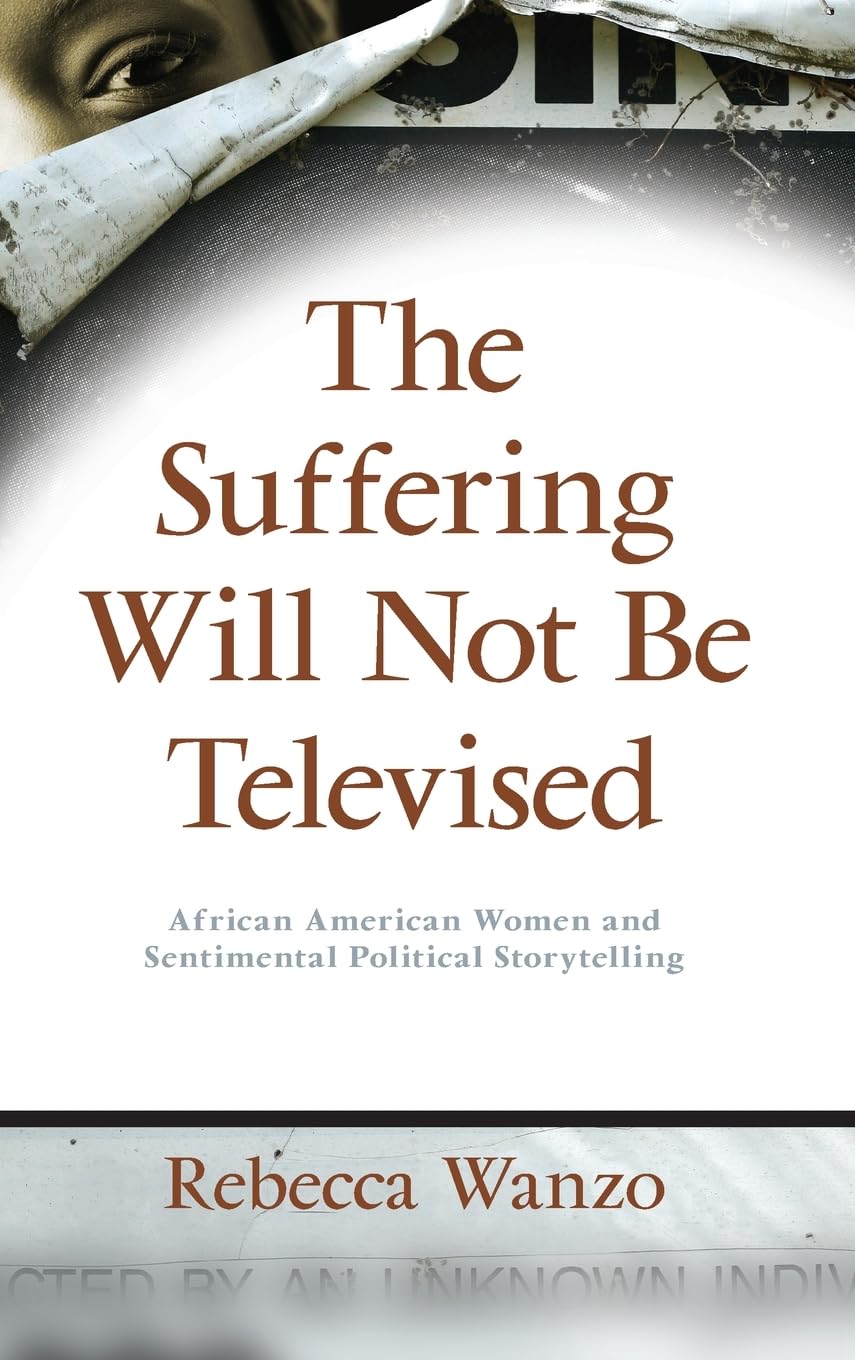
The Suffering Will Not Be Televised: African American Women and Sentimental Political Storytelling by Rebecca Wanzo – A
Inclusive of all applicable taxes. FREE shipping on all orders.
Available Offers
- 🚚Free Delivery — Free shipping on all orders
- 💵Cash on Delivery — Pay when your order arrives
- ↩️15-Day Easy Returns — Hassle-free return policy
- 🔒Cash on Delivery — Pay safely when your order arrives
Check Delivery
Product Description
Introduction
In a world where some stories of suffering dominate headlines while others remain invisible, Rebecca Wanzo’s The Suffering Will Not Be Televised: African American Women and Sentimental Political Storytelling offers a powerful and timely examination of how race, gender, and emotion shape who gets to be seen as a victim in American culture. This hardcover edition, published by the State University of New York Press, is an essential read for students, scholars, and anyone interested in media studies, African American studies, and social justice. Wanzo’s incisive analysis reveals the cultural mechanisms that make certain kinds of pain legible while rendering others invisible, using African American women as a central case study.
Book Overview
This book delves into the conventions of sentimental political storytelling—the cultural practices that determine whose suffering is deemed worthy of public attention and empathy. Wanzo examines a wide range of media, including memoirs, news coverage, film, and television, to uncover how suffering hierarchies are constructed and maintained. By focusing on disparities in child abduction coverage, pain in medical settings, sexual violence, and the treatment of prisoners of war, she illuminates the deep-seated biases that shape our collective understanding of victimhood. The book challenges readers to think critically about why some stories of lost white girls capture national headlines while others—particularly those involving African American women—remain ignored.
Key Highlights
- Original Research: A groundbreaking analysis of how sentimental storytelling shapes public perception of suffering.
- Interdisciplinary Approach: Combines insights from media studies, cultural criticism, feminist theory, and African American studies.
- Compelling Case Studies: Examines real-world examples, from child abduction cases to medical malpractice, to illustrate the politics of pain.
- Critical Framework: Introduces the concept of suffering hierarchies and how they reinforce systemic inequalities.
- Timely Relevance: Offers a lens to understand contemporary debates about representation, empathy, and social justice.
Inside the Book
Wanzo takes readers on a journey through the emotional and political landscapes of American storytelling. She explores how sentimental narratives—those designed to evoke sympathy and moral outrage—often conflate different kinds of suffering, treating wounds inflicted by the state as best healed through interpersonal therapy rather than structural change. The book dissects how African American women’s pain has been either sensationalized or erased in popular media, and how this pattern perpetuates racial and gender inequities. Through careful analysis of memoirs by figures like Harriet Jacobs and contemporary media events, Wanzo demonstrates the enduring power of sentimental storytelling to both reveal and obscure truth.
Key Topics
- Sentimental Political Storytelling: How emotional narratives shape public opinion and policy.
- Suffering Hierarchies: The cultural ranking of different kinds of pain and victimhood.
- Race and Gender in Media: The intersectional dynamics that determine whose stories are told.
- Medical and Legal Injustice: Case studies on pain in healthcare settings and the treatment of prisoners of war.
- Historical Continuities: From 19th-century slave narratives to 21st-century news coverage.
Reader Benefits
- Deepen Your Understanding: Gain critical insights into how media and culture construct narratives of suffering.
- Develop Analytical Skills: Learn to identify and question the emotional appeals in news and entertainment.
- Engage with Social Justice: Understand the structural barriers that prevent equitable representation.
- Enrich Your Academic Work: Ideal for research papers, theses, and classroom discussions in multiple disciplines.
Learning Outcomes
After reading this book, you will be able to critically analyze media representations of suffering, understand the historical roots of contemporary storytelling conventions, and articulate how race and gender intersect to shape public empathy. You will also gain the tools to recognize and challenge suffering hierarchies in your own engagement with news, film, and literature. Wanzo’s work empowers readers to move beyond surface-level sympathy toward a deeper, more structural understanding of injustice.
Who Should Read
This book is ideal for students and scholars of African American studies, media studies, cultural studies, gender studies, sociology, and political science. It is also highly relevant for journalists, activists, and anyone interested in the politics of representation and social change. If you are a reader in India seeking to understand global patterns of inequality and storytelling, Wanzo’s analysis offers valuable cross-cultural insights.
About the Author
Rebecca Wanzo is a professor of Women, Gender, and Sexuality Studies at Washington University in St. Louis. Her research focuses on African American literature and culture, sentimentalism, and the politics of suffering. She has published widely on topics ranging from comic books to racial violence, and her work has been recognized for its interdisciplinary depth and social relevance. Wanzo’s scholarship bridges the gap between academic theory and everyday cultural practices, making her a leading voice in contemporary American studies.
About the Publisher
The State University of New York Press is a distinguished academic publisher known for its rigorous scholarship in the humanities and social sciences. With a commitment to advancing knowledge and fostering critical dialogue, SUNY Press publishes works that challenge conventional thinking and contribute to public understanding of complex issues. This hardcover edition reflects the publisher’s dedication to producing high-quality, enduring books for libraries, scholars, and engaged readers worldwide.
Conclusion
The Suffering Will Not Be Televised is a vital, thought-provoking book that forces us to confront uncomfortable truths about empathy, media, and power. Rebecca Wanzo’s meticulous research and compelling prose make this an indispensable resource for anyone seeking to understand why some lives are mourned while others are forgotten. Order your hardcover copy from Bookshops.in today and add this transformative work to your library.
Quick Summary
Rebecca Wanzo's 'The Suffering Will Not Be Televised' is a groundbreaking academic work that investigates why certain stories of suffering capture public attention while others remain invisible. Focusing on African American women, Wanzo dissects the conventions of sentimental political storytelling in memoirs, news media, film, and television. She reveals how these narratives create hierarchies of victimhood, conflate different kinds of pain, and often frame state-inflicted wounds as personal problems best solved through therapy. The book is essential for students and scholars of media studies, African American studies, gender studies, and cultural criticism. It offers a sharp critique of how race and gender shape the legibility of suffering in US culture. Readers will learn to critically analyze media representations and understand the political implications of storytelling. By purchasing from Bookshops.in, you receive a genuine hardcover edition with trusted service across India.
Book Highlights
Book Specifications
| ISBN-13 | 9781438428833 |
| ISBN-10 | 1438428839 |
| Publisher | State University of New York Press |
| Language | English |
| Dimensions | 15.88 x 1.91 x 24.13 cm |
| Weight | 508 g |
| Country | India |
| Category | Communication & Journalism › Communications |
| Genre | Social Science / Media Studies / African American Studies |
| Original Language | English |
Frequently Asked Questions
What is 'The Suffering Will Not Be Televised' about?
Who is the author Rebecca Wanzo?
Is this book suitable for Indian readers?
What formats is this book available in?
What is sentimental political storytelling?
Does the book cover contemporary media?
What is the main argument of the book?
Can this book be used for academic courses?
What is the price in India?
Is the book easy to read for non-academics?
Does the book discuss specific case studies?
Why should I buy from Bookshops.in?
Readers Also Search For
Customers Also Bought

McFarland & Company
Playing with the Guys | by Marc A. Ouellette | Matthew Wilhelm Kapell | McFarland & Company | by Marc A. Ouellette | Matthew Wilhelm Kapell | McFarland & Company | by Marc A. Ouellette | Matthew Wilhelm Kapell | McFarland & Company | by Marc A. Ouellette | Matthew Wilhelm Kapell | McFarland & Company | by Marc A. Ouellette | Matthew Wilhelm Kapell | McFarland & Company | by Marc A. Ouellette | Matthew Wilhelm Kapell | McFarland & Company | by Marc A. Ouellette | Matthew W

Rowman & Littlefield Publishers
Joss Whedon's Dollhouse: Confounding Purpose, Confusing Identity (Science Fiction Television)

State University of New York Press
Mexico Unmanned: The Cultural Politics of Masculinity in Mexican Cinema (SUNY series in Latin American Cinema)

McFarland & Company
Valley Forge to Monmouth | by Jim Stempel | McFarland & Company | by Jim Stempel | McFarland & Company | by Jim Stempel | McFarland & Company | by Jim Stempel | McFarland & Company | by Jim Stempel | McFarland & Company | by Jim Stempel | McFarland & Company | by Jim Stempel | McFarland & Company | by Jim Stempel | McFarland & Company | by Jim Stempel | McFarland & Company | by Jim Stempel | McFarland & Company | by Jim Stempel | McFarland & Company |

University of Toronto Press
Structures of Feeling in Seventeenth-Century Cultural Expression (UCLA Center Clark Library)

McFarland & Company
Welcome to Arkham Asylum | by Sharon Packer | Daniel R. Fredrick | McFarland & Company | by Sharon Packer | Daniel R. Fredrick | McFarland & Company | by Sharon Packer | Daniel R. Fredrick | McFarland & Company | by Sharon Packer | Daniel R. Fredrick | McFarland & Company | by Sharon Packer | Daniel R. Fredrick | McFarland & Company | by Sharon Packer | Daniel R. Fredrick | McFarland & Company | by Sharon Packer | Daniel R. Fredrick | McFarland & Company | by Sharon P
Related Products
View All
State University of New York Press
The Hard Sell of Paradise: Hawai'i, Hollywood, Tourism (SUNY series, Horizons of Cinema)

State University of New York Press
Work and Lifecourse in Japan | by David W. Plath | State University of New York Press | by David W. Plath | State University of New York Press | by David W. Plath | State University of New York Press | by David W. Plath | State University of New York Press | by David W. Plath | State University of New York Press | by David W. Plath | State University of New York Press | by David W. Plath | State University of New York Press | by David W. Plath | State University of New York Press | by David W. P

State University of New York Press
For We are Sold, I and My People | by María P. Fernández-Kelly | State University of New York Press | by María P. Fernández-Kelly | State University of New York Press | by María P. Fernández-Kelly | State University of New York Press | by María P. Fernández-Kelly | State University of New York Press | by María P. Fernández-Kelly | State University of New York Press | by María P. Fernández-Kelly | State University of New York Press | by María P. Fernández-Kelly | State University of New York Pres

State University of New York Press
Education in the Third Reich | by Gilmer W. Blackburn | State University of New York Press | by Gilmer W. Blackburn | State University of New York Press | by Gilmer W. Blackburn | State University of New York Press | by Gilmer W. Blackburn | State University of New York Press | by Gilmer W. Blackburn | State University of New York Press | by Gilmer W. Blackburn | State University of New York Press | by Gilmer W. Blackburn | State University of New York Press | by Gilmer W. Blackburn | State Univ

State University of New York Press
Mantra | by Harvey P. Alper | State University of New York Press | by Harvey P. Alper | State University of New York Press | by Harvey P. Alper | State University of New York Press | by Harvey P. Alper | State University of New York Press | by Harvey P. Alper | State University of New York Press | by Harvey P. Alper | State University of New York Press | by Harvey P. Alper | State University of New York Press | by Harvey P. Alper | State University of New York Press | by Harvey P. Alper | State
State University of New York Press