
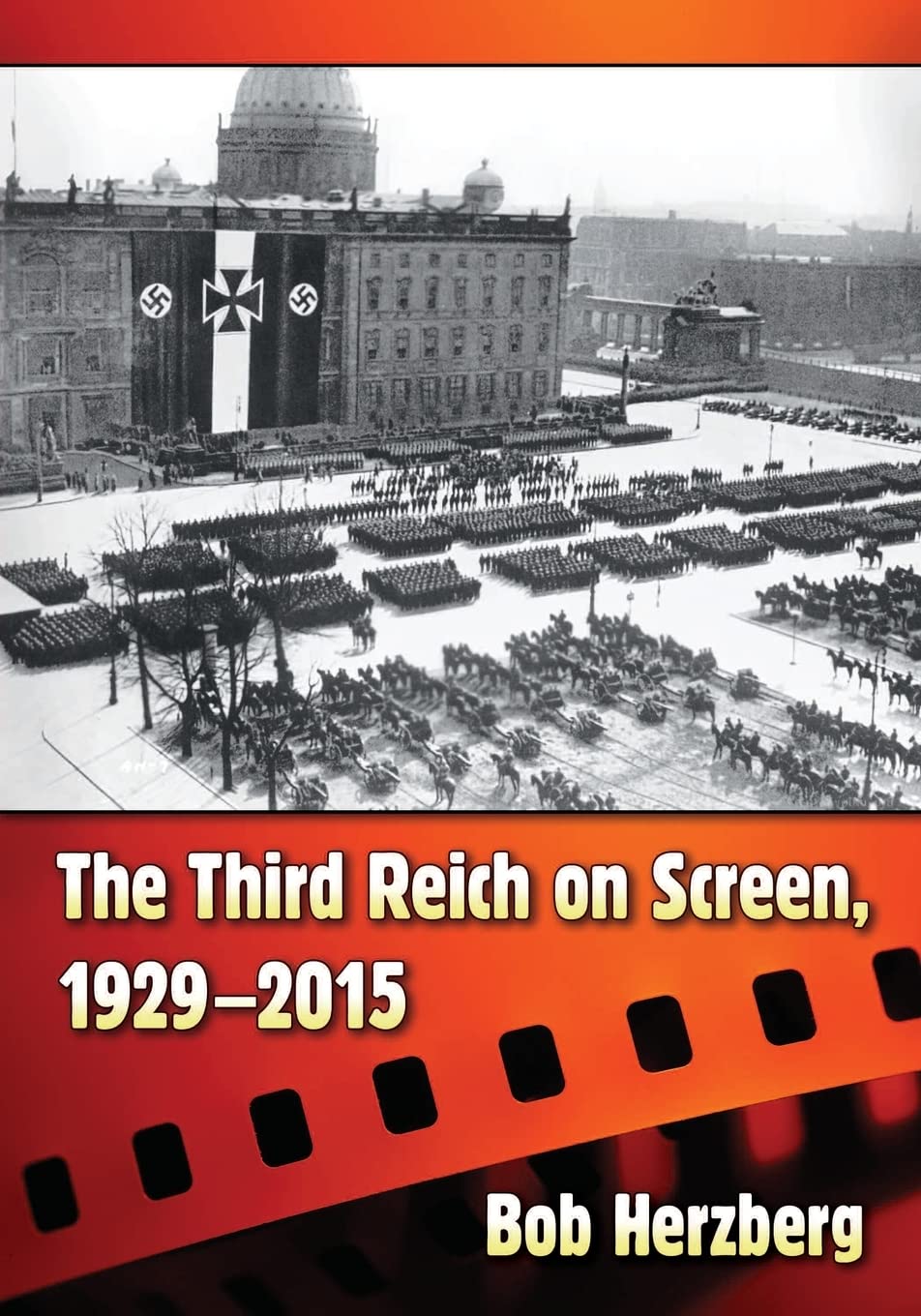
The Third Reich on Screen, 1929-2015: A Deep Dive into Nazi Cinema and Propaganda Films by Bob Herzberg
Inclusive of all applicable taxes. FREE shipping on all orders.
Available Offers
- 🚚Free Delivery — Free shipping on all orders
- 💵Cash on Delivery — Pay when your order arrives
- ↩️15-Day Easy Returns — Hassle-free return policy
- 🔒Cash on Delivery — Pay safely when your order arrives
Check Delivery
Product Description
Introduction
From the flickering newsreels of the 1930s to the darkly satirical films of the 21st century, the image of the Third Reich has been a persistent and powerful presence on screen. In The Third Reich on Screen, 1929-2015, author Bob Herzberg takes readers on a compelling journey through nearly a century of cinematic representations, exploring how filmmakers across the world have used the Nazi figure as a symbol of evil, a tool for propaganda, or a lens for historical reflection. This book is an essential resource for film enthusiasts, history buffs, and students of political cinema who want to understand how art and ideology collide on the silver screen.
Book Overview
This meticulously researched volume examines the evolution of Nazi imagery in cinema from the late silent era to the modern day. Herzberg delves into how Hollywood, Nazi Germany, the Soviet Union, and Eastern Bloc nations each crafted their own versions of the Third Reich, often reflecting their own political anxieties and cultural biases. Drawing on studio files, Production Code office correspondence, and writings of noted historians, the book reveals the complex motivations behind films that ranged from escapist adventures to stark war dramas. The hardcover edition from McFarland & Company offers a comprehensive analysis that bridges film studies and history.
Key Highlights
- Global Perspective: Covers films from Hollywood, Nazi Germany, the Soviet Union, and Eastern Europe, offering a rare comparative view.
- Historical Depth: Spans from 1929 to 2015, tracing the changing portrayal of Nazis through different eras and political climates.
- Real vs. Reel: Includes biographies of military and political figures who inspired Nazi characters, comparing cinematic depictions with historical reality.
- Archival Research: Based on studio files, censorship records, and the writings of leading historians and critics.
Inside the Book
Organized chronologically and thematically, the book moves through key periods: the pre-war years when Nazi propaganda films were crafted, the wartime era of anti-Nazi Hollywood productions, the Cold War's complex portrayals, and modern reinterpretations in genres like horror and science fiction. Each chapter focuses on specific films, such as musicals that used Nazis as comedic villains, war films that sought realism, and satires that questioned the very nature of evil. Herzberg also explores how the Production Code office in Hollywood shaped what could and could not be shown about the Third Reich.
Key Topics
- The rise of Nazi cinema under Joseph Goebbels' propaganda ministry
- Hollywood's use of the brutal Nazi as an all-purpose villain
- Soviet and Eastern Bloc films that recast Nazism through a communist lens
- The evolution of the Nazi figure in horror, science fiction, and comedy genres
- Censorship and self-censorship in depicting the Third Reich
- Biographical studies of key Nazi figures and their screen counterparts
Reader Benefits
This book offers a unique blend of film analysis and historical scholarship. Readers will gain a deeper understanding of how cinema shapes collective memory and political discourse. The comparative approach reveals how different cultures used the same historical event to tell vastly different stories. Film students will find invaluable case studies of production history, while general readers will enjoy the engaging narrative that brings forgotten films back to life. The hardcover format makes it a durable addition to any library.
Learning Outcomes
- Understand the historical and political contexts that influenced Nazi portrayals in cinema
- Identify the key propaganda techniques used by both Nazi and Allied filmmakers
- Compare and contrast how different nations represented the Third Reich
- Analyze the role of censorship and studio politics in shaping film content
- Critically evaluate the accuracy of cinematic depictions versus historical records
Who Should Read
The Third Reich on Screen, 1929-2015 is ideal for students of film studies, history, political science, and media studies. It is also a treasure for cinephiles who enjoy classic and cult films about World War II, as well as researchers looking for a comprehensive reference on Nazi cinema. Indian readers with an interest in global cinema and the politics of representation will find this book particularly enlightening, as it offers parallels to how historical events are reinterpreted in different cultural contexts.
About the Author
Bob Herzberg is a film historian and author who has written extensively on cinema's intersection with history and politics. His works include studies of war films, censorship, and the portrayal of evil on screen. Herzberg's research is known for its archival depth and accessible style, making complex topics understandable for both academic and general audiences.
About the Publisher
McFarland & Company is a respected independent publisher based in the United States, specializing in academic and reference works in film, history, and popular culture. Known for their rigorous scholarship and well-crafted hardcover editions, McFarland titles are a staple in university libraries and among serious collectors worldwide.
Conclusion
In an age where visual media continues to shape our understanding of history, The Third Reich on Screen, 1929-2015 offers a timely and thorough examination of how cinema has grappled with one of the most monstrous regimes in human history. Bob Herzberg's work is both an engaging read and a valuable academic resource, shedding light on the art, politics, and ethics of representing evil. Whether you are a student, a scholar, or a curious reader, this book will change the way you watch films about the past.
Quick Summary
The Third Reich on Screen, 1929-2015 by Bob Herzberg is a comprehensive study of how Nazi Germany has been represented in films across the globe for over eight decades. The book delves into Hollywood blockbusters, Nazi propaganda films, Soviet productions, and Eastern Bloc cinema, examining how each culture used the Third Reich as a symbol or villain. Drawing on studio files, Production Code office correspondence, and historical writings, Herzberg reveals the political and artistic motivations behind these portrayals. Readers will learn about the evolution of Nazi imagery from early newsreels to modern sci-fi and horror films, and how filmmakers often projected their own ideologies onto the screen. This book is ideal for film students, historians, and anyone interested in the intersection of cinema and politics. By purchasing from Bookshops.in, Indian readers get a premium hardcover edition delivered to their doorstep, supporting a local bookstore that values scholarly works.
Book Highlights
Book Specifications
| ISBN-13 | 9781476664262 |
| ISBN-10 | 1476664269 |
| Publisher | McFarland & Co Inc |
| Language | English |
| Dimensions | 17.78 x 1.07 x 25.4 cm |
| Weight | 386 g |
| Country | India |
| Category | Performing Arts › Film & Television |
| Genre | Film History |
| Original Language | English |
Frequently Asked Questions
What is the main focus of 'The Third Reich on Screen, 1929-2015'?
Who is Bob Herzberg?
Does this book only cover Hollywood films?
What time period does the book cover?
Is the book suitable for academic research?
Does the book include any film stills or illustrations?
What genres of films are discussed?
Are there biographies of Nazi figures in the book?
Can an Indian reader relate to this book?
Is this book available in hardcover?
Does the book discuss propaganda techniques?
Where can I buy this book in India?
Readers Also Search For
Customers Also Bought
McFarland & Company
Playing with the Guys | by Marc A. Ouellette | Matthew Wilhelm Kapell | McFarland & Company | by Marc A. Ouellette | Matthew Wilhelm Kapell | McFarland & Company | by Marc A. Ouellette | Matthew Wilhelm Kapell | McFarland & Company | by Marc A. Ouellette | Matthew Wilhelm Kapell | McFarland & Company | by Marc A. Ouellette | Matthew Wilhelm Kapell | McFarland & Company | by Marc A. Ouellette | Matthew Wilhelm Kapell | McFarland & Company | by Marc A. Ouellette | Matthew W

Rowman & Littlefield Publishers
Joss Whedon's Dollhouse: Confounding Purpose, Confusing Identity (Science Fiction Television)

State University of New York Press
Mexico Unmanned: The Cultural Politics of Masculinity in Mexican Cinema (SUNY series in Latin American Cinema)

McFarland & Company
Valley Forge to Monmouth | by Jim Stempel | McFarland & Company | by Jim Stempel | McFarland & Company | by Jim Stempel | McFarland & Company | by Jim Stempel | McFarland & Company | by Jim Stempel | McFarland & Company | by Jim Stempel | McFarland & Company | by Jim Stempel | McFarland & Company | by Jim Stempel | McFarland & Company | by Jim Stempel | McFarland & Company | by Jim Stempel | McFarland & Company | by Jim Stempel | McFarland & Company |

University of Toronto Press
Structures of Feeling in Seventeenth-Century Cultural Expression (UCLA Center Clark Library)
McFarland & Company
Welcome to Arkham Asylum | by Sharon Packer | Daniel R. Fredrick | McFarland & Company | by Sharon Packer | Daniel R. Fredrick | McFarland & Company | by Sharon Packer | Daniel R. Fredrick | McFarland & Company | by Sharon Packer | Daniel R. Fredrick | McFarland & Company | by Sharon Packer | Daniel R. Fredrick | McFarland & Company | by Sharon Packer | Daniel R. Fredrick | McFarland & Company | by Sharon Packer | Daniel R. Fredrick | McFarland & Company | by Sharon P
Related Products
View AllMcFarland & Company
Playing with the Guys | by Marc A. Ouellette | Matthew Wilhelm Kapell | McFarland & Company | by Marc A. Ouellette | Matthew Wilhelm Kapell | McFarland & Company | by Marc A. Ouellette | Matthew Wilhelm Kapell | McFarland & Company | by Marc A. Ouellette | Matthew Wilhelm Kapell | McFarland & Company | by Marc A. Ouellette | Matthew Wilhelm Kapell | McFarland & Company | by Marc A. Ouellette | Matthew Wilhelm Kapell | McFarland & Company | by Marc A. Ouellette | Matthew W
McFarland & Company
Valley Forge to Monmouth | by Jim Stempel | McFarland & Company | by Jim Stempel | McFarland & Company | by Jim Stempel | McFarland & Company | by Jim Stempel | McFarland & Company | by Jim Stempel | McFarland & Company | by Jim Stempel | McFarland & Company | by Jim Stempel | McFarland & Company | by Jim Stempel | McFarland & Company | by Jim Stempel | McFarland & Company | by Jim Stempel | McFarland & Company | by Jim Stempel | McFarland & Company |

McFarland & Company
Magic in Britain | by Robin Melrose | McFarland & Company | by Robin Melrose | McFarland & Company | by Robin Melrose | McFarland & Company | by Robin Melrose | McFarland & Company | by Robin Melrose | McFarland & Company | by Robin Melrose | McFarland & Company | by Robin Melrose | McFarland & Company | by Robin Melrose | McFarland & Company | by Robin Melrose | McFarland & Company | by Robin Melrose | McFarland & Company | by Robin Melrose | McFarland &a

McFarland & Company
Hoplites at War: A Comprehensive Analysis of Heavy Infantry Combat in the Greek World, 750-100 bce b
McFarland & Company
Storytelling in Video Games | by Amy M. Green | Matthew Wilhelm Kapell | McFarland & Company | by Amy M. Green | Matthew Wilhelm Kapell | McFarland & Company | by Amy M. Green | Matthew Wilhelm Kapell | McFarland & Company | by Amy M. Green | Matthew Wilhelm Kapell | McFarland & Company | by Amy M. Green | Matthew Wilhelm Kapell | McFarland & Company | by Amy M. Green | Matthew Wilhelm Kapell | McFarland & Company | by Amy M. Green | Matthew Wilhelm Kapell | McFarland &am
McFarland & Company