
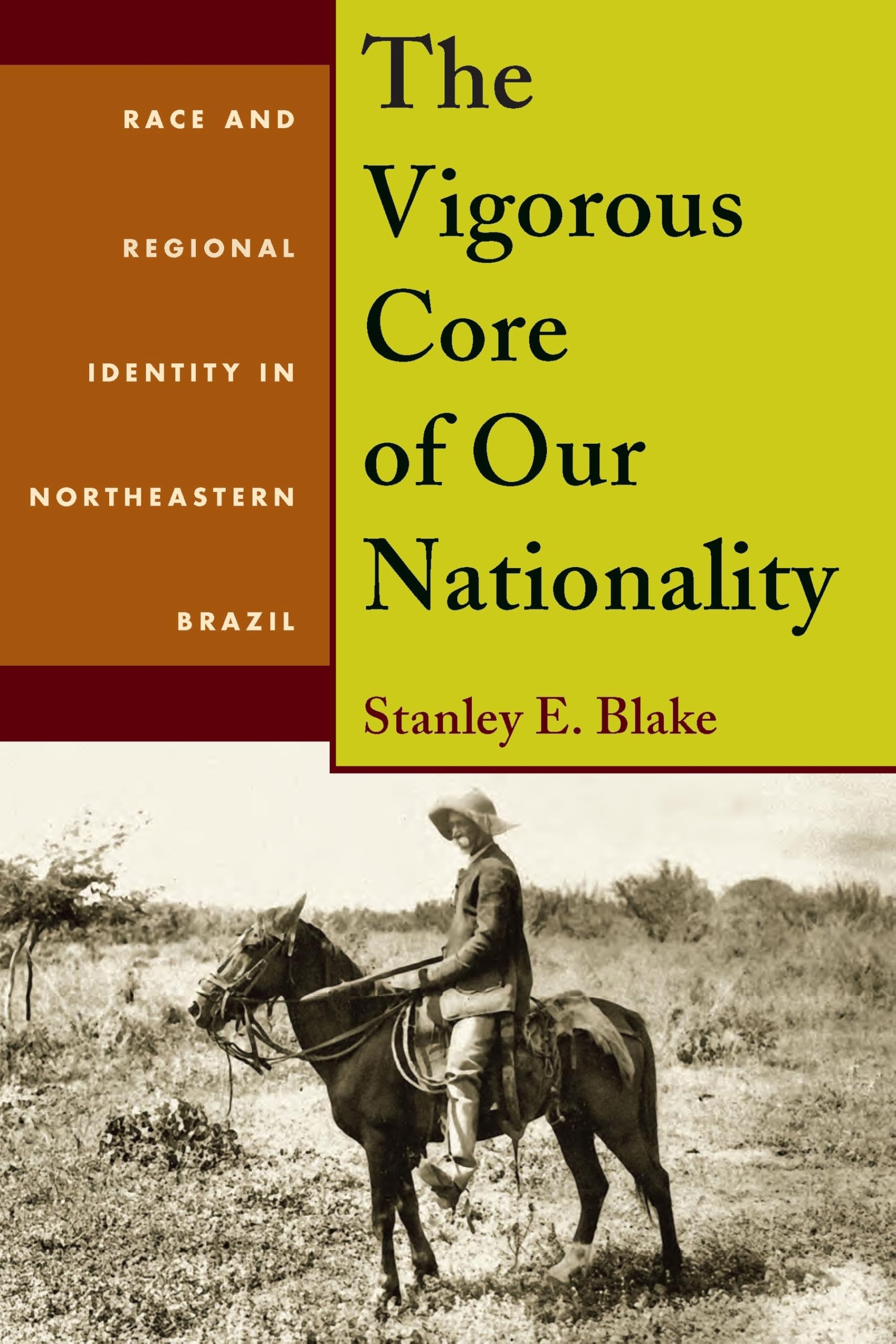
The Vigorous Core of Our Nationality: Race and Regional Identity in Northeastern Brazil by Stanley Blake – A Critical St
Inclusive of all applicable taxes. FREE shipping on all orders.
Available Offers
- 🚚Free Delivery — Free shipping on all orders
- 💵Cash on Delivery — Pay when your order arrives
- ↩️15-Day Easy Returns — Hassle-free return policy
- 🔒Cash on Delivery — Pay safely when your order arrives
Check Delivery
Product Description
Introduction
The Vigorous Core of Our Nationality: Race and Regional Identity in Northeastern Brazil by Stanley Blake offers a profound exploration of how regional identity and racial constructs shaped the modern Brazilian nation. This meticulously researched work delves into the historical evolution of the nordestino identity in Brazil’s Northeast, a region marked by its sugar economy, diverse population, and political significance. For Indian readers and students interested in postcolonial studies, race theory, or Latin American history, this book provides a compelling comparative lens to understand identity formation in multi-ethnic societies.
Book Overview
Stanley Blake’s monograph traces the conceptualization of the nordestino from the abolition of slavery in 1888 to the end of Getúlio Vargas’s Estado Novo in 1945. The book examines how intellectuals, politicians, and regional elites debated the racial and cultural essence of the Northeast. Initially linked to Afro-Brazilian heritage, the nordestino identity was later reimagined to align with European whiteness for political and nationalistic purposes. Blake uses archival sources, including medical, anthropological, and literary texts, to reveal how regionalism became a tool for state-building and social control. This is a critical read for understanding how race and region intersect in the construction of national narratives.
Key Highlights
- Original Research: Based on extensive archival work in Brazilian libraries and government records.
- Interdisciplinary Approach: Blends history, anthropology, and political science to analyze identity politics.
- Focus on Race: Examines the shifting racial categorization of nordestinos from Afro-Brazilian to European.
- Historical Context: Covers key events like abolition, the Old Republic, and the Vargas era.
- Comparative Value: Offers parallels to Indian debates on regionalism, caste, and national identity.
Inside the Book
The book is structured into thematic chapters that explore medical discourses on race, regionalist literature, and state policies. Blake unpacks how the Northeast was portrayed as both a backward region and the “vigorous core” of Brazilian nationality. He analyzes the role of eugenics, public health campaigns, and educational reforms in shaping nordestino identity. The narrative also highlights the resistance of local intellectuals who challenged national stereotypes. Rich with primary sources, the book brings to life the voices of doctors, writers, and politicians who debated what it meant to be a nordestino.
Key Topics
- Race and Regionalism: How racial ideologies defined the Northeast as a distinct region.
- State and Nation Building: The role of the Vargas regime in promoting a unified Brazilian identity.
- Afro-Brazilian Heritage: The erasure and reassertion of African influences in regional identity.
- Intellectual History: Contributions of Brazilian thinkers like Gilberto Freyre and Oliveira Viana.
- Gender and Class: Intersections of race with gender and social hierarchies in the Northeast.
Reader Benefits
- Deepen Understanding: Gain insights into how regional identities are constructed and manipulated.
- Critical Thinking: Develop analytical skills by examining contested historical narratives.
- Cross-Cultural Perspective: Compare Brazilian regionalism with Indian linguistic and caste-based identities.
- Research Foundation: Ideal for students writing theses on colonialism, race, or nationalism.
- Engaging Prose: Blake writes accessibly without sacrificing scholarly rigor.
Learning Outcomes
- Understand the historical origins of the nordestino identity and its political uses.
- Analyze the relationship between race, region, and nation in postcolonial contexts.
- Evaluate how elite discourses shape popular perceptions of ethnicity.
- Identify parallels between Brazilian and Indian experiences of regionalism.
- Critique the role of science and medicine in racial categorization.
Who Should Read
This book is essential for university students and scholars in history, sociology, Latin American studies, and race and ethnicity. It is also valuable for Indian readers interested in comparative postcolonial studies, as it offers a non-Western perspective on identity formation. Researchers working on regional movements, diaspora, or the legacy of slavery will find this work particularly enlightening. General readers with a curiosity about Brazil’s cultural diversity will also appreciate the accessible narrative.
About the Author
Stanley Blake is a historian specializing in modern Latin America, with a focus on Brazil. He has taught at several universities and published widely on race, regionalism, and state formation. His research draws on extensive fieldwork in Brazilian archives, and he brings a nuanced understanding of how local identities interact with national projects. Blake’s work is praised for its careful attention to primary sources and its ability to connect historical debates to contemporary issues.
About the Publisher
University of Pittsburgh Press is a respected academic publisher known for its rigorous scholarship in history, social sciences, and cultural studies. The press has a strong track record of publishing works that challenge conventional narratives and offer fresh perspectives on global issues. This book is part of their series on Latin American history, which has contributed significantly to the field.
Conclusion
The Vigorous Core of Our Nationality is a vital contribution to understanding how race and region have shaped modern Brazil. Stanley Blake’s careful analysis of the nordestino identity reveals the power of intellectual and political elites to define national belonging. For Indian students and scholars, this book offers a rich comparative framework to reflect on similar processes in South Asia. It is a must-read for anyone seeking to grasp the complexities of identity, power, and history in a global context.
Quick Summary
The Vigorous Core of Our Nationality by Stanley Blake is a scholarly work that delves into the construction of regional and racial identity in northeastern Brazil during a transformative period from 1888 to 1945. Beginning with the abolition of slavery and culminating with the Estado Novo under Getúlio Vargas, Blake examines how the nordestino—a population of African, indigenous, and European descent—became a symbol of both regional distinctiveness and national unity. The book reveals the paradoxes inherent in this identity, showing how it was used to promote nation building while also reinforcing stereotypes. Ideal for students and researchers in Latin American history, race studies, and postcolonial theory, this book offers original archival research and critical analysis. Readers will gain a nuanced understanding of how race, region, and politics intersected in Brazil's development. Purchasing from Bookshops.in ensures access to this important academic work in a high-quality hardcover edition, delivered across India.
Book Highlights
Book Specifications
| ISBN-13 | 9780822961338 |
| ISBN-10 | 0822961334 |
| Publisher | Univ of Pittsburgh Pr |
| Language | English |
| Dimensions | 15.56 x 2.54 x 23.5 cm |
| Weight | 499 g |
| Category | Region & Countries › Americas |
| Genre | History |
| Original Language | English |
Frequently Asked Questions
What is The Vigorous Core of Our Nationality about?
Who is the author of this book?
What time period does the book cover?
What is a nordestino?
Why is this book important for Brazilian studies?
Is this book suitable for undergraduates?
Does the book discuss the sugar economy?
What role does Getúlio Vargas play in the book?
How does the book address race?
Is this book based on primary sources?
What is the publisher of this book?
Does the book cover the entire Northeast region?
How is this book different from other works on Brazilian identity?
What language is the book written in?
Where can I buy this book in India?
Readers Also Search For
Related Products
View All
History
The Information Revolution: Transforming the World Through Technology (World History)
History
Human Nature and the French Revolution: From the Enlightenment to the Napoleonic Code: 3 (Polygons: Cultural Diversities and Intersections, 3)
History
The Unmaking of Home in Contemporary Art (Cultural Spaces)

History
Handbook to Life in Medieval and Early Modern Japan | by William E. Deal | Oxford University Press | by William E. Deal | Oxford University Press | by William E. Deal | Oxford University Press | by William E. Deal | Oxford University Press | by William E. Deal | Oxford University Press | by William E. Deal | Oxford University Press | by William E. Deal | Oxford University Press | by William E. Deal | Oxford University Press | by William E. Deal | Oxford University Press | by William E. Deal | Ox

History
The Narrators of Barbarian History (A.D. 550-800) | by Walter Goffart | University of Notre Dame Press | by Walter Goffart | University of Notre Dame Press | by Walter Goffart | University of Notre Dame Press | by Walter Goffart | University of Notre Dame Press | by Walter Goffart | University of Notre Dame Press | by Walter Goffart | University of Notre Dame Press | by Walter Goffart | University of Notre Dame Press | by Walter Goffart | University of Notre Dame Press | by Walter Goffart | Univ

History