
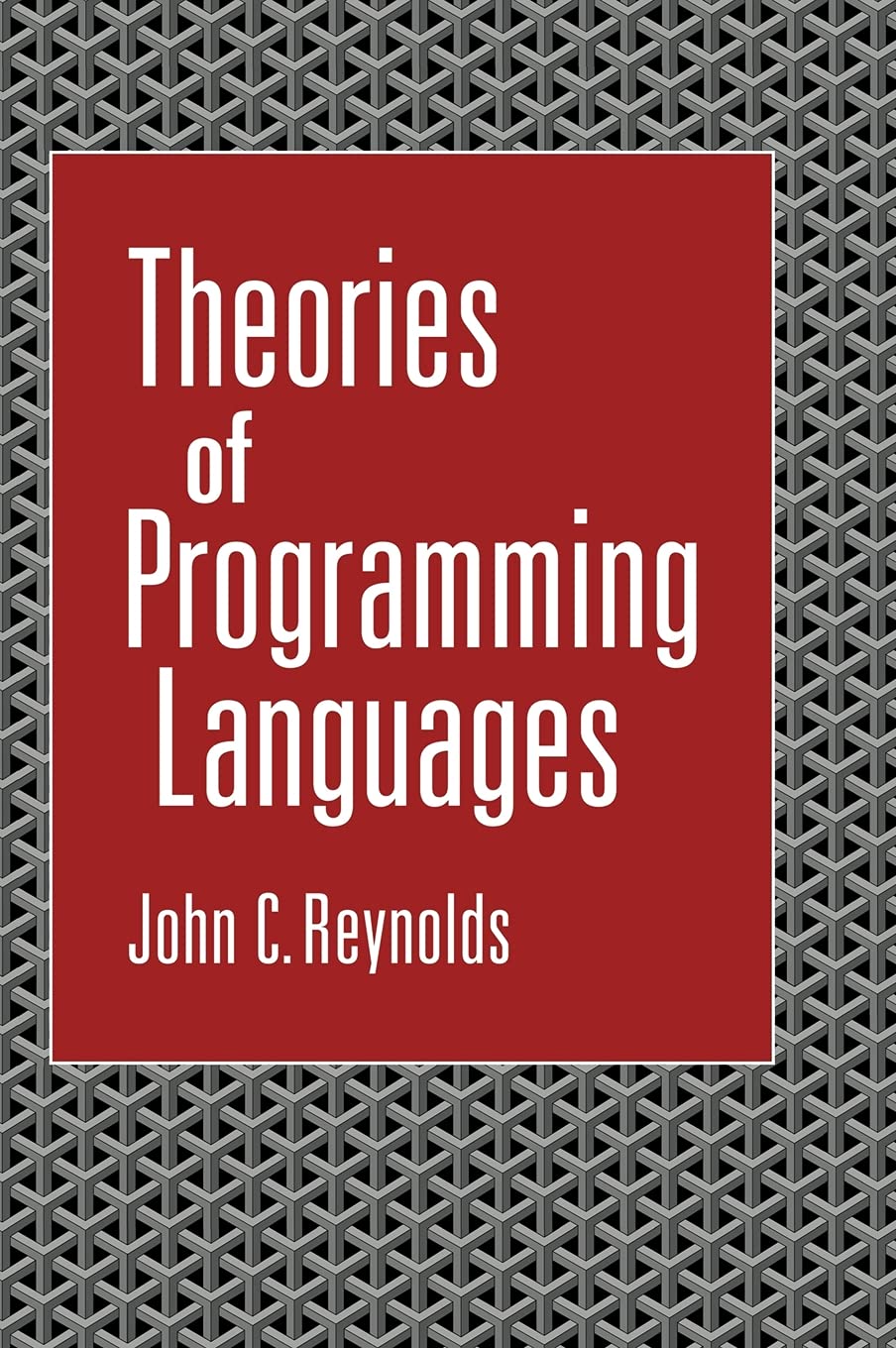
Theories of Programming Languages: A Comprehensive Textbook on Semantics and Formal Methods by John C. Reynolds
Inclusive of all applicable taxes. FREE shipping on all orders.
Available Offers
- 🚚Free Delivery — Free shipping on all orders
- 💵Cash on Delivery — Pay when your order arrives
- ↩️15-Day Easy Returns — Hassle-free return policy
- 🔒Cash on Delivery — Pay safely when your order arrives
Check Delivery
Product Description
Introduction
For students, researchers, and professionals navigating the intricate world of programming languages, Theories of Programming Languages by John C. Reynolds stands as a definitive guide. Published by Cambridge University Press, this hardcover volume offers a rigorous yet accessible exploration of the theoretical foundations that underpin modern programming language design, definition, and implementation. Whether you are an advanced undergraduate in computer science, a graduate student delving into language theory, or a practitioner seeking deeper insight, this book provides an integrated and unifying perspective that has shaped the field for decades.
Book Overview
First published in 1998, this textbook is a broad but thorough survey of the theoretical basis for programming languages. John C. Reynolds masterfully covers both imperative and functional programming paradigms, and shows how these can be integrated into more general languages. The book identifies a small set of core concepts—such as compositional semantics, binding structure, domains, transition systems, and inference rules—that serve as the foundation of the subject. By presenting an integrated treatment of these principles, Reynolds reveals a unity of technique beneath the diversity of research in programming languages. This approach makes the book ideal for courses in programming language theory and for self-study by professionals.
Key Highlights
- Integrated Approach: Unifies imperative and functional programming paradigms through a common theoretical lens.
- Foundational Concepts: Focuses on compositional semantics, binding structures, domains, transition systems, and inference rules.
- Rigorous Yet Accessible: Assumes only elementary programming and mathematics, making it suitable for advanced undergraduates and beginning graduates.
- Practical Relevance: Bridges theory and practice, appealing to researchers and professionals involved in designing or implementing programming languages.
- Authoritative Source: Written by John C. Reynolds, a pioneering figure in programming language theory.
Inside the Book
The book systematically builds from basic concepts to advanced topics. Early chapters introduce the fundamental ideas of syntax, semantics, and binding. The middle sections delve into imperative languages, including state and control structures, and functional languages, covering lambda calculus and type systems. Later chapters explore the integration of paradigms, polymorphism, and modularity. Throughout, Reynolds uses clear mathematical notation and numerous examples to illustrate how theoretical principles translate into language design. The text is enriched with exercises that challenge readers to apply concepts, making it a complete resource for both classroom use and independent study.
Key Topics
- Compositional semantics and denotational semantics
- Binding structures and environments
- Domains and continuous functions
- Transition systems and operational semantics
- Inference rules and type systems
- Imperative language features: assignment, control flow, procedures
- Functional language features: lambda calculus, recursion, higher-order functions
- Polymorphism and modularity
- Integration of imperative and functional paradigms
Reader Benefits
- Deep Understanding: Gain a solid grasp of the theoretical underpinnings that drive programming language design.
- Unified Perspective: See how different language paradigms share common principles, enabling better language comparison and evaluation.
- Enhanced Skills: Develop the ability to reason about program correctness and language features using formal methods.
- Career Advancement: Ideal for those pursuing careers in compiler design, language implementation, or academic research.
Learning Outcomes
By the end of this book, readers will be able to: understand and apply compositional semantics to define programming languages; analyze binding structures and their impact on program behavior; use domains and transition systems to model computation; construct inference rules for type systems; and design language features that integrate imperative and functional paradigms. The book equips students with the tools to critically evaluate existing languages and to contribute to the development of new ones.
Who Should Read
- Advanced Undergraduate Students: Taking courses in programming language theory, compiler design, or formal methods.
- Graduate Students: Specializing in computer science, especially in programming languages, semantics, or software engineering.
- Researchers: In programming language theory, formal verification, or related areas.
- Professionals: Language designers, compiler engineers, and software architects seeking a deeper theoretical foundation.
About the Author
John C. Reynolds was a renowned computer scientist and professor at Carnegie Mellon University. His pioneering contributions to programming language theory include the development of polymorphic lambda calculus, separation logic, and defunctionalization. Reynolds’ work has had a lasting impact on the field, and his textbooks are celebrated for their clarity, depth, and rigorous treatment of complex topics. He was a Fellow of the ACM and received numerous awards for his research and teaching.
About the Publisher
Cambridge University Press is a world-leading academic publisher with a rich history of producing authoritative texts in science, technology, and mathematics. Known for their commitment to quality and scholarly excellence, Cambridge University Press books are widely used in universities and research institutions across the globe. This hardcover edition reflects the publisher’s dedication to durable, high-quality production that stands the test of time.
Conclusion
Theories of Programming Languages is more than a textbook—it is a timeless reference that illuminates the intellectual core of programming language theory. John C. Reynolds’ clear, integrated exposition makes this book an essential addition to the library of any serious computer science student, researcher, or professional. Whether you are studying for a course or pursuing independent inquiry, this volume will deepen your understanding and inspire your work. Order your hardcover copy from Bookshops.in today and explore the theoretical foundations that power the languages we use every day.
Quick Summary
Theories of Programming Languages by John C. Reynolds is a classic textbook that provides a rigorous yet accessible survey of the theoretical foundations of programming languages. Published by Cambridge University Press, the book is designed for advanced undergraduate and graduate students in computer science, as well as researchers and practitioners interested in language design, semantics, and program verification. Reynolds masterfully identifies a small set of core concepts—compositional semantics, binding structure, domains, transition systems, and inference rules—that unify the diverse field of programming language theory. The book covers both imperative and functional programming paradigms, showing how they can be integrated into more general languages. Readers will learn to specify and reason about program behaviour using formal methods, understand the mathematical underpinnings of languages, and gain insights that are directly applicable to language implementation and software engineering. By purchasing from Bookshops.in, Indian students and professionals receive a high-quality physical copy with fast, reliable delivery across the country, supporting local bookstores and ensuring access to this essential academic resource.
Book Highlights
Book Specifications
| ISBN-13 | 9780521594141 |
| ISBN-10 | 0521594146 |
| Publisher | Cambridge University Press |
| Language | English |
| Dimensions | 18.42 x 2.54 x 26.67 cm |
| Weight | 1 kg 100 g |
| Country | India |
| Category | Languages › C & C++ |
| Genre | Non-fiction |
| Original Language | English |
Frequently Asked Questions
What is the main focus of Theories of Programming Languages?
Who is the author of this book?
What prior knowledge do I need to read this book?
Is this book suitable for self-study?
Does the book cover both imperative and functional programming?
What is unique about this textbook compared to others?
What topics in semantics are covered?
Can this book help with program verification?
Is the book available in hardcover?
What is the ISBN-13 of this book?
Where can I buy this book in India?
Does this book include exercises?
Readers Also Search For
Customers Also Bought

Programming
Algorithmische Sprache Und Programmentwicklung | by H. Partsch | F. L. Bauer | P. Pepper | Springer | by H. Partsch | F. L. Bauer | P. Pepper | Springer | by H. Partsch | F. L. Bauer | P. Pepper | Springer | by H. Partsch | F. L. Bauer | P. Pepper | Springer | by H. Partsch | F. L. Bauer | P. Pepper | Springer | by H. Partsch | F. L. Bauer | P. Pepper | Springer | by H. Partsch | F. L. Bauer | P. Pepper | Springer | by H. Partsch | F. L. Bauer | P. Pepper | Springer | by H. Partsch | F. L. Bauer
Programming
Distributed Algorithms | by Jean-Claude Bermond | Michel Raynal | Springer | by Jean-Claude Bermond | Michel Raynal | Springer | by Jean-Claude Bermond | Michel Raynal | Springer | by Jean-Claude Bermond | Michel Raynal | Springer | by Jean-Claude Bermond | Michel Raynal | Springer | by Jean-Claude Bermond | Michel Raynal | Springer | by Jean-Claude Bermond | Michel Raynal | Springer | by Jean-Claude Bermond | Michel Raynal | Springer | by Jean-Claude Bermond | Michel Raynal | Springer | by Jean
Programming
Meta-Level Control for Deductive Database Systems | by Helmut Schmidt | Springer | by Helmut Schmidt | Springer | by Helmut Schmidt | Springer | by Helmut Schmidt | Springer | by Helmut Schmidt | Springer | by Helmut Schmidt | Springer | by Helmut Schmidt | Springer | by Helmut Schmidt | Springer | by Helmut Schmidt | Springer | by Helmut Schmidt | Springer | by Helmut Schmidt | Springer | by Helmut Schmidt | Springer | by Helmut Schmidt | Springer | by Helmut Schmidt | Springer | by Helmut Schm
Programming
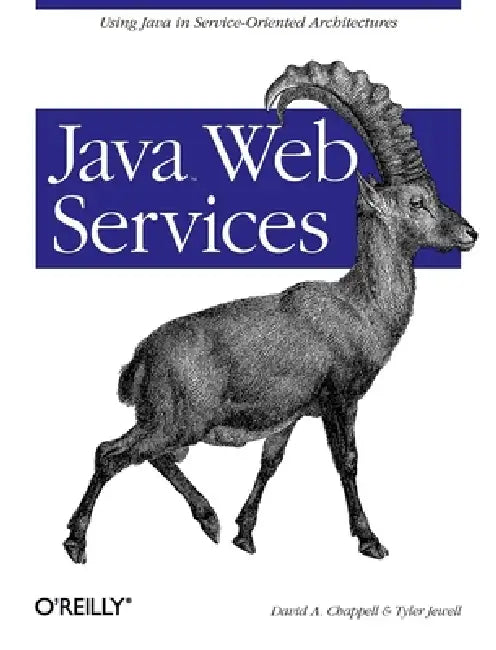
Java Web Services | by David A. Chappell | Tyler Jewell | O'Reilly Media | by David A. Chappell | Tyler Jewell | O'Reilly Media | by David A. Chappell | Tyler Jewell | O'Reilly Media | by David A. Chappell | Tyler Jewell | O'Reilly Media | by David A. Chappell | Tyler Jewell | O'Reilly Media | by David A. Chappell | Tyler Jewell | O'Reilly Media | by David A. Chappell | Tyler Jewell | O'Reilly Media | by David A. Chappell | Tyler Jewell | O'Reilly Media | by David A. Chappell | Tyler Jewell | O'
Programming
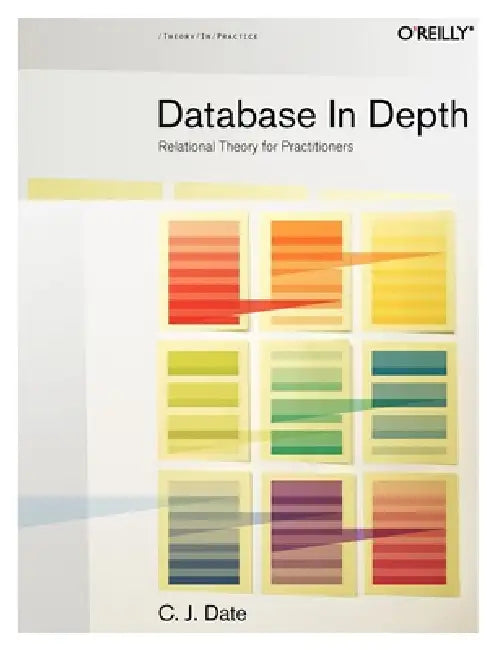
Database in Depth | by Chris J. Date | O'Reilly Media | by Chris J. Date | O'Reilly Media | by Chris J. Date | O'Reilly Media | by Chris J. Date | O'Reilly Media | by Chris J. Date | O'Reilly Media | by Chris J. Date | O'Reilly Media | by Chris J. Date | O'Reilly Media | by Chris J. Date | O'Reilly Media | by Chris J. Date | O'Reilly Media | by Chris J. Date | O'Reilly Media | by Chris J. Date | O'Reilly Media | by Chris J. Date | O'Reilly Media | by Chris J. Date | O'Reilly Media | by Chris J.
Programming
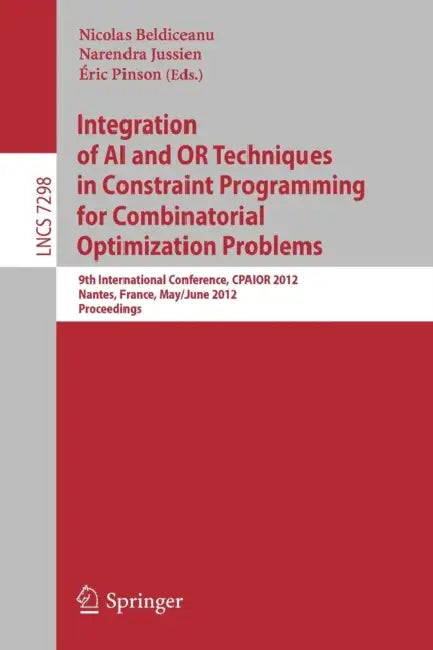
Integration of AI and OR Techniques in Constraint Programming for Combinatorial Optimization Problem | by Nicolas Beldiceanu | Narendra Jussien | Eric Pinson | Springer | by Nicolas Beldiceanu | Narendra Jussien | Eric Pinson | Springer | by Nicolas Beldiceanu | Narendra Jussien | Eric Pinson | Springer | by Nicolas Beldiceanu | Narendra Jussien | Eric Pinson | Springer | by Nicolas Beldiceanu | Narendra Jussien | Eric Pinson | Springer | by Nicolas Beldiceanu | Narendra Jussien | Eric Pinson |
Related Products
View All
Computers & Internet
Modern Full-Stack React Projects by Daniel Bugl
Computers & Internet
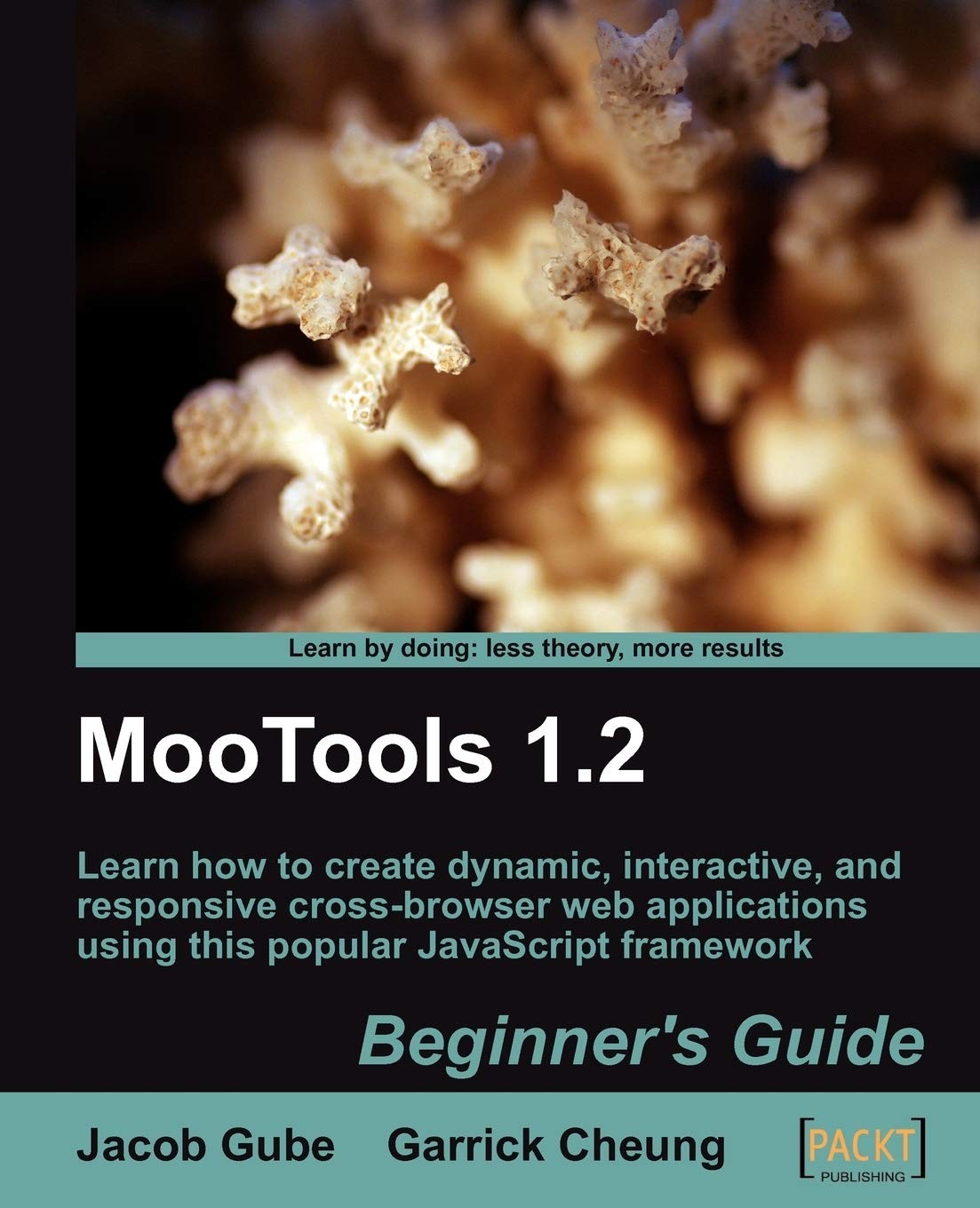
Mootools 1.2 Beginner's Guide (English, Jacob Gube)
Computers & Internet
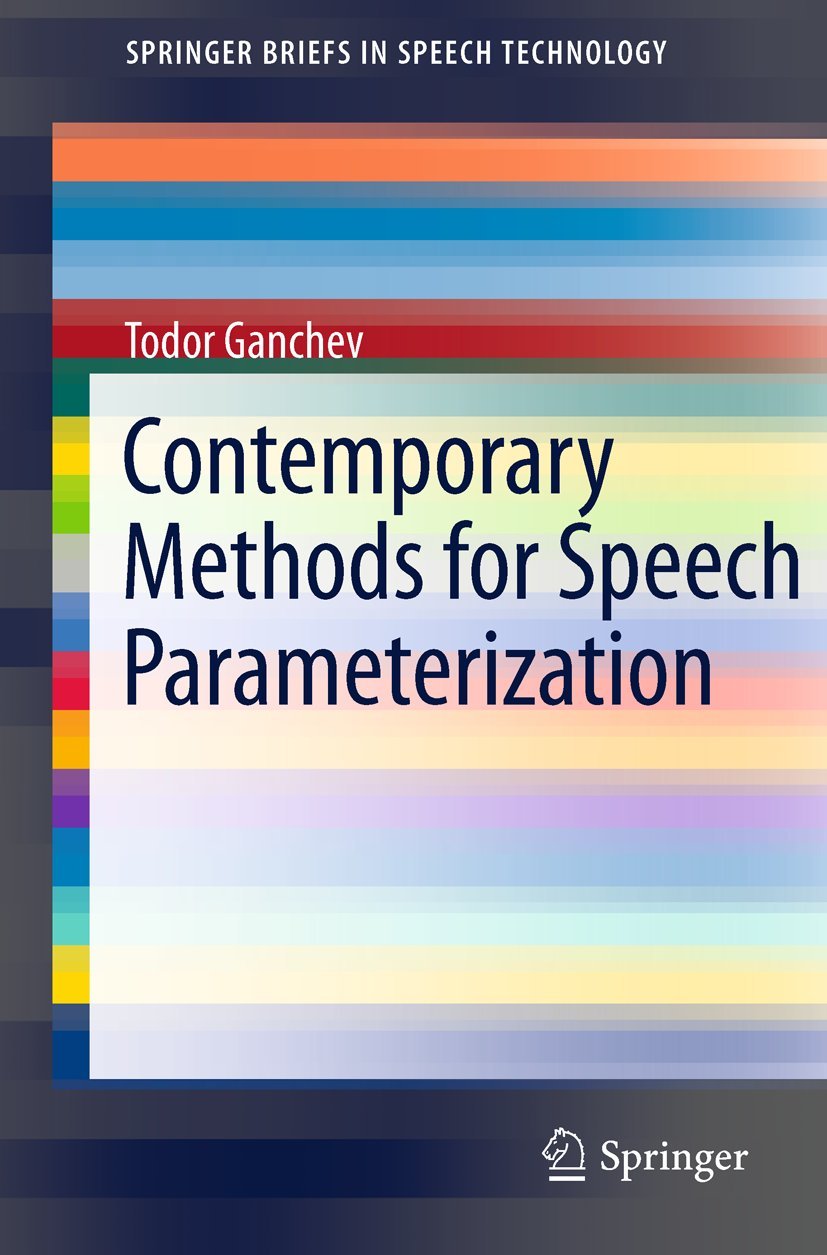
Contemporary Methods for Speech Parameterization (Springerbriefs in Electrical and Computer Engineering / Springerbriefs in Speech Technology)

Computers & Internet
Information Technology and Lawyers | by Arno R. Lodder | Anja Oskamp | Springer | by Arno R. Lodder | Anja Oskamp | Springer | by Arno R. Lodder | Anja Oskamp | Springer | by Arno R. Lodder | Anja Oskamp | Springer | by Arno R. Lodder | Anja Oskamp | Springer | by Arno R. Lodder | Anja Oskamp | Springer | by Arno R. Lodder | Anja Oskamp | Springer | by Arno R. Lodder | Anja Oskamp | Springer | by Arno R. Lodder | Anja Oskamp | Springer | by Arno R. Lodder | Anja Oskamp | Springer | by Arno R. Lo

Computers & Internet
Digital Analysis of Remotely Sensed Imagery | by Jay Gao | McGraw-Hill Companies | by Jay Gao | McGraw-Hill Companies | by Jay Gao | McGraw-Hill Companies | by Jay Gao | McGraw-Hill Companies | by Jay Gao | McGraw-Hill Companies | by Jay Gao | McGraw-Hill Companies | by Jay Gao | McGraw-Hill Companies | by Jay Gao | McGraw-Hill Companies | by Jay Gao | McGraw-Hill Companies | by Jay Gao | McGraw-Hill Companies | by Jay Gao | McGraw-Hill Companies | by Jay Gao | McGraw-Hill Companies | by Jay Gao
Computers & Internet