
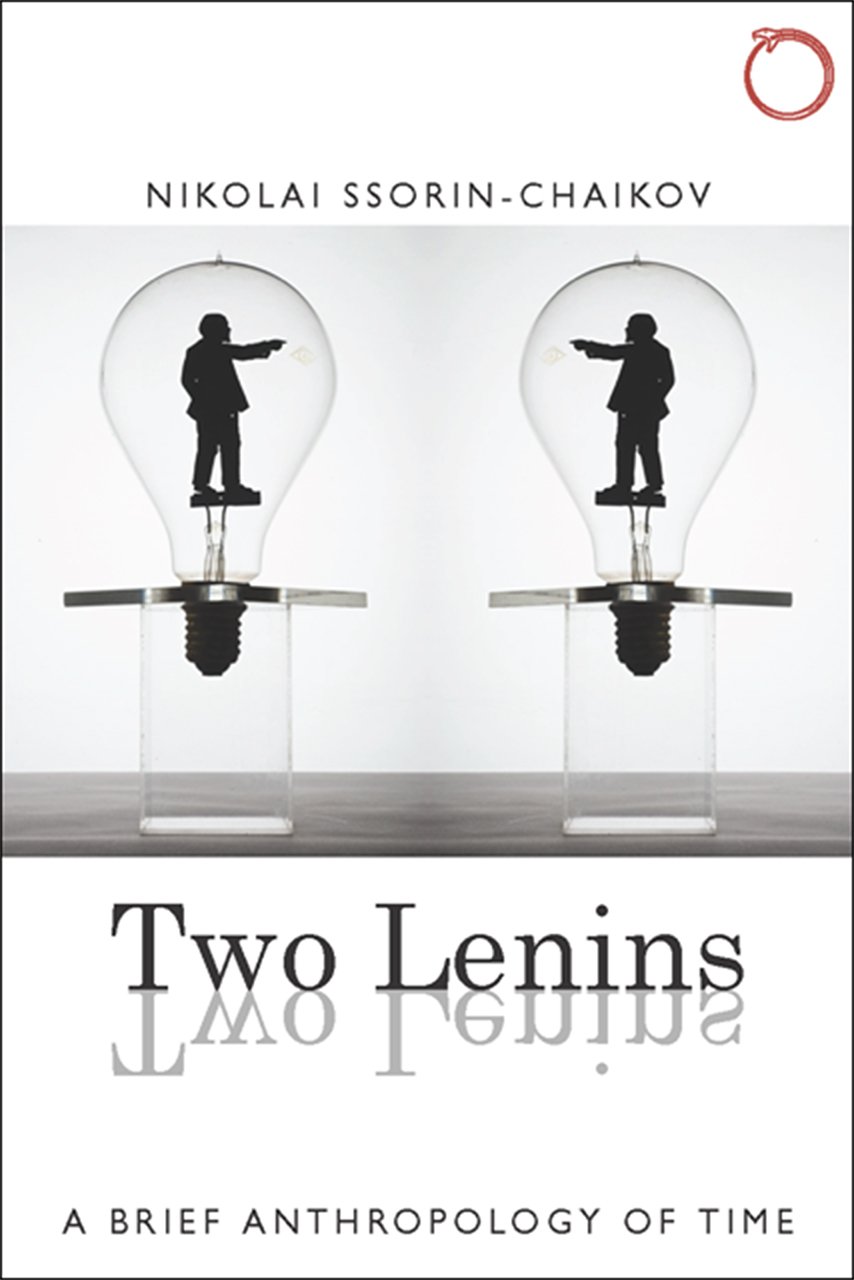
Two Lenins, and a Gift of Modernity – A Brief Anthropology of Time by Nikolai Ssorin-Chaikov: An Ethnographic Exploratio
Inclusive of all applicable taxes. FREE shipping on all orders.
Available Offers
- 🚚Free Delivery — Free shipping on all orders
- 💵Cash on Delivery — Pay when your order arrives
- ↩️15-Day Easy Returns — Hassle-free return policy
- 🔒Cash on Delivery — Pay safely when your order arrives
Check Delivery
Product Description
Introduction
In the vast landscape of anthropological thought, few works dare to question the very fabric of time itself. Two Lenins, and a Gift of Modernity – A Brief Anthropology of Time by Nikolai Ssorin-Chaikov is a groundbreaking exploration that challenges how we understand social reality through the prism of temporality. Published by Hau, this hardcover volume offers Indian readers a rare intellectual journey into the heart of Soviet and Siberian histories, weaving together two seemingly disparate lives under a single name. For students of anthropology, sociology, and political theory, this book is not just a read—it is an invitation to rethink the clock that governs our world.
Book Overview
This book presents a fascinating ethnographic and historical study that revolves around two figures named Lenin. The first is Vladimir Lenin, the iconic revolutionary leader of early twentieth-century Russia, whose political experiments with time and modernity reshaped global history. The second is an Evenki hunter from Siberia, nicknamed Lenin, who lived through the collapse of the USSR in the 1990s. Through their intertwined stories, Ssorin-Chaikov reveals how different ideas of time can coexist, collide, and create new forms of social life. The narrative moves from the Kremlin corridors of the 1920s to the vast taiga of post-Soviet Siberia, offering a unique lens on how modernity is gifted, negotiated, and lived.
Key Highlights
- First of its kind: The first book-length anthropological study to explore how multiple temporalities organize social reality.
- Rich ethnographic material: Combines archival research with fieldwork among Siberian Evenki hunters.
- Unexpected connections: Examines Vladimir Lenin’s relationship with American businessman Armand Hammer, revealing surprising intersections of capitalism and communism.
- Post-Soviet insights: Offers a rare glimpse into the improvisations of daily life in Siberia during the chaotic 1990s.
- Innovative theory: Develops a fresh conceptual framework for understanding time as a gift, a commodity, and a site of political struggle.
Inside the Book
The book is structured around a series of ethnographic vignettes and historical analyses. It begins with Lenin the revolutionary, exploring his attempts to control and accelerate time through state planning and industrialisation. Then, it shifts to the Siberian hunter, showing how he navigated the collapse of state structures by relying on kinship, barter, and a cyclical understanding of time. Along the way, Ssorin-Chaikov introduces readers to the concept of “gift modernity”—the idea that modernity is not merely imposed but is exchanged, adapted, and reimagined through social relationships. The narrative is dense with detail yet accessible, making complex theories feel alive and urgent.
Key Topics
- Anthropology of time: How different cultures perceive and experience temporality.
- Soviet history: The political use of time in revolutionary Russia.
- Siberian indigenous life: Evenki cosmology, hunting practices, and social change.
- Post-socialism: The collapse of the USSR and its impact on remote communities.
- Gift economies: How objects and ideas circulate as gifts in times of crisis.
- Modernity and tradition: The tension between linear progress and cyclical rhythms.
Reader Benefits
- Deepen your understanding: Gain a nuanced perspective on how time shapes politics, culture, and identity.
- Enhance your research skills: Learn from a master ethnographer how to weave theory with fieldwork.
- Broaden your worldview: Explore a part of the world rarely covered in Indian academic curricula.
- Critical thinking: Develop tools to question dominant narratives of progress and development.
- Academic edge: Perfect for writing essays, theses, or preparing for competitive exams in anthropology and sociology.
Learning Outcomes
By reading this book, you will be able to: articulate the concept of multiple temporalities and their social implications; analyse the relationship between political power and the control of time; understand the lived realities of indigenous peoples in post-Soviet Siberia; critically evaluate the idea of modernity as a gift rather than a linear imposition; and apply anthropological methods to study time in your own context, whether urban or rural India.
Who Should Read
- Anthropology students at undergraduate and postgraduate levels seeking innovative theoretical frameworks.
- Sociologists and historians interested in Soviet and post-Soviet studies.
- Political theorists exploring the intersections of power, time, and modernity.
- Indian readers curious about alternative modernities and non-Western perspectives on time.
- General readers with a passion for thought-provoking non-fiction that challenges everyday assumptions.
About the Author
Nikolai Ssorin-Chaikov is a distinguished anthropologist and professor at the European University at St. Petersburg. His research spans Siberia, Russia, and the anthropology of time, state, and economy. He is known for his innovative ethnographic methods and his ability to bridge Soviet history with contemporary theory. Two Lenins is the culmination of decades of fieldwork and archival study, establishing him as a leading voice in the anthropology of temporality.
About the Publisher
Hau is a renowned independent academic publisher based in the United Kingdom, dedicated to producing high-quality works in anthropology and the social sciences. Known for its rigorous editorial standards and commitment to innovative scholarship, Hau has become a trusted name among researchers and students worldwide. This hardcover edition reflects their signature attention to detail, making it a durable addition to any serious library.
Conclusion
Two Lenins, and a Gift of Modernity – A Brief Anthropology of Time is more than a book; it is a portal into a world where time bends, modernity is a gift, and two Lenins illuminate the human condition. For Indian readers navigating the complexities of tradition and change, this work offers profound insights into how we all live in multiple times at once. Whether you are a student, a scholar, or a curious mind, this hardcover volume from Hau deserves a place on your shelf. Order your copy today from Bookshops.in and embark on a journey that will forever change how you see the clock.
Quick Summary
Two Lenins, and a Gift of Modernity – A Brief Anthropology of Time by Nikolai Ssorin-Chaikov is a pathbreaking work that rethinks the anthropology of time through the parallel lives of two individuals sharing the name Lenin. One is the iconic Soviet revolutionary Vladimir Lenin; the other is an Evenki hunter from Siberia who lived through the collapse of the USSR. The book argues that social reality is not governed by a single timeline but by multiple, coexisting temporalities. Drawing on rich ethnographic fieldwork and archival research, Ssorin-Chaikov reveals how gift exchange, modernity, and indigenous traditions intersect to create complex experiences of time. This volume is ideal for anthropology students, scholars of Soviet history, and anyone interested in alternative conceptions of modernity. By purchasing from Bookshops.in, Indian readers gain access to a premium hardcover edition of a seminal academic work that challenges conventional Western notions of time and progress.
Book Highlights
Book Specifications
| ISBN-13 | 9780997367539 |
| ISBN-10 | 0997367539 |
| Publisher | HAU |
| Language | English |
| Dimensions | 15.24 x 1.52 x 22.86 cm |
| Weight | 263 g |
| Category | Region & Countries › Europe |
| Genre | Non-fiction |
| Original Language | English |
Frequently Asked Questions
What is the main theme of Two Lenins?
Who is the author of this book?
Is this book suitable for undergraduate students?
What makes this book unique in anthropology?
Does the book cover only Soviet history?
What is the meaning of 'gift of modernity' in the title?
Which publisher released this book?
Is this book available in Indian bookstores?
What is the price of this book in India?
What language is the book written in?
Does the book include illustrations or maps?
How is this book relevant to Indian readers?
Where can I buy this book online?
Readers Also Search For
Related Products
View All
History
The Information Revolution: Transforming the World Through Technology (World History)
History
Human Nature and the French Revolution: From the Enlightenment to the Napoleonic Code: 3 (Polygons: Cultural Diversities and Intersections, 3)
History
The Unmaking of Home in Contemporary Art (Cultural Spaces)

History
Handbook to Life in Medieval and Early Modern Japan | by William E. Deal | Oxford University Press | by William E. Deal | Oxford University Press | by William E. Deal | Oxford University Press | by William E. Deal | Oxford University Press | by William E. Deal | Oxford University Press | by William E. Deal | Oxford University Press | by William E. Deal | Oxford University Press | by William E. Deal | Oxford University Press | by William E. Deal | Oxford University Press | by William E. Deal | Ox

History
The Narrators of Barbarian History (A.D. 550-800) | by Walter Goffart | University of Notre Dame Press | by Walter Goffart | University of Notre Dame Press | by Walter Goffart | University of Notre Dame Press | by Walter Goffart | University of Notre Dame Press | by Walter Goffart | University of Notre Dame Press | by Walter Goffart | University of Notre Dame Press | by Walter Goffart | University of Notre Dame Press | by Walter Goffart | University of Notre Dame Press | by Walter Goffart | Univ
History