
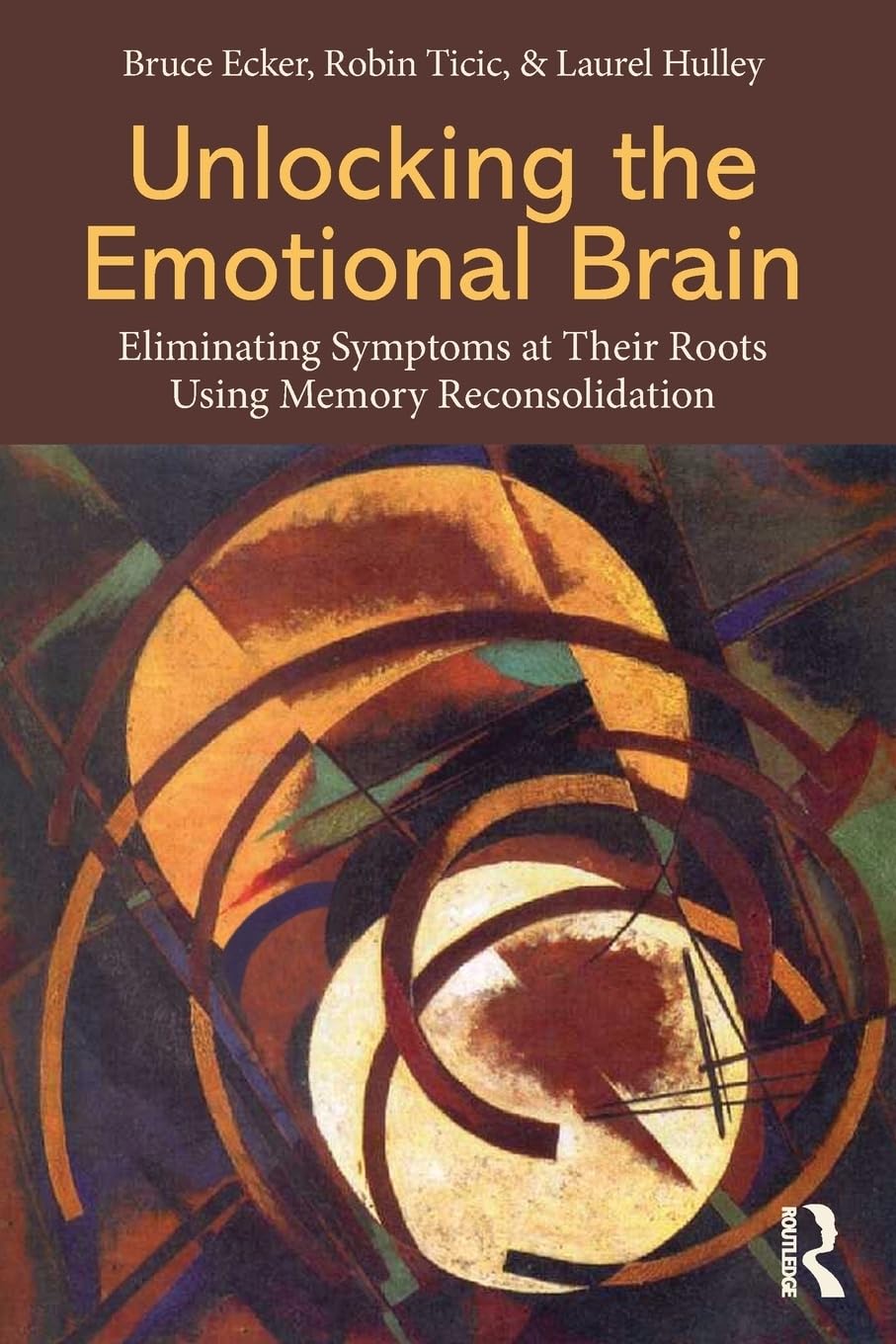
Unlocking the Emotional Brain: Eliminating Symptoms at Their Roots Using Memory Reconsolidation
Inclusive of all applicable taxes. FREE shipping on all orders.
Available Offers
- 🚚Free Delivery — Free shipping on all orders
- 💵Cash on Delivery — Pay when your order arrives
- ↩️15-Day Easy Returns — Hassle-free return policy
- 🔒Cash on Delivery — Pay safely when your order arrives
Check Delivery
Product Description
Introduction
For Indian psychology students, practicing therapists, and anyone fascinated by the science of lasting emotional change, Unlocking the Emotional Brain: Eliminating Symptoms at Their Roots Using Memory Reconsolidation offers a revolutionary perspective. Written by Bruce Ecker, this hardcover volume from Routledge presents a clinically proven, brain-based method for transforming deep-seated emotional learnings. Instead of merely managing symptoms, this book guides readers toward erasing the very roots of psychological distress, making it an indispensable resource for professionals and learners across India.
Book Overview
This book introduces memory reconsolidation—a groundbreaking neuroscientific process that allows therapists to unlock and rewrite emotional memories at the synaptic level. For decades, emotional learnings formed in childhood or during traumatic events were considered permanent. Ecker and his colleagues challenge this view, showing how precise therapeutic techniques can actually erase, not just suppress, the unconscious patterns that generate anxiety, depression, phobias, and relational difficulties. Through detailed case studies and step-by-step guidance, the book bridges clinical practice with cutting-edge brain science, offering a path to truly liberating change.
Key Highlights
- Memory Reconsolidation Explained: The first comprehensive guide to applying this discovery in therapy, enabling permanent symptom elimination.
- Evidence-Based Approach: Draws on decades of clinical research and neuroscience, making it a trusted reference for Indian practitioners.
- Practical Techniques: Provides clear protocols for inducing reconsolidation in sessions, with real-world examples from diverse therapeutic settings.
- Focus on Root Causes: Moves beyond symptom management to address the core emotional learnings that drive distress.
- Accessible Language: Complex brain science is broken down into understandable concepts for students and seasoned therapists alike.
Inside the Book
The book is structured into three parts. Part One lays the foundation, explaining the neuroscience of memory reconsolidation and why it matters for therapy. Part Two dives into clinical applications, presenting a detailed methodology for identifying and unlocking target emotional memories. Part Three explores integration, showing how reconsolidation works across different therapeutic modalities—from cognitive-behavioral to psychodynamic approaches. Each chapter includes vivid case illustrations, session transcripts, and reflective questions to deepen understanding.
Key Topics
- The neuroscience of emotional memory and synaptic plasticity
- How to detect and access unconscious emotional learnings
- Step-by-step protocol for memory reconsolidation in therapy
- Case studies on anxiety, trauma, depression, and relationship issues
- Integration with existing therapeutic frameworks
- Ethical considerations and therapist self-awareness
Reader Benefits
- For Therapists: Gain a powerful new tool to achieve lasting change with clients, reducing relapse and enhancing therapeutic outcomes.
- For Students: Build a solid understanding of modern brain science and its clinical applications, preparing for advanced practice.
- For Researchers: Access a comprehensive synthesis of memory reconsolidation research, with implications for future studies.
- For Self-Learners: Understand the mechanisms behind your own emotional patterns and how change is possible at a fundamental level.
Learning Outcomes
By studying this book, readers will be able to: identify the specific emotional learnings underlying a client’s symptoms; design interventions that reliably trigger memory reconsolidation; recognize the signs of successful unlocking in session; integrate reconsolidation work with other therapeutic techniques; and apply these methods across a wide range of clinical presentations. The knowledge gained is immediately applicable in Indian clinical settings, whether in urban clinics, rural outreach, or academic training programs.
Who Should Read
- Clinical psychologists, psychiatrists, and counselors in India
- Postgraduate students in psychology, neuroscience, and social work
- Mental health professionals seeking evidence-based innovation
- Anyone interested in the science of emotional transformation
- Faculty and researchers in Indian universities teaching psychotherapy or cognitive neuroscience
About the Author
Bruce Ecker is a leading psychotherapist, researcher, and co-director of the Coherence Psychology Institute. With over three decades of clinical experience, he has been at the forefront of translating memory reconsolidation research into effective therapeutic practice. He has trained thousands of therapists worldwide and published extensively in peer-reviewed journals. His work has been recognized for bridging the gap between neuroscience and psychotherapy, making complex ideas accessible and actionable.
About the Publisher
Routledge is a global academic publisher known for high-quality books in psychology, neuroscience, and social sciences. With a commitment to advancing knowledge and practice, Routledge publishes works that shape the field—from foundational texts to cutting-edge research. This hardcover edition reflects their dedication to producing durable, authoritative resources for professionals and students in India and around the world.
Conclusion
Unlocking the Emotional Brain is more than a book—it is a paradigm shift for psychotherapy. By providing a clear, science-backed method for erasing emotional suffering at its source, it empowers Indian therapists and students to achieve outcomes once thought impossible. Whether you are a seasoned clinician in Mumbai, a psychology student in Delhi, or a researcher in Bengaluru, this volume will transform how you understand and facilitate change. Add it to your library today and step into the future of emotional healing.
Quick Summary
Unlocking the Emotional Brain by Bruce Ecker is a groundbreaking work that translates the neuroscience of memory reconsolidation into practical psychotherapy. The book reveals how emotional memories, once thought to be indelible, can actually be erased at the synaptic level, allowing therapists to eliminate symptoms at their roots rather than merely suppressing them. Written for clinicians, students, and mental health professionals, it provides clear, step-by-step methods for applying this discovery in therapy sessions. Readers will learn how to unlock deep unconscious patterns, foster lasting change, and integrate empathic attunement with brain science. This hardcover edition from Routledge is an essential resource for Indian psychologists, psychiatrists, and counsellors seeking advanced, evidence-based techniques. By purchasing from Bookshops.in, customers receive a genuine, high-quality print edition with reliable delivery across India, supporting local bookstores and gaining access to a transformative clinical tool.
Book Highlights
Book Specifications
| ISBN-13 | 9780415897174 |
| ISBN-10 | 0415897173 |
| Publisher | Routledge |
| Language | English |
| Dimensions | 15.24 x 1.52 x 22.86 cm |
| Weight | 386 g |
| Category | Society & Social Sciences › Social Welfare & Social Services |
| Genre | Nonfiction |
| Reading Age | Adult |
| Original Language | English |
Frequently Asked Questions
What is memory reconsolidation in psychotherapy?
Who is the author of Unlocking the Emotional Brain?
Is this book suitable for beginners in psychology?
Does the book include practical therapy techniques?
What is the main difference between this book and other therapy books?
Can this book help with trauma treatment?
Is the book based on scientific research?
Do I need prior knowledge of neuroscience to read this?
How is this book relevant for Indian readers?
What is the price of this book on Bookshops.in?
Is this a hardcover or paperback?
Does the book have case studies?
Can I use this book for academic coursework?
Readers Also Search For
Customers Also Bought

Sociology
Imagination Beyond Nation: Latin American Popular Culture: 349 (Pitt Latin American Series)

Sociology
Boomer Volunteer Engagement: Facilitator's Tool Kit

Sociology
Making a Success of Marriage: Planning for Happily Ever After

Sociology
Causal Mediation Analysis (Analytical Methods for Social Research)

Sociology
Marriage and the Moral Imagination (New Departures in Anthropology)

Sociology
Social Change, Resistance and Social Practices: 19 (Studies in Critical Social Sciences, 19)
Related Products
View All
Society & Social Sciences
Sidgwick's Ethics and Victorian Moral Philosophy | by J. B. Schneewind | Jerome B. Schneewind | OUP Oxford | by J. B. Schneewind | Jerome B. Schneewind | OUP Oxford | by J. B. Schneewind | Jerome B. Schneewind | OUP Oxford | by J. B. Schneewind | Jerome B. Schneewind | OUP Oxford | by J. B. Schneewind | Jerome B. Schneewind | OUP Oxford | by J. B. Schneewind | Jerome B. Schneewind | OUP Oxford | by J. B. Schneewind | Jerome B. Schneewind | OUP Oxford | by J. B. Schneewind | Jerome B. Schneewind

Society & Social Sciences
Cognitive Phenomenology | by Tim Bayne | Michelle Montague | OUP UK | by Tim Bayne | Michelle Montague | OUP UK | by Tim Bayne | Michelle Montague | OUP UK | by Tim Bayne | Michelle Montague | OUP UK | by Tim Bayne | Michelle Montague | OUP UK | by Tim Bayne | Michelle Montague | OUP UK | by Tim Bayne | Michelle Montague | OUP UK | by Tim Bayne | Michelle Montague | OUP UK | by Tim Bayne | Michelle Montague | OUP UK | by Tim Bayne | Michelle Montague | OUP UK | by Tim Bayne | Michelle Montague |

Society & Social Sciences
Alasdair MacIntyre on Practical Philosophy | by Kelvin Knight | Peter Wicks | University of Notre Dame Press | by Kelvin Knight | Peter Wicks | University of Notre Dame Press | by Kelvin Knight | Peter Wicks | University of Notre Dame Press | by Kelvin Knight | Peter Wicks | University of Notre Dame Press | by Kelvin Knight | Peter Wicks | University of Notre Dame Press | by Kelvin Knight | Peter Wicks | University of Notre Dame Press | by Kelvin Knight | Peter Wicks | University of Notre Dame P

Society & Social Sciences
Philosophical Historicism and the Betrayal of First Philosophy | by Carl Page | Penn State University Press | by Carl Page | Penn State University Press | by Carl Page | Penn State University Press | by Carl Page | Penn State University Press | by Carl Page | Penn State University Press | by Carl Page | Penn State University Press | by Carl Page | Penn State University Press | by Carl Page | Penn State University Press | by Carl Page | Penn State University Press | by Carl Page | Penn State Univ

Society & Social Sciences
American and European Philosophy | by David Farrell Krell | Penn State University Press | by David Farrell Krell | Penn State University Press | by David Farrell Krell | Penn State University Press | by David Farrell Krell | Penn State University Press | by David Farrell Krell | Penn State University Press | by David Farrell Krell | Penn State University Press | by David Farrell Krell | Penn State University Press | by David Farrell Krell | Penn State University Press | by David Farrell Krell |
Society & Social Sciences