
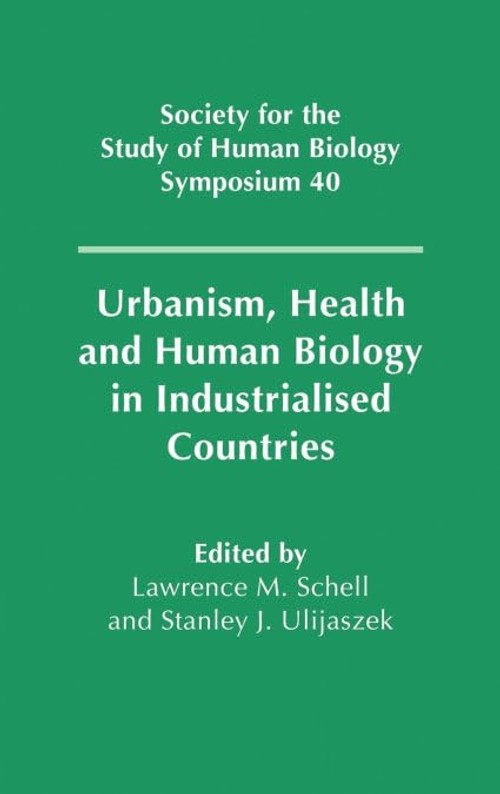
Urbanism, Health and Human Biology in Industrialised Countries by Lawrence M. Schell – A Cambridge University Press Clas
Inclusive of all applicable taxes. FREE shipping on all orders.
Available Offers
- 🚚Free Delivery — Free shipping on all orders
- 💵Cash on Delivery — Pay when your order arrives
- ↩️15-Day Easy Returns — Hassle-free return policy
- 🔒Cash on Delivery — Pay safely when your order arrives
Check Delivery
Product Description
Introduction
As India’s cities expand at an unprecedented pace, understanding the biological and health impacts of urban living has never been more critical. Urbanism, Health and Human Biology in Industrialised Countries by Lawrence M. Schell offers a rigorous scientific exploration of how modern urban environments shape human physiology, behaviour, and well-being. Published by Cambridge University Press, this hardcover volume is an essential resource for students, researchers, and professionals navigating the complex intersection of urbanisation and human biology.
Book Overview
This edited volume brings together leading experts to examine the multifaceted ways in which city life influences human health and biological function. With over 70% of the population in industrialised nations now living in urban areas—and similar trends sweeping across India—the book addresses the profound disconnect between our evolutionary heritage and the novel challenges posed by dense, polluted, and socially stratified urban environments. From dietary shifts and infectious disease patterns to stress, activity levels, and pollutant exposure, the chapters synthesise cutting-edge research across anthropology, epidemiology, and public health.
Key Highlights
- Interdisciplinary approach: Merges urban studies, human biology, and public health for a holistic understanding.
- Evidence-based insights: Draws on decades of empirical research from industrialised nations, with implications for rapidly urbanising countries like India.
- Focus on human adaptation: Explores how our bodies respond to urban stressors such as noise, crowding, and pollution.
- Practical relevance: Offers frameworks for addressing urban health challenges in policy, planning, and clinical practice.
- Authoritative source: Published by Cambridge University Press, a hallmark of academic excellence.
Inside the Book
The book is structured into thematic sections that guide readers from foundational concepts to applied insights. Early chapters establish the evolutionary backdrop of human biology, contrasting it with the rapid pace of urban change. Subsequent sections delve into specific health outcomes, including nutrition and growth, reproductive health, chronic disease risk, and mental well-being. Each chapter is supported by detailed data, case studies, and critical analysis, making complex topics accessible to advanced undergraduates, postgraduates, and professionals alike.
Key Topics
- Urbanisation and its impact on human growth and development
- Nutrition transition and dietary patterns in cities
- Stress, social stratification, and health disparities
- Infectious and non-communicable disease in urban settings
- Environmental pollutants and biological consequences
- Energy expenditure, physical activity, and urban design
- Reproductive health and fertility in industrialised contexts
Reader Benefits
Readers will gain a deep, scientifically grounded understanding of how city living alters human biology. The book equips you with the knowledge to critically evaluate urban health policies, design better public health interventions, and appreciate the biological trade-offs of modern lifestyles. For Indian students and professionals, the insights are directly transferable to our own rapidly urbanising landscape, where issues like air pollution, sedentary behaviour, and dietary changes are pressing concerns.
Learning Outcomes
- Understand the evolutionary mismatch between human biology and urban environments.
- Analyse the biological mechanisms linking urban exposures to health outcomes.
- Evaluate epidemiological evidence on urban health across industrialised nations.
- Apply interdisciplinary perspectives to real-world urban health challenges.
- Develop critical thinking on policy and planning for healthier cities.
Who Should Read
This book is ideal for students and researchers in anthropology, public health, urban planning, human biology, and environmental science. It is equally valuable for medical professionals, policymakers, and urban development practitioners seeking evidence-based insights into the health consequences of urbanisation. Indian readers pursuing postgraduate studies or working in city health departments will find the content particularly relevant to local contexts.
About the Author
Lawrence M. Schell is a distinguished professor of anthropology and epidemiology at the University at Albany, State University of New York. With decades of research on human growth, nutrition, and environmental health, he has contributed extensively to understanding how social and ecological factors shape human biology. His editorial leadership ensures a cohesive, authoritative volume that bridges disciplines.
About the Publisher
Cambridge University Press is one of the world’s oldest and most respected academic publishers. Known for rigorous peer review and high-quality scholarship, Cambridge titles set the standard in science, humanities, and social sciences. This hardcover edition reflects their commitment to durable, lasting works that serve as foundational references for years to come.
Conclusion
In an era where more humans live in cities than ever before, Urbanism, Health and Human Biology in Industrialised Countries provides an indispensable scientific compass. Whether you are a student, researcher, or urban health advocate, this book will deepen your understanding of the biological consequences of modern urban life—and inspire informed action for healthier, more sustainable cities in India and beyond.
Quick Summary
Urbanism, Health and Human Biology in Industrialised Countries by Lawrence M. Schell is a seminal work that explores how urban living in industrialised nations affects human health and biology. With over 70% of populations in these countries residing in cities, the book examines the unique social and biological challenges—such as social stratification, stress, infectious diseases, altered diets, reduced physical activity, and exposure to industrial pollutants—that shape human nutrition, growth, energy expenditure, and reproduction. Written from an evolutionary perspective, it highlights the mismatch between our evolved biology and modern urban environments. This Cambridge University Press hardcover is ideal for Indian students and researchers in anthropology, public health, urban planning, and sociology. It provides critical insights for understanding and addressing health issues arising from rapid urbanisation in India. Purchasing from Bookshops.in ensures you receive a genuine print copy with excellent service.
Book Highlights
Book Specifications
| ISBN-13 | 9780521620970 |
| ISBN-10 | 052162097X |
| Publisher | Cambridge University Press |
| Language | English |
| Dimensions | 15.88 x 2.54 x 23.5 cm |
| Weight | 1 kg 50 g |
| Category | Administration & Policy › Public Health |
| Genre | Nonfiction |
| Original Language | English |
Frequently Asked Questions
What is this book about?
Who is the author?
Is this book suitable for Indian students?
Which publisher released this book?
What is the ISBN?
What language is the book in?
What is the price?
Is this book a hardcover?
What is the book's rating?
What category does it belong to?
Does it cover Indian urban health issues?
Can I use this book for my university course?
Why should I buy from Bookshops.in?
Readers Also Search For
Related Products
View All
Science & Mathematics
Elements of Pelagos Biology: With Focus on the Mediterranean Sea

Science & Mathematics
Mathematical Theory of Optimal Processes (Classics of Soviet Mathematics)

Science & Mathematics
Cambridge IGCSE and O Level Additional Mathematics by Val Hanrahan – Textbook for 0606/4037

Science & Mathematics
Squid - Superconducting Quantum Interference Devices and Their Applications: Proceedings of the International Conference on Superconducting Quantum Devices, Berlin-west, October 4-8, 1976

Science & Mathematics
Concise Encyclopedia of Biochemistry
Science & Mathematics