
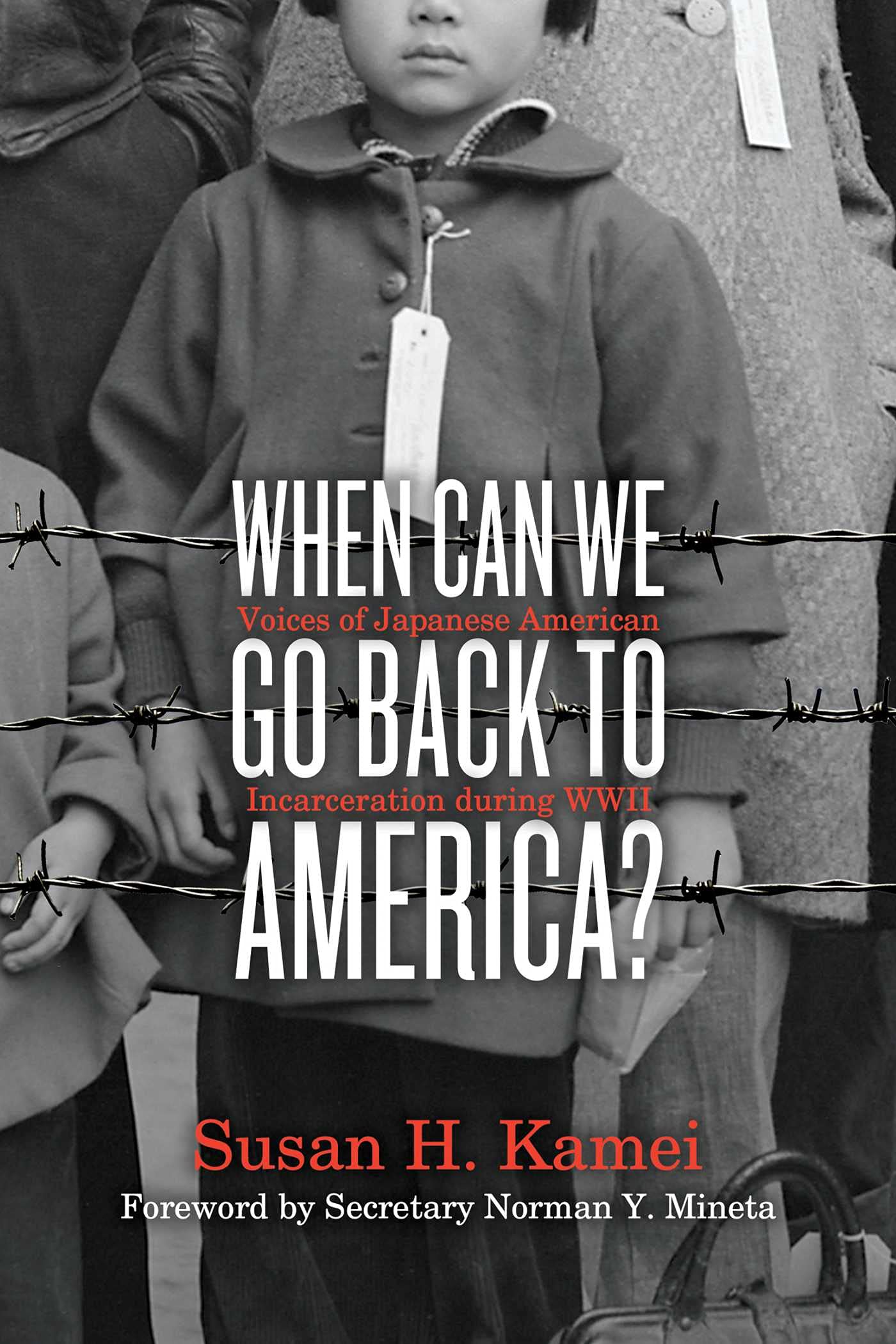
When Can We Go Back to America?: A Heartbreaking Account of Japanese American Incarceration
Inclusive of all applicable taxes. FREE shipping on all orders.
Available Offers
- 🚚Free Delivery — Free shipping on all orders
- 💵Cash on Delivery — Pay when your order arrives
- ↩️15-Day Easy Returns — Hassle-free return policy
- 🔒Cash on Delivery — Pay safely when your order arrives
Check Delivery
Product Description
Introduction
When Can We Go Back to America? by Barry Denenberg is a powerful and deeply researched work of narrative nonfiction that brings to light one of the most troubling chapters in American history: the forced incarceration of Japanese Americans during World War II. Written for young readers and students, this book combines personal stories, historical context, and compelling prose to answer the difficult questions surrounding civil rights, prejudice, and resilience. For Indian readers and students who are passionate about history, social justice, and human rights, this book offers a poignant and educational journey into a past that must never be forgotten.
Book Overview
This hardcover edition, published by Simon & Schuster Books for Young Readers, presents a gripping account of what happened after the attack on Pearl Harbor in 1941. More than 120,000 people of Japanese ancestry—most of them American citizens—were forcibly removed from their homes on the West Coast and sent to desolate detention camps. Through the voices of over 130 individuals who lived through this experience, Denenberg weaves a narrative that is both heartbreaking and inspiring. The book explores not only the events themselves but also the long-lasting impact on families, communities, and the American conscience.
Key Highlights
- Firsthand Accounts: More than 130 personal stories from survivors, including Norman Y. Mineta, who later became a U.S. Secretary of Transportation.
- Historical Accuracy: Meticulously researched with primary sources, government documents, and archival photographs.
- Age-Appropriate Narrative: Written specifically for young readers, making complex history accessible and engaging.
- Emotional Depth: Captures the fear, confusion, courage, and hope of those who endured the camps.
- Relevance Today: Connects historical injustices to contemporary discussions about discrimination and civil liberties.
Inside the Book
The book is structured chronologically, beginning with the vibrant Japanese American communities before the war, moving through the shock of Pearl Harbor, the mass removal, and life behind barbed wire. Denenberg does not shy away from the harsh realities—the loss of homes and businesses, the cramped barracks, the lack of privacy, and the constant uncertainty. Yet he also highlights moments of resilience: children attending school inside the camps, families creating gardens, and young people finding ways to prove their loyalty. The final chapters address the long struggle for redress and apology, offering a message of hope and justice.
Key Topics
- Executive Order 9066: The government order that authorized the incarceration.
- Life in the Camps: Daily routines, schooling, work, and recreation in places like Manzanar and Tule Lake.
- Civil Rights Violations: The suspension of habeas corpus and due process for Japanese Americans.
- Loyalty and Identity: The difficult choices faced by young Nisei (second-generation) Americans.
- Redress and Reparations: The decades-long fight for an official apology and compensation.
Reader Benefits
- Builds Empathy: Personal narratives help readers connect emotionally with historical events.
- Enhances Critical Thinking: Encourages readers to question government actions and think about justice.
- Supports Curriculum: Ideal for school projects, essays, and classroom discussions on World War II and human rights.
- Improves Historical Literacy: Provides a nuanced understanding of a lesser-known aspect of American history.
- Inspires Action: Motivates young readers to stand up against prejudice in their own communities.
Learning Outcomes
After reading When Can We Go Back to America?, students will be able to explain the causes and consequences of the Japanese American incarceration, analyze the role of racism and fear in shaping public policy, and evaluate the importance of protecting civil liberties during times of crisis. They will also gain skills in interpreting primary sources, understanding multiple perspectives, and drawing parallels between historical and current events.
Who Should Read
- Students aged 12 and above studying World War II, American history, or social justice.
- Teachers and educators looking for a compelling nonfiction text for their classrooms.
- Young history enthusiasts who enjoy true stories of courage and resilience.
- Indian readers interested in comparative histories of discrimination and diaspora communities.
- Parents who want to introduce their children to important but difficult historical topics in an age-appropriate way.
About the Author
Barry Denenberg is an acclaimed author of historical nonfiction for young readers. He has written extensively on topics ranging from the Holocaust to the American Civil Rights Movement, always with a focus on personal stories that bring history to life. His works are known for their meticulous research and ability to engage young minds with complex moral questions. Denenberg’s passion for uncovering hidden histories makes him a trusted voice in children’s literature.
About the Publisher
Simon & Schuster Books for Young Readers is a leading publisher of children’s and young adult literature, known for producing award-winning titles that educate, inspire, and entertain. With a commitment to quality storytelling and historical accuracy, the imprint has published many books that help young readers understand the world around them. This hardcover edition reflects the publisher’s dedication to creating lasting, meaningful books for classrooms and homes.
Conclusion
When Can We Go Back to America? is more than a history book—it is a call to remember, to empathize, and to act. Barry Denenberg’s masterful blend of personal testimony and historical analysis makes this an essential addition to any young reader’s library. For Indian students and families who value education, justice, and the power of storytelling, this book offers timeless lessons about courage in the face of oppression. Order your copy today from Bookshops.in and give the gift of understanding.
Quick Summary
When Can We Go Back to America? by Barry Denenberg is a compelling narrative history that recounts the tragic incarceration of Japanese Americans during World War II. After the bombing of Pearl Harbor, the U.S. government forcibly removed over 120,000 people of Japanese ancestry from their homes and placed them in desolate detention camps, simply because of their race. This book brings together the voices of more than 130 individuals who lived through this dark period, many of them young at the time, to tell their stories of loss, resilience, and hope. It is written for young readers, students, and anyone who wants to understand how fear and prejudice can lead to grave injustices. Readers will learn about the violation of civil liberties, the daily struggles of camp life, and the long fight for redress. This book is ideal for Indian students studying American history, social studies, or human rights. By purchasing from Bookshops.in, you get a genuine hardcover edition delivered to your doorstep, supporting local bookstores and ensuring quality reading material.
Book Highlights
Book Specifications
| ISBN-13 | 9781481401449 |
| ISBN-10 | 1481401440 |
| Publisher | Simon & Schuster |
| Language | English |
| Dimensions | 15.24 x 5.59 x 22.86 cm |
| Weight | 907 g |
| Category | By Region & Country › Americas |
| Genre | Historical Nonfiction |
| Reading Age | 12+ |
| Original Language | English |
Frequently Asked Questions
What is the book 'When Can We Go Back to America?' about?
Who is the author of this book?
Is this book suitable for Indian students?
What age group is this book intended for?
Does the book include real-life stories?
What is the ISBN of this book?
Is this book available in hardcover?
What language is the book written in?
Can I use this book for a school project?
Does the book cover the redress movement?
What makes this book different from other WWII histories?
Why should I buy this book from Bookshops.in?
Readers Also Search For
Related Products
View All
History
The Information Revolution: Transforming the World Through Technology (World History)
History
Human Nature and the French Revolution: From the Enlightenment to the Napoleonic Code: 3 (Polygons: Cultural Diversities and Intersections, 3)
History
The Unmaking of Home in Contemporary Art (Cultural Spaces)

History
Handbook to Life in Medieval and Early Modern Japan | by William E. Deal | Oxford University Press | by William E. Deal | Oxford University Press | by William E. Deal | Oxford University Press | by William E. Deal | Oxford University Press | by William E. Deal | Oxford University Press | by William E. Deal | Oxford University Press | by William E. Deal | Oxford University Press | by William E. Deal | Oxford University Press | by William E. Deal | Oxford University Press | by William E. Deal | Ox

History
The Narrators of Barbarian History (A.D. 550-800) | by Walter Goffart | University of Notre Dame Press | by Walter Goffart | University of Notre Dame Press | by Walter Goffart | University of Notre Dame Press | by Walter Goffart | University of Notre Dame Press | by Walter Goffart | University of Notre Dame Press | by Walter Goffart | University of Notre Dame Press | by Walter Goffart | University of Notre Dame Press | by Walter Goffart | University of Notre Dame Press | by Walter Goffart | Univ
History