
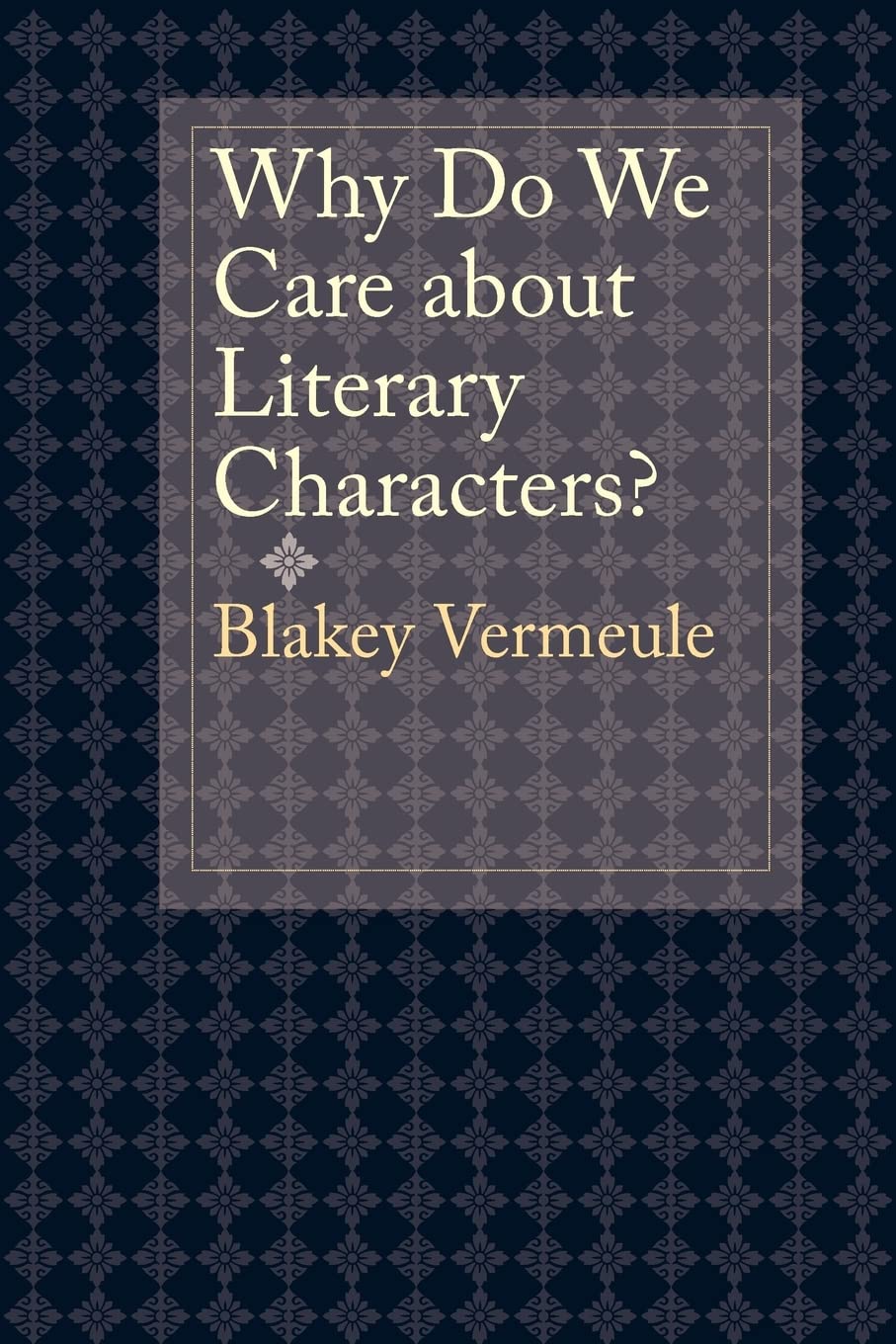
Why Do We Care About Literary Characters? by Blakey Vermeule – A Cognitive and Literary Exploration of Emotional Attachm
Inclusive of all applicable taxes. FREE shipping on all orders.
Available Offers
- 🚚Free Delivery — Free shipping on all orders
- 💵Cash on Delivery — Pay when your order arrives
- ↩️15-Day Easy Returns — Hassle-free return policy
- 🔒Cash on Delivery — Pay safely when your order arrives
Check Delivery
Product Description
Introduction
Have you ever found yourself deeply invested in the fate of a character who doesn’t actually exist? Do you feel a pang of loss when you finish a novel, as if you’re saying goodbye to a close friend? In Why Do We Care About Literary Characters?, author Blakey Vermeule takes readers on a fascinating intellectual journey to explore this very human phenomenon. Published by the prestigious Johns Hopkins University Press, this hardcover edition is a must-have for students, scholars, and avid readers in India who wish to understand the psychological and cognitive roots of our emotional bonds with fiction.
Book Overview
This book is a rigorous yet accessible examination of how readers form emotional attachments to fictional characters—people they know are not real. Vermeule combines literary analysis with insights from cognitive science, evolutionary psychology, and philosophy to argue that caring about literary characters is remarkably similar to caring about real people, especially strangers. The work primarily focuses on eighteenth-century British fiction but also extends its analysis to modern and postmodern works by authors such as Thomas Mann, J. M. Coetzee, Ian McEwan, and Chinua Achebe. By bridging the gap between literature and science, Vermeule offers a groundbreaking perspective on why stories matter to us on a fundamental, biological level.
Key Highlights
- Interdisciplinary Approach: Merges cognitive science, evolutionary psychology, and literary theory to decode reader empathy.
- Classic and Modern Examples: Analyzes works from the eighteenth century alongside contemporary novels by Ian McEwan and Chinua Achebe.
- Focus on Emotional Engagement: Explores how sexual desire, ambition, rivalry, and gender identity shape our connection to characters.
- Rigorous Scholarship: Authored by a leading academic, yet written in a style that is engaging for general readers.
- Hardcover Edition: A durable, premium binding perfect for libraries, classrooms, and personal collections.
Story Themes
At its core, the book examines how literature taps into our innate social instincts. Vermeule argues that our brains are wired to care about others—even fictional ones—because this capacity helped our ancestors survive in complex social groups. Key themes include the nature of empathy, the psychology of gossip and social evaluation, the role of narrative in shaping moral intuition, and the way fiction allows us to safely explore dangerous desires and rivalries. The book also delves into how rapid historical and economic changes in the eighteenth century influenced the rise of the novel and its focus on intimate, character-driven stories.
Reader Benefits
By reading this book, you will gain a deeper understanding of your own reading habits. You’ll learn why certain characters feel so real, why you root for some and despise others, and how these fictional relationships can actually improve your real-life social intelligence. For students of literature, psychology, or cognitive science, this book provides a fresh framework for analysis. For the general reader, it offers a delightful and thought-provoking look behind the curtain of narrative magic. It will change the way you think about every book you pick up.
Who Should Read
- Literature Students and Scholars: Anyone studying narrative theory, reader-response criticism, or eighteenth-century fiction.
- Psychology Enthusiasts: Readers interested in cognitive science, evolutionary psychology, and the science of empathy.
- Writers and Editors: Those who want to understand how to create compelling, emotionally resonant characters.
- Book Lovers: Any reader who has ever wondered why they care so much about the lives of people who never existed.
About the Author
Blakey Vermeule is a professor of English at Stanford University, where she specializes in eighteenth-century British literature, cognitive approaches to literature, and the history of the novel. She is known for her ability to bridge the humanities and sciences, making complex ideas accessible to a wide audience. Her work has been widely cited in both literary and psychological circles, and she is considered a leading voice in the field of cognitive literary studies.
About the Publisher
Johns Hopkins University Press is one of the oldest and most respected university presses in the United States. Founded in 1878, it is renowned for publishing authoritative works in the humanities, social sciences, and sciences. This hardcover edition reflects the press’s commitment to academic excellence and high-quality production standards, making it a reliable addition to any serious reader’s library.
Conclusion
Why Do We Care About Literary Characters? is not just a book about books—it is a book about what it means to be human. Blakey Vermeule’s insightful analysis will leave you marveling at the intricate ways our minds engage with stories. Whether you are a student in Delhi, a professor in Mumbai, or a passionate reader in Kolkata, this hardcover volume will enrich your understanding of literature and yourself. Order your copy today from Bookshops.in and discover the science behind your favourite fictional friends.
Quick Summary
Why Do We Care About Literary Characters? by Blakey Vermeule is a fascinating exploration of the emotional bonds readers form with fictional characters. Drawing on cognitive science, evolutionary psychology, and literary analysis, Vermeule examines why we care about people who do not exist. The book delves into 18th-century British fiction, from Samuel Richardson to Jane Austen, and also discusses postmodern works by Thomas Mann, J.M. Coetzee, Ian McEwan, and Chinua Achebe. Readers will learn how fiction triggers real emotional responses, shapes social cognition, and influences real-life relationships. This book is ideal for students of literature, psychology enthusiasts, and general readers who want to understand the magic of narrative. Published by Johns Hopkins University Press, this hardcover edition is perfect for academic libraries and personal collections. Order your copy from Bookshops.in, India's premium online bookstore, for prompt delivery and excellent service.
Book Highlights
Book Specifications
| ISBN-13 | 9781421404004 |
| ISBN-10 | 1421404001 |
| Publisher | Johns Hopkins Univ Pr |
| Language | English |
| Dimensions | 15.24 x 1.68 x 22.86 cm |
| Weight | 445 g |
| Country | India |
| Category | Science Fiction › History & Criticism |
| Genre | Literary Criticism |
| Original Language | English |
Frequently Asked Questions
What is this book about?
Who is Blakey Vermeule?
Which authors are discussed in the book?
Is this book suitable for non-academic readers?
What is the main argument of the book?
Does the book cover modern fiction?
What is the role of cognitive science in this book?
Can this book help me write better fiction?
Is this book used in university courses?
What makes this book different from other literary theory books?
Does the book include examples from Indian literature?
Is the book available in Indian bookstores?
What is the publication date?
What is the ISBN?
Readers Also Search For
Customers Also Bought

Related Products
View All
Science Fiction & Fantasy
Mediation in Contemporary Native American Fiction: Volume 15 (The American Indian Literature and Critical Studies Series)

Science Fiction & Fantasy
They Hurt, They Scar, They Shoot, They Kill: Toxic Characters in Young Adult Fiction: 52 (Studies in Young Adult Literature, 52)
Science Fiction & Fantasy
Woolf and the City: Selected Papers of the Nineteenth Annual Conference on Virginia Woolf (Clemson University Press w/ LUP)
Science Fiction & Fantasy
Belted Heroes and Bound Women: The Myth of the Homeric Warrior King (Greek Studies-Interdisciplinary Approaches)
Science Fiction & Fantasy
The High Court (Sky Throne)
Science Fiction & Fantasy