
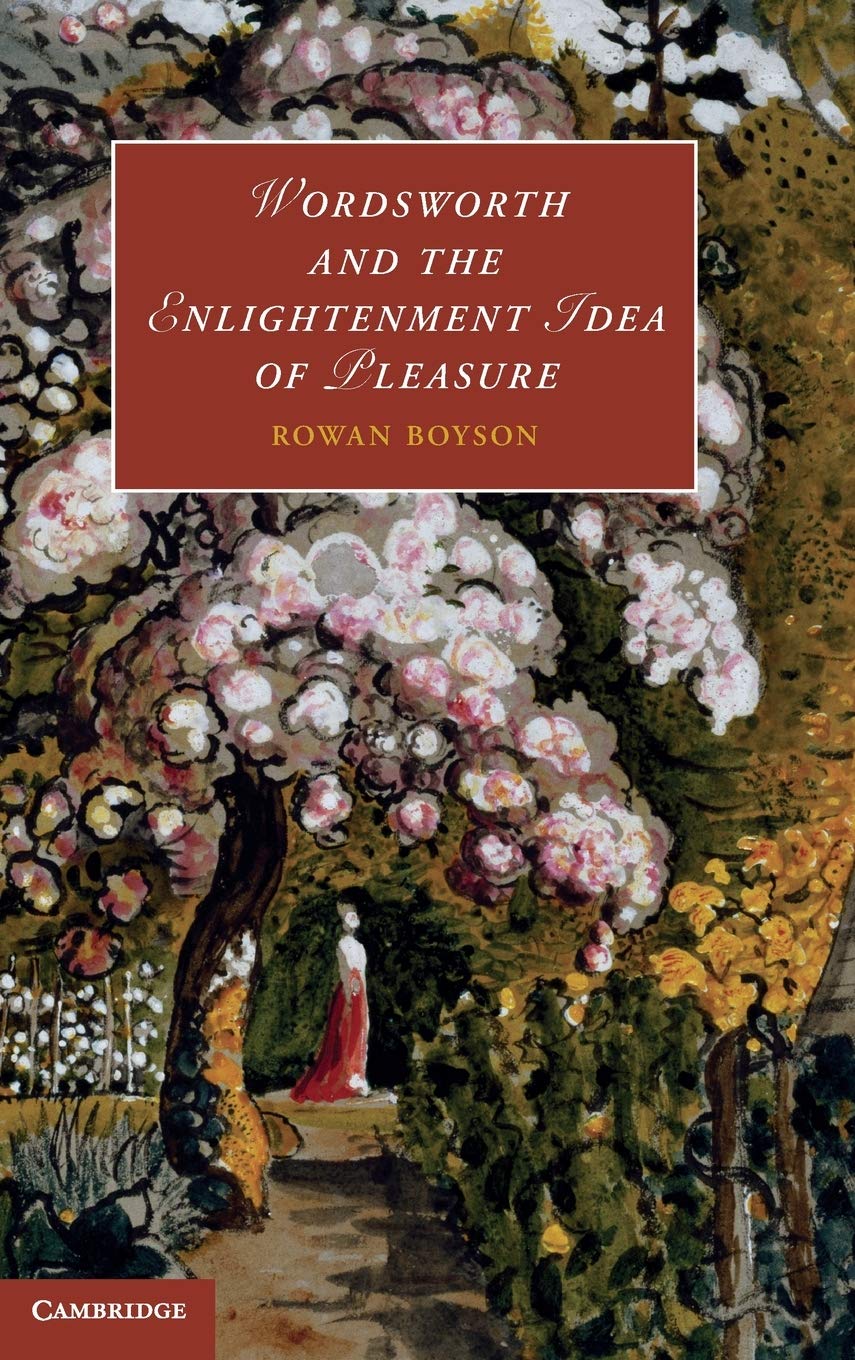
Wordsworth and the Enlightenment Idea of Pleasure by Rowan Boyson – A Study of Shared Joy in Romantic Poetry and Philoso
Inclusive of all applicable taxes. FREE shipping on all orders.
Available Offers
- 🚚Free Delivery — Free shipping on all orders
- 💵Cash on Delivery — Pay when your order arrives
- ↩️15-Day Easy Returns — Hassle-free return policy
- 🔒Cash on Delivery — Pay safely when your order arrives
Check Delivery
Product Description
Introduction
In an age where pleasure is often equated with fleeting gratification or individual indulgence, Rowan Boyson’s Wordsworth and the Enlightenment Idea of Pleasure offers a refreshing and intellectually rigorous counterpoint. This hardcover volume from Cambridge University Press invites readers to rediscover the eighteenth-century philosophical roots of pleasure as a shared, ethical, and politically significant experience. Through the lens of William Wordsworth’s poetry and prose, Boyson crafts a compelling narrative that bridges Enlightenment thought with Romantic creativity, making this book an essential addition for students, scholars, and anyone curious about the deeper dimensions of human joy.
Book Overview
Published by the prestigious Cambridge University Press, this work re-examines ancient questions about the nature and causes of pleasure that were revived during the Enlightenment. Unlike modern tendencies to view pleasure as selfish or private, Enlightenment philosophers—and later Wordsworth—portrayed it as a communal, even democratic, force. Boyson meticulously traces this idea through a wide range of texts, from classical philosophy to eighteenth-century treatises and Romantic-era poetry. The book argues that pleasure, far from being a mere sensory delight, holds profound implications for how we understand society, ethics, and aesthetic experience.
Key Highlights
- Original Interdisciplinary Approach: Combines philosophy, literary criticism, and political theory to explore pleasure as a shared ideal.
- Focus on Wordsworth: In-depth analysis of Wordsworth’s poems and prose, including The Prelude and Lyrical Ballads, as vehicles for Enlightenment ideas.
- Historical Breadth: Engages with thinkers from Epicurus and Plato to David Hume, Jean-Jacques Rousseau, and Immanuel Kant.
- Political Relevance: Demonstrates how pleasure was linked to concepts of citizenship, community, and social harmony in the Enlightenment.
- Scholarly Yet Accessible: Written for both academic readers and intellectually curious general audiences.
Inside the Book
The book is structured to guide readers from foundational philosophical debates to their literary manifestations. Boyson begins by outlining the Enlightenment’s revaluation of pleasure, contrasting it with later, more individualistic views. Subsequent chapters delve into Wordsworth’s poetry, showing how his depictions of natural beauty, childhood, and rural life embody a philosophy of shared joy. The author also examines lesser-known prose works and letters, revealing Wordsworth’s engagement with contemporary thinkers. Each chapter builds a case for pleasure as a catalyst for ethical awareness and collective well-being.
Key Topics
- The Enlightenment revival of Epicurean and Stoic ideas of pleasure
- Pleasure as a social and political concept in the works of Hume, Rousseau, and Kant
- Wordsworth’s poetic representations of joy, memory, and human connection
- The relationship between aesthetic pleasure and moral sensibility
- Critiques of selfish hedonism and the case for ‘disinterested’ pleasure
- The role of nature and solitude in fostering communal feeling
Reader Benefits
By reading this book, you will gain a deeper appreciation of how pleasure has been understood not just as a personal emotion but as a foundation for ethical life and political community. It challenges modern assumptions about happiness and offers a historically grounded alternative that resonates with contemporary debates on well-being, social solidarity, and environmental consciousness. For Indian readers, the book’s emphasis on shared joy and natural beauty aligns with traditions of collective celebration and reverence for nature found in Indian philosophy and literature.
Learning Outcomes
- Understand the key philosophical debates about pleasure from the Enlightenment to Romanticism.
- Analyze Wordsworth’s poetry and prose in the context of eighteenth-century ideas.
- Critically evaluate modern notions of pleasure against historical perspectives.
- Connect literary texts to broader ethical and political questions.
- Develop skills in interdisciplinary reading and argumentation.
Who Should Read
This book is ideal for undergraduate and postgraduate students of English literature, philosophy, political theory, and cultural studies. It will also appeal to scholars researching Romanticism, the Enlightenment, or the history of emotions. General readers with a passion for poetry, intellectual history, or the philosophy of happiness will find it both enlightening and enjoyable. Teachers and educators looking for a nuanced text to enrich their courses will also benefit from its clear arguments and rich textual analysis.
About the Author
Rowan Boyson is a scholar of eighteenth-century and Romantic literature, with a particular interest in the intersection of philosophy, politics, and aesthetics. She has taught at the University of Cambridge and other institutions, and her research focuses on how literary forms engage with ideas of pleasure, community, and ethics. Her work is known for its clarity, depth, and ability to make complex historical debates accessible to modern readers.
About the Publisher
Cambridge University Press is one of the world’s oldest and most respected academic publishers, with a legacy of producing groundbreaking scholarship across disciplines. This book is part of their prestigious Cambridge Studies in Romanticism series, which showcases innovative research on the literature and culture of the Romantic period. Every Cambridge title is peer-reviewed and edited to the highest standards, ensuring reliability and academic rigour.
Conclusion
Wordsworth and the Enlightenment Idea of Pleasure is more than a scholarly monograph—it is an invitation to rethink one of the most fundamental aspects of human experience. By recovering the Enlightenment vision of pleasure as a shared, ethical, and political force, Rowan Boyson provides a timely antidote to modern cynicism. Whether you are a seasoned academic or a curious reader, this book will enrich your understanding of literature, philosophy, and the enduring power of joy. Order your copy today from Bookshops.in and embark on a journey into the heart of Romantic thought.
Quick Summary
Rowan Boyson's 'Wordsworth and the Enlightenment Idea of Pleasure' is a compelling academic work that reexamines the concept of pleasure in 18th-century philosophy and Romantic literature. Contrary to modern assumptions that pleasure is primarily selfish, Boyson shows that Enlightenment thinkers often celebrated pleasure as a shared, communal experience with deep ethical and political implications. The book focuses extensively on William Wordsworth's poetry and prose, demonstrating how his works embody this ideal of shared joy. Readers will gain a nuanced understanding of how pleasure connects to aesthetics, community, and politics. This book is ideal for Indian students and scholars of English literature, philosophy, and cultural studies who seek a rigorous yet accessible analysis. By ordering from Bookshops.in, you receive a genuine hardcover edition from Cambridge University Press, ensuring quality and authenticity for your academic or personal library.
Book Highlights
Book Specifications
| ISBN-13 | 9781107023307 |
| ISBN-10 | 1107023300 |
| Publisher | Cambridge University Press |
| Language | English |
| Dimensions | 15.24 x 2.03 x 22.86 cm |
| Weight | 510 g |
| Country | India |
| Category | Literature › English Literature |
| Genre | Literary Criticism |
| Original Language | English |
Frequently Asked Questions
What is the main argument of 'Wordsworth and the Enlightenment Idea of Pleasure'?
Who is the author of this book?
Is this book suitable for undergraduate students?
Does the book only focus on Wordsworth?
What is the ISBN of this book?
Is this book available in hardcover?
What language is the book written in?
What is the price of this book in India?
Does the book discuss political philosophy?
Can I use this book for my research on Romantic poetry?
Is this book part of a series?
Where can I buy this book in India?
Readers Also Search For
Customers Also Bought
McFarland & Company
Playing with the Guys | by Marc A. Ouellette | Matthew Wilhelm Kapell | McFarland & Company | by Marc A. Ouellette | Matthew Wilhelm Kapell | McFarland & Company | by Marc A. Ouellette | Matthew Wilhelm Kapell | McFarland & Company | by Marc A. Ouellette | Matthew Wilhelm Kapell | McFarland & Company | by Marc A. Ouellette | Matthew Wilhelm Kapell | McFarland & Company | by Marc A. Ouellette | Matthew Wilhelm Kapell | McFarland & Company | by Marc A. Ouellette | Matthew W
Rowman & Littlefield Publishers
Joss Whedon's Dollhouse: Confounding Purpose, Confusing Identity (Science Fiction Television)
State University of New York Press
Mexico Unmanned: The Cultural Politics of Masculinity in Mexican Cinema (SUNY series in Latin American Cinema)

McFarland & Company
Valley Forge to Monmouth | by Jim Stempel | McFarland & Company | by Jim Stempel | McFarland & Company | by Jim Stempel | McFarland & Company | by Jim Stempel | McFarland & Company | by Jim Stempel | McFarland & Company | by Jim Stempel | McFarland & Company | by Jim Stempel | McFarland & Company | by Jim Stempel | McFarland & Company | by Jim Stempel | McFarland & Company | by Jim Stempel | McFarland & Company | by Jim Stempel | McFarland & Company |
University of Toronto Press
Structures of Feeling in Seventeenth-Century Cultural Expression (UCLA Center Clark Library)
McFarland & Company
Welcome to Arkham Asylum | by Sharon Packer | Daniel R. Fredrick | McFarland & Company | by Sharon Packer | Daniel R. Fredrick | McFarland & Company | by Sharon Packer | Daniel R. Fredrick | McFarland & Company | by Sharon Packer | Daniel R. Fredrick | McFarland & Company | by Sharon Packer | Daniel R. Fredrick | McFarland & Company | by Sharon Packer | Daniel R. Fredrick | McFarland & Company | by Sharon Packer | Daniel R. Fredrick | McFarland & Company | by Sharon P
Related Products
View All
Cambridge University Press
Jane Austen and the Enlightenment (English, Peter Knox-Shaw)

Cambridge University Press
Children of the Queen's Revels (English, Lucy Munro)

Cambridge University Press
Site Automation | by Thomas Bock | Thomas Linner | Cambridge University Press | by Thomas Bock | Thomas Linner | Cambridge University Press | by Thomas Bock | Thomas Linner | Cambridge University Press | by Thomas Bock | Thomas Linner | Cambridge University Press | by Thomas Bock | Thomas Linner | Cambridge University Press | by Thomas Bock | Thomas Linner | Cambridge University Press | by Thomas Bock | Thomas Linner | Cambridge University Press | by Thomas Bock | Thomas Linner | Cambridge Unive
Cambridge University Press
Complex Analysis | by Ian Stewart | David Tall | Cambridge University Press | by Ian Stewart | David Tall | Cambridge University Press | by Ian Stewart | David Tall | Cambridge University Press | by Ian Stewart | David Tall | Cambridge University Press | by Ian Stewart | David Tall | Cambridge University Press | by Ian Stewart | David Tall | Cambridge University Press | by Ian Stewart | David Tall | Cambridge University Press | by Ian Stewart | David Tall | Cambridge University Press | by Ian St
Cambridge University Press
Taming Intuition | by Kevin Arceneaux | Ryan J. Vander Wielen | Cambridge University Press | by Kevin Arceneaux | Ryan J. Vander Wielen | Cambridge University Press | by Kevin Arceneaux | Ryan J. Vander Wielen | Cambridge University Press | by Kevin Arceneaux | Ryan J. Vander Wielen | Cambridge University Press | by Kevin Arceneaux | Ryan J. Vander Wielen | Cambridge University Press | by Kevin Arceneaux | Ryan J. Vander Wielen | Cambridge University Press | by Kevin Arceneaux | Ryan J. Vander W

Cambridge University Press