
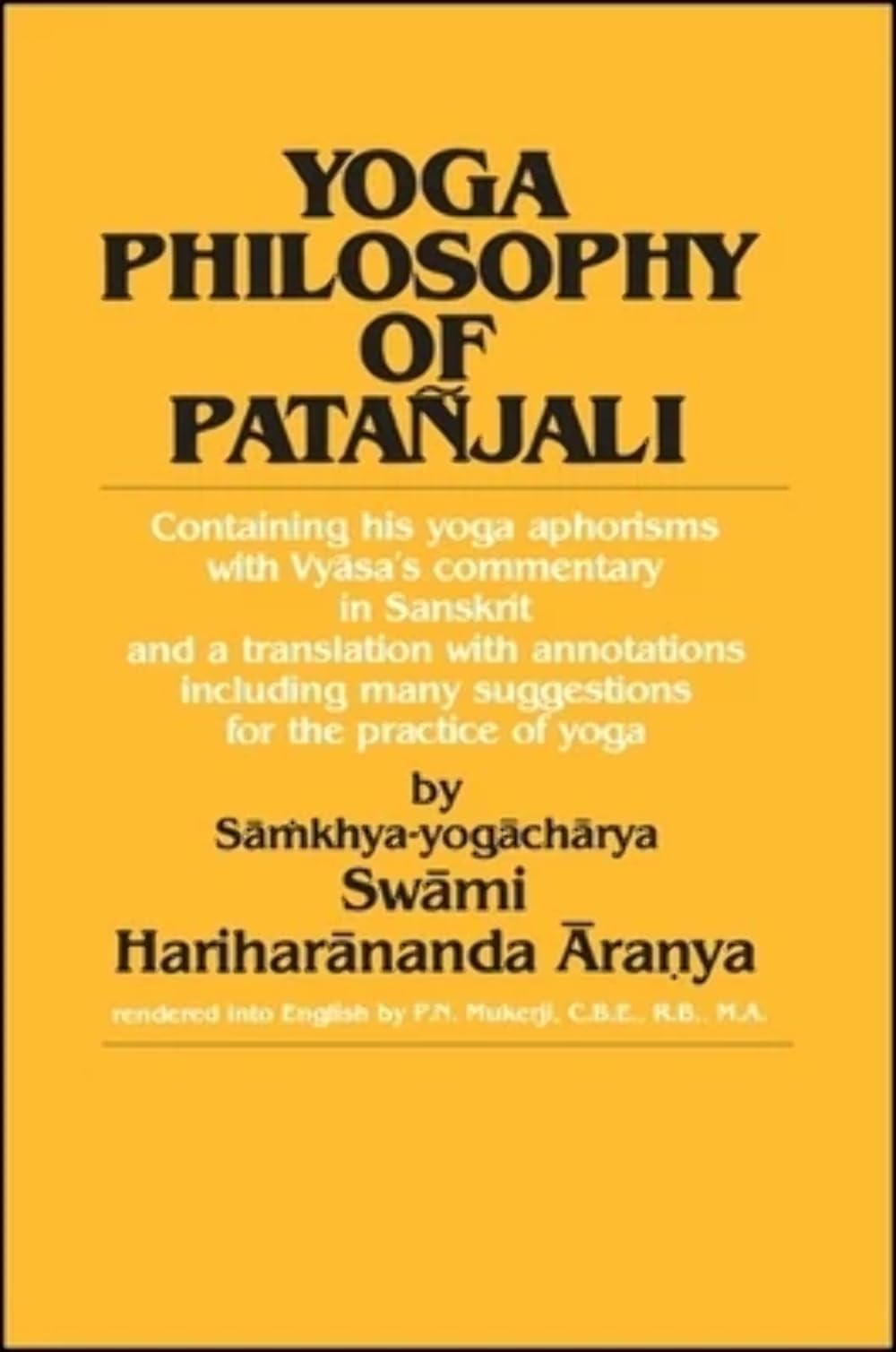
Yoga Philosophy of Patanjali: Containing His Yoga Aphorisms with Vyasa's Commentary in Sanskrit and a Translation with A
Inclusive of all applicable taxes. FREE shipping on all orders.
Available Offers
- 🚚Free Delivery — Free shipping on all orders
- 💵Cash on Delivery — Pay when your order arrives
- ↩️15-Day Easy Returns — Hassle-free return policy
- 🔒Cash on Delivery — Pay safely when your order arrives
Check Delivery
Product Description
Introduction
In the vast landscape of yogic literature, few works command the reverence and scholarly attention that Patanjali's Yoga Sutras do. For students, practitioners, and scholars of Indian philosophy, the Yoga Philosophy of Patanjali stands as a beacon of authentic wisdom. This hardcover edition, published by the State University of New York Press, presents the aphorisms of Patanjali alongside Vyasa's classical commentary in both original Sanskrit and a meticulous English translation. Annotated with practical suggestions for the practice of yoga, this volume is not merely a textual study but a living guide to the path of Samkhya Yoga. Whether you are a seasoned yogi or a curious beginner, this book offers a profound journey into the heart of meditative discipline and spiritual liberation.
Book Overview
This definitive edition brings together the foundational texts of the Yoga school of Indian philosophy. At its core are the Yoga Sutras of Patanjali — 196 concise aphorisms that outline the theory and practice of yoga. Accompanying them is the Bhasya, a detailed commentary by the ancient sage Vyasa, which has been revered for centuries as the most authoritative explanation of the sutras. The translation, enriched by the insights of Swami Hariharananda Aranya — a yogi and scholar of exceptional repute — bridges the gap between classical exegesis and modern understanding. Each sutra is presented in Devanagari script, followed by a transliteration, a word-for-word gloss, and a fluent English rendering. The annotations draw from the author's own yogic experience, offering practical advice on meditation, breath control, and mental discipline. This is not a book to be read passively; it is a manual for transformation.
Key Highlights
- Authentic Sanskrit Text: Complete Yoga Sutras and Vyasa's Bhasya in Devanagari script with accurate transliteration.
- Authoritative Translation: Renowned for its clarity and fidelity, the English version is widely considered the most reliable available.
- Practical Annotations: Swami Hariharananda Aranya's commentary includes actionable suggestions for asana, pranayama, and meditation.
- Comprehensive Structure: Each sutra is explained with word meanings, context, and philosophical significance.
- Hardcover Quality: A durable binding suitable for repeated study and reference.
Inside the Book
The volume is meticulously organized into four chapters (padas) that mirror the structure of the sutras themselves: Samadhi Pada (contemplation), Sadhana Pada (practice), Vibhuti Pada (powers), and Kaivalya Pada (liberation). Each chapter opens with an introduction that situates the aphorisms within the broader framework of Samkhya philosophy. The Sanskrit text is printed in clear Devanagari, with each sutra numbered for easy reference. Following the original, the translation provides a literal yet readable version, while the annotations explore subtle nuances and practical applications. The book also includes a glossary of key terms, a bibliography, and an index, making it an invaluable resource for both classroom study and personal sadhana. Readers will find detailed discussions on the eight limbs of yoga, the nature of consciousness, the obstacles to enlightenment, and the path to kaivalya (absolute freedom).
Key Topics
- The nature of yoga as the cessation of mental fluctuations (chitta vritti nirodha)
- The eight limbs: yama, niyama, asana, pranayama, pratyahara, dharana, dhyana, and samadhi
- The role of Ishvara (the Lord) in yogic practice
- Kleshas (afflictions) and their eradication
- Karma, rebirth, and the law of cause and effect
- Psychic powers (siddhis) and their place on the spiritual path
- Discrimination between pure consciousness (purusha) and nature (prakriti)
- Practical techniques for concentration and meditation
Reader Benefits
- Deepen Your Practice: Gain a theoretical foundation that enhances your daily yoga and meditation routine.
- Study with Confidence: Access an accurate, scholarly translation that respects the original tradition.
- Understand the Philosophy: Grasp the metaphysical underpinnings of yoga beyond mere postures.
- Learn from a Master: Benefit from the experiential wisdom of Swami Hariharananda Aranya, a lifelong practitioner.
- Preserve Your Learning: A hardcover edition that will last for years of dedicated study.
Learning Outcomes
By engaging with this book, readers will be able to explain the core tenets of Patanjali's yoga system, interpret the sutras in their original context, and apply the principles of concentration and mindfulness in daily life. The annotations equip you with practical methods to quiet the mind, cultivate detachment, and progress toward samadhi. You will develop a nuanced understanding of key concepts like prakriti, purusha, and the gunas, and learn to distinguish between the temporary modifications of the mind and the eternal witness consciousness. This is not just intellectual knowledge — it is a map for inner transformation.
Who Should Read
- Yoga teachers and practitioners seeking a deeper philosophical grounding
- Students of Indian philosophy, comparative religion, and Eastern spirituality
- Scholars and researchers working on classical Indian texts
- Meditators and spiritual seekers on the path of self-realization
- Anyone curious about the original source of modern yoga traditions
About the Author
Swami Hariharananda Aranya (1869–1947) was a distinguished yogi, scholar, and ascetic who dedicated his life to the revival and dissemination of the Samkhya Yoga system. Born in Bengal, he renounced worldly life at a young age and spent decades in solitary meditation and study. He established the Kapila Matha in Bihar, a monastery devoted to the teachings of Patanjali and the sage Kapila. His commentary on the Yoga Sutras is revered for its combination of rigorous scholarship and direct experiential insight. Swami Aranya was widely regarded as the foremost authority on Samkhya Yoga in his time, and his works continue to inspire generations of yogis and academics.
About the Publisher
The State University of New York Press (SUNY Press) is a leading academic publisher known for its distinguished list in philosophy, religion, and Asian studies. With a commitment to scholarly excellence, SUNY Press has made available many classic texts of Indian philosophy in authoritative editions. This hardcover edition of the Yoga Philosophy of Patanjali reflects the publisher's dedication to preserving and disseminating the wisdom of the East for a global readership.
Conclusion
The Yoga Philosophy of Patanjali is more than a book — it is a companion for life. In an age of distraction, this timeless text calls us back to the stillness within. With its original Sanskrit, faithful translation, and practical insights, it serves as both a scholarly resource and a spiritual guide. Whether you seek intellectual understanding or practical transformation, this volume will illuminate your path. Add it to your library and begin a journey that has enlightened seekers for over two millennia.
Quick Summary
The Yoga Philosophy of Patanjali is a definitive edition of the foundational text of classical yoga, presenting Patanjali's Yoga Sutras in the original Sanskrit along with Vyasa's ancient commentary (Bhasya) and an authoritative English translation by Swami Hariharananda Aranya. This book is designed for yoga practitioners, students of Indian philosophy, and spiritual seekers who wish to understand the profound teachings of the Yoga Sutras in their authentic form. The translation is accompanied by detailed annotations that clarify complex concepts and offer practical suggestions for integrating yoga into daily life, including meditation techniques and ethical disciplines. Readers will gain a deep understanding of the Samkhya Yoga system, the eightfold path of Ashtanga Yoga, and the nature of consciousness and liberation. What sets this edition apart is its combination of scholarly rigor and practical applicability, making it equally valuable for academic study and personal spiritual practice. Published by State University of New York Press in a durable hardcover format, it is a trusted resource worldwide. Buying from Bookshops.in ensures you receive a genuine copy with fast delivery across India, supporting your journey into the timeless wisdom of yoga.
Book Highlights
Book Specifications
| ISBN-13 | 9780873957298 |
| ISBN-10 | 0873957296 |
| Publisher | State University of New York Press |
| Language | English |
| Dimensions | 15.24 x 2.95 x 22.86 cm |
| Weight | 544 g |
| Category | Training & Coaching › Fitness Training |
| Genre | Non-fiction |
| Reading Age | Adult |
| Original Language | Sanskrit |
Frequently Asked Questions
What is the Yoga Philosophy of Patanjali about?
Who is the author of this book?
Does this book include the original Sanskrit text?
Is this book suitable for beginners?
What is unique about this edition?
Is this book only for academic study?
What language is the translation in?
Does this book cover the eight limbs of yoga?
Who is Vyasa?
Can this book help improve my meditation practice?
Is this a hardcover book?
What is the rating of this book?
Where can I buy this book in India?
Readers Also Search For
Customers Also Bought


Related Products
View All
Sports
Way of the Mind Gate

Sports
Softpower, Soccer, Supremacy: The Chinese Dream: 1 (Sport in East and Southeast Asian Societies: Geopolitical, Political, Cultural and Social Perspectives)

Sports
Mathematical Crystallography: An Introduction to the Mathematical Foundations of Crystallography: 15 (Reviews in Mineralogy & Geochemistry, 15)
Sports
Essentials of Eccentric Training: With Online Video

Sports
LGBT Football Fans (English, Rory Magrath)

Sports