
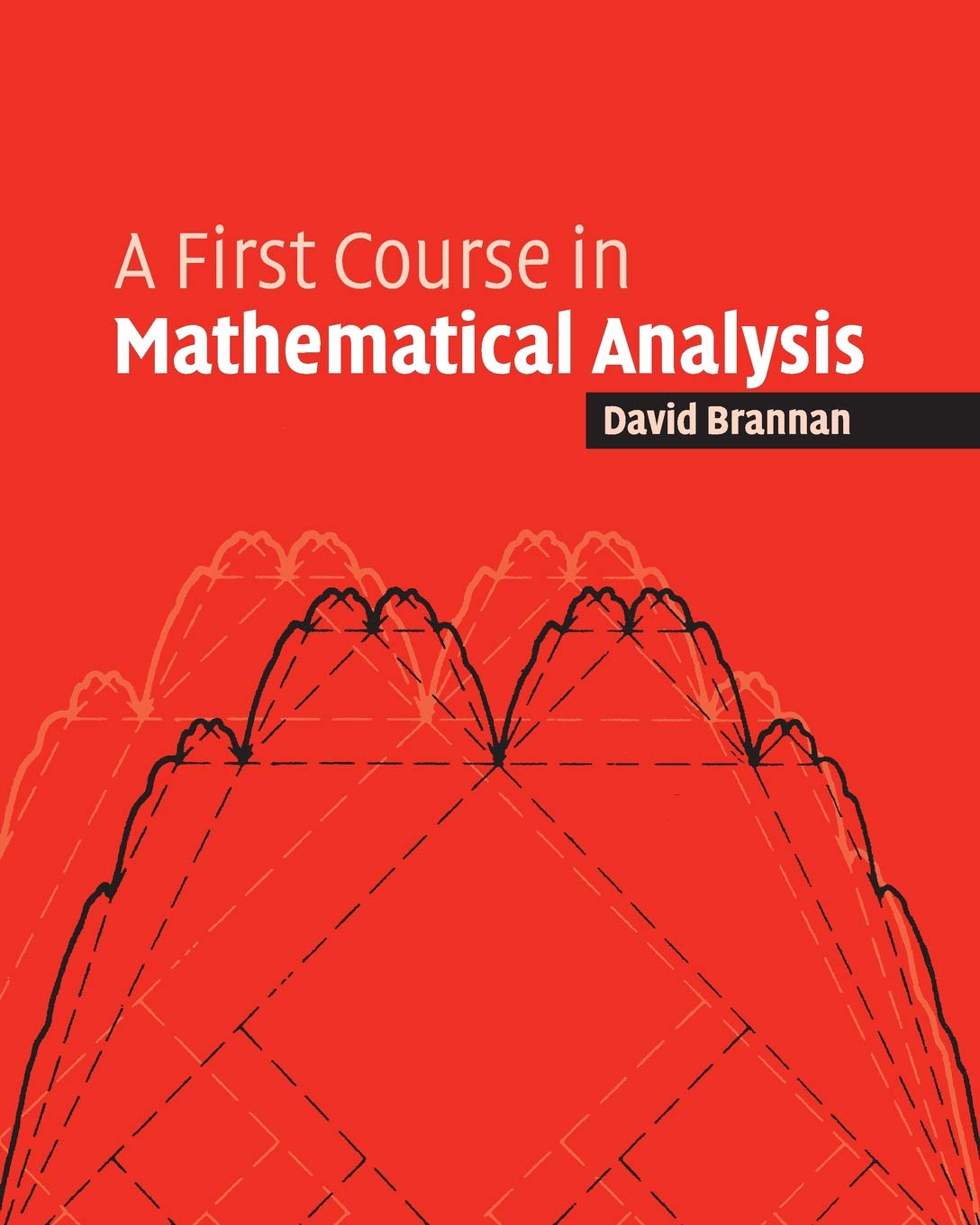
A First Course in Mathematical Analysis by David Alexander Brannan – A Comprehensive Undergraduate Textbook on Advanced
Inclusive of all applicable taxes. FREE shipping on all orders.
Available Offers
- 🚚Free Delivery — Free shipping on all orders
- 💵Cash on Delivery — Pay when your order arrives
- ↩️15-Day Easy Returns — Hassle-free return policy
- 🔒Cash on Delivery — Pay safely when your order arrives
Check Delivery
Product Description
Introduction
For many students of mathematics and engineering in India, the transition from elementary calculus to rigorous mathematical analysis is a formidable challenge. David Alexander Brannan's A First Course in Mathematical Analysis is a trusted companion designed to bridge this gap with clarity and precision. Published by Cambridge University Press, this hardcover edition is an indispensable resource for undergraduate students seeking a solid foundation in advanced calculus. Whether you are preparing for competitive exams or pursuing a degree in pure mathematics, this book offers a systematic and accessible approach to understanding the core concepts that underpin modern analysis.
Book Overview
This text adopts the sequential approach to continuity, differentiability, and integration—a method that makes abstract ideas more concrete and easier to grasp. Unlike standard calculus textbooks that gloss over foundational questions, Brannan's work tackles them head-on. What does it truly mean for a function to be continuous? How can we rigorously define an integral? These are the questions that this book answers with exceptional care. The volume is richly illustrated with diagrams and margin notes, and it includes a wealth of graded examples and exercises, many with complete solutions, to guide learners through the trickiest points. It is equally suitable for self-study or as a companion to a university course.
Key Highlights
- Sequential Approach: A clear, logical progression from sequences to continuity, differentiation, and integration, making analysis intuitive.
- Rigorous Yet Accessible: Provides careful definitions and proofs without overwhelming the beginner.
- Extensive Practice Material: Hundreds of graded exercises with full solutions for selected problems, ideal for Indian students who value self-assessment.
- Visual Learning Aids: Numerous diagrams and margin notes that clarify complex ideas and highlight important points.
- Self-Study Friendly: Structured for independent learners, with clear explanations and step-by-step reasoning.
Inside the Book
The book is organized into chapters that build upon each other seamlessly. It begins with the real number system and sequences, then moves to limits and continuity of functions. The middle sections delve into differentiation and the mean value theorem, followed by Riemann integration. Later chapters cover infinite series, power series, and functions of several variables. Each chapter opens with a motivating discussion and closes with a summary and a rich set of exercises. The margin notes serve as quick reminders and insights, while the diagrams help visualize epsilon-delta arguments and geometric interpretations of theorems.
Key Topics
- The Real Number System and Completeness
- Sequences and Series of Real Numbers
- Limits and Continuity of Functions
- Differentiation and the Mean Value Theorem
- Riemann Integration and the Fundamental Theorem of Calculus
- Infinite Series and Convergence Tests
- Power Series and Taylor Expansions
- Functions of Several Variables (partial derivatives, multiple integrals)
Reader Benefits
Indian students will find this book particularly beneficial because it aligns well with the rigorous demands of university curricula in mathematics, physics, and engineering. The step-by-step solutions to exercises build confidence and deepen understanding. The sequential approach demystifies the often-dreaded epsilon-delta proofs, making them a natural part of the learning process. By working through this book, readers develop the ability to think critically about mathematical statements and proofs—a skill essential for higher studies and research. The hardcover binding ensures durability for years of repeated reference.
Learning Outcomes
- Master the concept of limits and continuity using the epsilon-delta definition.
- Understand the rigorous foundation of differentiation and integration.
- Analyze sequences and series for convergence and divergence.
- Apply the mean value theorem and its consequences to real-world problems.
- Gain proficiency in Riemann integration and the fundamental theorem of calculus.
- Develop the ability to construct and write clear mathematical proofs.
Who Should Read
This book is designed for undergraduate students in their first or second year of a B.Sc. or B.A. program in Mathematics, Physics, or Engineering. It is also ideal for self-learners who wish to strengthen their understanding of calculus beyond the computational level. Students preparing for competitive examinations such as the IIT JAM, GATE, or CSIR NET in mathematical sciences will find it an excellent resource for building conceptual clarity. Teachers and tutors will appreciate its structured approach for classroom instruction.
About the Author
David Alexander Brannan is a renowned mathematician and educator with decades of experience in teaching mathematical analysis. He has authored several highly regarded textbooks that are used in universities worldwide. His writing style is known for its clarity, precision, and pedagogical sensitivity, making difficult subjects accessible to a broad audience. Brannan's deep understanding of student challenges is evident in the thoughtful organization of this book.
About the Publisher
Cambridge University Press is one of the oldest and most respected academic publishers in the world. With a legacy spanning over four centuries, it is committed to producing high-quality educational and scholarly content. This hardcover edition reflects the publisher's dedication to excellence, with clear typesetting, durable binding, and meticulous editorial standards. Indian students can rely on the accuracy and authority that Cambridge brings to every mathematics title.
Conclusion
A First Course in Mathematical Analysis by David Alexander Brannan is more than just a textbook—it is a gateway to advanced mathematical thinking. For Indian students navigating the demanding transition from calculus to analysis, this book provides the guidance, rigor, and practice needed to succeed. Whether used in a classroom or for self-study, it will equip you with the analytical skills that are the bedrock of higher mathematics. Order your copy from Bookshops.in today and take the first confident step towards mastering mathematical analysis.
Quick Summary
A First Course in Mathematical Analysis by David Alexander Brannan is a rigorous yet accessible textbook designed for undergraduate students of mathematics, particularly those in Indian B.Sc. and M.Sc. programs. The book adopts a unique sequential approach to explain the core concepts of continuity, differentiability, and integration, making these often-difficult topics more intuitive. It provides clear definitions, numerous diagrams, margin notes, and a wealth of graded exercises with complete solutions, enabling students to learn at their own pace. Unlike standard calculus books, this text delves deep into the theoretical foundations, such as the exact meaning of a continuous function and the careful construction of the Riemann integral. Readers will develop strong proof-writing skills and a solid understanding of real analysis, which is essential for advanced mathematics and competitive exams like GATE, JAM, and NET. Published by Cambridge University Press, this hardcover edition is built to last. By purchasing from Bookshops.in, Indian students get fast delivery, competitive pricing, and the assurance of a trusted online bookstore dedicated to academic excellence.
Book Highlights
Book Specifications
| ISBN-13 | 9780521684248 |
| ISBN-10 | 0521684242 |
| Publisher | Cambridge University Press |
| Language | English |
| Dimensions | 18.9 x 2.72 x 24.61 cm |
| Weight | 860 g |
| Country | India |
| Category | Sciences, Technology & Medicine › Engineering & Technology |
| Genre | Non-fiction |
| Reading Age | 18+ |
| Original Language | English |
Frequently Asked Questions
What is the main approach used in this book for teaching analysis?
Is this book suitable for Indian B.Sc. mathematics students?
Does the book include solved examples and exercises?
What topics does the book cover?
How is this book different from standard calculus textbooks?
Who is the author of this book?
Does the book have diagrams and visual aids?
What is the price of this book in India?
Is this book helpful for competitive exams like GATE or JAM?
What is the language of the book?
Can I use this book for self-study?
Does the book cover the Riemann integral in detail?
Is this book available in hardcover?
Readers Also Search For
Customers Also Bought
Research
Mathematical Modeling of Biological Systems, Volume I (English, Andreas Deutsch | Lutz Brusch | Helen Byrne)
Research
Intermediate Statistics (English, James P. Stevens)
Research
Statistics Explained by Steve McKillup – Life Science Statistics Guide

Research
Data Analysis and Graphics Using R by John Maindonald – Statistical Computing

Research
Applied Longitudinal Data Analysis (English, Judith D. Singer | John B. Willett)
Research
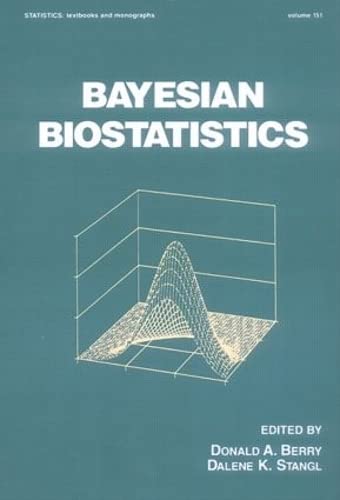
Bayesian Biostatistics (STATISTICS, A SERIES OF TEXTBOOKS AND MONOGRAPHS)
Related Products
View All
Sciences, Technology & Medicine
African Philosophy and the Epistemic Marginalization of Women (Routledge African Studies)

Sciences, Technology & Medicine
Evolution Interrupted: How We Change Nature and How Nature Changes Us
Sciences, Technology & Medicine
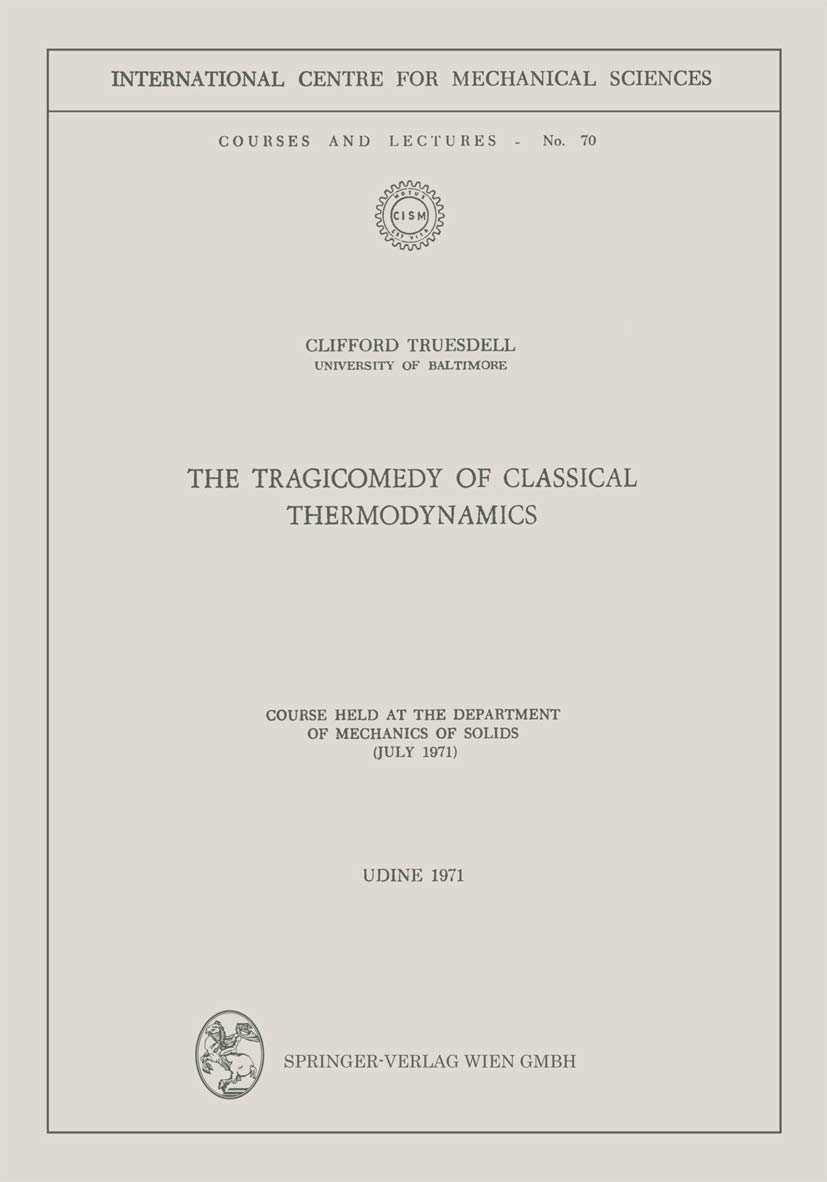
The Tragicomedy of Classical Thermodynamics: Course Held at the Department of Mechanics of Solids (July 1971): 70 (CISM International Centre for Mechanical Sciences)

Sciences, Technology & Medicine
DNA Repair Protocols: 113 (Methods in Molecular Biology)

Sciences, Technology & Medicine
Acoustic Fish Reconnaissance: 32 (Marine Science, 32)

Sciences, Technology & Medicine