
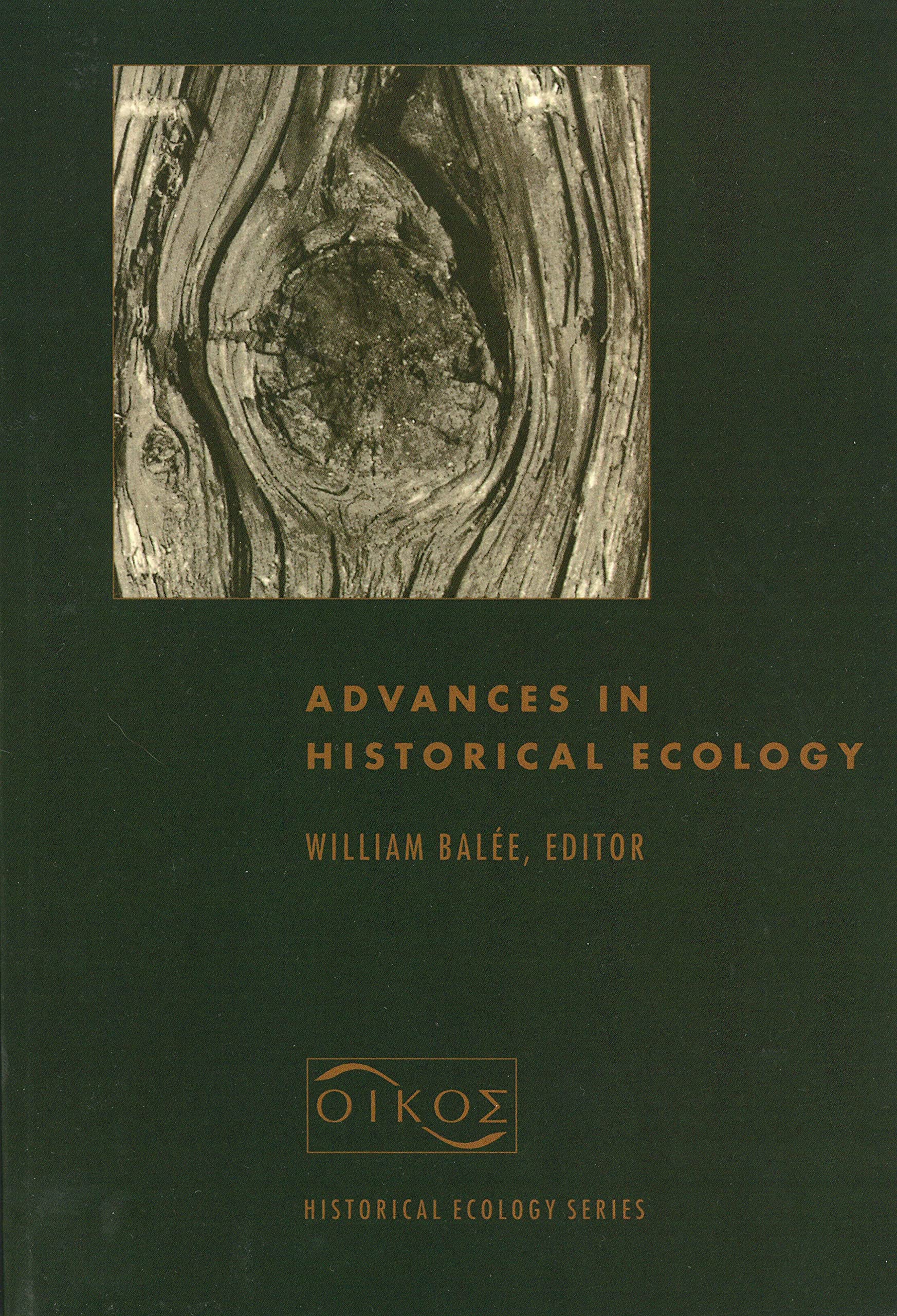
Advances in Historical Ecology: A Holistic Study of Human-Environment Relationships by William Balée
Inclusive of all applicable taxes. FREE shipping on all orders.
Available Offers
- 🚚Free Delivery — Free shipping on all orders
- 💵Cash on Delivery — Pay when your order arrives
- ↩️15-Day Easy Returns — Hassle-free return policy
- 🔒Cash on Delivery — Pay safely when your order arrives
Check Delivery
Product Description
Introduction
In the vast landscape of environmental studies, few books have managed to bridge the intellectual chasm between the natural and social sciences as effectively as Advances in Historical Ecology by William Balée. This compelling hardbound volume, published by Columbia University Press, offers Indian students, researchers, and curious readers a profound exploration of how human societies have shaped—and been shaped by—their environments over time. Rather than viewing human impact as merely destructive, this book presents a nuanced, holistic perspective that celebrates the intricate dance between culture, history, and ecology. For anyone in India seeking to understand the deep roots of our environmental challenges and the resilient wisdom embedded in traditional practices, this work is an essential addition to your library.
Book Overview
Advances in Historical Ecology is a landmark collection that redefines how we understand the relationship between humans and the natural world. Edited and largely authored by William Balée, a leading figure in ethnobiology and historical ecology, this book brings together eighteen specialists from anthropology, geography, history, ethnobiology, and related disciplines. The volume moves beyond deterministic models to offer a more dynamic, reciprocal framework for studying environmental change. It is not a textbook in the conventional sense but a rich tapestry of case studies, theoretical innovations, and methodological insights that span local and global scales, from short-term events to millennia-long processes. The hardcover edition is meticulously organized, making it a durable reference for academic and personal study alike.
Key Highlights
- Interdisciplinary Synthesis: Unites perspectives from anthropology, geography, history, and biology to create a comprehensive understanding of human-environment interactions.
- Global and Local Scope: Explores case studies from tropical forests to temperate zones, offering insights relevant to India’s diverse ecosystems.
- Material Factors Analyzed: Dedicated chapters on anthropogenic fire, soils, pathogens, and other material elements that mediate human-ecological relationships.
- Theoretical Innovation: Challenges older models of environmental determinism and presents a reciprocal, co-evolutionary approach.
- Renowned Contributors: Features work from leading scholars such as William M. Denevan, Darrell Addison Posey, and others who have shaped the field.
Inside the Book
The volume is structured into two major parts. The first part lays the theoretical groundwork, discussing key concepts like landscape transformation, disturbance regimes, and the role of indigenous knowledge. The second part presents regional applications, including studies on Amazonian dark earths, fire management in savannas, and historical land use in the Andes. Each chapter is rich with empirical data, maps, and bibliographic references, making it an invaluable resource for Indian scholars working on topics such as sacred groves, traditional agriculture, or urban ecology. The book also delves into the role of pathogens in shaping human history, a topic of particular relevance in the post-pandemic era.
Key Topics
- Anthropogenic fire as a tool for landscape management
- Historical soil modification and terra preta
- Co-evolution of plants, animals, and human societies
- Indigenous ecological knowledge and biodiversity conservation
- Long-term environmental change and resilience
- Political ecology and the role of colonial histories
- Landscape domestication and cultural forests
Reader Benefits
- Deepen Understanding: Gain a sophisticated grasp of how human actions have historically shaped ecosystems, moving beyond simplistic narratives of degradation.
- Academic Edge: Access cutting-edge theories and case studies that can enrich research papers, dissertations, and classroom discussions.
- Practical Insights: Learn from traditional practices that can inform modern sustainable development and conservation strategies in India.
- Critical Thinking: Develop a more nuanced perspective on environmental debates, from climate change to forest management.
- Cultural Relevance: Connect global ecological principles with India’s rich heritage of agro-ecology, sacred landscapes, and community-based conservation.
Learning Outcomes
After engaging with this book, readers will be able to: critically evaluate deterministic models of human-environment interaction; articulate the principles of historical ecology and its methodological approaches; analyze case studies of anthropogenic landscapes across different regions and time periods; apply concepts such as landscape domestication and disturbance ecology to real-world contexts; and appreciate the ethical dimensions of integrating indigenous knowledge into scientific research. These outcomes are especially valuable for Indian students preparing for competitive exams like UGC-NET, GATE in environmental science, or civil services, as well as for practitioners in NGOs and government agencies.
Who Should Read
- Students and Academics: Undergraduate and postgraduate students in ecology, anthropology, geography, history, and environmental studies will find this book a core reference.
- Researchers: Scholars working on human-environment interactions, ethnobiology, landscape history, or conservation biology.
- Policy Makers and Practitioners: Professionals in forestry, agriculture, urban planning, and sustainable development who seek historical perspectives.
- Nature Enthusiasts: Anyone curious about how traditional societies have managed resources and shaped the world around them.
- Indian Readers: Especially relevant for those interested in India’s own historical ecology, from the Western Ghats to the Gangetic plains.
About the Author
William Balée is a professor of anthropology at Tulane University and a leading authority in historical ecology and ethnobiology. With decades of field experience in Amazonia and other tropical regions, Balée has pioneered the study of how indigenous peoples actively manage and enrich their environments. His work has influenced conservation policy and ecological theory worldwide. He is also the author of several influential books, including Footprints of the Forest and Cultural Forests of the Amazon. Balée’s writing is known for its clarity, depth, and respect for traditional knowledge systems.
About the Publisher
Columbia University Press, established in 1893, is one of the oldest and most prestigious academic publishers in the United States. Renowned for its rigorous editorial standards and commitment to scholarly excellence, the press publishes works that shape intellectual discourse across the humanities, social sciences, and natural sciences. For Indian readers, a Columbia University Press book signifies quality, reliability, and enduring value—a trusted resource for serious study and research.
Conclusion
Advances in Historical Ecology is more than a book—it is an invitation to rethink the story of our planet. In an era of climate crisis and biodiversity loss, understanding the long, intertwined history of humans and nature is not just academic; it is essential. William Balée and his contributors offer a vision of ecology that is inclusive, dynamic, and hopeful. For Indian readers, this volume provides both a global framework and a mirror to reflect on our own diverse ecological traditions. Whether you are a student, a scholar, or a lifelong learner, this hardcover edition deserves a prominent place on your shelf. Order your copy from Bookshops.in today and embark on a journey through the landscapes of time.
Quick Summary
Advances in Historical Ecology, edited by William Balée, is a landmark interdisciplinary work that redefines how we understand the relationship between humans and their environment. Moving beyond traditional ecological approaches that often ignore or vilify human influence, this collection brings together eighteen specialists from anthropology, geography, history, ethnobiology, and related fields to present a holistic perspective. The book examines both short-term and long-term changes at local and global scales, challenging deterministic views and highlighting the reciprocal nature of human-environment interactions. Readers will learn about indigenous knowledge systems, landscape transformation, cultural ecology, and the dynamic co-evolution of societies and ecosystems. This volume is particularly valuable for Indian students and researchers in ecology, anthropology, and environmental science, as it provides conceptual tools to analyze complex environmental issues in the Indian context. Published by Columbia University Press in a sturdy hardcover edition, this book is a must-have for academic libraries and serious scholars. Purchase your copy from Bookshops.in, India's premium online bookstore, for fast delivery and excellent customer service.
Book Highlights
Book Specifications
| ISBN-13 | 9780231106337 |
| ISBN-10 | 0231106335 |
| Publisher | Columbia Univ Pr |
| Language | English |
| Dimensions | 17.78 x 2.39 x 23.37 cm |
| Weight | 735 g |
| Country | USA |
| Category | Biology & Life Sciences › Ecology |
| Genre | Non-fiction |
| Original Language | English |
Frequently Asked Questions
What is Advances in Historical Ecology about?
Who edited Advances in Historical Ecology?
Is this book suitable for Indian students?
What disciplines does this book cover?
How many chapters are in the book?
What is the price of this book?
Is the book available in hardcover?
Who is the target audience for this book?
Does the book include Indian case studies?
What makes this book different from other ecology texts?
Can this book help with UGC NET or other exams?
What is the language of the book?
How can I purchase this book from Bookshops.in?
Is there a digital version available?
Readers Also Search For
Customers Also Bought
Mathematics
Stereotype Spaces and Algebras: 73 (De Gruyter Expositions in Mathematics, 73)

Mathematics
Semigroups in Algebra, Geometry and Analysis: 20 (De Gruyter Expositions in Mathematics, 20)

Mathematics
Geometry from the Pacific Rim: Proceedings of the Pacific Rim Geometry Conference held at National University of Singapore, Republic of Singapore, ... 1994 (De Gruyter Proceedings in Mathematics)

Mathematics
First International Tainan-Moscow Algebra Workshop: Proceedings of the International Conference held at National Cheng Kung University Tainan, Taiwan, ... 1994 (De Gruyter Proceedings in Mathematics)
Mathematics
Differential Geometry - Proceedings of the VIII International Colloquium (English, Jesus A. Alvarez Lopez | Eduardo Garcia-Rio)

Mathematics
Mathematical Theory of Optimal Processes (Classics of Soviet Mathematics)
Related Products
View All
Science & Mathematics
Squid - Superconducting Quantum Interference Devices and Their Applications: Proceedings of the International Conference on Superconducting Quantum Devices, Berlin-west, October 4-8, 1976

Science & Mathematics
Thermodynamics and Pattern Formation in Biology

Science & Mathematics
The Nature of Mathematics and the Mathematics of Nature by S. Andersson – Mathematics & Science

Science & Mathematics
Linear Algebra | by Stephen Friedberg | Arnold Insel | Lawrence Spence | Pearson | by Stephen Friedberg | Arnold Insel | Lawrence Spence | Pearson | by Stephen Friedberg | Arnold Insel | Lawrence Spence | Pearson | by Stephen Friedberg | Arnold Insel | Lawrence Spence | Pearson | by Stephen Friedberg | Arnold Insel | Lawrence Spence | Pearson | by Stephen Friedberg | Arnold Insel | Lawrence Spence | Pearson | by Stephen Friedberg | Arnold Insel | Lawrence Spence | Pearson | by Stephen Friedberg

Science & Mathematics
University Calculus | by Joel Hass | Christopher Heil | Maurice Weir | Pearson | by Joel Hass | Christopher Heil | Maurice Weir | Pearson | by Joel Hass | Christopher Heil | Maurice Weir | Pearson | by Joel Hass | Christopher Heil | Maurice Weir | Pearson | by Joel Hass | Christopher Heil | Maurice Weir | Pearson | by Joel Hass | Christopher Heil | Maurice Weir | Pearson | by Joel Hass | Christopher Heil | Maurice Weir | Pearson | by Joel Hass | Christopher Heil | Maurice Weir | Pearson | by Joe
Science & Mathematics