
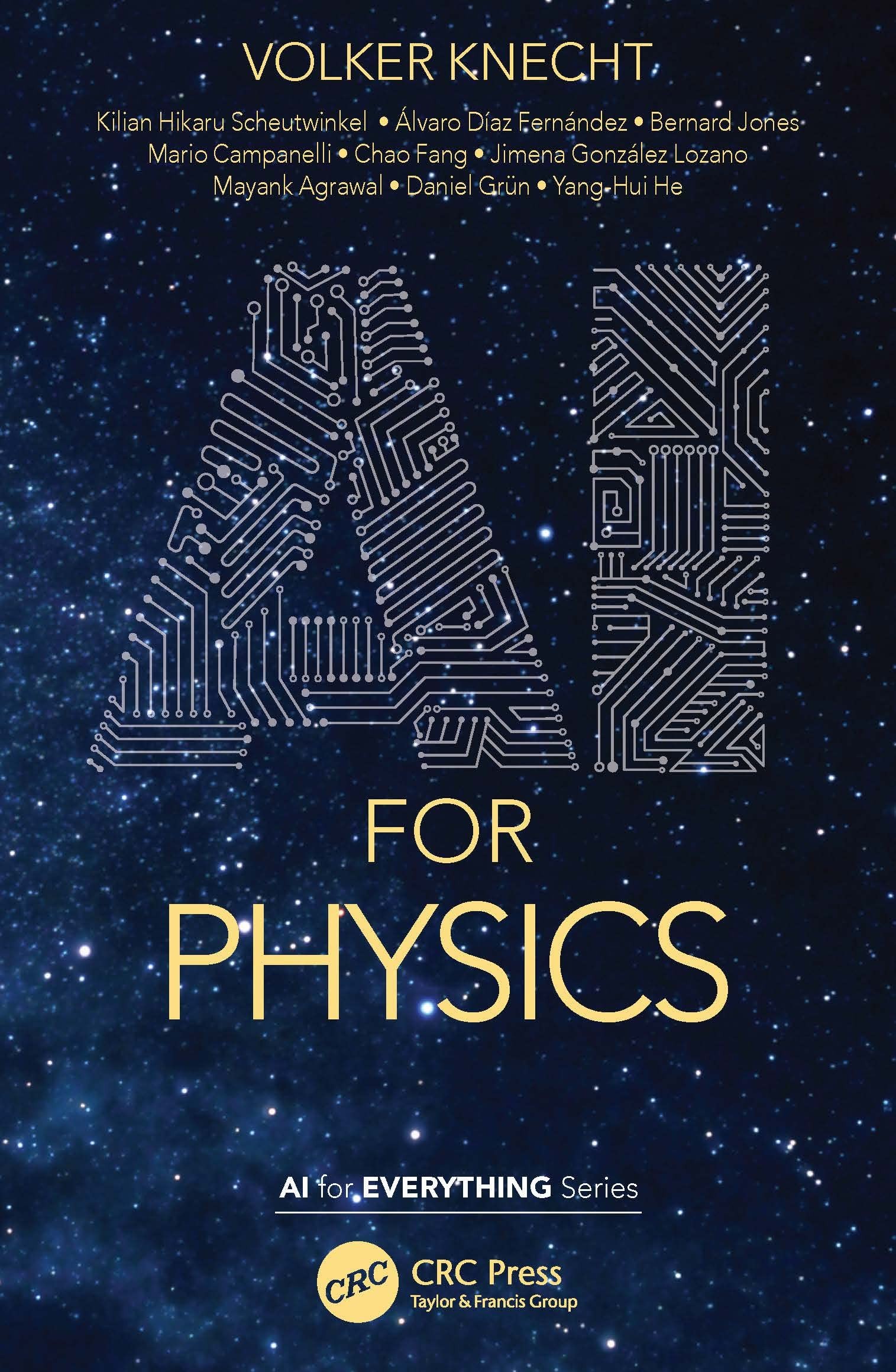
AI for Physics: Machine Learning Applications in Particle Physics, Astrophysics, and Cosmology by Knecht
Inclusive of all applicable taxes. FREE shipping on all orders.
Available Offers
- 🚚Free Delivery — Free shipping on all orders
- 💵Cash on Delivery — Pay when your order arrives
- ↩️15-Day Easy Returns — Hassle-free return policy
- 🔒Cash on Delivery — Pay safely when your order arrives
Check Delivery
Product Description
Introduction
In an era where artificial intelligence is reshaping every scientific frontier, AI FOR PHYSICS by Knecht offers a refreshingly accessible gateway into the transformative role of machine learning in the physical sciences. Published by CRC Press, this hardcover edition is designed for students, researchers, and curious minds in India who wish to understand how AI uncovers hidden patterns in data without wading through complex mathematics. Whether you are a physics enthusiast in Mumbai or a researcher in Bengaluru, this book bridges the gap between cutting-edge technology and fundamental physics.
Book Overview
AI FOR PHYSICS is a concise yet comprehensive guide that explores the wide-ranging applications of artificial intelligence across the spectrum of physical sciences. Written in clear, non-technical language and free of dense mathematical formulas, the book focuses on how AI, particularly machine learning, extracts meaningful patterns from vast datasets. It begins with foundational concepts, then delves into real-world applications in particle physics, molecular physics, condensed matter physics, astrophysics, cosmology, and even the theory of everything. The narrative is enriched with examples such as the search for new subatomic particles and the detection of gravitational waves from merging black holes, making abstract ideas tangible.
Key Highlights
- Accessible Language: No prior knowledge of advanced mathematics or programming is required; the book speaks to a broad audience.
- Comprehensive Coverage: From quantum mechanics to the cosmos, the book spans the entire physical sciences landscape.
- Real-World Applications: Learn how AI helps detect gravitational waves, identify new particles, and simulate complex physical systems.
- Expert Author: Knecht brings clarity and authority, making complex topics easy to grasp.
- Premium Hardback: A durable, collectible edition perfect for library or personal reference.
Inside the Book
The book is structured to guide readers from basics to advanced concepts seamlessly. The opening chapters introduce key machine learning algorithms—such as neural networks, decision trees, and support vector machines—and explain how they are adapted for physics problems. Subsequent chapters dive into specific fields: particle physics uses AI to sift through collision data; molecular physics leverages it for drug discovery; condensed matter physics applies it to understand superconductors; astrophysics and cosmology rely on AI to map the universe and detect faint signals from deep space. The final chapter offers a thought-provoking look at the future, including the potential of AI in unifying fundamental forces.
Key Topics
- Machine learning algorithms for pattern recognition in physics
- AI in particle physics: discovering new particles and validating the Standard Model
- Molecular physics: predicting molecular properties and reactions
- Condensed matter physics: identifying phases and material properties
- Astrophysics: detecting gravitational waves and exoplanets
- Cosmology: analyzing cosmic microwave background and galaxy formation
- The theory of everything: AI as a tool for unification
Reader Benefits
By reading AI FOR PHYSICS, you will gain a clear understanding of how artificial intelligence is revolutionizing the way physicists work. You will learn to appreciate the synergy between data-driven methods and theoretical physics, and see how AI accelerates discovery in fields that once relied solely on human intuition. The book also equips you with the vocabulary and conceptual framework to follow cutting-edge research, whether in academic journals or science news. For Indian students preparing for competitive exams or research careers, this book provides a head start in one of the most exciting interdisciplinary areas.
Learning Outcomes
- Understand the fundamental principles of machine learning relevant to physics
- Identify key applications of AI in various subfields of physical sciences
- Analyze how AI extracts patterns from complex datasets like particle collisions or cosmic signals
- Evaluate the potential and limitations of AI in advancing theoretical physics
- Develop a broad perspective on the future of AI-driven scientific discovery
Who Should Read
This book is ideal for undergraduate and postgraduate students in physics, engineering, or data science who want to explore the intersection of AI and physical sciences. It is also perfect for educators seeking to incorporate modern computational methods into their curriculum, as well as hobbyists and science enthusiasts who wish to stay informed about the latest technological trends. Researchers transitioning into AI-related fields will find the book a valuable primer. If you are a student at an Indian university or a professional in a tech hub like Pune, Hyderabad, or Delhi, this book will expand your horizons.
About the Author
Knecht is a respected physicist and science communicator with a deep interest in the application of artificial intelligence to fundamental research. With years of experience in both theoretical and computational physics, Knecht has contributed to bridging the gap between traditional physics methods and modern data-driven approaches. Their writing style is known for being engaging, clear, and devoid of unnecessary jargon, making complex ideas accessible to a wide audience.
About the Publisher
CRC Press is a premier publisher of scientific and technical books, renowned for its high-quality content in engineering, physics, mathematics, and computer science. With a legacy of over a century, CRC Press is trusted by academics and professionals worldwide for authoritative and well-edited publications. This hardcover edition reflects their commitment to excellence and durability, making it a reliable resource for years to come.
Conclusion
AI FOR PHYSICS is more than a book—it is a window into the future of scientific exploration. By demystifying how artificial intelligence enhances our understanding of the physical world, Knecht empowers readers to think critically about the role of technology in discovery. Whether you are a student, teacher, or researcher, this book will inspire you to see physics through a new lens. Order your copy from Bookshops.in today and join the revolution where data meets the universe.
Quick Summary
AI for Physics by Knecht is a concise, accessible guide that demystifies the role of artificial intelligence and machine learning in the physical sciences. Written without mathematical formulas, it introduces key ML algorithms and their applications in particle physics, molecular physics, condensed matter physics, astrophysics, and cosmology. Readers will learn how AI helps detect gravitational waves from black hole mergers, search for new particles, and even contribute to the quest for a theory of everything. This book is perfect for Indian students and researchers who want to understand the intersection of AI and physics without getting bogged down by complex equations. Published by CRC Press in 2022, this hardcover edition is a valuable addition to any science library. By purchasing from Bookshops.in, you support a premium Indian online bookstore offering fast delivery, genuine products, and excellent customer service.
Book Highlights
Book Specifications
| ISBN-13 | 9781032151694 |
| ISBN-10 | 1032151692 |
| Publisher | CRC Pr I Llc |
| Language | English |
| Dimensions | 12.9 x 0.86 x 19.81 cm |
| Weight | 159 g |
| Category | Engineering Textbooks › Electrical & Electronic Engineering |
| Genre | Science & Mathematics |
| Original Language | English |
Frequently Asked Questions
What is AI for Physics about?
Who is the author of AI for Physics?
Is this book suitable for beginners?
What topics does the book cover?
Does the book require prior knowledge of AI?
Is this book useful for Indian students?
What is the ISBN of AI for Physics?
Is this a hardcover or paperback?
Does the book cover the theory of everything?
Can I use this book for research?
What is the price of AI for Physics at Bookshops.in?
How is this book different from other AI books?
Readers Also Search For
Customers Also Bought
Mathematics
Stereotype Spaces and Algebras: 73 (De Gruyter Expositions in Mathematics, 73)
Mathematics
Semigroups in Algebra, Geometry and Analysis: 20 (De Gruyter Expositions in Mathematics, 20)
Mathematics
Geometry from the Pacific Rim: Proceedings of the Pacific Rim Geometry Conference held at National University of Singapore, Republic of Singapore, ... 1994 (De Gruyter Proceedings in Mathematics)
Mathematics
First International Tainan-Moscow Algebra Workshop: Proceedings of the International Conference held at National Cheng Kung University Tainan, Taiwan, ... 1994 (De Gruyter Proceedings in Mathematics)
Mathematics
Group Theory, Algebra, and Number Theory: Colloquium in Memory of Hans Zassenhaus held in Saarbrücken, Germany, June 4-5, 1993
Mathematics
Mathematical Theory of Optimal Processes (Classics of Soviet Mathematics)
Related Products
View All
Science & Mathematics
Squid - Superconducting Quantum Interference Devices and Their Applications: Proceedings of the International Conference on Superconducting Quantum Devices, Berlin-west, October 4-8, 1976
Science & Mathematics
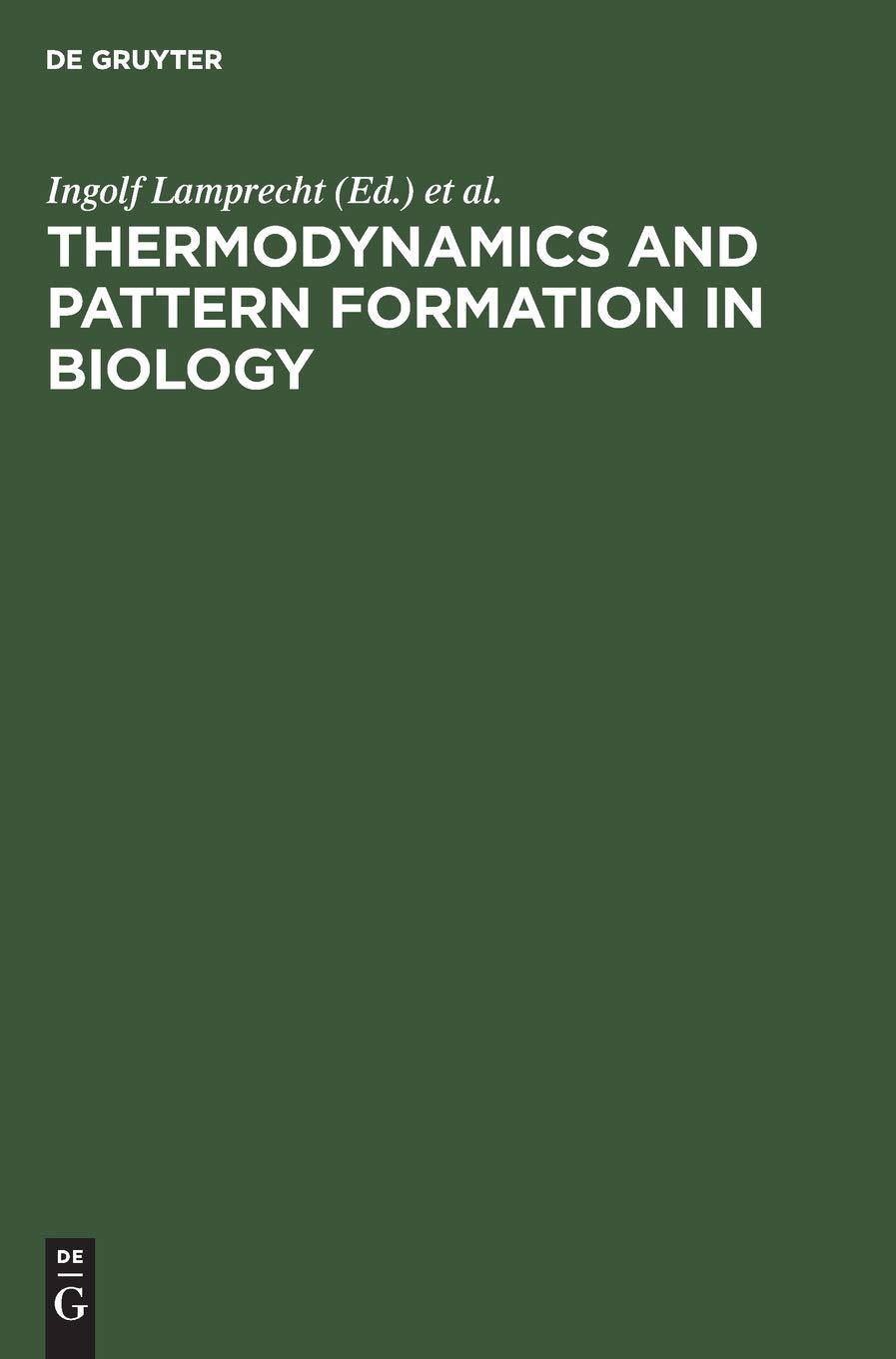
Thermodynamics and Pattern Formation in Biology
Science & Mathematics
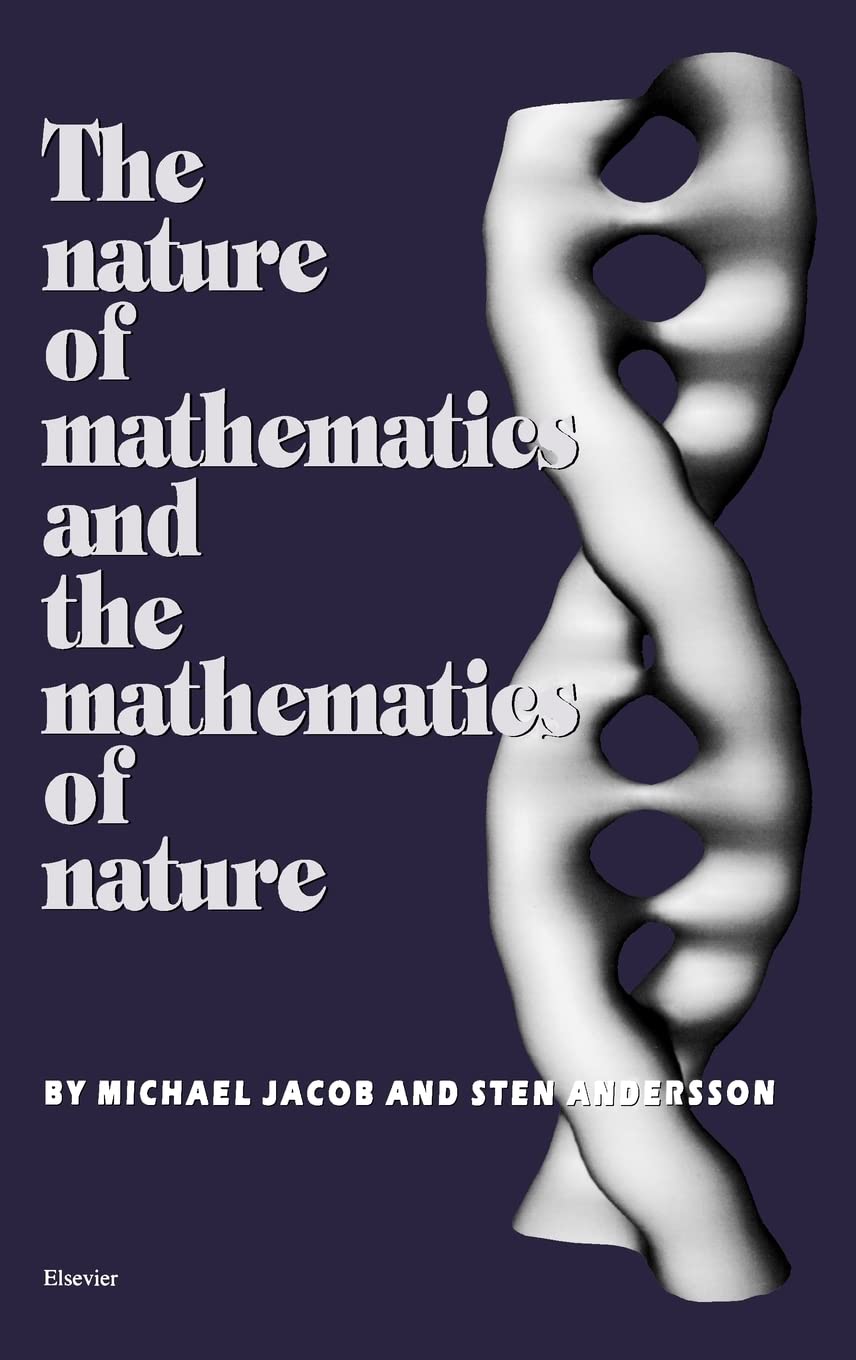
The Nature of Mathematics and the Mathematics of Nature by S. Andersson – Mathematics & Science

Science & Mathematics
Linear Algebra | by Stephen Friedberg | Arnold Insel | Lawrence Spence | Pearson | by Stephen Friedberg | Arnold Insel | Lawrence Spence | Pearson | by Stephen Friedberg | Arnold Insel | Lawrence Spence | Pearson | by Stephen Friedberg | Arnold Insel | Lawrence Spence | Pearson | by Stephen Friedberg | Arnold Insel | Lawrence Spence | Pearson | by Stephen Friedberg | Arnold Insel | Lawrence Spence | Pearson | by Stephen Friedberg | Arnold Insel | Lawrence Spence | Pearson | by Stephen Friedberg
Science & Mathematics
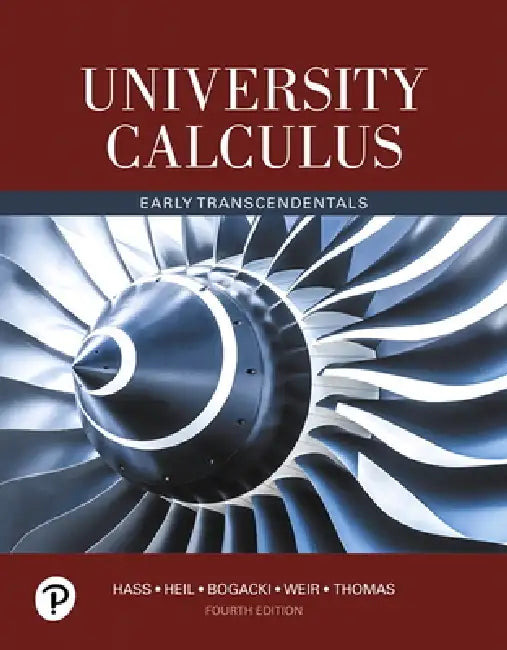
University Calculus | by Joel Hass | Christopher Heil | Maurice Weir | Pearson | by Joel Hass | Christopher Heil | Maurice Weir | Pearson | by Joel Hass | Christopher Heil | Maurice Weir | Pearson | by Joel Hass | Christopher Heil | Maurice Weir | Pearson | by Joel Hass | Christopher Heil | Maurice Weir | Pearson | by Joel Hass | Christopher Heil | Maurice Weir | Pearson | by Joel Hass | Christopher Heil | Maurice Weir | Pearson | by Joel Hass | Christopher Heil | Maurice Weir | Pearson | by Joe
Science & Mathematics