
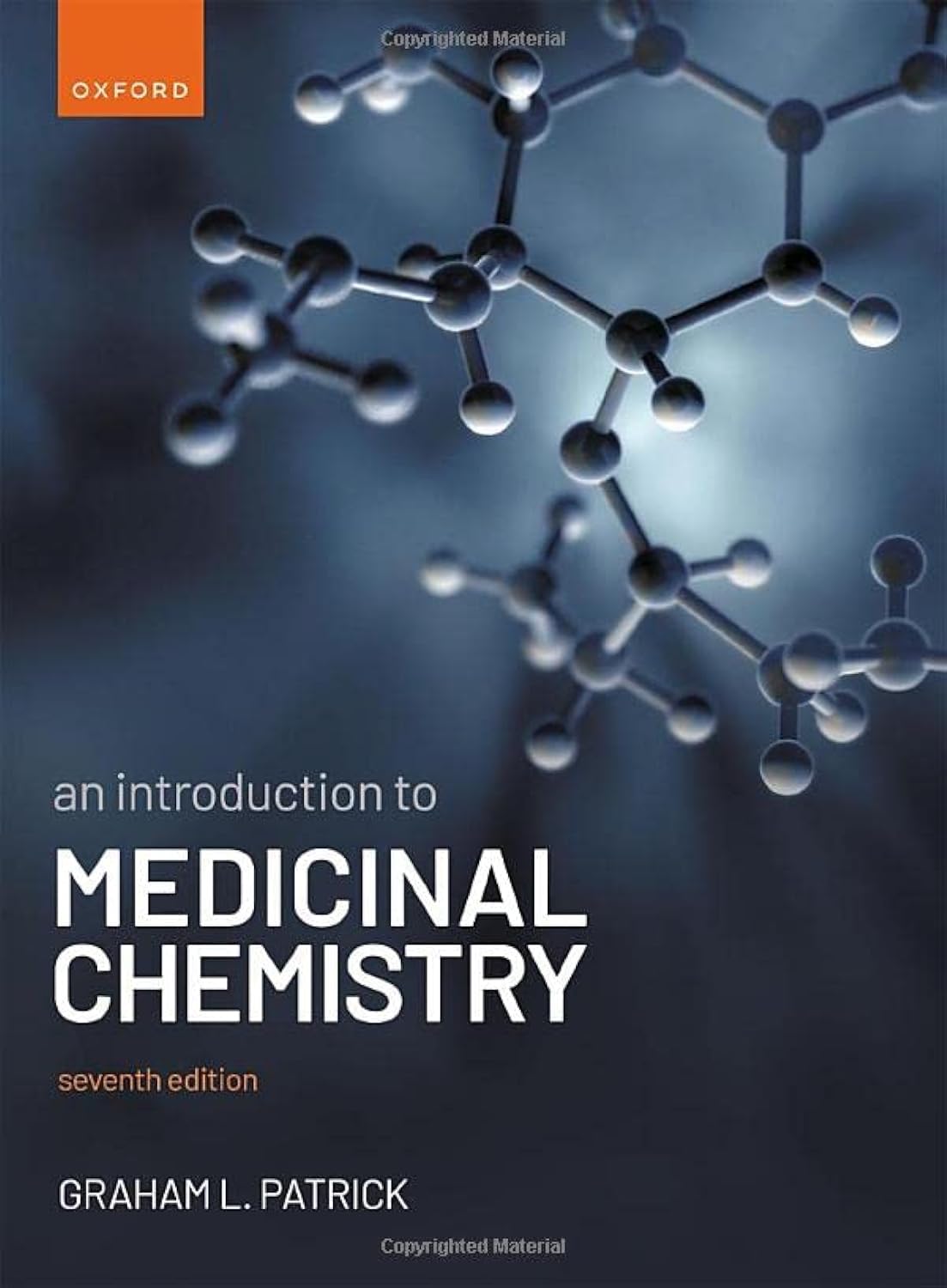
An Introduction to Medicinal Chemistry by Patrick – A Complete Guide for Pharmacy and Pharmacology Students in India
Inclusive of all applicable taxes. FREE shipping on all orders.
Available Offers
- 🚚Free Delivery — Free shipping on all orders
- 💵Cash on Delivery — Pay when your order arrives
- ↩️15-Day Easy Returns — Hassle-free return policy
- 🔒Cash on Delivery — Pay safely when your order arrives
Check Delivery
Product Description
Introduction
Medicinal chemistry sits at the crossroads of chemistry, biology, and pharmacology, shaping the way we discover, design, and develop life-saving drugs. For Indian students and researchers stepping into this fascinating field, having a clear, structured, and engaging guide is essential. An Introduction to Medicinal Chemistry, authored by Patrick and published by Oxford University Press, USA, is a comprehensive hardcover volume that has become a trusted textbook worldwide. This edition continues the tradition of making complex concepts accessible, blending theoretical foundations with real-world applications. Whether you are pursuing a degree in pharmacy, chemistry, or biomedical sciences, this book offers a solid starting point for your journey into the science behind modern medicine.
Book Overview
This seventh edition of An Introduction to Medicinal Chemistry is a meticulously updated resource that covers the entire spectrum of drug discovery and development. The book begins with fundamental principles of drug action, including molecular interactions, pharmacokinetics, and pharmacodynamics, before moving into advanced topics like drug design, lead optimization, and computational methods. Each chapter is enriched with case studies drawn from current biomedical research, helping readers connect theory to practice. The author’s student-friendly writing style ensures that even those encountering medicinal chemistry for the first time can grasp core concepts with confidence. The hardcover binding makes it a durable companion for both classroom learning and self-study.
Key Highlights
- Comprehensive Coverage: From molecular targets to clinical applications, the book covers every stage of the drug development pipeline.
- Student-Centric Approach: Clear explanations, worked examples, and end-of-chapter questions support active learning and revision.
- Current Research Integration: Case studies from recent biomedical breakthroughs illustrate how principles are applied in real-world drug discovery.
- Updated Content: The seventh edition includes new material on protein–protein interactions, antibody–drug conjugates, and emerging therapeutic modalities.
- Global Perspective: Examples include drugs relevant to Indian healthcare needs, such as antimalarials, antibiotics, and cardiovascular agents.
Inside the Book
Opening the book, readers will find a logical progression from basic to advanced topics. The early chapters introduce the concept of drug targets—enzymes, receptors, ion channels, and nucleic acids—and explain how drugs interact with them at the molecular level. Subsequent sections delve into drug discovery processes, including hit identification, lead optimization, and structure–activity relationships. The book also dedicates significant space to pharmacokinetics and drug metabolism, crucial for understanding how drugs behave in the body. Later chapters explore combinatorial chemistry, high-throughput screening, and computer-aided drug design, reflecting the modern toolkit of medicinal chemists. Each chapter concludes with a summary, review questions, and references for further reading.
Key Topics
- Molecular basis of drug action and drug–target interactions
- Enzymes as drug targets and enzyme inhibitors
- Receptors, agonists, antagonists, and allosteric modulators
- Nucleic acids as drug targets (antisense, siRNA, and gene therapy)
- Drug discovery and development: from target identification to clinical trials
- Lead optimization strategies and structure–activity relationships
- Pharmacokinetics: absorption, distribution, metabolism, and excretion
- Computational chemistry and molecular modeling
- Case studies on anticancer, antiviral, and antibacterial drugs
- Emerging trends: biologics, peptides, and targeted therapies
Reader Benefits
Students gain a robust understanding of how drugs are designed, tested, and brought to market. The book demystifies complex topics like molecular docking and quantitative structure–activity relationships through clear diagrams and step-by-step explanations. Indian readers will appreciate the inclusion of drugs commonly used in the country, such as artemisinin-based antimalarials and statins. The hardcover format ensures longevity, making it ideal for repeated reference during coursework or exam preparation. Additionally, the book builds a strong foundation for advanced studies in medicinal chemistry, pharmaceutical sciences, or drug design research.
Learning Outcomes
By working through this book, readers will be able to: explain the molecular mechanisms of drug action; identify key drug targets and their roles in disease; apply principles of drug design to develop new therapeutic agents; interpret structure–activity relationship data; understand the drug development pipeline from discovery to clinical use; and critically evaluate case studies from modern biomedical research. These outcomes align well with undergraduate and postgraduate curricula in Indian universities, particularly in pharmacy, chemistry, and biotechnology programs.
Who Should Read
This book is ideal for undergraduate and postgraduate students in medicinal chemistry, pharmacy, pharmacology, and biochemistry. It is also a valuable resource for researchers entering the pharmaceutical industry, as well as professionals in drug discovery labs who wish to refresh their knowledge. Indian students preparing for competitive exams like GPAT, NIPER, or CSIR-UGC NET in pharmaceutical sciences will find the content particularly useful. Moreover, faculty members teaching medicinal chemistry can rely on this text to structure their lectures and assignments.
About the Author
Patrick is a highly respected educator and researcher in the field of medicinal chemistry. With years of experience teaching at the university level, he has developed a reputation for making difficult concepts understandable without oversimplifying the science. His writing reflects a deep understanding of how students learn, and his commitment to clarity and accuracy has made this book a staple in classrooms around the world. Patrick’s work continues to inspire the next generation of medicinal chemists.
About the Publisher
Oxford University Press (OUP) is a globally renowned academic publisher with a legacy of excellence spanning over five centuries. OUP’s titles are known for their rigorous peer review, authoritative content, and high production standards. This edition of An Introduction to Medicinal Chemistry is printed on quality paper with a durable hardcover binding, ensuring it withstands years of use. OUP’s commitment to advancing education and research aligns perfectly with the needs of Indian students and academics seeking reliable, world-class textbooks.
Conclusion
An Introduction to Medicinal Chemistry, Seventh Edition, is more than just a textbook—it is a gateway to understanding how chemistry transforms into cures. For Indian students and professionals aiming to excel in pharmaceutical sciences, this book offers the depth, clarity, and relevance needed to succeed. Its hardcover format, updated content, and student-friendly approach make it a valuable addition to any library. Whether you are beginning your journey or looking to deepen your expertise, this book will equip you with the knowledge and skills to contribute meaningfully to the world of drug discovery. Order your copy from Bookshops.in today and take the first step toward mastering medicinal chemistry.
Quick Summary
An Introduction to Medicinal Chemistry by Patrick is the definitive textbook for students and professionals entering the multidisciplinary field of medicinal chemistry. Published by Oxford University Press in its seventh edition (2023), this hardcover volume offers a complete and accessible journey from fundamental principles to advanced drug design. Written in a student-friendly style, it demystifies complex topics like drug targets, lead optimization, ADME, and pharmacokinetics. The book is enriched with case studies drawn from current biomedical research, making it highly relevant for Indian students pursuing B.Pharm, M.Pharm, pharmacology, or pharmaceutical chemistry. Readers will learn how drugs are discovered, designed, developed, and brought to market, with a strong emphasis on molecular mechanisms. This edition also covers modern computational tools like QSAR and molecular modeling. By purchasing from Bookshops.in, Indian students get a reliable, authentic copy with fast delivery and competitive pricing. Whether you are preparing for GPAT, NIPER, or university exams, this book builds a solid conceptual foundation and practical insight into the pharmaceutical industry.
Book Highlights
Book Specifications
| ISBN-13 | 9780198866664 |
| ISBN-10 | 0198866666 |
| Publisher | Oxford Univ Pr |
| Language | English |
| Dimensions | 27.46 x 3.81 x 22.07 cm |
| Weight | 2 kg 270 g |
| Country | United Kingdom |
| Category | Basic Sciences › Toxicology |
| Genre | Nonfiction |
| Original Language | English |
Frequently Asked Questions
Is this book suitable for Indian pharmacy students?
Does the book cover drug design techniques?
Is this book useful for GPAT preparation?
What is the language of the book?
Who is the author?
Does it include case studies?
What is the binding type?
Is it suitable for beginners?
Does it cover pharmacokinetics?
Can I use it for M.Pharm studies?
What is the ISBN?
Does it include review questions?
Where can I buy it in India?
Readers Also Search For
Customers Also Bought

Anatomy
Ultrastructure of the Digestive Tract: 4 (Electron Microscopy in Biology and Medicine)

Anatomy
Ultrastructure of the Connective Tissue Matrix: 3 (Electron Microscopy in Biology and Medicine)

Anatomy
Reproductive Genetics (Royal College of Obstetricians and Gynaecologists Study Group)

Anatomy
Human Gross Anatomy: An Outline Text by Robert J. Leonard – Medical Anatomy

Pharmacology
Mathematical Modeling and Simulation in Enteric Neurobiology

Anatomy
Nature’s Patterns and the Fractional Calculus: 2 (Fractional Calculus in Applied Sciences and Engineering, 2)
Related Products
View All
Medicine & Health Sciences
Handbook of Hospitality Strategic Management | by Olsen Michael | Taylor & Francis Ltd | by Olsen Michael | Taylor & Francis Ltd | by Olsen Michael | Taylor & Francis Ltd | by Olsen Michael | Taylor & Francis Ltd | by Olsen Michael | Taylor & Francis Ltd | by Olsen Michael | Taylor & Francis Ltd | by Olsen Michael | Taylor & Francis Ltd | by Olsen Michael | Taylor & Francis Ltd | by Olsen Michael | Taylor & Francis Ltd | by Olsen Michael | Taylor & Francis
Medicine & Health Sciences
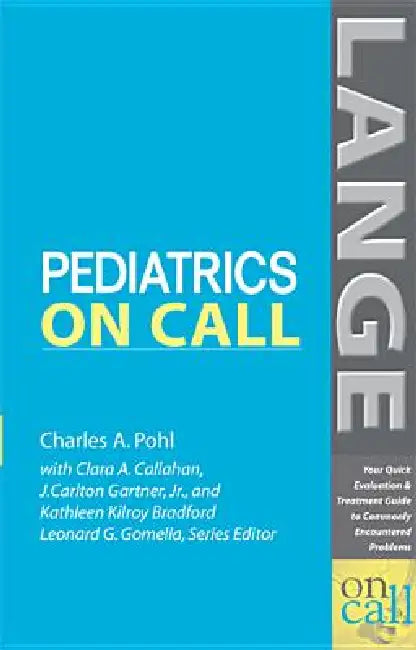
Pediatrics on Call | by Charles A. Pohl | Kathleen Bradford | Clara Callahan | McGraw Hill / Medical | by Charles A. Pohl | Kathleen Bradford | Clara Callahan | McGraw Hill / Medical | by Charles A. Pohl | Kathleen Bradford | Clara Callahan | McGraw Hill / Medical | by Charles A. Pohl | Kathleen Bradford | Clara Callahan | McGraw Hill / Medical | by Charles A. Pohl | Kathleen Bradford | Clara Callahan | McGraw Hill / Medical | by Charles A. Pohl | Kathleen Bradford | Clara Callahan | McGraw Hill

Medicine & Health Sciences
The Physician's Guide to Depression and Bipolar Disorders | by Dwight L. Evans | Dennis S. Charney | Lydia Lewis | McGraw Hill / Medical | by Dwight L. Evans | Dennis S. Charney | Lydia Lewis | McGraw Hill / Medical | by Dwight L. Evans | Dennis S. Charney | Lydia Lewis | McGraw Hill / Medical | by Dwight L. Evans | Dennis S. Charney | Lydia Lewis | McGraw Hill / Medical | by Dwight L. Evans | Dennis S. Charney | Lydia Lewis | McGraw Hill / Medical | by Dwight L. Evans | Dennis S. Charney | Lydi
Medicine & Health Sciences
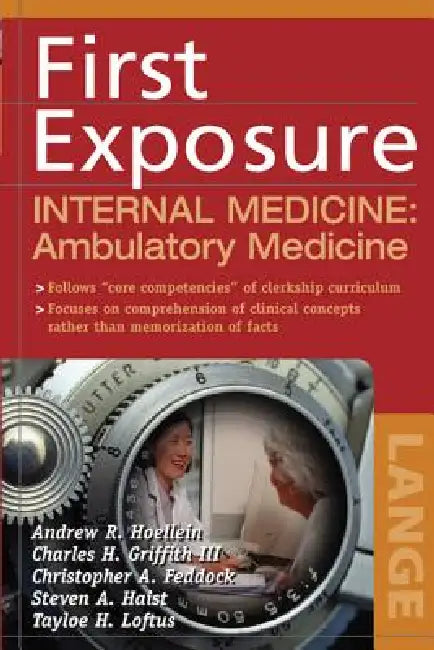
First Exposure to Internal Medicine | by Andrew R. Hoellein | Charles H. Griffith | McGraw Hill / Medical | by Andrew R. Hoellein | Charles H. Griffith | McGraw Hill / Medical | by Andrew R. Hoellein | Charles H. Griffith | McGraw Hill / Medical | by Andrew R. Hoellein | Charles H. Griffith | McGraw Hill / Medical | by Andrew R. Hoellein | Charles H. Griffith | McGraw Hill / Medical | by Andrew R. Hoellein | Charles H. Griffith | McGraw Hill / Medical | by Andrew R. Hoellein | Charles H. Griffit
Medicine & Health Sciences
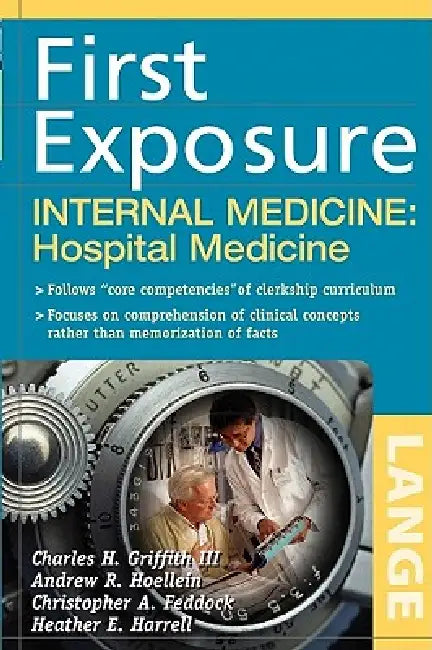
First Exposure to Internal Medicine | by Charles H. Griffith | Andrew R. Hoellein | McGraw Hill / Medical | by Charles H. Griffith | Andrew R. Hoellein | McGraw Hill / Medical | by Charles H. Griffith | Andrew R. Hoellein | McGraw Hill / Medical | by Charles H. Griffith | Andrew R. Hoellein | McGraw Hill / Medical | by Charles H. Griffith | Andrew R. Hoellein | McGraw Hill / Medical | by Charles H. Griffith | Andrew R. Hoellein | McGraw Hill / Medical | by Charles H. Griffith | Andrew R. Hoellei
Medicine & Health Sciences