

Animal Cells as Bioreactors by Terence Cartwright – A Complete Guide to Biotechnological Drug Production Using Animal Ce
Inclusive of all applicable taxes. FREE shipping on all orders.
Available Offers
- 🚚Free Delivery — Free shipping on all orders
- 💵Cash on Delivery — Pay when your order arrives
- ↩️15-Day Easy Returns — Hassle-free return policy
- 🔒Cash on Delivery — Pay safely when your order arrives
Check Delivery
Product Description
Introduction
In the rapidly evolving world of biotechnology, the ability to harness living cells for the production of life-saving drugs has become a cornerstone of modern medicine. Animal Cells as Bioreactors by Terence Cartwright offers a comprehensive and authoritative exploration of how animal cells are engineered and cultured to serve as efficient factories for complex protein-based therapeutics. Published by Cambridge University Press, this hardcover edition is an essential resource for Indian students, researchers, and professionals in biotechnology, pharmaceutical sciences, and genetic engineering.
Book Overview
This book delves deep into the intricate processes required to transform animal cells into reliable and cost-effective tools for drug manufacturing. From genetic modification to large-scale industrial cultivation, every critical step is examined with scientific rigour. The author bridges the gap between laboratory research and industrial application, making it a vital reference for anyone involved in bioprocess development. The text addresses the unique challenges of producing the new generation of protein drugs, which cannot be synthesized chemically and depend entirely on biotechnological methods using animal cell cultures.
Key Highlights
- Comprehensive coverage of all stages from gene insertion to product purification
- Integration of biological safety and regulatory verification of protein drugs
- Industrial scalability insights for reproducible large-scale production
- Practical approaches to genetic engineering of animal cell lines
- Real-world relevance for Indian biotech and pharmaceutical sectors
Inside the Book
Readers will find a well-structured journey through the entire bioprocess pipeline. The book begins with the fundamentals of animal cell biology and genetic manipulation, then progresses to the design of expression systems that maximize yield. It covers culture media optimization, bioreactor design, and harvesting techniques. A significant portion is dedicated to analytical methods for verifying the chemical and biological identity of the final product, ensuring compliance with stringent regulatory standards. The author also discusses risk assessment and containment strategies, making it a complete guide for safe and effective drug production.
Key Topics
- Genetic modification of animal cells for high-yield protein expression
- Cell line development and selection of stable clones
- Bioreactor types and operational parameters for suspension and adherent cultures
- Downstream processing including purification and formulation
- Quality control and bioanalytical characterization of therapeutic proteins
- Regulatory guidelines for biological safety and product approval
Reader Benefits
This book empowers readers with a holistic understanding of the entire production workflow. It helps students grasp complex biotechnological concepts through clear explanations and practical examples. For researchers, it provides cutting-edge methodologies to improve yield and consistency. Industry professionals will appreciate the focus on scalability and regulatory compliance, which are crucial for bringing products to market. The Indian context is particularly relevant, given the country's growing biopharmaceutical industry and need for skilled professionals in this domain.
Learning Outcomes
- Understand the principles of using animal cells as bioreactors for protein drug production
- Learn techniques for genetic engineering and cell line optimization
- Gain knowledge of bioreactor design and operation for industrial scale
- Master methods for product extraction, purification, and quality assurance
- Develop awareness of biological safety and regulatory frameworks
Who Should Read
This book is ideal for postgraduate students in biotechnology, biochemistry, and pharmaceutical sciences. It is also highly valuable for research scientists, bioprocess engineers, and quality control specialists working in the biopharmaceutical industry. Faculty members teaching advanced courses in cell culture technology or bioprocessing will find it an excellent reference. Additionally, professionals involved in drug development and regulatory affairs will benefit from the comprehensive coverage of safety and verification protocols.
About the Author
Terence Cartwright is a distinguished expert in the field of animal cell biotechnology with decades of experience in both academic research and industrial applications. His work has contributed significantly to the development of efficient bioprocesses for therapeutic protein production. Known for his ability to translate complex scientific concepts into accessible knowledge, Cartwright has authored several influential publications that bridge the gap between laboratory innovation and commercial viability.
About the Publisher
Cambridge University Press is one of the world's oldest and most respected academic publishers, with a legacy of excellence spanning over four centuries. Renowned for its rigorous peer-review process and commitment to scholarly quality, Cambridge University Press publishes works that shape education and research globally. This hardcover edition upholds the publisher's tradition of delivering authoritative and meticulously edited content to students and professionals worldwide.
Conclusion
Animal Cells as Bioreactors is an indispensable guide for anyone serious about understanding or working in the field of biopharmaceutical production. Its thorough coverage of genetic, engineering, and regulatory aspects makes it a complete resource for turning scientific potential into practical reality. Whether you are a student beginning your journey or an experienced professional seeking to deepen your expertise, this book offers the knowledge and insights needed to excel in the dynamic world of animal cell biotechnology.
Quick Summary
Animal Cells as Bioreactors by Terence Cartwright is a comprehensive guide to the science and technology of using animal cell cultures to produce complex protein drugs. The book covers every step of the bioprocess: from genetically modifying cells to secrete high yields of therapeutic proteins, to designing scalable bioreactor systems, to extracting and purifying the final product. It also addresses critical biological safety issues and the verification of the chemical and biological identity of the drug. Written for biotechnology students, researchers, and industry professionals, this work emphasizes the integration of all stages for an efficient and cost-effective production process. Published by Cambridge University Press, it remains a valuable reference for anyone involved in biopharmaceutical manufacturing. By purchasing from Bookshops.in, Indian readers get a reliable, high-quality physical copy delivered to their doorstep, supporting a trusted domestic bookstore.
Book Highlights
Book Specifications
| ISBN-13 | 9780521412582 |
| ISBN-10 | 0521412587 |
| Publisher | Cambridge University Press |
| Language | English |
| Dimensions | 16.51 x 1.27 x 24.13 cm |
| Weight | 443 g |
| Country | India |
| Category | Basic Sciences › Microbiology |
| Genre | Non-fiction |
| Original Language | English |
Frequently Asked Questions
What is the main focus of Animal Cells as Bioreactors?
Who is the author of this book?
Is this book suitable for Indian students?
What topics are covered in the book?
Does the book include practical examples?
Is this book available in hardcover?
What is the ISBN of this book?
Who should read this book?
How does this book help in understanding bioprocess integration?
Does the book cover regulatory aspects?
Can this book be used for self-study?
What makes this book unique?
Is the content still relevant today?
Where can I buy this book in India?
Readers Also Search For
Customers Also Bought

Anatomy
Ultrastructure of the Digestive Tract: 4 (Electron Microscopy in Biology and Medicine)

Anatomy
Ultrastructure of the Connective Tissue Matrix: 3 (Electron Microscopy in Biology and Medicine)

Anatomy
Reproductive Genetics (Royal College of Obstetricians and Gynaecologists Study Group)

Anatomy
Human Gross Anatomy: An Outline Text by Robert J. Leonard – Medical Anatomy

Pharmacology
Mathematical Modeling and Simulation in Enteric Neurobiology

Anatomy
Nature’s Patterns and the Fractional Calculus: 2 (Fractional Calculus in Applied Sciences and Engineering, 2)
Related Products
View All
Medicine & Health Sciences
Handbook of Hospitality Strategic Management | by Olsen Michael | Taylor & Francis Ltd | by Olsen Michael | Taylor & Francis Ltd | by Olsen Michael | Taylor & Francis Ltd | by Olsen Michael | Taylor & Francis Ltd | by Olsen Michael | Taylor & Francis Ltd | by Olsen Michael | Taylor & Francis Ltd | by Olsen Michael | Taylor & Francis Ltd | by Olsen Michael | Taylor & Francis Ltd | by Olsen Michael | Taylor & Francis Ltd | by Olsen Michael | Taylor & Francis

Medicine & Health Sciences
Pediatrics on Call | by Charles A. Pohl | Kathleen Bradford | Clara Callahan | McGraw Hill / Medical | by Charles A. Pohl | Kathleen Bradford | Clara Callahan | McGraw Hill / Medical | by Charles A. Pohl | Kathleen Bradford | Clara Callahan | McGraw Hill / Medical | by Charles A. Pohl | Kathleen Bradford | Clara Callahan | McGraw Hill / Medical | by Charles A. Pohl | Kathleen Bradford | Clara Callahan | McGraw Hill / Medical | by Charles A. Pohl | Kathleen Bradford | Clara Callahan | McGraw Hill

Medicine & Health Sciences
The Physician's Guide to Depression and Bipolar Disorders | by Dwight L. Evans | Dennis S. Charney | Lydia Lewis | McGraw Hill / Medical | by Dwight L. Evans | Dennis S. Charney | Lydia Lewis | McGraw Hill / Medical | by Dwight L. Evans | Dennis S. Charney | Lydia Lewis | McGraw Hill / Medical | by Dwight L. Evans | Dennis S. Charney | Lydia Lewis | McGraw Hill / Medical | by Dwight L. Evans | Dennis S. Charney | Lydia Lewis | McGraw Hill / Medical | by Dwight L. Evans | Dennis S. Charney | Lydi
Medicine & Health Sciences
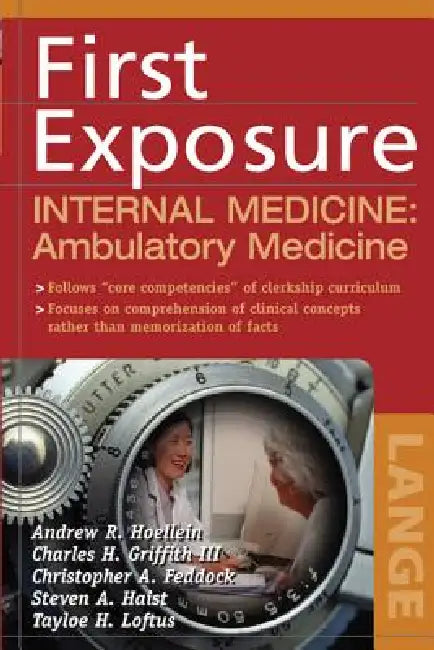
First Exposure to Internal Medicine | by Andrew R. Hoellein | Charles H. Griffith | McGraw Hill / Medical | by Andrew R. Hoellein | Charles H. Griffith | McGraw Hill / Medical | by Andrew R. Hoellein | Charles H. Griffith | McGraw Hill / Medical | by Andrew R. Hoellein | Charles H. Griffith | McGraw Hill / Medical | by Andrew R. Hoellein | Charles H. Griffith | McGraw Hill / Medical | by Andrew R. Hoellein | Charles H. Griffith | McGraw Hill / Medical | by Andrew R. Hoellein | Charles H. Griffit
Medicine & Health Sciences
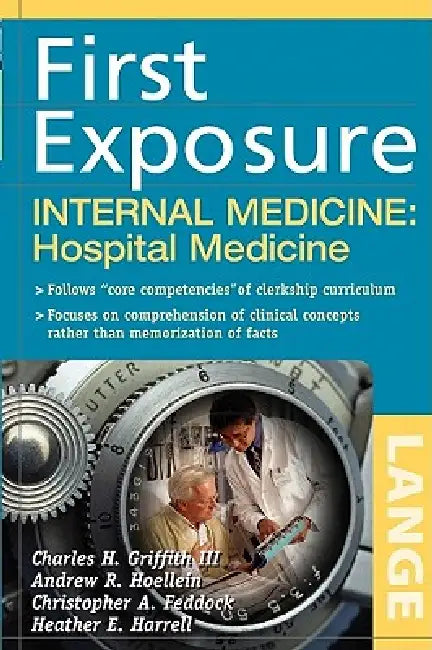
First Exposure to Internal Medicine | by Charles H. Griffith | Andrew R. Hoellein | McGraw Hill / Medical | by Charles H. Griffith | Andrew R. Hoellein | McGraw Hill / Medical | by Charles H. Griffith | Andrew R. Hoellein | McGraw Hill / Medical | by Charles H. Griffith | Andrew R. Hoellein | McGraw Hill / Medical | by Charles H. Griffith | Andrew R. Hoellein | McGraw Hill / Medical | by Charles H. Griffith | Andrew R. Hoellein | McGraw Hill / Medical | by Charles H. Griffith | Andrew R. Hoellei
Medicine & Health Sciences