
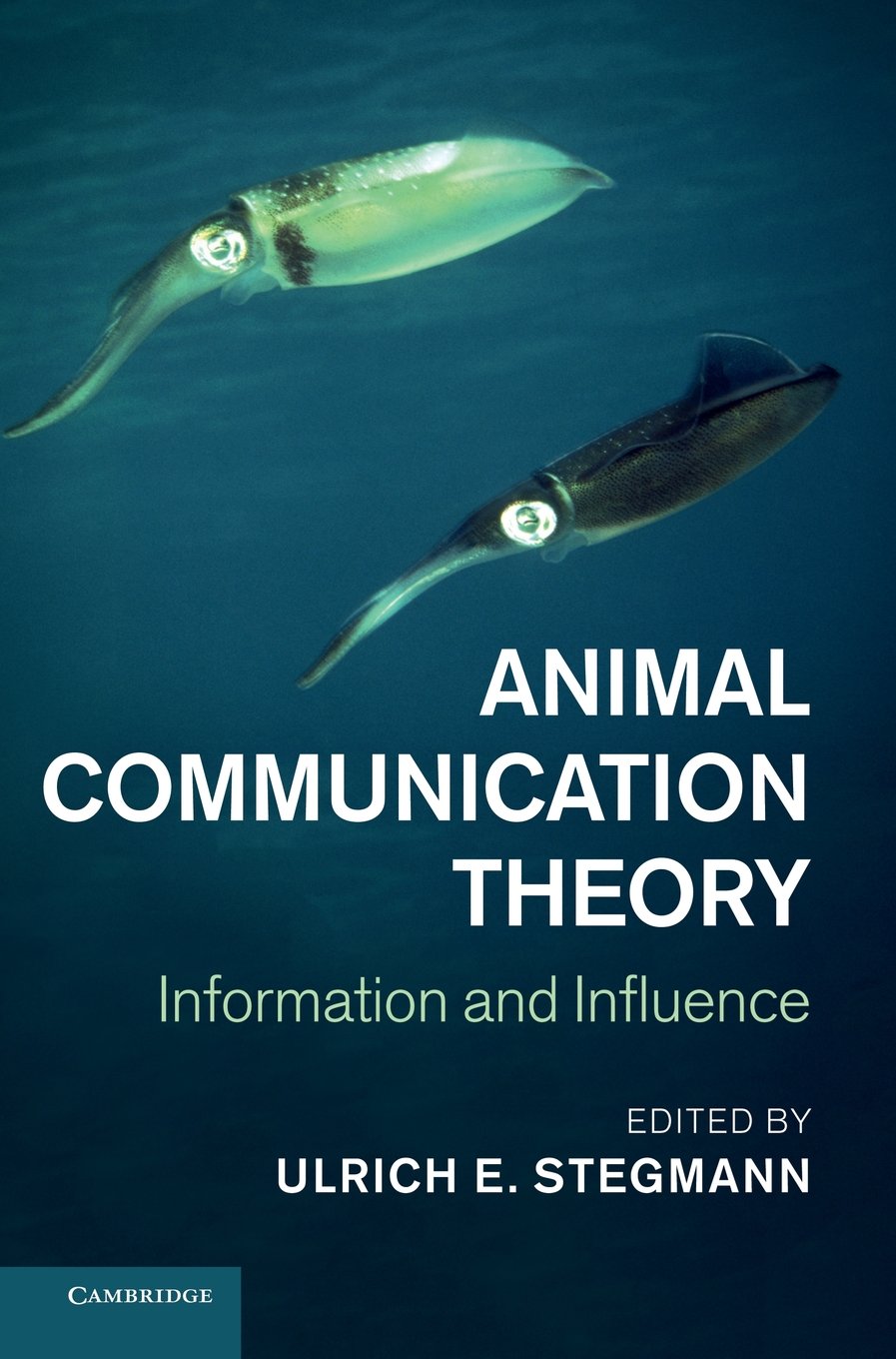
Animal Communication Theory: Information and Influence by Ulrich E. Stegmann – A Comprehensive Exploration of Foundation
Inclusive of all applicable taxes. FREE shipping on all orders.
Available Offers
- 🚚Free Delivery — Free shipping on all orders
- 💵Cash on Delivery — Pay when your order arrives
- ↩️15-Day Easy Returns — Hassle-free return policy
- 🔒Cash on Delivery — Pay safely when your order arrives
Check Delivery
Product Description
Introduction
Animal communication has long fascinated scientists and philosophers alike. How do birds, bees, primates, and insects share information? What does it mean for a signal to carry meaning? In Animal Communication Theory: Information and Influence, edited by Ulrich E. Stegmann, readers are taken on a rigorous intellectual journey through the foundational concepts that underpin the study of animal signals. Published by Cambridge University Press, this hardcover volume brings together leading voices from ethology, evolutionary biology, animal cognition, and philosophy to explore whether notions like information, reference, and meaning are scientifically valid when applied to non-human communication. For Indian students, researchers, and wildlife enthusiasts, this book offers a rare synthesis of theoretical depth and empirical case studies—from the dance of honeybees to the calls of primates—making it an essential addition to any serious library on animal behaviour.
Book Overview
Animal Communication Theory: Information and Influence is not a simple field guide or introductory textbook. It is a scholarly collection that critically examines the very language we use to describe animal signalling. The book opens with a comprehensive introduction that equips non-specialists with the necessary background, then moves into chapters that debate whether animal signals can truly be said to convey information, or whether they primarily function to influence the behaviour of receivers. The volume bridges philosophy of biology and empirical research, asking bold questions: Is human language unique, or do animal communication systems share deep similarities? What role does evolutionary theory play in shaping our understanding of signals? The result is a thought-provoking work that challenges readers to rethink what they know about the natural world.
Key Highlights
- Interdisciplinary Approach: Combines insights from ethology, theoretical biology, animal cognition, evolutionary biology, and philosophy of mind and biology.
- Foundational Questions: Tackles the core issue of whether information, meaning, and reference are useful concepts in animal communication studies.
- Rich Case Studies: Includes detailed analyses of communication in primates, birds, and insects, offering concrete examples to ground theoretical debates.
- Comprehensive Introduction: A specially written opening chapter makes the complex field accessible to newcomers while still satisfying advanced readers.
- Future-Oriented: Surveys both established and emerging concepts, providing a roadmap for future research in animal behaviour.
Inside the Book
Structured as a series of invited chapters, this volume is divided into thematic sections that progress from philosophical and theoretical analyses to empirical investigations. The first part examines the nature of information itself—what it means to say a signal 'carries information' and whether this is a metaphor or a measurable quantity. Subsequent chapters explore the evolutionary origins of communication, the relationship between animal signals and human language, and the cognitive mechanisms underlying signal production and reception. Each chapter is self-contained but builds on the others, creating a cohesive narrative that encourages readers to engage deeply with the material. The inclusion of primates, birds, and insects ensures a broad taxonomic coverage, highlighting both common principles and fascinating divergences.
Key Topics
- Information theory and its application to animal communication
- Concepts of meaning, reference, and representation in non-human animals
- Evolutionary models of signal design and honesty
- Comparative analysis of primate vocalisations, bird song, and insect dances
- Cognitive and philosophical dimensions of animal signalling
- The boundary between influence and information in behavioural interactions
Reader Benefits
This book is more than an academic text; it is a tool for sharpening critical thinking. Readers will learn to evaluate scientific claims about animal minds, understand the assumptions behind popular theories of communication, and appreciate the philosophical depth that underlies even simple observations of animals. For Indian students preparing for competitive exams or pursuing research in zoology, psychology, or philosophy of science, this volume provides a solid foundation in one of the most debated topics in modern biology. It also offers wildlife conservationists and naturalists a richer vocabulary to describe the behaviours they observe in the field.
Learning Outcomes
After engaging with Animal Communication Theory: Information and Influence, readers will be able to: critically assess whether animal signals convey information in the same sense as human language; identify the key theories of signal evolution, including honest signalling and sensory exploitation; compare communication systems across diverse taxa such as insects, birds, and mammals; articulate the philosophical challenges of attributing mental states like intention or reference to animals; and apply concepts from information theory to real-world examples of animal behaviour. These outcomes are valuable for both academic growth and a deeper appreciation of the natural world.
Who Should Read
This book is ideal for advanced undergraduate and postgraduate students in animal behaviour, evolutionary biology, cognitive science, and philosophy of biology. It will also appeal to professional researchers seeking a comprehensive overview of current debates. Wildlife biologists, zoo educators, and science communicators in India who wish to move beyond surface-level descriptions of animal communication will find the theoretical rigour refreshing. Additionally, anyone with a serious interest in the question of animal minds—whether a hobbyist naturalist or a seasoned academic—will discover new perspectives that challenge conventional wisdom.
About the Author
Ulrich E. Stegmann is a philosopher of biology with a deep interest in animal communication and the conceptual foundations of behavioural science. He has published extensively on topics such as information in biology, the nature of animal signals, and the philosophy of ethology. Stegmann's editorial work brings together contributors who are leaders in their respective fields, ensuring that the volume represents the cutting edge of interdisciplinary research. His ability to bridge the gap between empirical science and philosophical analysis makes him uniquely suited to guide readers through this complex terrain.
About the Publisher
Cambridge University Press is one of the oldest and most prestigious academic publishers in the world. Known for its rigorous peer-review process and high-quality scholarly output, Cambridge University Press has been a cornerstone of academic publishing since 1534. This hardcover edition reflects the press's commitment to producing durable, beautifully bound books that stand the test of time. For Indian readers, Cambridge titles are synonymous with authority and excellence in the sciences, humanities, and social sciences.
Conclusion
Animal Communication Theory: Information and Influence is a landmark volume that pushes the boundaries of how we think about the lives of animals. By questioning the very tools we use to describe animal behaviour, it opens up new avenues for research and reflection. Whether you are a student in Delhi, a researcher in Bengaluru, or a wildlife enthusiast in the Western Ghats, this book will change the way you listen to the world around you. Order your copy today from Bookshops.in and add this essential work to your collection.
Quick Summary
Animal Communication Theory: Information and Influence, edited by Ulrich E. Stegmann, is a comprehensive academic work that delves into the foundational concepts underlying the study of animal communication. The book critically examines how notions of information, meaning, and reference are employed to explain animal behaviour, drawing from diverse fields such as ethology, animal cognition, theoretical biology, evolutionary biology, and philosophy of biology. It addresses key questions like the nature of information, its theoretical roles, and whether these concepts are justified in explaining animal communication. The volume also explores the relationship between animal signals and human language, making it relevant for linguists and cognitive scientists. With a detailed introduction that orients non-specialists, the book is ideal for advanced undergraduate and postgraduate students, as well as researchers in animal behaviour and philosophy. Published by Cambridge University Press, this hardcover edition is a valuable addition to any academic library. Readers will gain a nuanced understanding of the conceptual challenges in animal communication research. By purchasing from Bookshops.in, Indian customers receive a genuine, high-quality print edition with reliable service.
Book Highlights
Book Specifications
| ISBN-13 | 9781107013100 |
| ISBN-10 | 1107013100 |
| Publisher | Cambridge University Press |
| Language | English |
| Dimensions | 18.42 x 3.18 x 26.04 cm |
| Weight | 1 kg 70 g |
| Country | India |
| Category | Veterinary Medicine › General |
| Genre | Nonfiction |
| Original Language | English |
Frequently Asked Questions
What is Animal Communication Theory: Information and Influence about?
Who is the author of this book?
Is this book suitable for beginners?
What disciplines does this book cover?
Does the book compare animal communication to human language?
What is the ISBN of this book?
What is the price of this book on Bookshops.in?
Is this book available in hardcover?
What is the reading level for this book?
Can I use this book for my animal behaviour course?
Does the book include contributions from other researchers?
Why should I buy this book from Bookshops.in?
Readers Also Search For
Customers Also Bought

Anatomy
Ultrastructure of the Digestive Tract: 4 (Electron Microscopy in Biology and Medicine)

Anatomy
Ultrastructure of the Connective Tissue Matrix: 3 (Electron Microscopy in Biology and Medicine)

Anatomy
Reproductive Genetics (Royal College of Obstetricians and Gynaecologists Study Group)

Anatomy
Human Gross Anatomy: An Outline Text by Robert J. Leonard – Medical Anatomy

Pharmacology
Mathematical Modeling and Simulation in Enteric Neurobiology

Anatomy
Nature’s Patterns and the Fractional Calculus: 2 (Fractional Calculus in Applied Sciences and Engineering, 2)
Related Products
View All
Medicine & Health Sciences
Handbook of Hospitality Strategic Management | by Olsen Michael | Taylor & Francis Ltd | by Olsen Michael | Taylor & Francis Ltd | by Olsen Michael | Taylor & Francis Ltd | by Olsen Michael | Taylor & Francis Ltd | by Olsen Michael | Taylor & Francis Ltd | by Olsen Michael | Taylor & Francis Ltd | by Olsen Michael | Taylor & Francis Ltd | by Olsen Michael | Taylor & Francis Ltd | by Olsen Michael | Taylor & Francis Ltd | by Olsen Michael | Taylor & Francis
Medicine & Health Sciences
Pediatrics on Call | by Charles A. Pohl | Kathleen Bradford | Clara Callahan | McGraw Hill / Medical | by Charles A. Pohl | Kathleen Bradford | Clara Callahan | McGraw Hill / Medical | by Charles A. Pohl | Kathleen Bradford | Clara Callahan | McGraw Hill / Medical | by Charles A. Pohl | Kathleen Bradford | Clara Callahan | McGraw Hill / Medical | by Charles A. Pohl | Kathleen Bradford | Clara Callahan | McGraw Hill / Medical | by Charles A. Pohl | Kathleen Bradford | Clara Callahan | McGraw Hill

Medicine & Health Sciences
The Physician's Guide to Depression and Bipolar Disorders | by Dwight L. Evans | Dennis S. Charney | Lydia Lewis | McGraw Hill / Medical | by Dwight L. Evans | Dennis S. Charney | Lydia Lewis | McGraw Hill / Medical | by Dwight L. Evans | Dennis S. Charney | Lydia Lewis | McGraw Hill / Medical | by Dwight L. Evans | Dennis S. Charney | Lydia Lewis | McGraw Hill / Medical | by Dwight L. Evans | Dennis S. Charney | Lydia Lewis | McGraw Hill / Medical | by Dwight L. Evans | Dennis S. Charney | Lydi
Medicine & Health Sciences
First Exposure to Internal Medicine | by Andrew R. Hoellein | Charles H. Griffith | McGraw Hill / Medical | by Andrew R. Hoellein | Charles H. Griffith | McGraw Hill / Medical | by Andrew R. Hoellein | Charles H. Griffith | McGraw Hill / Medical | by Andrew R. Hoellein | Charles H. Griffith | McGraw Hill / Medical | by Andrew R. Hoellein | Charles H. Griffith | McGraw Hill / Medical | by Andrew R. Hoellein | Charles H. Griffith | McGraw Hill / Medical | by Andrew R. Hoellein | Charles H. Griffit
Medicine & Health Sciences
First Exposure to Internal Medicine | by Charles H. Griffith | Andrew R. Hoellein | McGraw Hill / Medical | by Charles H. Griffith | Andrew R. Hoellein | McGraw Hill / Medical | by Charles H. Griffith | Andrew R. Hoellein | McGraw Hill / Medical | by Charles H. Griffith | Andrew R. Hoellein | McGraw Hill / Medical | by Charles H. Griffith | Andrew R. Hoellein | McGraw Hill / Medical | by Charles H. Griffith | Andrew R. Hoellein | McGraw Hill / Medical | by Charles H. Griffith | Andrew R. Hoellei

Medicine & Health Sciences