
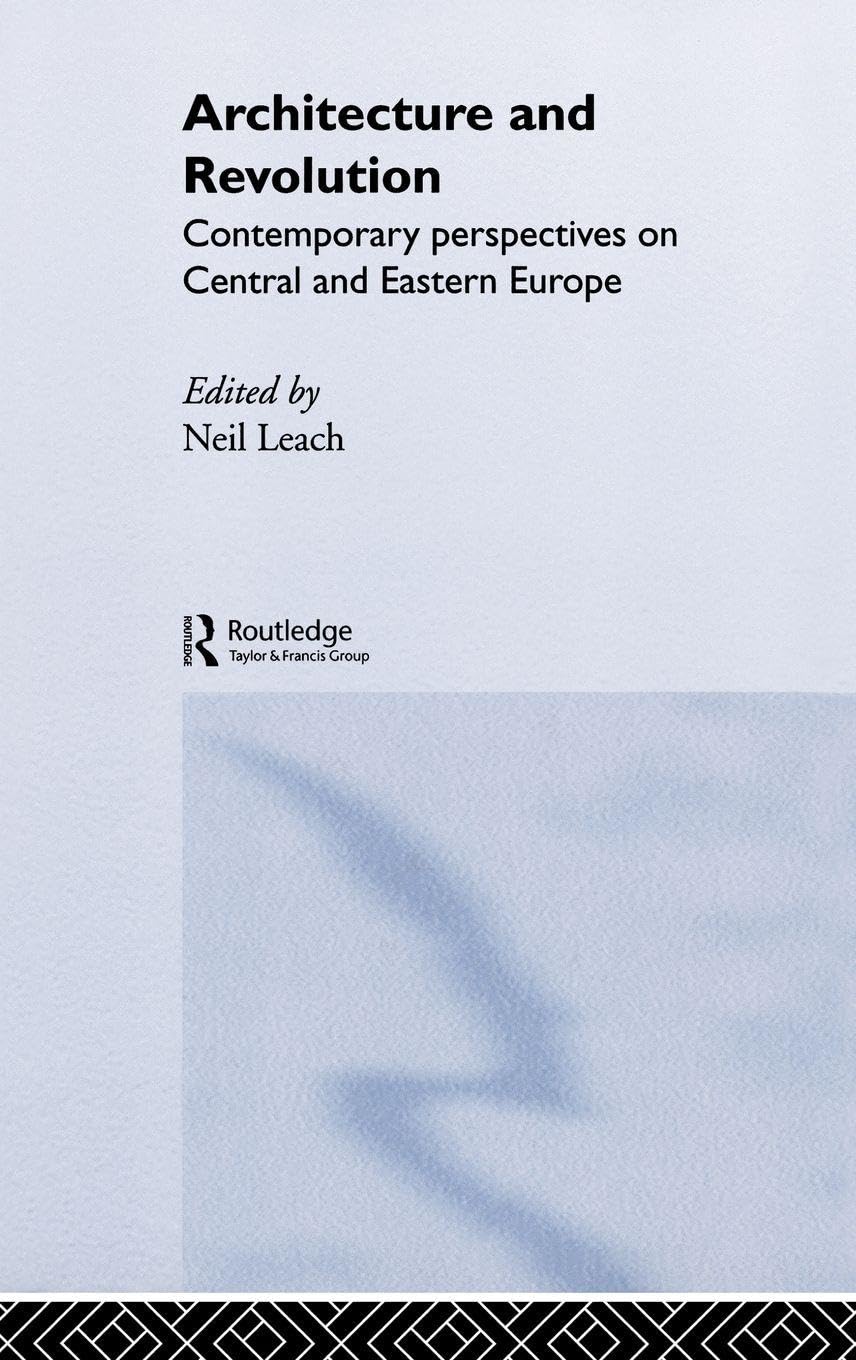
Architecture and Revolution: Contemporary Perspectives on Central and Eastern Europe by Neil Leach – A Critical Study of
Inclusive of all applicable taxes. FREE shipping on all orders.
Available Offers
- 🚚Free Delivery — Free shipping on all orders
- 💵Cash on Delivery — Pay when your order arrives
- ↩️15-Day Easy Returns — Hassle-free return policy
- 🔒Cash on Delivery — Pay safely when your order arrives
Check Delivery
Product Description
Introduction
In the wake of the seismic political shifts that reshaped Central and Eastern Europe after 1989, a profound transformation took hold—not just in governance and ideology, but in the very fabric of cities and buildings. Architecture and Revolution: Contemporary Perspectives on Central and Eastern Europe by Neil Leach examines this pivotal moment through the lens of architectural theory and practice. Published by Routledge, this hardcover volume brings together voices from both sides of the former Iron Curtain to explore how the built environment reflects, resists, and reinvents itself in times of radical change. For Indian students and professionals interested in global architectural discourse, this book offers a rare window into a region whose struggles and innovations resonate with contemporary urban challenges everywhere.
Book Overview
This edited collection gathers original essays from an international array of architects, philosophers, and cultural theorists. It investigates the architectural aftermath of the revolutions that toppled communist regimes across Central and Eastern Europe. The book tackles urgent questions: What should be done with buildings that served a now-obsolete social order? How do we address structures that are environmentally inadequate or politically stigmatized? Through critical analysis and provocative proposals, Architecture and Revolution charts a path forward for planners, architects, and policymakers navigating the complex legacy of a bygone era. The book stands as a key text for understanding how architecture participates in—and is shaped by—historical rupture.
Key Highlights
- Multidisciplinary Perspectives: Contributions from renowned figures such as Daniel Libeskind, Bernard Tschumi, Laura Mulvey, Hélène Cixous, Andrew Benjamin, and Fredric Jameson bring diverse viewpoints from architecture, film theory, philosophy, and cultural studies.
- East-West Dialogue: The book uniquely bridges Eastern and Western intellectual traditions, offering insights that are both locally specific and globally relevant.
- Critical Examination of Communist-Era Architecture: Essays dissect the environmental, functional, and symbolic problems of buildings inherited from socialist regimes.
- Timely Relevance: While focused on the 1989 revolutions, the themes of political transition, urban renewal, and contested heritage speak directly to contemporary debates in India and beyond.
Inside the Book
The volume is structured around thematic clusters that move from theoretical frameworks to case studies. Opening chapters establish the philosophical stakes of revolution and architecture, drawing on thinkers like Walter Benjamin and Jacques Derrida. Subsequent sections delve into specific urban contexts—from Berlin to Bucharest, from Warsaw to Moscow—examining how cities have grappled with the physical remnants of communism. The final essays propose speculative futures, questioning what a truly post-revolutionary architecture might look like. Throughout, the writing is rigorous yet accessible, balancing academic depth with a clarity that makes it suitable for advanced students and practitioners alike.
Key Topics
- The politics of architectural memory and forgetting
- Reuse and adaptation of socialist-era buildings
- Urban planning in post-communist cities
- Architecture as a tool for national identity formation
- The role of monuments and public space in transitional societies
- Environmental sustainability and the legacy of industrial construction
Reader Benefits
This book equips readers with a nuanced understanding of how architecture responds to political upheaval. It provides analytical tools to evaluate built heritage critically, whether in Europe or India. By engaging with multiple disciplinary perspectives, readers will develop a richer vocabulary for discussing the intersection of design, power, and history. The essays also offer practical insights for architects and planners working in contexts of rapid urban change, from redevelopment projects to heritage conservation.
Learning Outcomes
- Understand the historical and theoretical context of post-1989 architecture in Central and Eastern Europe
- Analyze the ethical and aesthetic dilemmas posed by communist-era buildings
- Critically assess the role of architecture in shaping collective memory and national identity
- Apply theoretical frameworks from leading thinkers to real-world urban challenges
- Develop comparative perspectives that connect European transitions to global architectural debates
Who Should Read
Architecture and Revolution is essential reading for architecture students, urban planners, historians, and cultural theorists. It will also appeal to professionals involved in heritage management, urban policy, and design practice. Indian readers with an interest in postcolonial urbanism, political transitions, or the global history of modernism will find the book’s comparative approach especially valuable. The essays are rigorous enough for academic coursework yet engaging for curious general readers seeking to understand how cities bear the marks of history.
About the Author
Neil Leach is an internationally recognized architectural theorist, educator, and curator. He has taught at leading institutions including the Architectural Association, Columbia University, and the University of Southern California. His research spans digital architecture, critical theory, and the politics of urban space. Leach has edited numerous influential volumes and is known for bringing philosophical rigor to architectural discourse. His editorial hand ensures that Architecture and Revolution maintains a coherent vision while showcasing a multiplicity of voices.
About the Publisher
Routledge is a premier academic publisher specializing in the humanities and social sciences. With a reputation for publishing landmark works in architecture, urban studies, and cultural theory, Routledge brings global scholarship to a diverse readership. This hardcover edition is produced to high standards, making it a durable addition to any academic or personal library.
Conclusion
Architecture and Revolution: Contemporary Perspectives on Central and Eastern Europe is more than a historical account—it is a vital resource for anyone who believes that buildings are never neutral, that they carry the weight of ideologies and the promise of transformation. By exploring the architectural legacy of one of the twentieth century’s most dramatic political shifts, this book illuminates the enduring power of design to shape our collective futures. For Indian readers seeking to understand how societies rebuild after upheaval, this volume offers both cautionary tales and inspiring possibilities.
Quick Summary
Architecture and Revolution: Contemporary Perspectives on Central and Eastern Europe, edited by Neil Leach, is a seminal collection that explores the architectural aftermath of the 1989 revolutions. Featuring essays from renowned figures such as Daniel Libeskind, Bernard Tschumi, Laura Mulvey, Helene Cixous, Andrew Benjamin, and Frederic Jameson, the book examines the challenges of repurposing communist-era buildings—many of which are environmentally inadequate, socially redundant, or carry the stigma of past regimes. It addresses the urgent questions facing architects, planners, and politicians as they reshape the built environment in a post-communist context. This volume is essential for students and professionals in architecture, urban planning, and cultural theory who seek a deeper understanding of how political upheaval transforms cities. By offering both Eastern and Western perspectives, the book provides a balanced, critical analysis that remains relevant today. Readers will gain insights into the intersection of ideology, space, and design, making it a valuable resource for academic research and practical urban regeneration. Purchasing from Bookshops.in ensures you receive a genuine hardcover edition with fast delivery across India.
Book Highlights
Book Specifications
| ISBN-13 | 9780415139144 |
| ISBN-10 | 0415139147 |
| Publisher | Routledge |
| Language | English |
| Dimensions | 17.15 x 2.54 x 24.77 cm |
| Weight | 612 g |
| Category | Engineering Textbooks › Civil Engineering |
| Genre | Non-fiction |
| Original Language | English |
Frequently Asked Questions
What is the main theme of Architecture and Revolution?
Who edited this book?
Which notable contributors are included?
Is this book suitable for students?
Does the book cover only Eastern Europe?
What type of buildings are discussed?
Is there a focus on theory or practice?
Is this book available in paperback?
Can I use this book for a research paper?
Does the book include illustrations?
Is the language accessible for non-native English speakers?
What makes this book unique?
Where can I buy it in India?
Readers Also Search For
Customers Also Bought
Mathematics
Stereotype Spaces and Algebras: 73 (De Gruyter Expositions in Mathematics, 73)
Mathematics
Semigroups in Algebra, Geometry and Analysis: 20 (De Gruyter Expositions in Mathematics, 20)
Mathematics
Geometry from the Pacific Rim: Proceedings of the Pacific Rim Geometry Conference held at National University of Singapore, Republic of Singapore, ... 1994 (De Gruyter Proceedings in Mathematics)
Mathematics
First International Tainan-Moscow Algebra Workshop: Proceedings of the International Conference held at National Cheng Kung University Tainan, Taiwan, ... 1994 (De Gruyter Proceedings in Mathematics)
Mathematics
Differential Geometry - Proceedings of the VIII International Colloquium (English, Jesus A. Alvarez Lopez | Eduardo Garcia-Rio)
Mathematics
Mathematical Theory of Optimal Processes (Classics of Soviet Mathematics)
Related Products
View All
Science & Mathematics
Elements of Pelagos Biology: With Focus on the Mediterranean Sea
Science & Mathematics
Squid - Superconducting Quantum Interference Devices and Their Applications: Proceedings of the International Conference on Superconducting Quantum Devices, Berlin-west, October 4-8, 1976
Science & Mathematics
Thermodynamics and Pattern Formation in Biology
Science & Mathematics
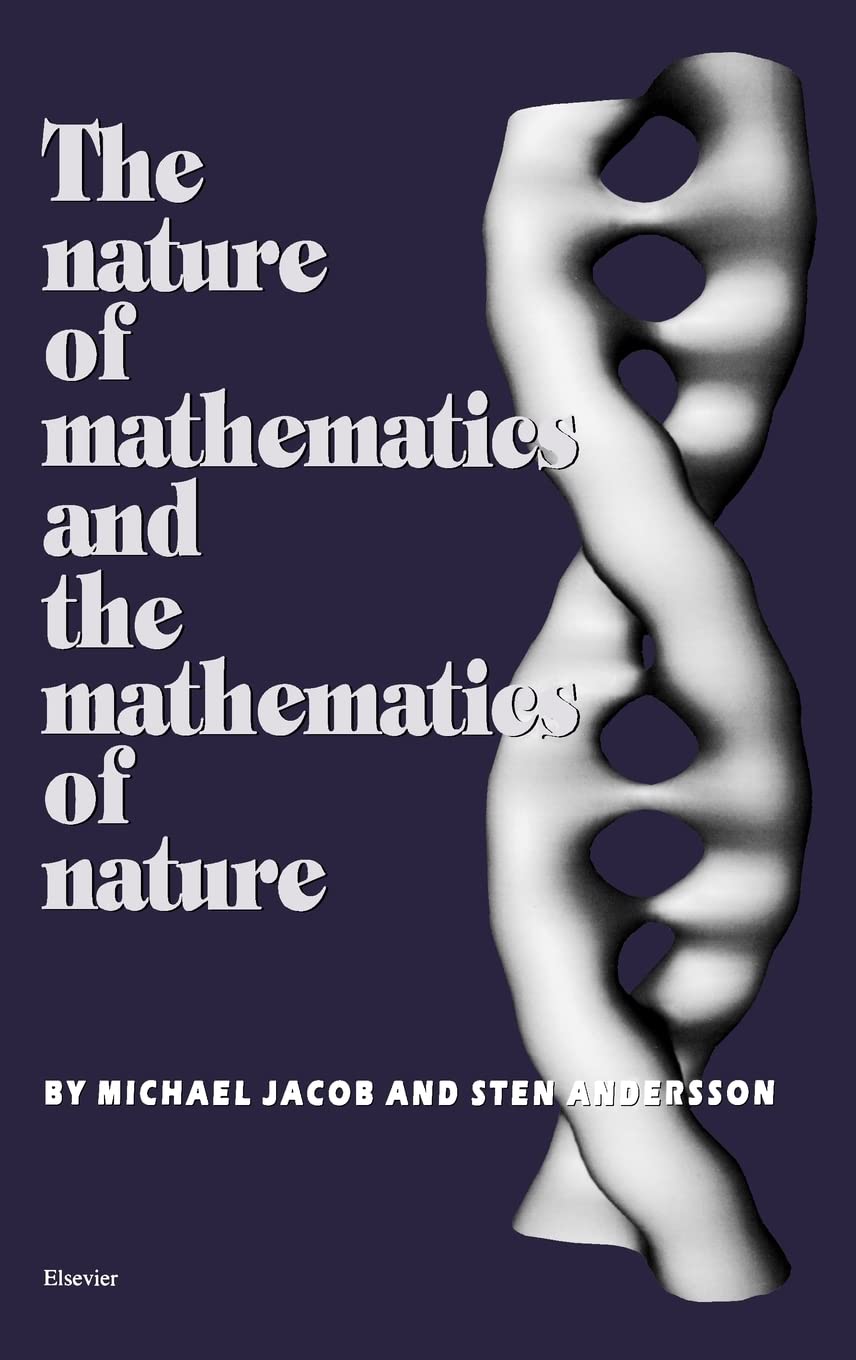
The Nature of Mathematics and the Mathematics of Nature by S. Andersson – Mathematics & Science

Science & Mathematics
Linear Algebra | by Stephen Friedberg | Arnold Insel | Lawrence Spence | Pearson | by Stephen Friedberg | Arnold Insel | Lawrence Spence | Pearson | by Stephen Friedberg | Arnold Insel | Lawrence Spence | Pearson | by Stephen Friedberg | Arnold Insel | Lawrence Spence | Pearson | by Stephen Friedberg | Arnold Insel | Lawrence Spence | Pearson | by Stephen Friedberg | Arnold Insel | Lawrence Spence | Pearson | by Stephen Friedberg | Arnold Insel | Lawrence Spence | Pearson | by Stephen Friedberg
Science & Mathematics