
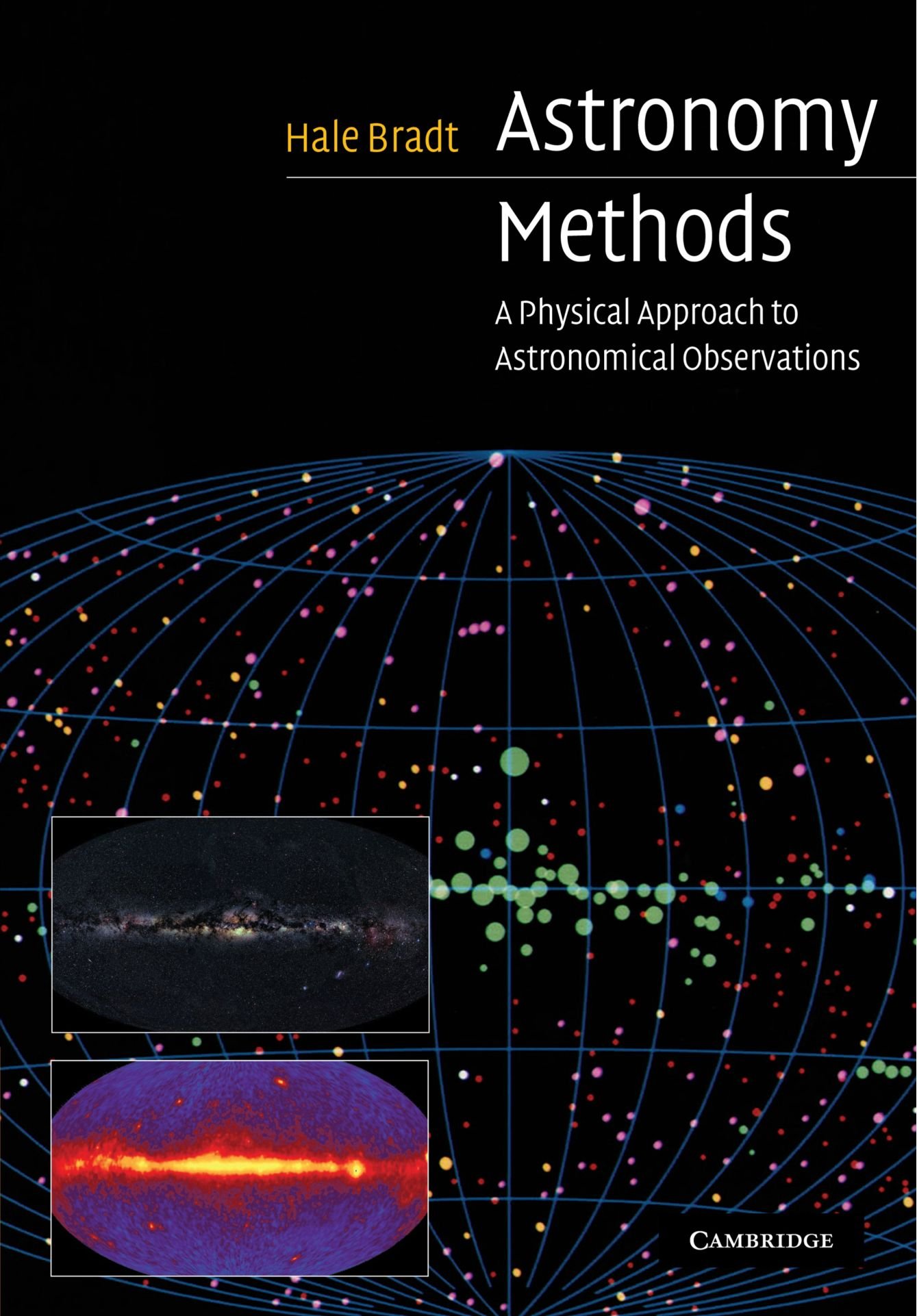
Astronomy Methods: A Physical Approach to Astronomical Observations by Hale Bradt – Essential Textbook for Astrophysics
Inclusive of all applicable taxes. FREE shipping on all orders.
Available Offers
- 🚚Free Delivery — Free shipping on all orders
- 💵Cash on Delivery — Pay when your order arrives
- ↩️15-Day Easy Returns — Hassle-free return policy
- 🔒Cash on Delivery — Pay safely when your order arrives
Check Delivery
Product Description
Introduction
Astronomy has always been a gateway to the infinite, but understanding the cosmos requires more than just gazing at the stars—it demands a rigorous, quantitative approach. Astronomy Methods: A Physical Approach to Astronomical Observations by Hale Bradt is a definitive guide for students and researchers who wish to master the practical tools and physical principles behind modern observational astronomy. Published by Cambridge University Press, this hardcover edition is an indispensable resource for anyone serious about the science of the universe.
Book Overview
First published in 2003, this comprehensive volume introduces the foundational techniques and phenomena that underpin quantitative astronomy. Unlike general astronomy books, it takes a deeply technical and analytical perspective, covering the entire electromagnetic spectrum—from radio waves to gamma rays. The author systematically explores topics such as atmospheric and interstellar absorption, telescope design across wavebands, interferometry, adaptive optics, radiative transfer, spectral line formation, and even neutrino and gravitational-wave astronomy. Each concept is presented with clarity, supported by diagrams and problem sets that reinforce understanding. This is not a casual read but a thorough academic resource designed for undergraduate and graduate students who seek to practice and study astronomy with precision.
Key Highlights
- Comprehensive coverage of observational methods across all wavelengths, from radio to gamma-ray astronomy.
- Rigorous physical approach that bridges theory and real-world observation.
- Includes modern topics such as adaptive optics, interferometry, neutrino astronomy, and gravitational-wave detection.
- Rich pedagogical features with numerous diagrams, worked examples, and problem sets to build analytical skills.
- Authored by Hale Bradt, a renowned physicist and educator with decades of experience in astrophysics research.
Inside the Book
The book is structured to guide readers from basic concepts to advanced applications. Early chapters establish the quantitative foundations of the electromagnetic spectrum and the effects of Earth's atmosphere on observations. Subsequent sections delve into telescope optics for different wavebands, including radio, infrared, optical, ultraviolet, X-ray, and gamma-ray instruments. Interferometry and adaptive optics are explained in detail, showing how astronomers achieve high-resolution images. The later part of the book focuses on the transport of radiation through matter, the formation of spectral lines, and the exciting frontiers of neutrino and gravitational-wave astronomy. Each chapter is enriched with clear illustrations and end-of-chapter problems that challenge readers to apply what they have learned.
Key Topics
- Quantitative aspects of the electromagnetic spectrum and blackbody radiation
- Atmospheric absorption, seeing, and interstellar extinction
- Telescope designs for radio, infrared, optical, UV, X-ray, and gamma-ray astronomy
- Interferometry and aperture synthesis
- Adaptive optics and image sharpening techniques
- Radiative transfer and spectral line formation
- Neutrino detection and gravitational-wave astronomy
- Coordinate systems, timekeeping, and data analysis basics
Reader Benefits
Readers will gain a solid, hands-on understanding of how astronomical observations are actually made and interpreted. The book demystifies the complex instruments and physical processes behind every image and spectrum. It equips students with the quantitative skills needed to design experiments, analyze data, and critically evaluate research. For Indian students pursuing degrees in physics, astrophysics, or space sciences, this book aligns well with advanced undergraduate and postgraduate curricula. It also serves as a reliable reference for professionals transitioning into observational astronomy.
Learning Outcomes
- Understand the physical principles governing radiation and its interaction with matter in astronomical contexts.
- Analyze the limitations and capabilities of telescopes across different wavebands.
- Apply interferometric and adaptive optics techniques to improve angular resolution.
- Interpret spectral lines to determine chemical composition, temperature, density, and motion of celestial objects.
- Evaluate methods used in modern neutrino and gravitational-wave observatories.
- Solve quantitative problems related to observational astronomy using mathematical and physical reasoning.
Who Should Read
This book is ideal for undergraduate and graduate students in astronomy, astrophysics, physics, and related fields. It is also highly suitable for research scholars, early-career astronomers, and science educators who wish to deepen their grasp of observational techniques. Professionals in space science and instrumentation will find it a valuable reference. Anyone with a strong foundation in physics and mathematics and a passion for understanding how we observe the universe will benefit from this text.
About the Author
Hale Bradt is a professor emeritus of physics at the Massachusetts Institute of Technology (MIT), where he has taught and conducted research for decades. His work has focused on X-ray astronomy, astrophysical sources, and high-energy phenomena. Bradt is known for his clear, methodical teaching style and has authored several acclaimed textbooks, including Astronomy Methods and Astrophysics Processes. His deep expertise and pedagogical skill make complex topics accessible to students.
About the Publisher
Cambridge University Press is one of the world's oldest and most respected academic publishers. With a legacy of excellence in scientific and scholarly publishing, Cambridge ensures that each book meets the highest standards of accuracy, clarity, and production quality. This hardcover edition is built to withstand years of rigorous use in libraries, classrooms, and research labs.
Conclusion
Astronomy Methods: A Physical Approach to Astronomical Observations is more than a textbook—it is a gateway to thinking like an astronomer. For Indian students and researchers aiming to excel in observational astrophysics, this book provides the essential toolkit. Whether you are preparing for a career in space research or simply wish to understand the science behind every star you see, this volume will illuminate your path. Order your copy from Bookshops.in today and begin your journey into the quantitative cosmos.
Quick Summary
Astronomy Methods: A Physical Approach to Astronomical Observations by Hale Bradt is a definitive textbook designed for students and researchers who want a deep understanding of how astronomical data is collected and interpreted. The book systematically covers the entire electromagnetic spectrum, from radio waves to gamma rays, explaining the physical principles behind telescopes, detectors, and observational techniques. It delves into advanced topics such as interferometry, adaptive optics, and the transport of radiation through matter to form spectral lines. Additionally, it introduces emerging fields like neutrino and gravitational-wave astronomy, making it a forward-looking resource. Written in a clear, structured manner, the book includes numerous diagrams and problem sets that help readers apply concepts. Published by Cambridge University Press, this hardcover edition is ideal for Indian undergraduate and graduate students in physics and astrophysics. By purchasing from Bookshops.in, customers receive a genuine, high-quality print copy with reliable delivery across India.
Book Highlights
Book Specifications
| ISBN-13 | 9780521535519 |
| ISBN-10 | 0521535514 |
| Publisher | Cambridge University Press |
| Language | English |
| Dimensions | 16.99 x 2.64 x 24.41 cm |
| Weight | 910 g |
| Country | India |
| Category | Science & Mathematics › Astronomy & Astrophysics |
| Genre | Science & Mathematics |
| Original Language | English |
Frequently Asked Questions
What is Astronomy Methods about?
Who is the author of Astronomy Methods?
Is this book suitable for beginners?
What topics are covered in the book?
Does the book include problem sets?
What is the ISBN?
Is this book available in hardcover?
What language is the book in?
Can Indian students benefit from this book?
Does the book cover radio astronomy?
What is the price of the book?
Are there diagrams in the book?
Is this book used in university courses?
Readers Also Search For
Customers Also Bought
Mathematics
Stereotype Spaces and Algebras: 73 (De Gruyter Expositions in Mathematics, 73)
Mathematics
Semigroups in Algebra, Geometry and Analysis: 20 (De Gruyter Expositions in Mathematics, 20)
Mathematics
Geometry from the Pacific Rim: Proceedings of the Pacific Rim Geometry Conference held at National University of Singapore, Republic of Singapore, ... 1994 (De Gruyter Proceedings in Mathematics)
Mathematics
First International Tainan-Moscow Algebra Workshop: Proceedings of the International Conference held at National Cheng Kung University Tainan, Taiwan, ... 1994 (De Gruyter Proceedings in Mathematics)
Mathematics
Differential Geometry - Proceedings of the VIII International Colloquium (English, Jesus A. Alvarez Lopez | Eduardo Garcia-Rio)
Mathematics
Mathematical Theory of Optimal Processes (Classics of Soviet Mathematics)
Related Products
View All
Science & Mathematics
Elements of Pelagos Biology: With Focus on the Mediterranean Sea
Science & Mathematics
Squid - Superconducting Quantum Interference Devices and Their Applications: Proceedings of the International Conference on Superconducting Quantum Devices, Berlin-west, October 4-8, 1976
Science & Mathematics
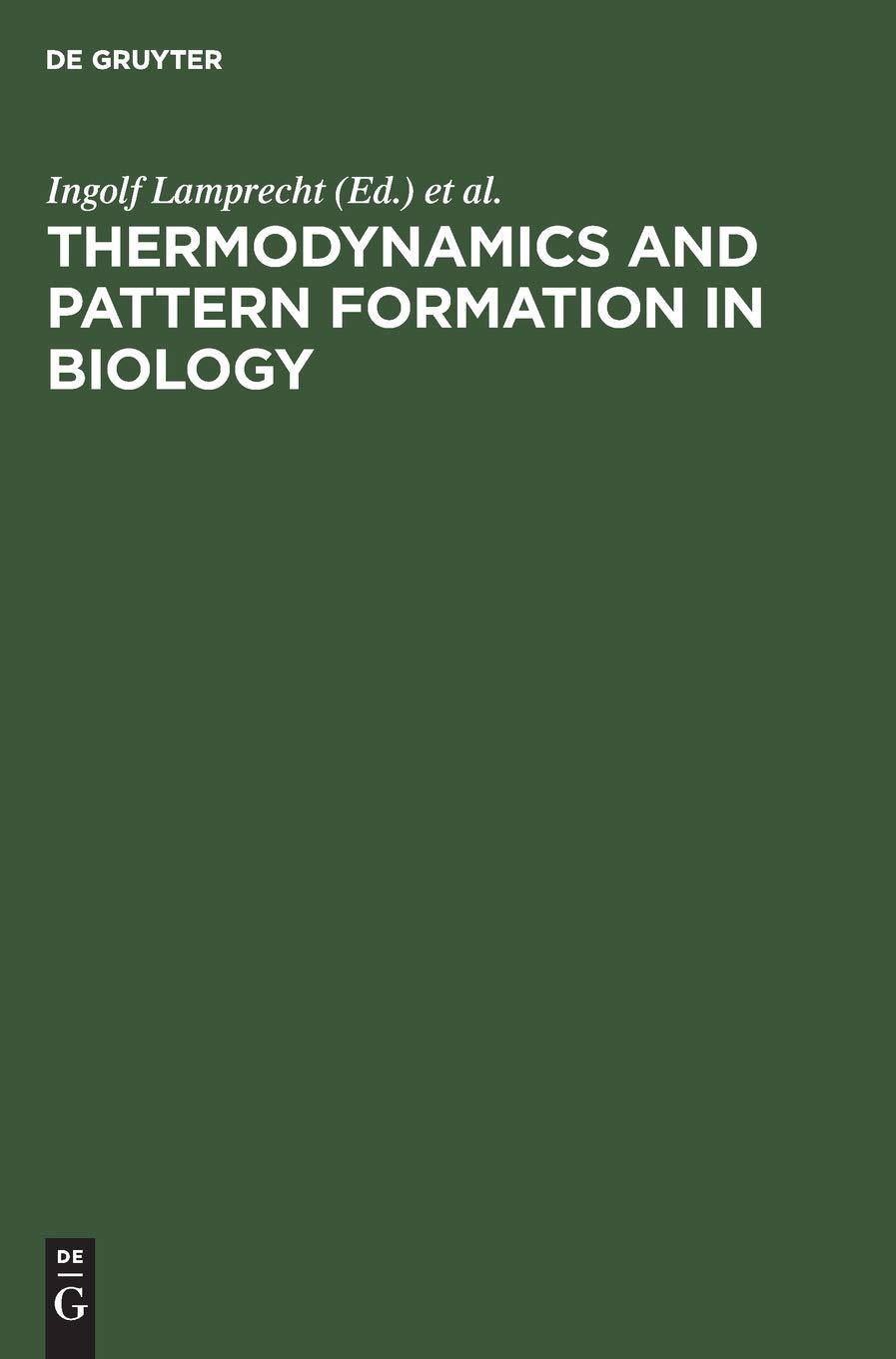
Thermodynamics and Pattern Formation in Biology
Science & Mathematics
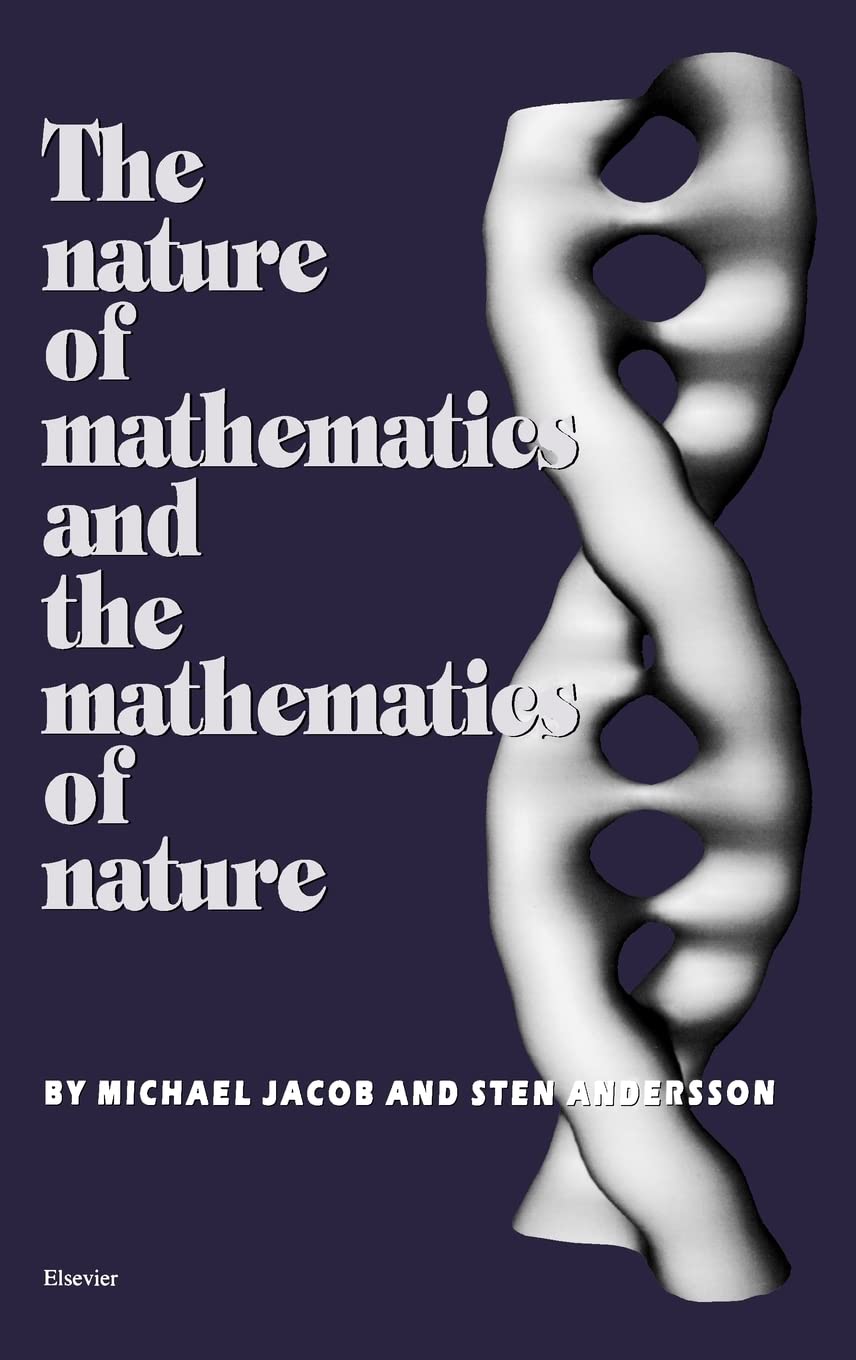
The Nature of Mathematics and the Mathematics of Nature by S. Andersson – Mathematics & Science

Science & Mathematics
Linear Algebra | by Stephen Friedberg | Arnold Insel | Lawrence Spence | Pearson | by Stephen Friedberg | Arnold Insel | Lawrence Spence | Pearson | by Stephen Friedberg | Arnold Insel | Lawrence Spence | Pearson | by Stephen Friedberg | Arnold Insel | Lawrence Spence | Pearson | by Stephen Friedberg | Arnold Insel | Lawrence Spence | Pearson | by Stephen Friedberg | Arnold Insel | Lawrence Spence | Pearson | by Stephen Friedberg | Arnold Insel | Lawrence Spence | Pearson | by Stephen Friedberg
Science & Mathematics