
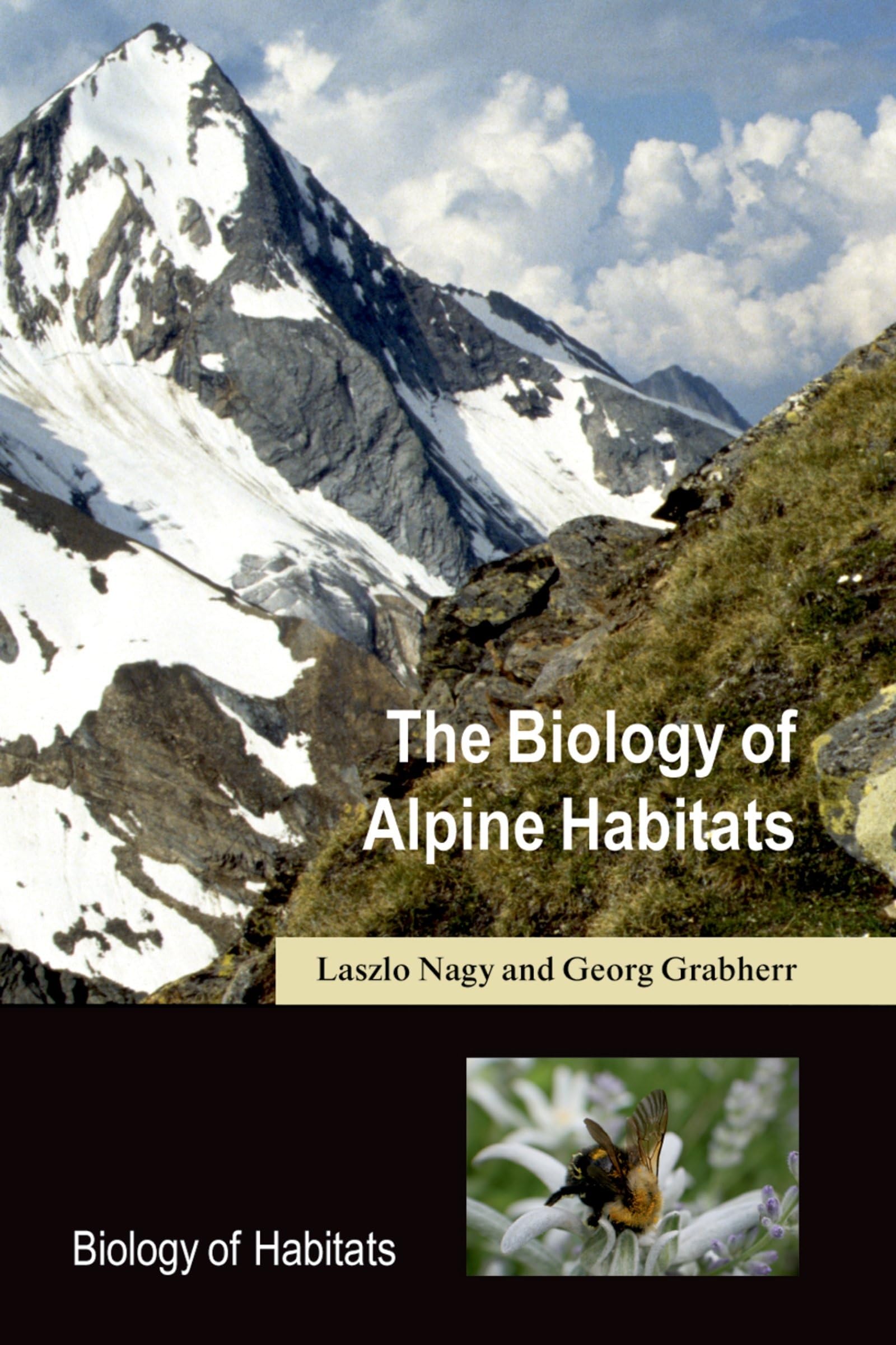
The Biology of Alpine Habitats by Laszlo Nagy – An In-Depth Study of High Mountain Ecosystems and Ecology
Inclusive of all applicable taxes. FREE shipping on all orders.
Available Offers
- 🚚Free Delivery — Free shipping on all orders
- 💵Cash on Delivery — Pay when your order arrives
- ↩️15-Day Easy Returns — Hassle-free return policy
- 🔒Cash on Delivery — Pay safely when your order arrives
Check Delivery
Product Description
Introduction
High above the tree line, where the air thins and the landscape appears stark, lies a world teeming with life that has adapted to extremes. The Biology of Alpine Habitats by Laszlo Nagy is a comprehensive guide that takes you into these high-altitude ecosystems, revealing the intricate web of life that thrives in the cold, windswept zones of mountains across the globe. For Indian readers and students, this book offers a unique lens to understand the Himalayan alpine regions, alongside comparisons with the Arctic and tropical highlands.
Book Overview
This hardbound volume from OUP Oxford provides a global perspective on alpine habitats—those areas above the natural tree line where cold temperatures limit forest growth. Rather than viewing these landscapes as barren wastelands, the book celebrates the rich diversity of life forms, from hardy plants and insects to birds and mammals that have evolved remarkable survival strategies. It explores how geological forces, climate, hydrology, and soils combine to create distinct Alpine zones, and how these habitats respond to environmental change over both ecological and evolutionary timescales.
Key Highlights
- Global Coverage: Compare alpine systems from the Arctic to the Tropics, including the Indian Himalaya, the Andes, the Alps, and the Ethiopian highlands.
- Ecological and Evolutionary Insights: Understand how species have adapted to cold, low oxygen, intense UV radiation, and short growing seasons.
- Interdisciplinary Approach: Integrates geography, climatology, soil science, and biology to paint a complete picture of high-mountain ecosystems.
- Rich Illustrations and Data: Packed with diagrams, maps, and photographs that bring the alpine world to life.
Inside the Book
The book is structured to first introduce the physical environment—landforms, energy balance, climate patterns, hydrology, and soils. It then delves into the biological realm, covering plant and animal communities, their interactions, and the processes of evolution and population dynamics. Later chapters address the resilience of alpine habitats to global change, including climate warming, glacial retreat, and human activities such as tourism and grazing. Each chapter builds logically, making complex concepts accessible to students and researchers alike.
Key Topics
- Defining the alpine zone: tree lines, climatic limits, and topographic diversity
- Alpine landforms: glaciers, scree slopes, snowbeds, and fellfields
- Energy and microclimate: how solar radiation, wind, and temperature shape life
- Hydrology and nutrient cycling in high-altitude watersheds
- Alpine vegetation: cushion plants, rosettes, and dwarf shrubs
- Animal adaptations: from ptarmigans to snow leopards, and the insects of the high Himalaya
- Evolutionary processes: speciation, genetic diversity, and dispersal in isolated habitats
- Human impacts and conservation strategies for fragile alpine ecosystems
Reader Benefits
By reading this book, you gain a deep appreciation for the beauty and complexity of mountain ecosystems. It equips you with the knowledge to understand why alpine habitats are so sensitive to climate change and what can be done to protect them. For students of ecology, botany, zoology, and environmental science, it serves as an essential reference that bridges theory and real-world observation. The global perspective also helps Indian readers contextualize the unique features of the Himalaya within a worldwide framework.
Learning Outcomes
- Identify the key physical and biological factors that define alpine habitats.
- Explain how plants and animals have evolved to survive extreme conditions.
- Analyze the role of topography in creating microhabitats and species diversity.
- Evaluate the impacts of global warming on high-altitude ecosystems.
- Apply ecological principles to conservation planning in mountain regions.
Who Should Read
This book is ideal for undergraduate and postgraduate students in life sciences, geography, and environmental studies. It is also a valuable resource for researchers, wildlife biologists, mountaineers, and nature enthusiasts who wish to deepen their understanding of alpine environments. Indian students studying Himalayan ecology will find particularly relevant examples and data that connect global patterns to local realities.
About the Author
Laszlo Nagy is a respected ecologist with decades of experience studying alpine and arctic ecosystems. His research spans multiple continents, including the European Alps, the Rocky Mountains, and the Himalaya. He has published extensively on plant community dynamics, climate change impacts, and biodiversity conservation in high-altitude regions. His writing is known for its clarity and depth, making complex ecological concepts accessible to a broad audience.
About the Publisher
Oxford University Press (OUP) is a globally renowned academic publisher with a strong presence in India. Known for its rigorous editorial standards and authoritative titles, OUP has been a trusted source of knowledge for students and scholars for over five centuries. This book reflects OUP’s commitment to advancing science education and fostering a deeper understanding of the natural world.
Conclusion
The Biology of Alpine Habitats is more than a textbook—it is an invitation to explore the hidden wonders of the world’s highest ecosystems. Whether you are a student preparing for exams, a researcher seeking foundational knowledge, or a curious reader drawn to mountains, this book will enrich your perspective. It reminds us that even in the harshest environments, life finds a way to flourish, and that understanding these fragile habitats is key to preserving them for future generations.
Quick Summary
The Biology of Alpine Habitats by Laszlo Nagy is a comprehensive global study of high mountain ecosystems above the natural tree line. It challenges the perception of alpine zones as barren wastelands, revealing instead a rich tapestry of habitats shaped by topography, climate, geology, and evolutionary history. The book systematically examines habitat-forming factors such as landforms, energy balance, hydrology, soils, and vegetation, drawing comparisons across major mountain systems from the Arctic to the Tropics, including the Himalayas, Andes, and Alps. Readers will gain an integrated understanding of how alpine ecosystems function, how species adapt to extreme conditions, and how these environments are responding to global change. This volume is ideal for Indian ecology students, researchers, and conservation professionals seeking a solid foundation in mountain ecology. By ordering from Bookshops.in, you support a trusted Indian bookstore that delivers quality academic titles across the country.
Book Highlights
Book Specifications
| ISBN-13 | 9780198567042 |
| ISBN-10 | 0198567049 |
| Publisher | Oxford Univ Pr on Demand |
| Language | English |
| Dimensions | 15.6 x 2.24 x 23.39 cm |
| Weight | 658 g |
| Category | Biology & Life Sciences › Ecology |
| Genre | Science & Mathematics |
| Original Language | English |
Frequently Asked Questions
What is the main focus of this book?
Is this book suitable for undergraduate students?
Does the book cover Indian Himalayan habitats?
What makes this book different from other alpine ecology texts?
Are there illustrations and diagrams?
Who is the author?
Is this book focused only on plants?
Can it be used for a course on mountain ecology?
Does it discuss climate change?
Is the book hardcover or paperback?
Where can I buy this book in India?
Is the language easy to follow?
Does the book include case studies?
Readers Also Search For
Customers Also Bought

Mathematics
Stereotype Spaces and Algebras: 73 (De Gruyter Expositions in Mathematics, 73)

Mathematics
Semigroups in Algebra, Geometry and Analysis: 20 (De Gruyter Expositions in Mathematics, 20)

Mathematics
Geometry from the Pacific Rim: Proceedings of the Pacific Rim Geometry Conference held at National University of Singapore, Republic of Singapore, ... 1994 (De Gruyter Proceedings in Mathematics)

Mathematics
First International Tainan-Moscow Algebra Workshop: Proceedings of the International Conference held at National Cheng Kung University Tainan, Taiwan, ... 1994 (De Gruyter Proceedings in Mathematics)

Mathematics
Differential Geometry - Proceedings of the VIII International Colloquium (English, Jesus A. Alvarez Lopez | Eduardo Garcia-Rio)

Mathematics
Mathematical Theory of Optimal Processes (Classics of Soviet Mathematics)
Related Products
View All
Science & Mathematics
Squid - Superconducting Quantum Interference Devices and Their Applications: Proceedings of the International Conference on Superconducting Quantum Devices, Berlin-west, October 4-8, 1976

Science & Mathematics
Thermodynamics and Pattern Formation in Biology

Science & Mathematics
The Nature of Mathematics and the Mathematics of Nature by S. Andersson – Mathematics & Science

Science & Mathematics
Linear Algebra | by Stephen Friedberg | Arnold Insel | Lawrence Spence | Pearson | by Stephen Friedberg | Arnold Insel | Lawrence Spence | Pearson | by Stephen Friedberg | Arnold Insel | Lawrence Spence | Pearson | by Stephen Friedberg | Arnold Insel | Lawrence Spence | Pearson | by Stephen Friedberg | Arnold Insel | Lawrence Spence | Pearson | by Stephen Friedberg | Arnold Insel | Lawrence Spence | Pearson | by Stephen Friedberg | Arnold Insel | Lawrence Spence | Pearson | by Stephen Friedberg

Science & Mathematics
University Calculus | by Joel Hass | Christopher Heil | Maurice Weir | Pearson | by Joel Hass | Christopher Heil | Maurice Weir | Pearson | by Joel Hass | Christopher Heil | Maurice Weir | Pearson | by Joel Hass | Christopher Heil | Maurice Weir | Pearson | by Joel Hass | Christopher Heil | Maurice Weir | Pearson | by Joel Hass | Christopher Heil | Maurice Weir | Pearson | by Joel Hass | Christopher Heil | Maurice Weir | Pearson | by Joel Hass | Christopher Heil | Maurice Weir | Pearson | by Joe
Science & Mathematics