

Continuum Mechanics and Thermodynamics: From Fundamental Concepts to Governing Equations by Ellad B. Tadmor – A Comprehe
Inclusive of all applicable taxes. FREE shipping on all orders.
Available Offers
- 🚚Free Delivery — Free shipping on all orders
- 💵Cash on Delivery — Pay when your order arrives
- ↩️15-Day Easy Returns — Hassle-free return policy
- 🔒Cash on Delivery — Pay safely when your order arrives
Check Delivery
Product Description
Introduction
Continuum mechanics and thermodynamics form the bedrock of modern engineering and physical sciences. For students and researchers seeking a rigorous yet accessible treatment of these intertwined subjects, Ellad B. Tadmor's Continuum Mechanics and Thermodynamics: From Fundamental Concepts to Governing Equations offers an authoritative and self-contained journey from first principles to advanced applications. Published by Cambridge University Press, this hardcover volume is an indispensable resource for Indian graduate students, academics, and professionals in mechanical, aerospace, civil, and materials engineering.
Book Overview
This book bridges the gap between microscopic theories and macroscopic behavior, providing a unified framework for understanding solid-state thermo-mechanical phenomena. Tadmor begins with the essential mathematics of vectors and tensors, then systematically develops finite deformation kinematics, balance laws, and classical thermodynamics. The text progresses naturally into constitutive theory, energy principles, and stability, culminating in closed-form solutions and finite element essentials. It is designed as a standalone text but also complements the author's companion volume, Modeling Materials (Cambridge University Press, 2011), for a complete multiscale modeling education.
Key Highlights
- Self-contained coverage from vector/tensor calculus to nonlinear constitutive models
- Fresh perspective connecting nanoscopic and macroscopic theories
- Emphasis on solid-state thermo-mechanical behavior relevant to Indian research contexts
- Rigorous derivations without sacrificing conceptual clarity
- Includes worked examples and closed-form solutions for practical understanding
Inside the Book
The book is structured into logical, building-block chapters. The opening sections introduce mathematical preliminaries, ensuring readers are comfortable with index notation, coordinate transformations, and tensor operations. Subsequent chapters delve into finite deformation kinematics, covering deformation gradients, strain measures, and compatibility. The middle portion presents the fundamental balance laws—mass, momentum, energy—and the second law of thermodynamics, all within a continuum framework. Later chapters explore constitutive theory, including elasticity, plasticity, and viscoelasticity, followed by energy methods and stability analysis. The final sections provide example solutions and a concise introduction to finite element discretization.
Key Topics
- Vectors, tensors, and their applications in continuum mechanics
- Finite deformation kinematics and strain measures
- Conservation laws: mass, linear momentum, angular momentum, energy
- Classical and continuum thermodynamics
- Constitutive modeling: elastic, plastic, and viscous materials
- Energy principles and stability theory
- Closed-form solutions for benchmark problems
- Essentials of finite element methods
Reader Benefits
Indian students often face the challenge of mastering abstract mathematical concepts while connecting them to real-world engineering problems. This book addresses that need by providing clear, step-by-step derivations and linking theory to observable material behavior. Researchers in materials science and solid mechanics will appreciate the modern, multiscale perspective that prepares them for advanced work in computational modeling. Professionals in aerospace, automotive, and structural engineering will find the treatment of nonlinear behavior directly applicable to design and analysis tasks.
Learning Outcomes
By the end of this book, readers will be able to formulate and solve continuum mechanics problems using tensor calculus, apply thermodynamic principles to deformable solids, develop constitutive models for a range of materials, and understand the foundations of finite element analysis. The book also equips learners with the conceptual tools to explore multiscale modeling, bridging atomistic and continuum descriptions—a skill increasingly demanded in Indian research institutions and industries.
Who Should Read
- Postgraduate students in mechanical, civil, aerospace, and materials engineering
- PhD scholars working on solid mechanics, thermodynamics, or multiscale modeling
- Faculty members teaching advanced courses in continuum mechanics
- R&D engineers in automotive, aerospace, and manufacturing sectors
- Researchers in computational materials science and nanomechanics
About the Author
Ellad B. Tadmor is a distinguished professor and researcher known for his contributions to multiscale materials modeling and continuum mechanics. With decades of teaching and research experience at leading universities, Tadmor brings a clarity of exposition that makes complex topics accessible. His work bridges theoretical rigor with practical computational methods, making him a trusted guide for students and professionals alike.
About the Publisher
Cambridge University Press is one of the world's oldest and most prestigious academic publishers, known for producing high-quality textbooks and reference works. Their commitment to scholarly excellence ensures that this book meets the highest standards of accuracy, readability, and production quality—making it a valuable addition to any Indian library or personal collection.
Conclusion
Continuum Mechanics and Thermodynamics: From Fundamental Concepts to Governing Equations is more than a textbook—it is a gateway to mastering the core theories that underpin modern engineering. Whether you are a student embarking on advanced studies or a professional seeking to deepen your understanding, this Cambridge University Press hardcover offers the depth and clarity you need. Order your copy today from Bookshops.in and take a definitive step toward excellence in continuum mechanics.
Quick Summary
Continuum Mechanics and Thermodynamics: From Fundamental Concepts to Governing Equations by Ellad B. Tadmor is a rigorous and self-contained textbook that bridges the gap between microscopic theories and macroscopic continuum descriptions. The book is designed for graduate students, researchers, and practicing engineers in mechanical, civil, aerospace, and materials engineering who need a deep understanding of solid-state thermo-mechanical behavior. Readers will learn vectors and tensors, finite deformation kinematics, balance and conservation laws, classical thermodynamics, constitutive theory, and energy principles with stability analysis. The inclusion of example closed-form solutions helps solidify concepts and aids in practical application. By connecting micro- and nanoscopic perspectives to continuum theories, Tadmor provides a unique and modern viewpoint that is essential for nonlinear materials modeling. Choosing to buy this book from Bookshops.in ensures you receive a genuine Cambridge University Press hardcover edition, delivered across India, with the assurance of quality and timely service.
Book Highlights
Book Specifications
| ISBN-13 | 9781107008267 |
| ISBN-10 | 1107008263 |
| Publisher | Cambridge University Press |
| Language | English |
| Dimensions | 19.05 x 1.91 x 24.77 cm |
| Weight | 970 g |
| Country | India |
| Category | Science & Mathematics › Mechanics |
| Genre | Non-fiction |
| Original Language | English |
Frequently Asked Questions
What is the main focus of Continuum Mechanics and Thermodynamics?
Who is the author of this book?
What are the prerequisites for reading this book?
Does the book cover finite deformation kinematics?
Is this book suitable for self-study?
What topics are covered in the thermodynamics section?
Are there any solved examples in the book?
What is the binding type of this book?
Is this book useful for finite element method (FEM) studies?
Does the book discuss constitutive models?
Can I use this book for a graduate course?
Does the book include energy principles and stability theory?
Readers Also Search For
Customers Also Bought
Mathematics
Stereotype Spaces and Algebras: 73 (De Gruyter Expositions in Mathematics, 73)
Mathematics
Semigroups in Algebra, Geometry and Analysis: 20 (De Gruyter Expositions in Mathematics, 20)
Mathematics
Geometry from the Pacific Rim: Proceedings of the Pacific Rim Geometry Conference held at National University of Singapore, Republic of Singapore, ... 1994 (De Gruyter Proceedings in Mathematics)
Mathematics
First International Tainan-Moscow Algebra Workshop: Proceedings of the International Conference held at National Cheng Kung University Tainan, Taiwan, ... 1994 (De Gruyter Proceedings in Mathematics)
Mathematics
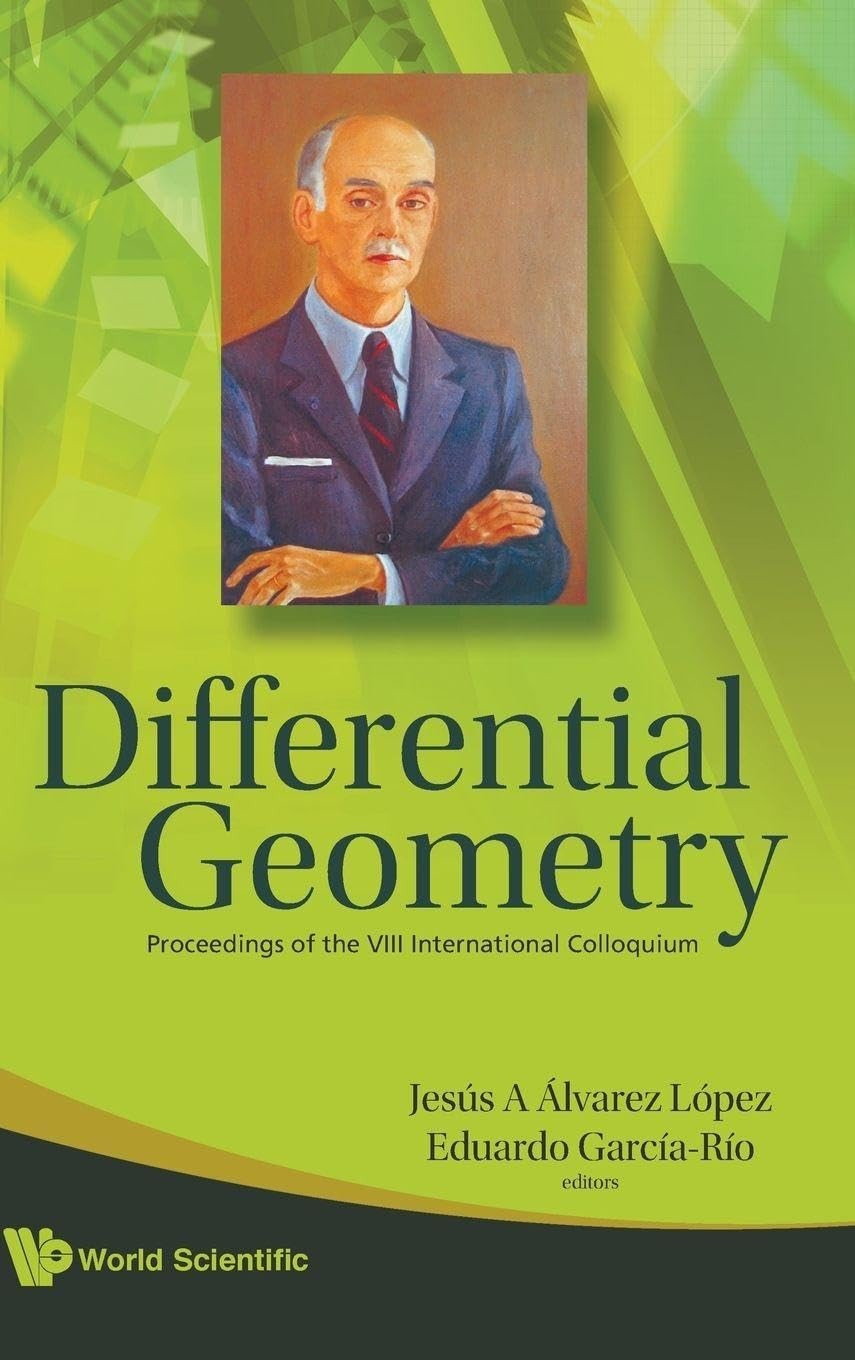
Differential Geometry - Proceedings of the VIII International Colloquium (English, Jesus A. Alvarez Lopez | Eduardo Garcia-Rio)
Mathematics
Mathematical Theory of Optimal Processes (Classics of Soviet Mathematics)
Related Products
View All
Science & Mathematics
Squid - Superconducting Quantum Interference Devices and Their Applications: Proceedings of the International Conference on Superconducting Quantum Devices, Berlin-west, October 4-8, 1976
Science & Mathematics
Thermodynamics and Pattern Formation in Biology
Science & Mathematics
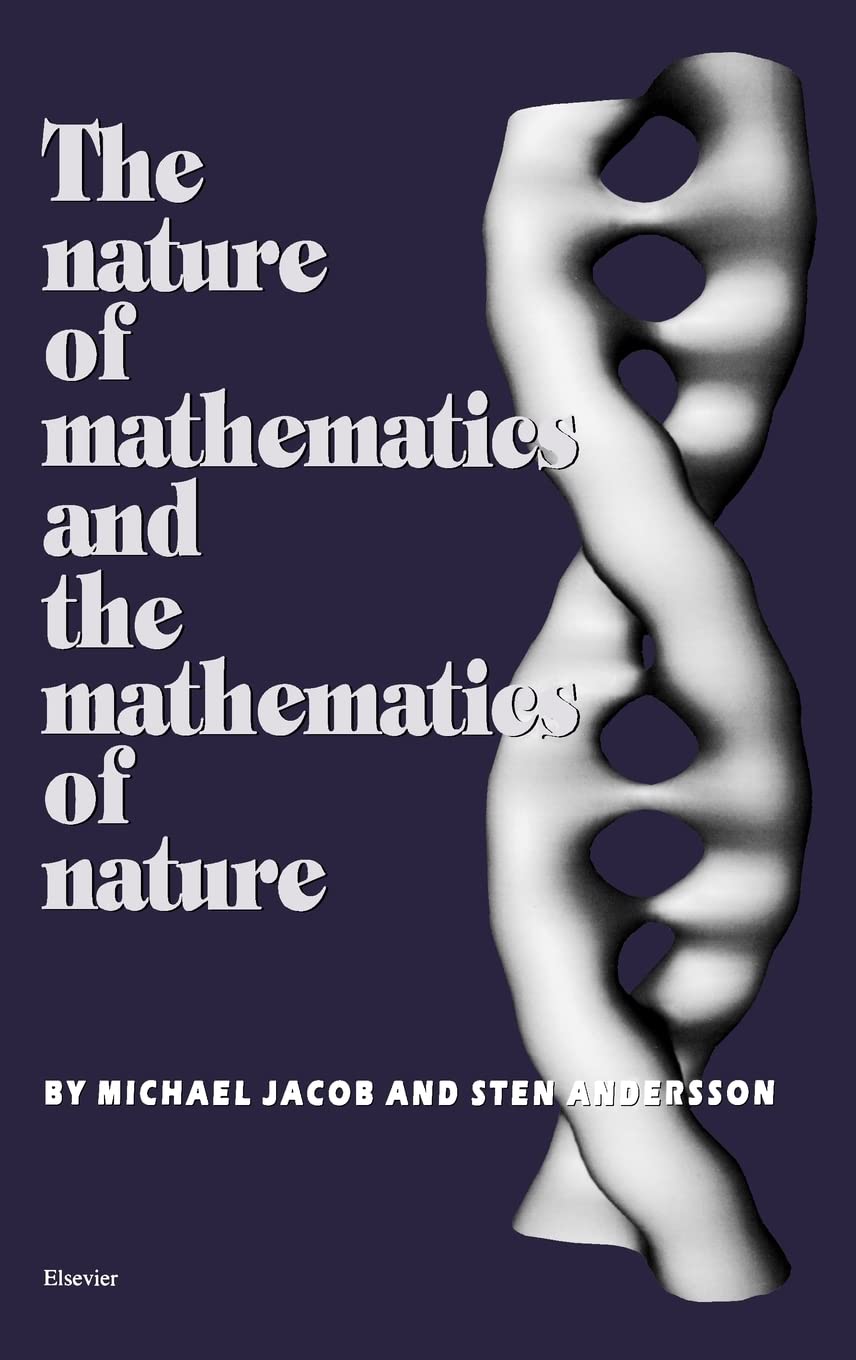
The Nature of Mathematics and the Mathematics of Nature by S. Andersson – Mathematics & Science

Science & Mathematics
Linear Algebra | by Stephen Friedberg | Arnold Insel | Lawrence Spence | Pearson | by Stephen Friedberg | Arnold Insel | Lawrence Spence | Pearson | by Stephen Friedberg | Arnold Insel | Lawrence Spence | Pearson | by Stephen Friedberg | Arnold Insel | Lawrence Spence | Pearson | by Stephen Friedberg | Arnold Insel | Lawrence Spence | Pearson | by Stephen Friedberg | Arnold Insel | Lawrence Spence | Pearson | by Stephen Friedberg | Arnold Insel | Lawrence Spence | Pearson | by Stephen Friedberg
Science & Mathematics
University Calculus | by Joel Hass | Christopher Heil | Maurice Weir | Pearson | by Joel Hass | Christopher Heil | Maurice Weir | Pearson | by Joel Hass | Christopher Heil | Maurice Weir | Pearson | by Joel Hass | Christopher Heil | Maurice Weir | Pearson | by Joel Hass | Christopher Heil | Maurice Weir | Pearson | by Joel Hass | Christopher Heil | Maurice Weir | Pearson | by Joel Hass | Christopher Heil | Maurice Weir | Pearson | by Joel Hass | Christopher Heil | Maurice Weir | Pearson | by Joe

Science & Mathematics