
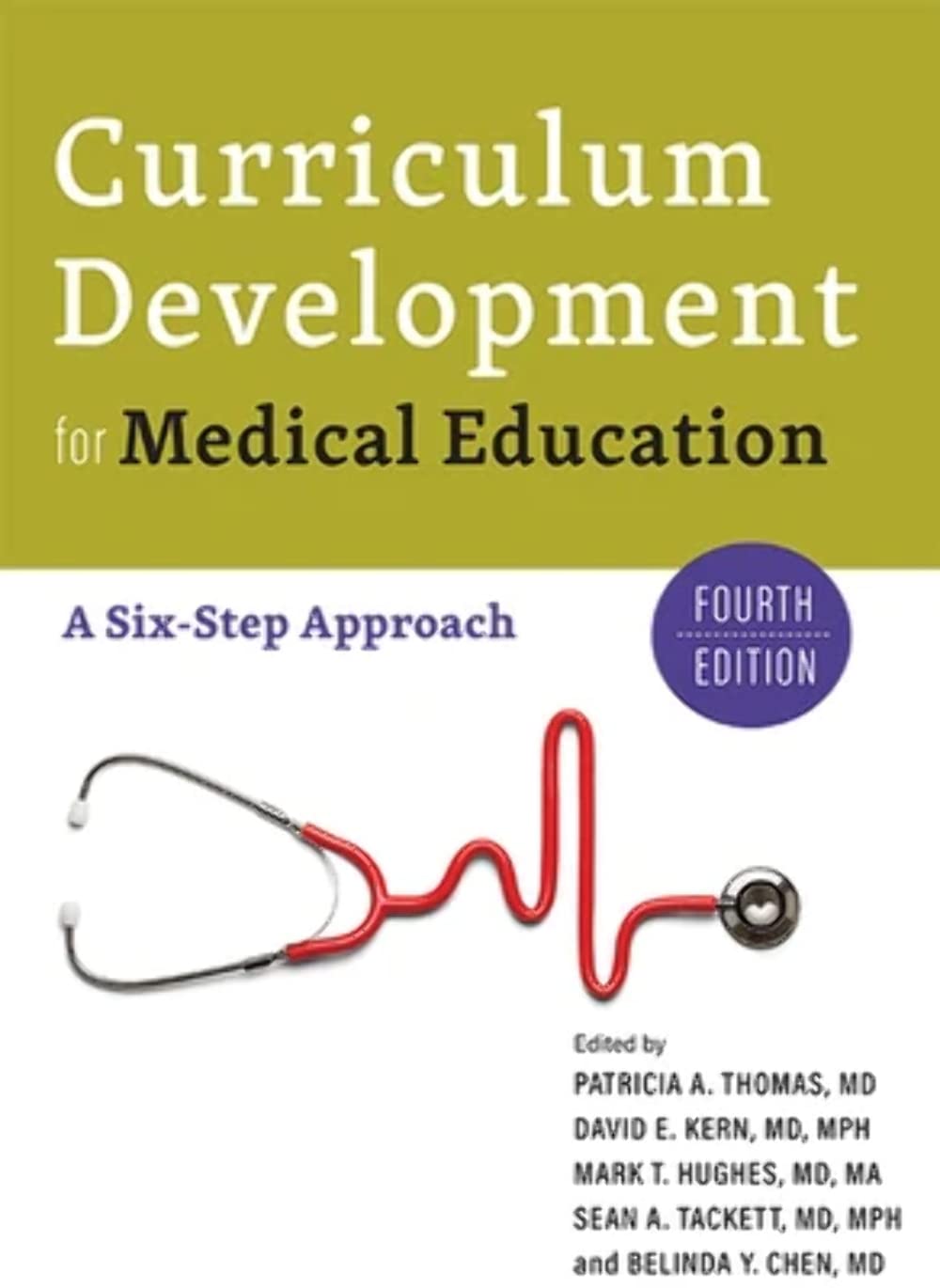
Curriculum Development for Medical Education: A Six-step Approach by Patricia A. Thomas – A Practical Guide for Health P
Inclusive of all applicable taxes. FREE shipping on all orders.
Available Offers
- 🚚Free Delivery — Free shipping on all orders
- 💵Cash on Delivery — Pay when your order arrives
- ↩️15-Day Easy Returns — Hassle-free return policy
- 🔒Cash on Delivery — Pay safely when your order arrives
Check Delivery
Product Description
Introduction
In the ever-evolving landscape of medical education, the need for a structured, evidence-based approach to curriculum design has never been greater. Curriculum Development for Medical Education: A Six-step Approach, now in its thoroughly revised fourth edition, stands as a definitive guide for faculty, educators, and health professionals who seek to create meaningful, learner-centred curricula. Published by the esteemed Johns Hopkins University Press, this hardcover volume offers a practical, time-tested framework that has become an international benchmark in health professions education.
Book Overview
This fourth edition builds on the acclaimed six-step model of curriculum development, a user-friendly and systematic method that has been adopted by institutions worldwide. The book extends its vision to serve a diverse, global audience, including educators in India and across Asia who are shaping the next generation of healthcare providers. With rich examples, updated insights, and a focus on contemporary challenges, the text equips readers with the tools to design curricula that are both rigorous and responsive to community needs.
Key Highlights
- Updated Learning Science: Incorporates the latest understanding of how humans learn, ensuring that curricula are grounded in cognitive and educational psychology.
- New Chapter on Community Needs: A dedicated chapter addresses health equity and curricula designed to meet the needs of underserved populations.
- Enhanced Focus on Health Systems Science: Expands coverage of population health, interprofessional education, and educational technology in health professions training.
- Practical Examples: Numerous real-world case studies and innovations that challenge traditional teaching models, making the content immediately applicable.
Inside the Book
The six-step model remains the core of this edition, guiding readers through problem identification, targeted needs assessment, goals and objectives, educational strategies, implementation, and evaluation. Each step is explained in clear, actionable language, with templates and checklists that simplify the process. The book also includes new material on competency-based education, simulation, and digital tools, all tailored for today's medical classrooms and clinical settings.
Key Topics
- Step 1: Problem Identification and General Needs Assessment
- Step 2: Targeted Needs Assessment for Learners
- Step 3: Goals and Objectives
- Step 4: Educational Strategies
- Step 5: Implementation
- Step 6: Evaluation and Feedback
- Health Equity and Community-Responsive Curricula
- Interprofessional Education and Collaborative Practice
- Technology-Enhanced Learning in Medicine
Reader Benefits
Readers will gain a systematic, repeatable method for designing curricula that align with institutional goals and learner needs. The book demystifies complex educational theory, offering step-by-step guidance that saves time and reduces trial-and-error. By applying the six-step model, educators can create courses that are engaging, effective, and adaptable to changing healthcare environments. Moreover, the emphasis on equity and population health prepares faculty to train doctors who are not only clinically skilled but also socially conscious.
Learning Outcomes
After engaging with this book, readers will be able to: identify gaps in existing curricula using needs assessment techniques; write measurable learning objectives that guide assessment; select appropriate teaching methods for diverse learner groups; implement curricula with attention to resources and stakeholder buy-in; and evaluate educational programmes using both formative and summative approaches. These outcomes are directly applicable to undergraduate, postgraduate, and continuing medical education.
Who Should Read
This book is essential for medical faculty, deans, curriculum developers, and education coordinators in medical colleges, nursing schools, and allied health programmes. It is also valuable for residents and fellows who serve as teachers, as well as for administrators involved in accreditation and quality improvement. Indian readers, particularly those in institutions affiliated with the National Medical Commission or seeking international standards, will find the framework highly relevant.
About the Author
Patricia A. Thomas, MD, is a distinguished educator and clinician with decades of experience in medical curriculum design. She has served as a professor of medicine and held leadership roles in medical education at major universities. Her work focuses on integrating educational theory into practice, and she is widely recognised for her contributions to faculty development and health professions pedagogy. Dr Thomas brings both scholarly rigour and practical wisdom to this edition.
About the Publisher
Johns Hopkins University Press is one of the oldest and most respected academic publishers in the world. Based in Baltimore, USA, it has a long tradition of publishing authoritative works in medicine, science, and education. Its titles are known for their quality, clarity, and impact on professional practice. This edition continues that legacy, offering a resource that is both scholarly and accessible.
Conclusion
Curriculum Development for Medical Education: A Six-step Approach is more than a textbook—it is a companion for every educator committed to excellence in health professions training. Whether you are designing a new course, revising an existing one, or preparing for accreditation, this fourth edition provides the roadmap you need. Order your hardcover copy from Bookshops.in today and take the next step toward transforming medical education in India and beyond.
Quick Summary
Curriculum Development for Medical Education: A Six-step Approach by Patricia A. Thomas is the definitive guide for faculty and content experts who design or improve curricula in health professional education. Now in its fourth edition, this book builds on the widely adopted six-step model—problem identification, needs assessment, goals and objectives, educational strategies, implementation, and evaluation—while incorporating the latest understanding of how humans learn. A new chapter on community needs ensures curricula address real-world health challenges. Readers will gain practical tools, numerous examples, and innovative approaches that challenge traditional teaching models. This book is ideal for medical educators, curriculum developers, and anyone involved in training healthcare professionals in India and abroad. By purchasing from Bookshops.in, you receive an authentic hardcover edition with prompt delivery and excellent customer service, making it a trusted choice for Indian academic institutions.
Book Highlights
Book Specifications
| ISBN-13 | 9781421444093 |
| ISBN-10 | 1421444097 |
| Publisher | Johns Hopkins Univ Pr |
| Language | English |
| Dimensions | 17.78 x 2.69 x 25.4 cm |
| Weight | 953 g |
| Category | Clinical › Preventive Medicine |
| Genre | Medicine & Health Sciences |
| Original Language | English |
Frequently Asked Questions
What is the six-step approach in this book?
Who is the author of this book?
Is this book suitable for Indian medical educators?
What is new in the fourth edition?
Does the book include practical examples?
What is the language of the book?
Who should use this book?
Is this book a hardcover?
What is the ISBN of this book?
How can this book help me improve my teaching?
Does the book cover evaluation methods?
Can this book be used for nursing or pharmacy education?
Is there a focus on community health?
Why buy from Bookshops.in?
Readers Also Search For
Customers Also Bought

Anatomy
Ultrastructure of the Digestive Tract: 4 (Electron Microscopy in Biology and Medicine)

Anatomy
Ultrastructure of the Connective Tissue Matrix: 3 (Electron Microscopy in Biology and Medicine)

Anatomy
Reproductive Genetics (Royal College of Obstetricians and Gynaecologists Study Group)

Anatomy
Human Gross Anatomy: An Outline Text by Robert J. Leonard – Medical Anatomy

Pharmacology
Mathematical Modeling and Simulation in Enteric Neurobiology

Anatomy
Nature’s Patterns and the Fractional Calculus: 2 (Fractional Calculus in Applied Sciences and Engineering, 2)
Related Products
View All
Medicine & Health Sciences
Handbook of Hospitality Strategic Management | by Olsen Michael | Taylor & Francis Ltd | by Olsen Michael | Taylor & Francis Ltd | by Olsen Michael | Taylor & Francis Ltd | by Olsen Michael | Taylor & Francis Ltd | by Olsen Michael | Taylor & Francis Ltd | by Olsen Michael | Taylor & Francis Ltd | by Olsen Michael | Taylor & Francis Ltd | by Olsen Michael | Taylor & Francis Ltd | by Olsen Michael | Taylor & Francis Ltd | by Olsen Michael | Taylor & Francis
Medicine & Health Sciences
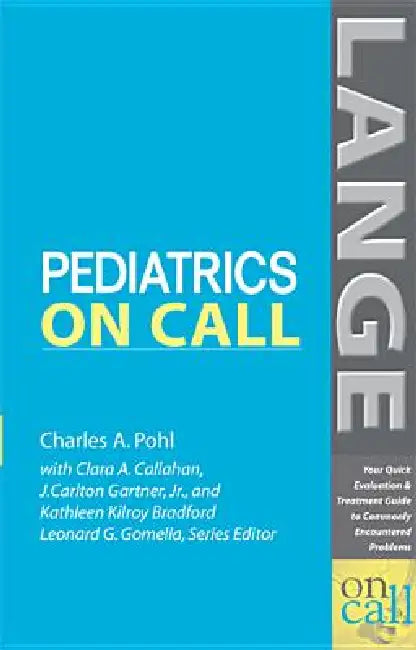
Pediatrics on Call | by Charles A. Pohl | Kathleen Bradford | Clara Callahan | McGraw Hill / Medical | by Charles A. Pohl | Kathleen Bradford | Clara Callahan | McGraw Hill / Medical | by Charles A. Pohl | Kathleen Bradford | Clara Callahan | McGraw Hill / Medical | by Charles A. Pohl | Kathleen Bradford | Clara Callahan | McGraw Hill / Medical | by Charles A. Pohl | Kathleen Bradford | Clara Callahan | McGraw Hill / Medical | by Charles A. Pohl | Kathleen Bradford | Clara Callahan | McGraw Hill
Medicine & Health Sciences
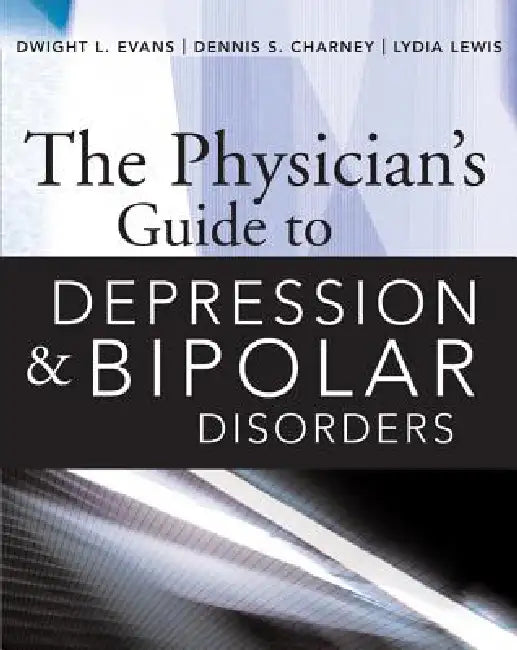
The Physician's Guide to Depression and Bipolar Disorders | by Dwight L. Evans | Dennis S. Charney | Lydia Lewis | McGraw Hill / Medical | by Dwight L. Evans | Dennis S. Charney | Lydia Lewis | McGraw Hill / Medical | by Dwight L. Evans | Dennis S. Charney | Lydia Lewis | McGraw Hill / Medical | by Dwight L. Evans | Dennis S. Charney | Lydia Lewis | McGraw Hill / Medical | by Dwight L. Evans | Dennis S. Charney | Lydia Lewis | McGraw Hill / Medical | by Dwight L. Evans | Dennis S. Charney | Lydi
Medicine & Health Sciences
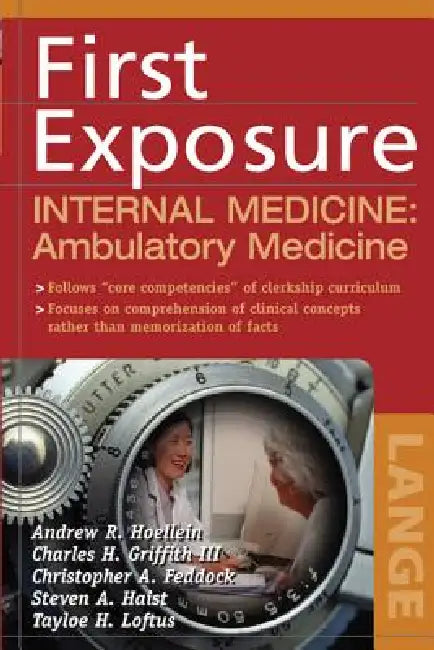
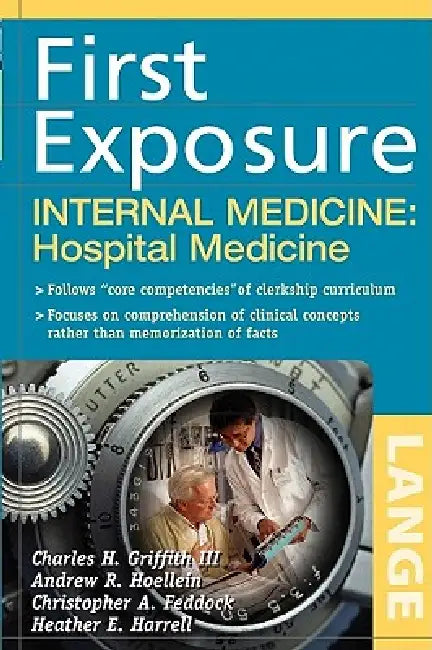
First Exposure to Internal Medicine | by Andrew R. Hoellein | Charles H. Griffith | McGraw Hill / Medical | by Andrew R. Hoellein | Charles H. Griffith | McGraw Hill / Medical | by Andrew R. Hoellein | Charles H. Griffith | McGraw Hill / Medical | by Andrew R. Hoellein | Charles H. Griffith | McGraw Hill / Medical | by Andrew R. Hoellein | Charles H. Griffith | McGraw Hill / Medical | by Andrew R. Hoellein | Charles H. Griffith | McGraw Hill / Medical | by Andrew R. Hoellein | Charles H. Griffit
Medicine & Health Sciences
First Exposure to Internal Medicine | by Charles H. Griffith | Andrew R. Hoellein | McGraw Hill / Medical | by Charles H. Griffith | Andrew R. Hoellein | McGraw Hill / Medical | by Charles H. Griffith | Andrew R. Hoellein | McGraw Hill / Medical | by Charles H. Griffith | Andrew R. Hoellein | McGraw Hill / Medical | by Charles H. Griffith | Andrew R. Hoellein | McGraw Hill / Medical | by Charles H. Griffith | Andrew R. Hoellein | McGraw Hill / Medical | by Charles H. Griffith | Andrew R. Hoellei
Medicine & Health Sciences