
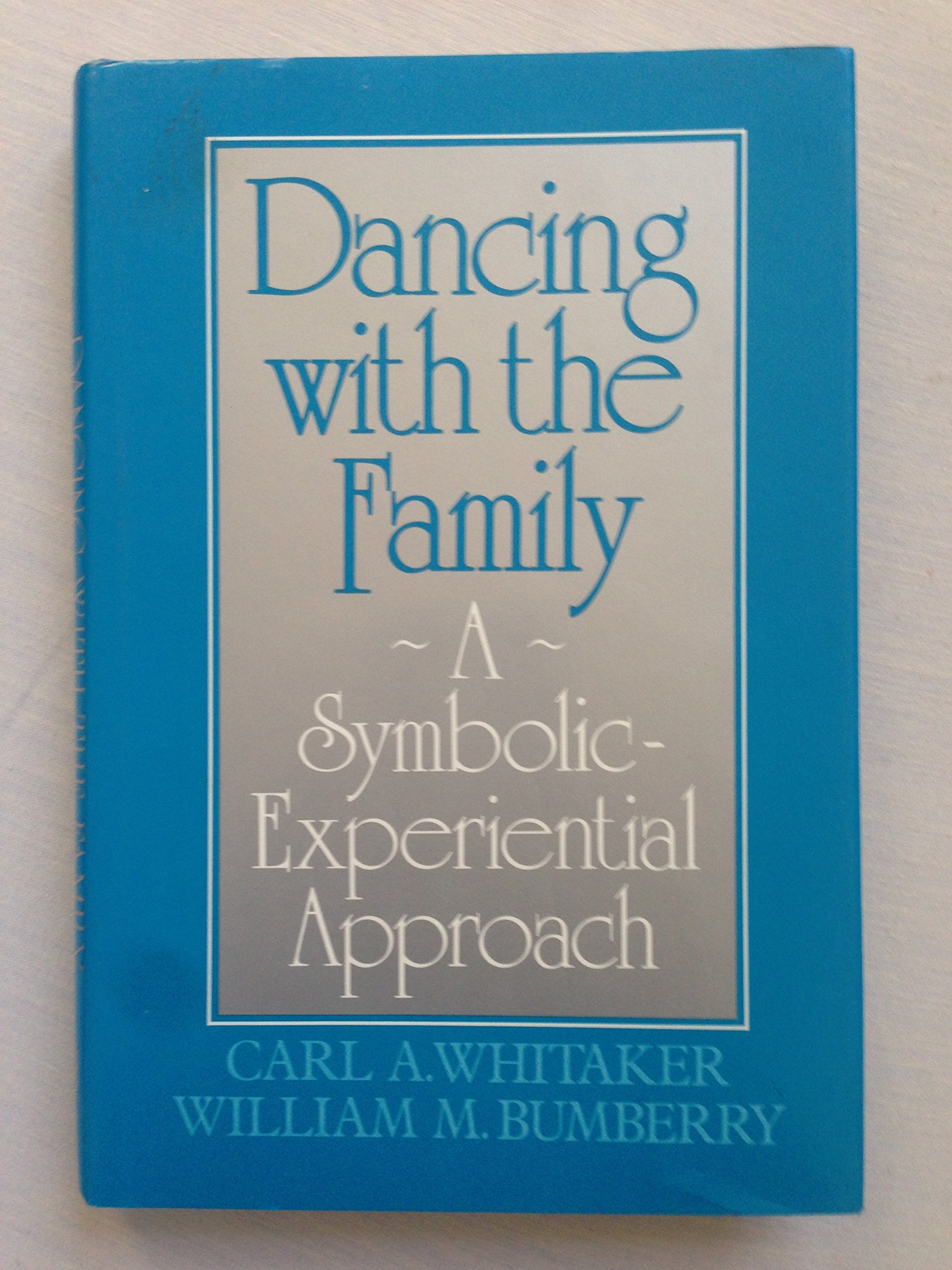
Dancing with the Family: A Symbolic-Experiential Approach by Carl A. Whitaker – Essential Reading for Family Therapists
Inclusive of all applicable taxes. FREE shipping on all orders.
Available Offers
- 🚚Free Delivery — Free shipping on all orders
- 💵Cash on Delivery — Pay when your order arrives
- ↩️15-Day Easy Returns — Hassle-free return policy
- 🔒Cash on Delivery — Pay safely when your order arrives
Check Delivery
Product Description
Introduction
In the field of family therapy, few voices are as bold, unconventional, and profoundly human as that of Carl A. Whitaker. Dancing with the Family: A Symbolic-Experiential Approach is not a textbook of rigid techniques; it is an invitation to step into the therapeutic dance with authenticity, spontaneity, and deep emotional presence. This hardcover edition, published by Routledge, brings together Whitaker’s pioneering ideas in a format that speaks directly to Indian students, practitioners, and educators who seek to understand the living, breathing process of family therapy.
Book Overview
This volume presents a dual focus that is both challenging and liberating. On one hand, it emphasizes the centrality of the therapist as a person—not as a detached expert, but as a vulnerable, creative participant in the therapeutic encounter. On the other hand, it highlights the evolving, organic process of therapy itself, where symbolic communication, metaphor, and experiential moments take precedence over manualized interventions. Whitaker’s approach is less about diagnosing and fixing, and more about joining the family in their unique dance of relationships, pain, and growth.
Key Highlights
- Original Whitaker Perspective: A rare look into the mind of one of family therapy’s most influential and iconoclastic figures.
- Symbolic-Experiential Framework: Learn how to use metaphors, humor, confrontation, and personal authenticity to unlock family dynamics.
- Therapist as Co-Participant: Understand why the therapist’s own emotional availability is the most powerful tool in the room.
- Process Over Technique: Shift from rigid models to a fluid, moment-to-moment engagement with families.
- Clinical Relevance: Rich case illustrations and dialogues that bring theory to life for Indian mental health professionals.
Inside the Book
The book is structured to guide readers through the philosophical underpinnings and practical applications of Whitaker’s approach. Early chapters explore the concept of the therapist’s “self” as an instrument of change, while later sections delve into the symbolic language of families—the unspoken rules, myths, and rituals that shape interaction. Whitaker’s writing is conversational, provocative, and often humorous, making complex ideas accessible without oversimplification. Readers will find detailed transcripts of therapy sessions, commentary on the therapist’s internal process, and reflections on the courage required to dance authentically with families in distress.
Key Topics
- The person of the therapist: authenticity, spontaneity, and vulnerability
- Symbolic communication in family systems
- Experiential techniques: confrontation, metaphor, and humor
- Co-therapy and the use of self in family sessions
- Working with resistance, chaos, and emotional intensity
- Differentiation and individuation within the family dance
- Ethical and cultural considerations in symbolic-experiential therapy
Reader Benefits
- Deepen Your Clinical Intuition: Move beyond textbook formulas and develop a more responsive, intuitive therapeutic style.
- Enhance Self-Awareness: Gain insight into how your own family history and emotional patterns influence your work.
- Build Confidence in Uncertainty: Learn to trust the process and stay present even when the therapeutic path is unclear.
- Apply Across Contexts: Adapt Whitaker’s principles to Indian family structures, including joint families, intergenerational conflicts, and cultural transitions.
- Rich Case Material: Study real-world examples that illustrate the dance in action, making theory tangible.
Learning Outcomes
By reading this book, you will be able to: articulate the core principles of symbolic-experiential family therapy; identify and utilize symbolic and metaphorical content in family interactions; develop greater comfort with emotional intensity and therapeutic spontaneity; reflect critically on your own role as a therapist in co-creating change; and apply Whitaker’s concepts to diverse clinical settings, including outpatient clinics, private practice, and educational programs.
Who Should Read
This book is essential for postgraduate students in clinical psychology, counselling, and social work; practicing family therapists and counsellors seeking to expand their therapeutic repertoire; psychiatrists, psychiatric social workers, and mental health nurses working with families; educators and trainers in family therapy programs; and any mental health professional interested in humanistic, experiential, and relational approaches to therapy. Indian readers will particularly appreciate the emphasis on the therapist’s humanity, which resonates deeply with the relational values of many Indian cultures.
About the Author
Carl A. Whitaker (1912–1995) was an American psychiatrist and a seminal figure in the development of family therapy. Known for his iconoclastic style, he was a co-founder of the symbolic-experiential approach, which emphasizes the therapist’s emotional authenticity and the use of metaphor and spontaneity in therapy. Whitaker served as a professor at the University of Wisconsin–Madison and was a founding member of the American Family Therapy Academy. His work continues to inspire therapists worldwide to embrace creativity, vulnerability, and the art of being fully present with families.
About the Publisher
Routledge is a globally respected academic publisher, part of the Taylor & Francis Group, known for its extensive catalogue in the behavioural and social sciences. With a legacy spanning over 150 years, Routledge is committed to publishing works that advance knowledge, practice, and education in fields such as psychology, counselling, and psychotherapy. This hardcover edition of Dancing with the Family upholds Routledge’s tradition of bringing authoritative and transformative texts to professionals and students around the world, including India.
Conclusion
Dancing with the Family: A Symbolic-Experiential Approach is more than a book—it is an experience. For Indian readers navigating the complexities of family therapy in a rapidly changing society, Whitaker’s wisdom offers a refreshing antidote to overly technical models. It reminds us that therapy is not a performance of expertise but a shared dance of human connection. Whether you are a student stepping into the field or a seasoned practitioner seeking renewal, this book will challenge, inspire, and transform the way you think about families, therapy, and yourself. Add this classic to your library and discover the freedom of dancing with the family.
Quick Summary
Dancing with the Family: A Symbolic-Experiential Approach by Carl A. Whitaker is a foundational text in family therapy, presenting the author's unique method that prioritizes the therapist's authentic self and the evolving emotional process of therapy over rigid techniques. Readers will learn to engage families through symbolic communication, creativity, and spontaneity, while staying attuned to their own emotional responses. This book is ideal for Indian clinical psychology students, practicing family therapists, and mental health professionals who want to deepen their understanding of family dynamics and therapeutic presence. By buying from Bookshops.in, Indian readers receive a genuine Routledge hardcover edition, ensuring access to this classic work with trusted service and fast delivery across the country.
Book Highlights
Book Specifications
| ISBN-13 | 9780876304969 |
| ISBN-10 | 087630496X |
| Publisher | Routledge |
| Language | English |
| Dimensions | 15.88 x 2.54 x 23.5 cm |
| Weight | 499 g |
| Country | India |
| Category | Clinical › Psychiatry |
| Genre | Non-fiction |
| Original Language | English |
Frequently Asked Questions
What is 'Dancing with the Family' about?
Who is Carl A. Whitaker?
Is this book suitable for beginners in family therapy?
Does the book include case examples?
How is this book relevant to Indian therapists?
Is this a textbook or a clinical guide?
What is the ISBN of this book?
Does the book discuss the therapist's own emotions?
Can this book help with marriage counseling?
Is there a digital version available?
What is the reading level of this book?
Why buy from Bookshops.in?
Readers Also Search For
Customers Also Bought

Anatomy
Ultrastructure of the Digestive Tract: 4 (Electron Microscopy in Biology and Medicine)

Anatomy
Ultrastructure of the Connective Tissue Matrix: 3 (Electron Microscopy in Biology and Medicine)

Anatomy
Reproductive Genetics (Royal College of Obstetricians and Gynaecologists Study Group)

Anatomy
Human Gross Anatomy: An Outline Text by Robert J. Leonard – Medical Anatomy

Pharmacology
Mathematical Modeling and Simulation in Enteric Neurobiology

Anatomy
Nature’s Patterns and the Fractional Calculus: 2 (Fractional Calculus in Applied Sciences and Engineering, 2)
Related Products
View All
Medicine & Health Sciences
Handbook of Hospitality Strategic Management | by Olsen Michael | Taylor & Francis Ltd | by Olsen Michael | Taylor & Francis Ltd | by Olsen Michael | Taylor & Francis Ltd | by Olsen Michael | Taylor & Francis Ltd | by Olsen Michael | Taylor & Francis Ltd | by Olsen Michael | Taylor & Francis Ltd | by Olsen Michael | Taylor & Francis Ltd | by Olsen Michael | Taylor & Francis Ltd | by Olsen Michael | Taylor & Francis Ltd | by Olsen Michael | Taylor & Francis

Medicine & Health Sciences
Pediatrics on Call | by Charles A. Pohl | Kathleen Bradford | Clara Callahan | McGraw Hill / Medical | by Charles A. Pohl | Kathleen Bradford | Clara Callahan | McGraw Hill / Medical | by Charles A. Pohl | Kathleen Bradford | Clara Callahan | McGraw Hill / Medical | by Charles A. Pohl | Kathleen Bradford | Clara Callahan | McGraw Hill / Medical | by Charles A. Pohl | Kathleen Bradford | Clara Callahan | McGraw Hill / Medical | by Charles A. Pohl | Kathleen Bradford | Clara Callahan | McGraw Hill

Medicine & Health Sciences
The Physician's Guide to Depression and Bipolar Disorders | by Dwight L. Evans | Dennis S. Charney | Lydia Lewis | McGraw Hill / Medical | by Dwight L. Evans | Dennis S. Charney | Lydia Lewis | McGraw Hill / Medical | by Dwight L. Evans | Dennis S. Charney | Lydia Lewis | McGraw Hill / Medical | by Dwight L. Evans | Dennis S. Charney | Lydia Lewis | McGraw Hill / Medical | by Dwight L. Evans | Dennis S. Charney | Lydia Lewis | McGraw Hill / Medical | by Dwight L. Evans | Dennis S. Charney | Lydi

Medicine & Health Sciences
First Exposure to Internal Medicine | by Andrew R. Hoellein | Charles H. Griffith | McGraw Hill / Medical | by Andrew R. Hoellein | Charles H. Griffith | McGraw Hill / Medical | by Andrew R. Hoellein | Charles H. Griffith | McGraw Hill / Medical | by Andrew R. Hoellein | Charles H. Griffith | McGraw Hill / Medical | by Andrew R. Hoellein | Charles H. Griffith | McGraw Hill / Medical | by Andrew R. Hoellein | Charles H. Griffith | McGraw Hill / Medical | by Andrew R. Hoellein | Charles H. Griffit

Medicine & Health Sciences
First Exposure to Internal Medicine | by Charles H. Griffith | Andrew R. Hoellein | McGraw Hill / Medical | by Charles H. Griffith | Andrew R. Hoellein | McGraw Hill / Medical | by Charles H. Griffith | Andrew R. Hoellein | McGraw Hill / Medical | by Charles H. Griffith | Andrew R. Hoellein | McGraw Hill / Medical | by Charles H. Griffith | Andrew R. Hoellein | McGraw Hill / Medical | by Charles H. Griffith | Andrew R. Hoellein | McGraw Hill / Medical | by Charles H. Griffith | Andrew R. Hoellei

Medicine & Health Sciences