
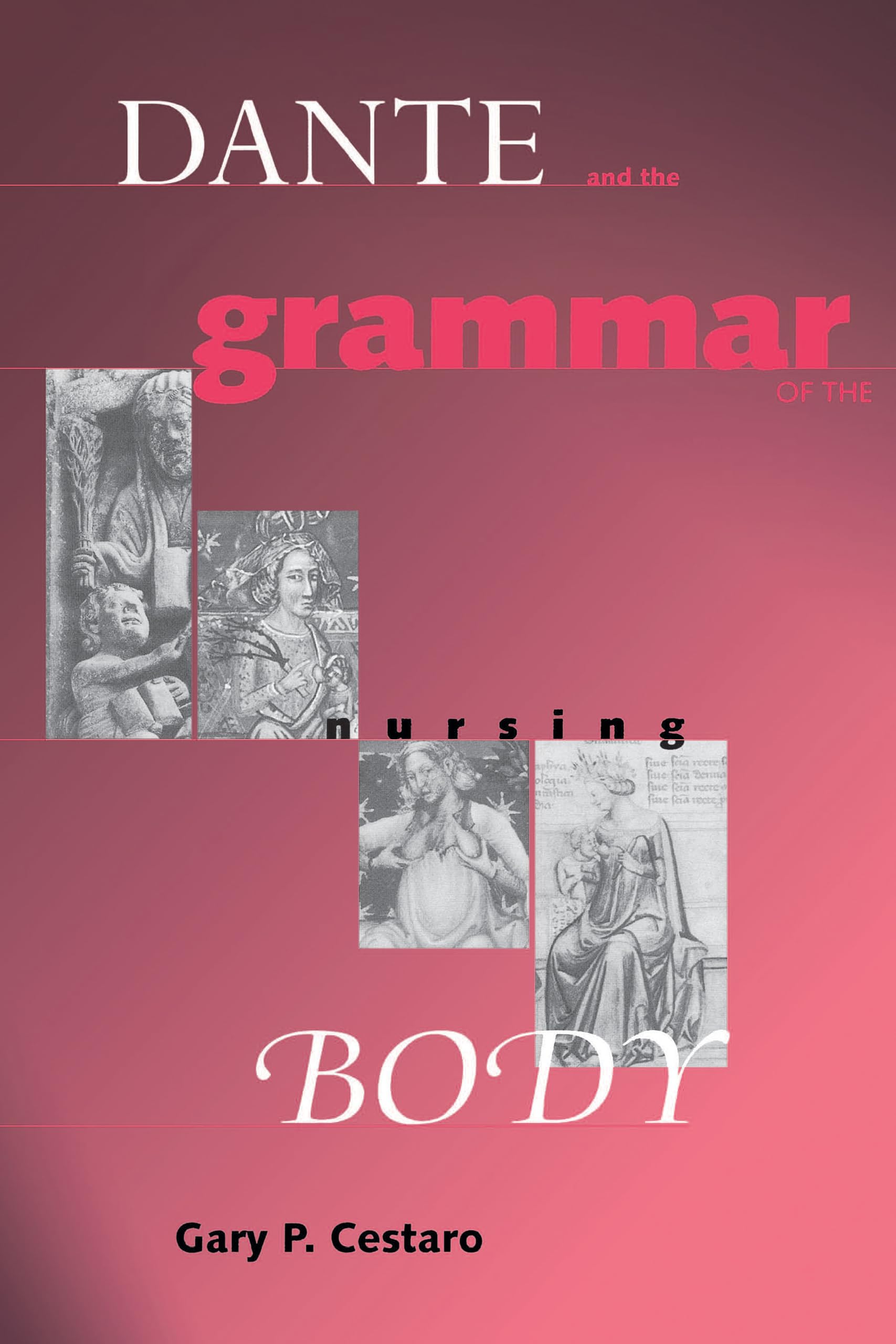
Dante and the Grammar of the Nursing Body by Gary P. Cestaro – A Study of Language, Motherhood, and Medieval Italian Lit
Inclusive of all applicable taxes. FREE shipping on all orders.
Available Offers
- 🚚Free Delivery — Free shipping on all orders
- 💵Cash on Delivery — Pay when your order arrives
- ↩️15-Day Easy Returns — Hassle-free return policy
- 🔒Cash on Delivery — Pay safely when your order arrives
Check Delivery
Product Description
Introduction
Dante and the Grammar of the Nursing Body by Gary P. Cestaro is a compelling scholarly work that delves into the intricate relationship between language, selfhood, and the maternal figure in medieval literature. This hardcover edition, published by the University of Notre Dame Press, offers a fresh perspective on Dante Alighieri’s works, particularly his exploration of the nursing mother as a foundational metaphor for linguistic and personal development. Ideal for students and researchers in literature, philosophy, and medieval studies, this book bridges classical and modern theories of language with profound cultural insights.
Book Overview
In this meticulously researched volume, Cestaro examines how Dante’s writings, from his early Latin treatise De vulgari eloquentia to the monumental Comedy, engage with the nursing body as a symbol of linguistic origin and identity formation. Drawing on Julia Kristeva’s concept of the maternal semiotic, the author uncovers ancient and medieval discourses that position the nursing mother as essential to the growth of a mature linguistic self. The book traces a journey from the parodic anti-nurse figures in Inferno to the transformative maternal imagery in Purgatorio and Paradiso, revealing how Dante reimagines selfhood through the grammar of care and nourishment.
Key Highlights
- Original Theoretical Framework: Applies Julia Kristeva’s maternal semiotic to medieval texts, offering a groundbreaking lens for understanding Dante’s language.
- Focus on De vulgari eloquentia: Provides a detailed analysis of Dante’s unfinished Latin treatise, arguing that the nursing scene motivates and ultimately disrupts the work.
- Comprehensive Textual Analysis: Explores nursing motifs across Dante’s minor works and the entire Comedy, from Inferno to Paradiso.
- Cultural and Historical Context: Situates Dante’s ideas within medieval debates about grammar, vernacular language, and the body.
- Interdisciplinary Approach: Merges literary criticism, psychoanalysis, and medieval philosophy for a rich, multidimensional study.
Inside the Book
The book is structured into several chapters that progress from theoretical foundations to close readings. The opening chapters discuss the nursing body in Dante’s minor works and De vulgari eloquentia, where a primal scene of suckling is shown to drive the poet’s linguistic musings. Subsequent chapters move through the Comedy, examining the anti-nurse figures of Inferno, such as Circe with her poison milk, and the deconstruction and reconstruction of selfhood in Purgatorio and Paradiso. Cestaro’s prose is both rigorous and accessible, making complex ideas understandable for advanced students and scholars alike.
Key Topics
- Maternal semiotic theory in medieval literature
- Dante’s concept of the vernacular as a mother tongue
- The nursing body as a metaphor for linguistic origin
- Gender and selfhood in Dante’s works
- Medieval grammar and the role of the body in language
- Psychoanalytic readings of Dante’s poetry
- The interplay between Latin and Italian vernacular
Reader Benefits
Readers will gain a deeper understanding of Dante’s linguistic philosophy and its connection to medieval culture. This book challenges conventional readings by foregrounding the maternal body, offering new insights into the formation of identity and language. It also provides tools for analyzing literary texts through a psychoanalytic lens, enriching one’s appreciation of Dante’s complexity. For Indian students, the exploration of vernacular versus classical language resonates with ongoing debates about regional languages and English in academic discourse.
Learning Outcomes
- Understand the role of the nursing body in Dante’s linguistic theory.
- Analyze the intersection of psychoanalysis and medieval literature.
- Trace the evolution of selfhood from Inferno to Paradiso.
- Critically evaluate the cultural significance of the mother tongue in medieval Europe.
- Apply theoretical concepts to other literary works.
Who Should Read
This book is essential for postgraduate students and scholars of Italian literature, medieval studies, comparative literature, and philosophy. It is also highly relevant for those interested in gender studies, psychoanalysis, and the history of language. Undergraduate students with a strong background in Dante or critical theory will find it rewarding. Indian readers engaged with linguistic diversity and the politics of language will appreciate its thematic parallels.
About the Author
Gary P. Cestaro is a distinguished scholar of Italian literature and medieval studies. He has taught at several universities and published widely on Dante, Boccaccio, and the intersection of language and the body in medieval culture. His work is known for its theoretical sophistication and close textual analysis, making him a leading voice in Dante studies.
About the Publisher
The University of Notre Dame Press is a renowned academic publisher based in the United States, known for its high-quality books in theology, philosophy, literature, and history. It is committed to advancing scholarship and making critical works accessible to a global audience.
Conclusion
Dante and the Grammar of the Nursing Body is a transformative study that redefines our understanding of Dante’s linguistic project. By placing the nursing mother at the center of the poet’s vision, Gary P. Cestaro offers a profound meditation on language, identity, and the body. This book is a valuable addition to any library and a must-read for serious students of medieval literature and critical theory.
Quick Summary
Dante and the Grammar of the Nursing Body by Gary P. Cestaro offers a groundbreaking exploration of how the nursing mother shapes Dante's linguistic and poetic imagination. Drawing on Julia Kristeva's theory of the maternal semiotic, Cestaro uncovers the deep cultural and psychological significance of the nursing body in medieval discussions of language and selfhood. The book focuses on Dante's Latin treatise De vulgari eloquentia, arguing that a primal scene of suckling underpins the poet's reflections on the mother tongue and ultimately brings the work to an abrupt end. Through careful analysis of Dante's minor works and the broader medieval discourse, Cestaro reveals how the maternal body breaks through the symbolic order of Latin grammar, influencing the development of the Italian vernacular. This book is ideal for scholars and students of medieval literature, feminist theory, linguistics, and psychoanalytic criticism. By integrating philological rigor with contemporary theory, it provides a unique lens through which to understand Dante's enduring legacy. Purchase your copy from Bookshops.in, India's premium online bookstore, for fast delivery and excellent service.
Book Highlights
Book Specifications
| ISBN-13 | 9780268025533 |
| ISBN-10 | 0268025533 |
| Publisher | Univ of Notre Dame Pr |
| Language | English |
| Dimensions | 15.24 x 1.9 x 22.86 cm |
| Weight | 590 g |
| Country | India |
| Category | Foreign Languages › Italian |
| Genre | Literary Criticism |
| Reading Age | Adult |
| Original Language | English |
Frequently Asked Questions
What is the main argument of Dante and the Grammar of the Nursing Body?
Who is the author of this book?
Which works of Dante does the book focus on?
How does the book use Julia Kristeva's theories?
Is this book suitable for undergraduate students?
Does the book cover Dante's entire oeuvre?
What makes this book unique?
Is the book written in English?
What is the binding type of this book?
Can I use this book for research on medieval motherhood?
Does the book discuss the Divine Comedy?
What is the price of the book?
Is this book part of a series?
Readers Also Search For
Customers Also Bought

Anatomy
Ultrastructure of the Digestive Tract: 4 (Electron Microscopy in Biology and Medicine)

Anatomy
Ultrastructure of the Connective Tissue Matrix: 3 (Electron Microscopy in Biology and Medicine)

Anatomy
Reproductive Genetics (Royal College of Obstetricians and Gynaecologists Study Group)

Anatomy
Human Gross Anatomy: An Outline Text by Robert J. Leonard – Medical Anatomy

Pharmacology
Mathematical Modeling and Simulation in Enteric Neurobiology

Anatomy
Nature’s Patterns and the Fractional Calculus: 2 (Fractional Calculus in Applied Sciences and Engineering, 2)
Related Products
View All
Medicine & Health Sciences
Handbook of Hospitality Strategic Management | by Olsen Michael | Taylor & Francis Ltd | by Olsen Michael | Taylor & Francis Ltd | by Olsen Michael | Taylor & Francis Ltd | by Olsen Michael | Taylor & Francis Ltd | by Olsen Michael | Taylor & Francis Ltd | by Olsen Michael | Taylor & Francis Ltd | by Olsen Michael | Taylor & Francis Ltd | by Olsen Michael | Taylor & Francis Ltd | by Olsen Michael | Taylor & Francis Ltd | by Olsen Michael | Taylor & Francis
Medicine & Health Sciences
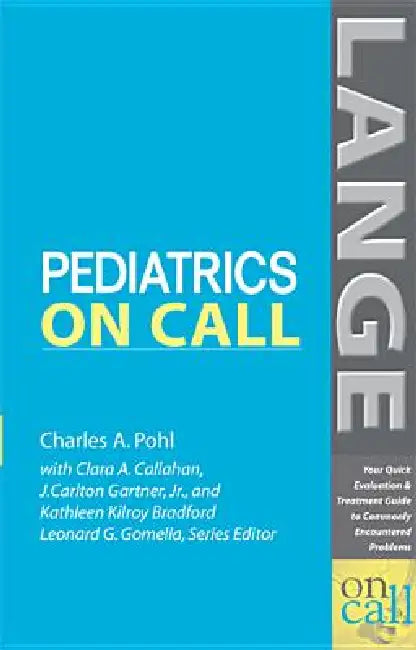
Pediatrics on Call | by Charles A. Pohl | Kathleen Bradford | Clara Callahan | McGraw Hill / Medical | by Charles A. Pohl | Kathleen Bradford | Clara Callahan | McGraw Hill / Medical | by Charles A. Pohl | Kathleen Bradford | Clara Callahan | McGraw Hill / Medical | by Charles A. Pohl | Kathleen Bradford | Clara Callahan | McGraw Hill / Medical | by Charles A. Pohl | Kathleen Bradford | Clara Callahan | McGraw Hill / Medical | by Charles A. Pohl | Kathleen Bradford | Clara Callahan | McGraw Hill

Medicine & Health Sciences
The Physician's Guide to Depression and Bipolar Disorders | by Dwight L. Evans | Dennis S. Charney | Lydia Lewis | McGraw Hill / Medical | by Dwight L. Evans | Dennis S. Charney | Lydia Lewis | McGraw Hill / Medical | by Dwight L. Evans | Dennis S. Charney | Lydia Lewis | McGraw Hill / Medical | by Dwight L. Evans | Dennis S. Charney | Lydia Lewis | McGraw Hill / Medical | by Dwight L. Evans | Dennis S. Charney | Lydia Lewis | McGraw Hill / Medical | by Dwight L. Evans | Dennis S. Charney | Lydi
Medicine & Health Sciences
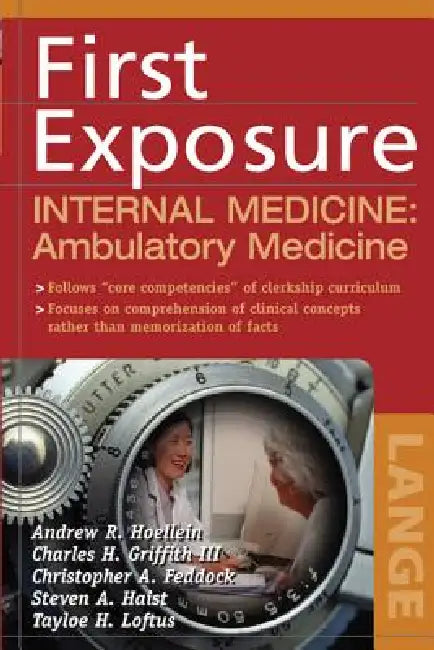
First Exposure to Internal Medicine | by Andrew R. Hoellein | Charles H. Griffith | McGraw Hill / Medical | by Andrew R. Hoellein | Charles H. Griffith | McGraw Hill / Medical | by Andrew R. Hoellein | Charles H. Griffith | McGraw Hill / Medical | by Andrew R. Hoellein | Charles H. Griffith | McGraw Hill / Medical | by Andrew R. Hoellein | Charles H. Griffith | McGraw Hill / Medical | by Andrew R. Hoellein | Charles H. Griffith | McGraw Hill / Medical | by Andrew R. Hoellein | Charles H. Griffit
Medicine & Health Sciences
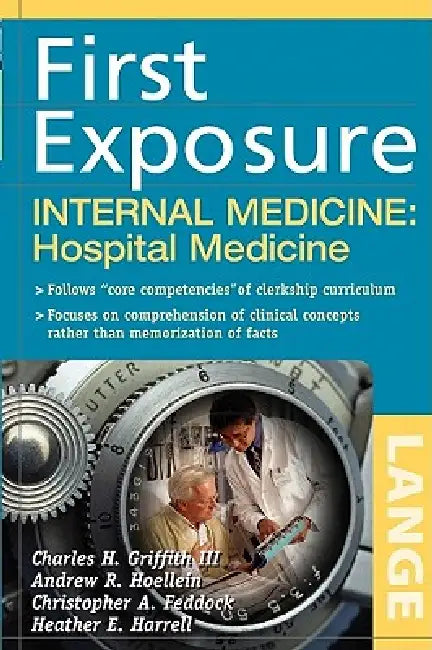
First Exposure to Internal Medicine | by Charles H. Griffith | Andrew R. Hoellein | McGraw Hill / Medical | by Charles H. Griffith | Andrew R. Hoellein | McGraw Hill / Medical | by Charles H. Griffith | Andrew R. Hoellein | McGraw Hill / Medical | by Charles H. Griffith | Andrew R. Hoellein | McGraw Hill / Medical | by Charles H. Griffith | Andrew R. Hoellein | McGraw Hill / Medical | by Charles H. Griffith | Andrew R. Hoellein | McGraw Hill / Medical | by Charles H. Griffith | Andrew R. Hoellei
Medicine & Health Sciences