
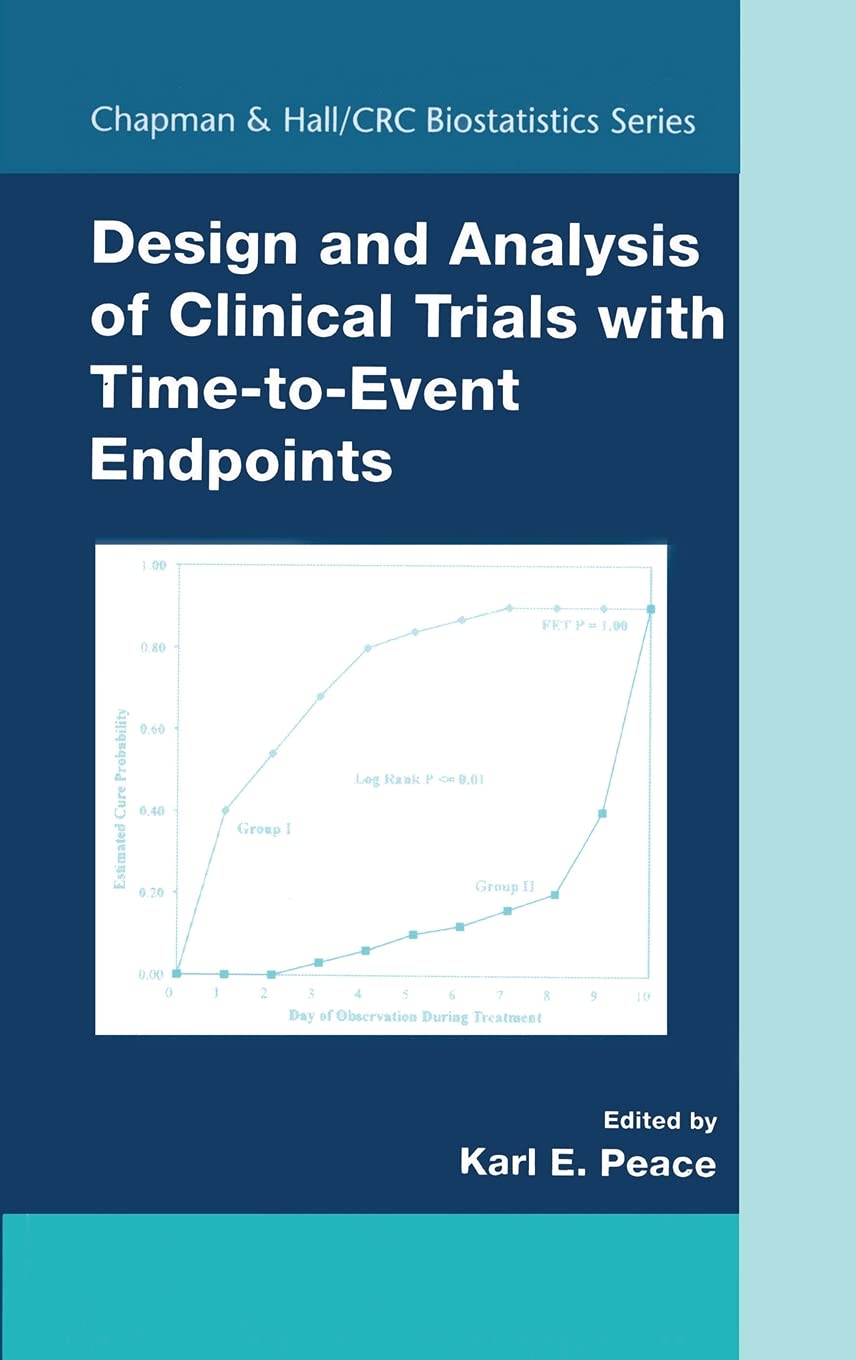
Design and Analysis of Clinical Trials With Time-to-Event Endpoints by Karl E. Peace – A Comprehensive Guide for Biostat
Inclusive of all applicable taxes. FREE shipping on all orders.
Available Offers
- 🚚Free Delivery — Free shipping on all orders
- 💵Cash on Delivery — Pay when your order arrives
- ↩️15-Day Easy Returns — Hassle-free return policy
- 🔒Cash on Delivery — Pay safely when your order arrives
Check Delivery
Product Description
Introduction
Clinical trials are the backbone of modern medical research, and the analysis of time-to-event endpoints—such as survival, recurrence, or progression—demands a rigorous, specialized approach. Karl E. Peace's Design and Analysis of Clinical Trials With Time-to-Event Endpoints is an authoritative guide for researchers, biostatisticians, and graduate students navigating this complex field. Published by Chapman and Hall/CRC, this hardcover volume offers a comprehensive blend of theory and practical application, making it an essential addition to any medical or statistical library in India.
Book Overview
This book systematically addresses the entire lifecycle of a clinical trial where time-to-event is the primary endpoint. From defining events and handling censored observations to monitoring trial progress and interpreting results, it covers every critical step. The text balances foundational concepts with advanced methodologies, ensuring that readers can apply these techniques to real-world clinical studies, whether in oncology, cardiology, or other therapeutic areas. With a focus on clarity and rigor, it serves as both a classroom textbook and a reference for practicing professionals.
Key Highlights
- Comprehensive Coverage: Explores parametric, semiparametric, categorical, and Bayesian methods for time-to-event analysis.
- Practical Focus: Includes detailed discussions on trial design, monitoring, and ethical considerations specific to survival studies.
- Unique Perspectives: Offers an alternative to the Cox model for small samples and methods for estimating and testing changes in hazard over time.
- Descriptive Tools: Presents graphical and descriptive techniques such as Kaplan-Meier curves and log-rank tests, with clear interpretation guidelines.
Inside the Book
The text is structured to guide readers from foundational principles to advanced applications. Early chapters review time-to-event endpoint methodology and clinical trial design, including sample size determination and interim monitoring. The core of the book dives into inferential analysis: likelihood-based parametric models, the Cox proportional hazards model, and Bayesian approaches. Later chapters explore categorical data methods, small-sample alternatives, and change-point hazard analysis. Throughout, real-world examples and case studies illustrate key concepts, while exercises reinforce learning. The final sections cover descriptive and graphical methods, making it a complete resource for any researcher.
Key Topics
- Definition and types of time-to-event endpoints (e.g., survival, progression-free survival)
- Censoring mechanisms and their impact on analysis
- Parametric models: exponential, Weibull, log-normal, and gamma distributions
- Semiparametric methods: Cox proportional hazards model and its extensions
- Bayesian survival analysis and categorical data approaches
- Small-sample alternatives to the Cox model
- Change-point hazard estimation and testing
- Trial monitoring with group sequential designs
Reader Benefits
- Deepen Analytical Skills: Gain mastery over statistical methods that are critical for regulatory submissions and peer-reviewed publications.
- Bridge Theory and Practice: Understand how to design trials, handle missing data, and interpret results with confidence.
- Stay Current: The book incorporates modern Bayesian and categorical techniques, preparing readers for evolving research standards.
- Enhance Career Prospects: Biostatisticians, epidemiologists, and clinical researchers will find this knowledge invaluable for roles in academia, pharma, and CROs.
Learning Outcomes
By the end of this book, readers will be able to: define and classify time-to-event endpoints appropriately; choose and implement parametric, semiparametric, and Bayesian models for survival data; design clinical trials with adequate power and proper monitoring plans; handle censored observations and assess the assumption of noninformative censoring; apply descriptive and graphical methods to summarize survival data; and critically evaluate published clinical trial results in medical literature.
Who Should Read
- Graduate students in biostatistics, epidemiology, and public health
- Clinical researchers and medical professionals involved in trial design and analysis
- Biostatisticians working in pharmaceutical companies, contract research organizations, and academic institutions
- Regulatory affairs professionals seeking a deeper understanding of survival analysis methodology
- Anyone preparing for advanced certification or doctoral research in clinical trials
About the Author
Karl E. Peace is a renowned biostatistician with decades of experience in clinical trial design and analysis. He has held senior positions in academia and the pharmaceutical industry, and has authored numerous influential books and papers on statistical methodology. His expertise in survival analysis and Bayesian methods is widely recognized, and he is a Fellow of the American Statistical Association. His writing is known for being both rigorous and accessible, making complex topics understandable for practitioners.
About the Publisher
Chapman and Hall/CRC is a premier academic publisher specializing in statistics, mathematics, and the sciences. Their titles are trusted by universities and research institutions worldwide for their depth, accuracy, and practical relevance. This book upholds that tradition, offering a meticulously edited and professionally produced resource for the global research community.
Conclusion
Design and Analysis of Clinical Trials With Time-to-Event Endpoints by Karl E. Peace is an indispensable resource for anyone serious about survival analysis in clinical research. Whether you are a student building foundational knowledge or a seasoned professional refining your analytical toolkit, this book delivers the clarity, depth, and practical insights you need. Order your hardcover copy today from Bookshops.in and elevate your understanding of this critical area of biostatistics.
Quick Summary
Design and Analysis of Clinical Trials With Time-to-Event Endpoints by Karl E. Peace is an authoritative reference for anyone involved in clinical research where the primary outcome is the time until an event occurs. The book systematically covers the entire lifecycle of a clinical trial, from design and monitoring to analysis and interpretation. It delves into parametric, semiparametric, categorical, and Bayesian methods, with special attention to small-sample alternatives to the Cox model. Readers will learn how to handle censored data, define events, and ensure the validity of assumptions like noninformative censoring. This book is ideal for biostatisticians, clinical researchers, and graduate students in India who want to apply rigorous statistical techniques to real-world trials. By purchasing from Bookshops.in, you get a genuine hardcover copy delivered to your doorstep, along with the assurance of quality and service.
Book Highlights
Book Specifications
| ISBN-13 | 9781420066395 |
| ISBN-10 | 1420066390 |
| Publisher | Chapman & Hall |
| Language | English |
| Dimensions | 16.51 x 3.81 x 22.86 cm |
| Weight | 975 g |
| Country | India |
| Category | Research › Biostatistics |
| Genre | Non-fiction |
| Original Language | English |
Frequently Asked Questions
What is the main focus of this book?
Who is the author of this book?
Is this book suitable for beginners?
Does the book cover Bayesian methods?
What types of clinical trials are discussed?
Are there examples from Indian clinical research?
Does the book include software code?
How does this book help with regulatory submissions?
What is the difference between this book and standard survival analysis texts?
Can I use this book for self-study?
Does the book address competing risks?
Where can I buy this book in India?
Readers Also Search For
Customers Also Bought
Research
Mathematical Modeling of Biological Systems, Volume I (English, Andreas Deutsch | Lutz Brusch | Helen Byrne)
Research
Intermediate Statistics (English, James P. Stevens)
Research
Statistics Explained by Steve McKillup – Life Science Statistics Guide

Research
Data Analysis and Graphics Using R by John Maindonald – Statistical Computing
Research
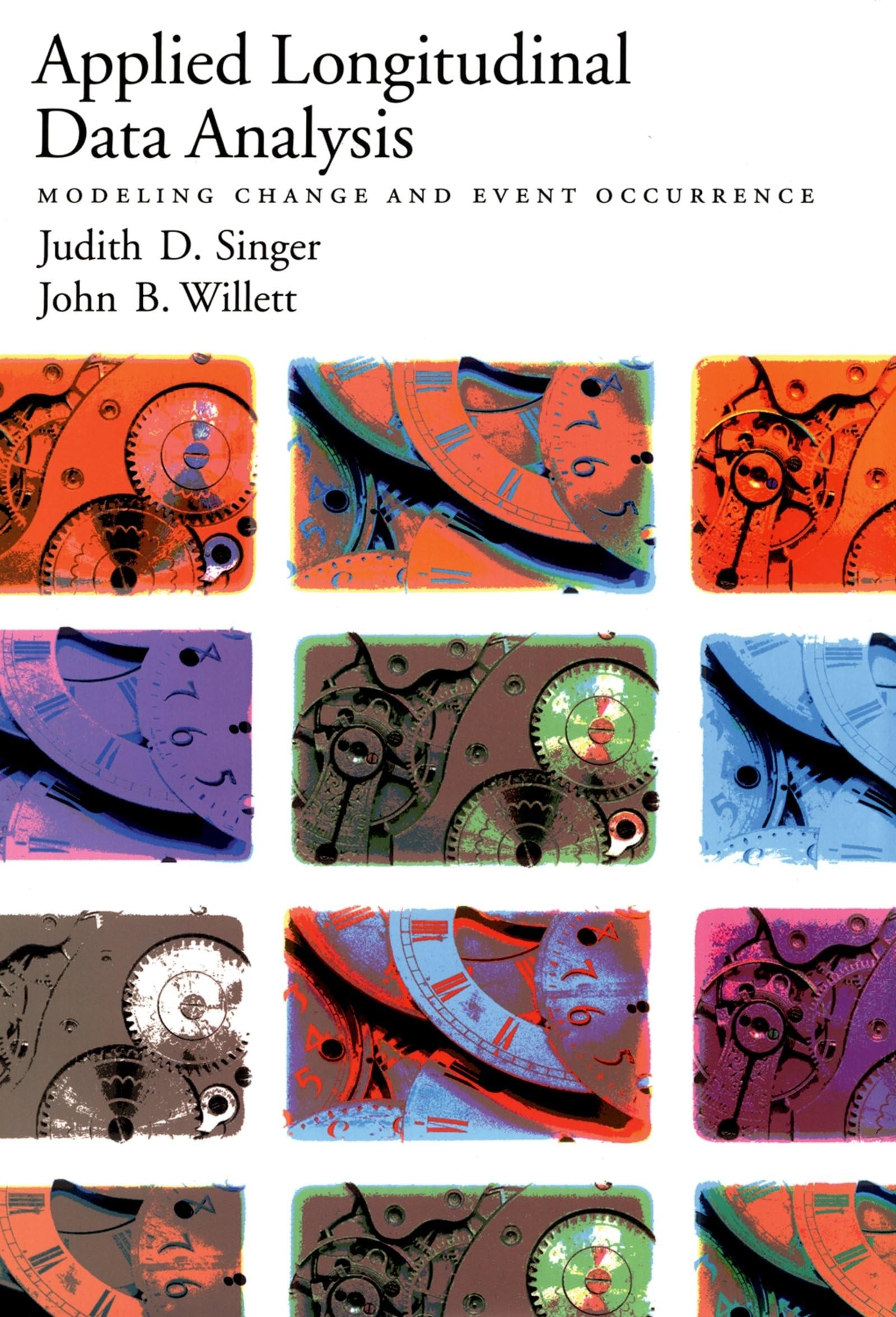
Applied Longitudinal Data Analysis (English, Judith D. Singer | John B. Willett)
Research
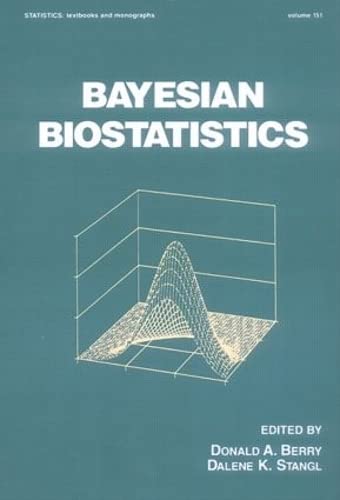
Bayesian Biostatistics (STATISTICS, A SERIES OF TEXTBOOKS AND MONOGRAPHS)
Related Products
View AllResearch
Mathematical Modeling of Biological Systems, Volume I (English, Andreas Deutsch | Lutz Brusch | Helen Byrne)
Research
Intermediate Statistics (English, James P. Stevens)
Research
Statistics Explained by Steve McKillup – Life Science Statistics Guide
Research
Data Analysis and Graphics Using R by John Maindonald – Statistical Computing
Research
Applied Longitudinal Data Analysis (English, Judith D. Singer | John B. Willett)
Research