
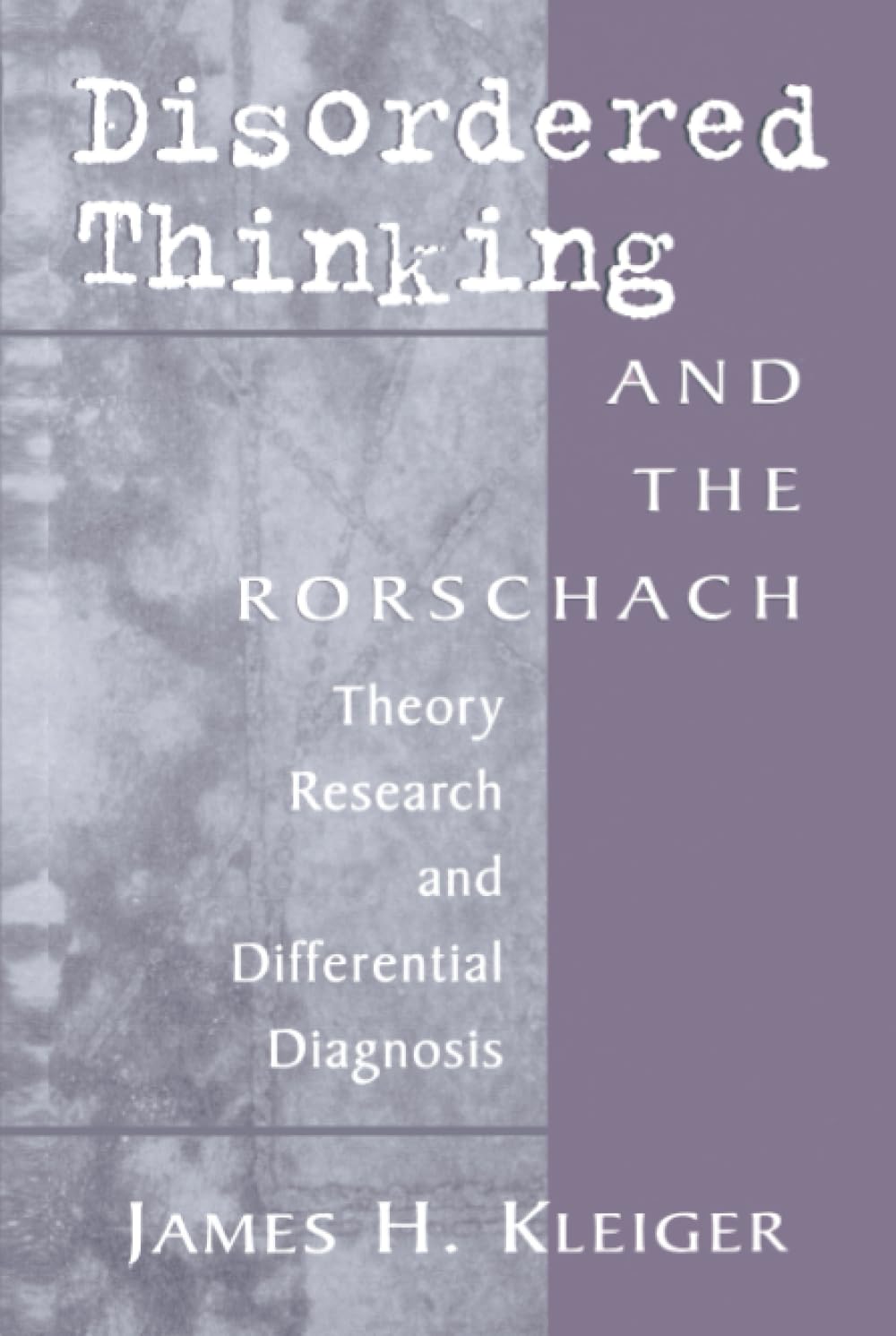
Disordered Thinking and the Rorschach: Theory, Research, and Differential Diagnosis by James H. Kleiger
Inclusive of all applicable taxes. FREE shipping on all orders.
Available Offers
- 🚚Free Delivery — Free shipping on all orders
- 💵Cash on Delivery — Pay when your order arrives
- ↩️15-Day Easy Returns — Hassle-free return policy
- 🔒Cash on Delivery — Pay safely when your order arrives
Check Delivery
Product Description
Introduction
Disordered thinking remains one of the most challenging areas in clinical psychology and psychiatry. For students, practitioners, and researchers working with the Rorschach Inkblot Method, understanding how to identify, interpret, and differentiate various forms of thought disturbance is essential. James H. Kleiger's Disordered Thinking and the Rorschach: Theory, Research, and Differential Diagnosis offers a comprehensive, scholarly, and practical guide to this complex topic. Published by Routledge, this hardcover edition is an indispensable resource for anyone serious about mastering the Rorschach as a diagnostic tool.
Book Overview
This book provides an in-depth exploration of disordered thinking as revealed through the Rorschach test. Kleiger masterfully integrates historical perspectives, psychoanalytic theory, and empirical research to create a unified framework for understanding thought disorder. The text traces the evolution of concepts from early psychiatric classifications to modern scoring systems, including the influential work of David Rapaport, Robert Holt, Philip Holzman, and John Exner. It also examines lesser-known research approaches that clarify persistent interpretive challenges. The result is a balanced, critical, and clinically useful synthesis that helps readers move beyond rote scoring to meaningful interpretation.
Key Highlights
- Comprehensive coverage of major Rorschach scoring systems for disordered thinking
- Historical and theoretical grounding in psychoanalytic and psychiatric thought
- Practical differential diagnosis guidance for schizophrenia, bipolar disorder, and personality disorders
- Research-based insights that bridge theory and clinical application
- Clear explanations of complex concepts, suitable for both beginners and advanced readers
Inside the Book
The book is organized into well-structured sections that build knowledge progressively. Early chapters review the history of thought disorder concepts, from Kraepelin and Bleuler to contemporary DSM perspectives. Subsequent chapters delve into each major scoring system, explaining their theoretical underpinnings, scoring criteria, and interpretive significance. Kleiger then addresses common diagnostic dilemmas, such as distinguishing psychotic from non-psychotic thinking, and differentiating thought disorder from creativity or cultural differences. Case examples and clinical vignettes throughout the text illustrate how to apply these concepts in real-world settings. The final chapters explore emerging research and future directions, making this a truly forward-looking reference.
Key Topics
- History and evolution of thought disorder concepts
- Rapaport's scoring system for deviant verbalizations
- Holt's primary process and secondary process scoring
- Holzman and colleagues' Thought Disorder Index
- Exner's Comprehensive System and its approach to cognitive impairment
- Differential diagnosis of schizophrenia, schizotypal personality, and mood disorders
- Cultural and linguistic considerations in assessing disordered thinking
- Integration of Rorschach findings with other clinical data
Reader Benefits
Readers will gain a deep understanding of how to identify and interpret disordered thinking on the Rorschach. The book equips clinicians with the skills to make more accurate differential diagnoses, avoiding common pitfalls. Researchers will appreciate the thorough review of empirical studies and the critical evaluation of competing models. Students will find the clear explanations and historical context invaluable for exam preparation and clinical training. Ultimately, this book enhances diagnostic confidence and improves the quality of psychological assessment.
Learning Outcomes
- Understand the theoretical foundations of thought disorder in Rorschach assessment
- Apply major scoring systems accurately and critically
- Differentiate between types of disordered thinking and their diagnostic implications
- Integrate Rorschach findings with other clinical information for robust case conceptualization
- Recognize limitations and controversies within existing research
- Develop a nuanced, evidence-based approach to interpreting cognitive disturbances
Who Should Read
This book is essential for clinical psychologists, psychiatrists, psychiatric social workers, and mental health professionals who use the Rorschach in their practice. It is also highly recommended for graduate students in clinical psychology, counselling, and related fields who are learning psychological assessment. Researchers specializing in thought disorder, psychosis, or personality assessment will find it a valuable reference. Additionally, forensic psychologists and those working in psychiatric settings will benefit from the detailed differential diagnostic guidance.
About the Author
James H. Kleiger is a distinguished clinical psychologist and a leading authority on the Rorschach Inkblot Method. He has published extensively on personality assessment, thought disorder, and psychodiagnosis. With decades of clinical experience and teaching, Kleiger brings both academic rigour and practical wisdom to this work. He is known for his ability to make complex theoretical material accessible and clinically relevant, making him a trusted voice in the field.
About the Publisher
Routledge is a globally respected academic publisher, renowned for high-quality books in psychology, psychiatry, and the social sciences. Their publications are widely used in universities and training institutes around the world. This hardcover edition reflects Routledge's commitment to producing durable, authoritative texts that serve as lasting resources for professionals and students alike.
Conclusion
Disordered Thinking and the Rorschach: Theory, Research, and Differential Diagnosis is a masterful work that fills a critical gap in the assessment literature. Whether you are a seasoned clinician or a student beginning your journey into psychodiagnosis, this book will deepen your understanding and sharpen your skills. It is not merely a manual but a thoughtful, scholarly companion that will stay with you throughout your career. For anyone committed to excellence in psychological assessment, this hardcover edition is a worthy investment.
Quick Summary
Disordered Thinking and the Rorschach by James H. Kleiger is a seminal work for mental health professionals seeking to master the assessment of thought disorders using the Rorschach inkblot test. The book traces the evolution of psychiatric and psychoanalytic understandings of disordered thinking, then systematically reviews the major scoring systems developed by David Rapaport, Robert Holt, Philip Holzman, and John Exner. It also explores lesser-known research, making it a comprehensive resource for differential diagnosis. Readers will learn to identify and differentiate psychotic, borderline, and neurotic thought patterns, and integrate Rorschach findings with other clinical data. This hardcover edition from Routledge is ideal for clinical psychologists, psychiatrists, researchers, and students in India who want to deepen their diagnostic skills. By purchasing from Bookshops.in, you get a reliable, high-quality print edition delivered to your doorstep, backed by India's trusted online bookstore for academic and professional titles.
Book Highlights
Book Specifications
| ISBN-13 | 9780881632323 |
| ISBN-10 | 0881632325 |
| Publisher | Routledge |
| Language | English |
| Dimensions | 15.84 x 2.92 x 23.46 cm |
| Weight | 798 g |
| Category | Clinical › Psychiatry |
| Genre | Nonfiction |
| Original Language | English |
Frequently Asked Questions
What is the main focus of 'Disordered Thinking and the Rorschach'?
Who is the author of this book?
Which Rorschach scoring systems are covered?
Is this book suitable for beginners in Rorschach testing?
Does the book include practical case examples?
Is this book relevant for Indian psychology students?
What is the ISBN of this book?
Who is the publisher?
Does the book cover differential diagnosis?
What is the price of this book at Bookshops.in?
Is this book available in hardcover?
Can this book help in understanding schizophrenia?
Does the book include research from less-known studies?
How is this book different from general Rorschach textbooks?
Readers Also Search For
Customers Also Bought

Anatomy
Ultrastructure of the Digestive Tract: 4 (Electron Microscopy in Biology and Medicine)

Anatomy
Ultrastructure of the Connective Tissue Matrix: 3 (Electron Microscopy in Biology and Medicine)

Anatomy
Reproductive Genetics (Royal College of Obstetricians and Gynaecologists Study Group)

Anatomy
Human Gross Anatomy: An Outline Text by Robert J. Leonard – Medical Anatomy

Pharmacology
Mathematical Modeling and Simulation in Enteric Neurobiology

Anatomy
Nature’s Patterns and the Fractional Calculus: 2 (Fractional Calculus in Applied Sciences and Engineering, 2)
Related Products
View All
Medicine & Health Sciences
Handbook of Hospitality Strategic Management | by Olsen Michael | Taylor & Francis Ltd | by Olsen Michael | Taylor & Francis Ltd | by Olsen Michael | Taylor & Francis Ltd | by Olsen Michael | Taylor & Francis Ltd | by Olsen Michael | Taylor & Francis Ltd | by Olsen Michael | Taylor & Francis Ltd | by Olsen Michael | Taylor & Francis Ltd | by Olsen Michael | Taylor & Francis Ltd | by Olsen Michael | Taylor & Francis Ltd | by Olsen Michael | Taylor & Francis
Medicine & Health Sciences
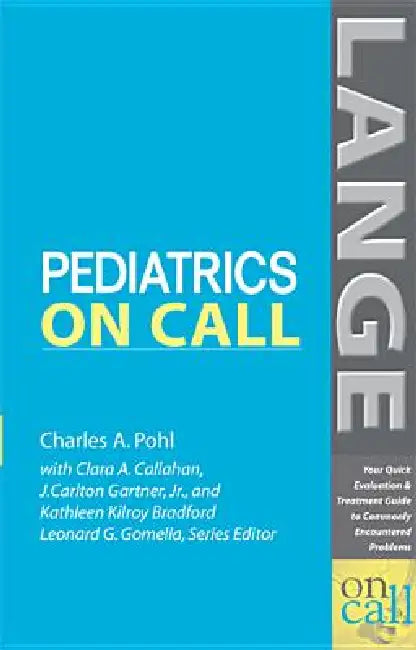
Pediatrics on Call | by Charles A. Pohl | Kathleen Bradford | Clara Callahan | McGraw Hill / Medical | by Charles A. Pohl | Kathleen Bradford | Clara Callahan | McGraw Hill / Medical | by Charles A. Pohl | Kathleen Bradford | Clara Callahan | McGraw Hill / Medical | by Charles A. Pohl | Kathleen Bradford | Clara Callahan | McGraw Hill / Medical | by Charles A. Pohl | Kathleen Bradford | Clara Callahan | McGraw Hill / Medical | by Charles A. Pohl | Kathleen Bradford | Clara Callahan | McGraw Hill
Medicine & Health Sciences
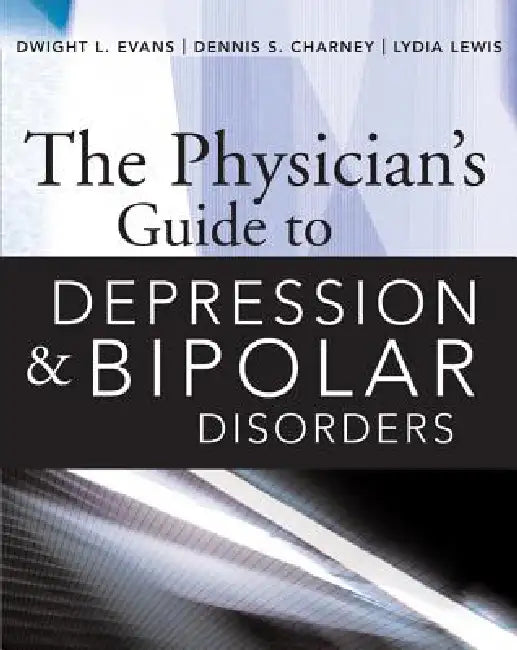
The Physician's Guide to Depression and Bipolar Disorders | by Dwight L. Evans | Dennis S. Charney | Lydia Lewis | McGraw Hill / Medical | by Dwight L. Evans | Dennis S. Charney | Lydia Lewis | McGraw Hill / Medical | by Dwight L. Evans | Dennis S. Charney | Lydia Lewis | McGraw Hill / Medical | by Dwight L. Evans | Dennis S. Charney | Lydia Lewis | McGraw Hill / Medical | by Dwight L. Evans | Dennis S. Charney | Lydia Lewis | McGraw Hill / Medical | by Dwight L. Evans | Dennis S. Charney | Lydi
Medicine & Health Sciences
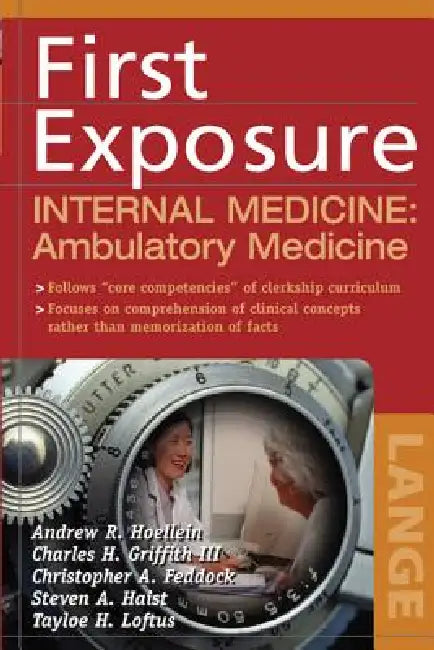
First Exposure to Internal Medicine | by Andrew R. Hoellein | Charles H. Griffith | McGraw Hill / Medical | by Andrew R. Hoellein | Charles H. Griffith | McGraw Hill / Medical | by Andrew R. Hoellein | Charles H. Griffith | McGraw Hill / Medical | by Andrew R. Hoellein | Charles H. Griffith | McGraw Hill / Medical | by Andrew R. Hoellein | Charles H. Griffith | McGraw Hill / Medical | by Andrew R. Hoellein | Charles H. Griffith | McGraw Hill / Medical | by Andrew R. Hoellein | Charles H. Griffit
Medicine & Health Sciences
First Exposure to Internal Medicine | by Charles H. Griffith | Andrew R. Hoellein | McGraw Hill / Medical | by Charles H. Griffith | Andrew R. Hoellein | McGraw Hill / Medical | by Charles H. Griffith | Andrew R. Hoellein | McGraw Hill / Medical | by Charles H. Griffith | Andrew R. Hoellein | McGraw Hill / Medical | by Charles H. Griffith | Andrew R. Hoellein | McGraw Hill / Medical | by Charles H. Griffith | Andrew R. Hoellein | McGraw Hill / Medical | by Charles H. Griffith | Andrew R. Hoellei
Medicine & Health Sciences