

Dynamical Systems in Cosmology: Understanding Cosmological Evolution with Modern Dynamical Systems Theory by J. Wainwrig
Inclusive of all applicable taxes. FREE shipping on all orders.
Available Offers
- 🚚Free Delivery — Free shipping on all orders
- 💵Cash on Delivery — Pay when your order arrives
- ↩️15-Day Easy Returns — Hassle-free return policy
- 🔒Cash on Delivery — Pay safely when your order arrives
Check Delivery
Product Description
Introduction
For students and researchers delving into the intricate dance between gravity and cosmic evolution, Dynamical Systems in Cosmology offers a rigorous yet accessible gateway. Authored by J. Wainwright and published by Cambridge University Press, this hardcover volume bridges the gap between abstract mathematical theory and the observable universe. It is an essential resource for anyone seeking to understand how the large-scale structure of the cosmos emerges from fundamental physical laws.
Book Overview
This authoritative work demonstrates how modern dynamical systems theory can illuminate the behaviour of cosmological models. By moving beyond traditional perturbation methods, the book provides a unified framework to analyse the stability, attractors, and qualitative evolution of space-time geometries. It systematically explores both spatially homogeneous (Bianchi) models and their isotropic subclass, the Friedmann-Lemaître models, while also venturing into inhomogeneous examples such as 'silent universes'. The text uniquely connects these theoretical constructs to real observational cosmology, making it a landmark contribution to the field.
Key Highlights
- First of its kind: The first book to systematically link modern dynamical systems theory with both cosmological models and observational data.
- Comprehensive coverage: Covers Bianchi models, Friedmann-Lemaître models, and inhomogeneous universes in a single coherent narrative.
- Methodological depth: Compares dynamical systems approaches with Hamiltonian methods and numerical simulations, offering readers multiple analytical perspectives.
- Observational relevance: Shows how high-symmetry models govern the evolution of more generic families and how these relate to real cosmic observations.
Inside the Book
The book is structured to guide readers from foundational concepts to advanced applications. Early chapters introduce the phase-space formulation of cosmological dynamics, equilibrium points, and stability analysis. Subsequent sections delve into the classification of Bianchi models, their asymptotic behaviour, and the role of matter fields. A significant portion is devoted to the isotropic Friedmann-Lemaître models, including their singularities and late-time attractors. The final chapters explore inhomogeneous models and the connection to observational cosmology, such as the cosmic microwave background and large-scale structure.
Key Topics
- Phase-space analysis of relativistic cosmological models
- Bianchi classification and dynamics of spatially homogeneous space-times
- Friedmann-Lemaître models and the cosmological principle
- Inhomogeneous models: silent universes and exact solutions
- Stability, bifurcations, and attractors in cosmology
- Comparison with Hamiltonian and numerical approaches
- Observational constraints from dynamical systems perspective
Reader Benefits
Readers will gain a deep, intuitive grasp of how cosmological models behave over cosmic time scales. The dynamical systems approach reveals which features of a model are robust and which depend sensitively on initial conditions. This understanding is invaluable for interpreting simulations, designing new models, and connecting theory to data. The book also equips researchers with a powerful toolkit for analysing nonlinear phenomena in general relativity, applicable beyond cosmology to astrophysics and gravitational physics.
Learning Outcomes
- Master the application of dynamical systems theory to relativistic cosmology
- Analyze the stability and asymptotic behaviour of Bianchi and Friedmann-Lemaître models
- Understand how inhomogeneous models extend the standard cosmological picture
- Compare different mathematical methods for studying cosmic evolution
- Relate theoretical model dynamics to observable quantities like the Hubble parameter and density parameters
Who Should Read
This book is tailored for graduate students and researchers in general relativity, cosmology, and dynamical systems. It is also highly relevant for astrophysicists and mathematicians interested in the geometric foundations of the universe. Indian students pursuing advanced degrees in physics or mathematics will find it a rigorous yet rewarding companion for coursework and research projects. Professionals working in theoretical cosmology or data analysis will appreciate its clear exposition of complex ideas.
About the Author
J. Wainwright is a distinguished mathematician and cosmologist known for his pioneering work on the application of dynamical systems to general relativity. With decades of teaching and research experience, he has contributed significantly to the understanding of exact solutions and asymptotic behaviour in cosmology. His clear writing style and pedagogical approach make advanced topics accessible to a broad audience.
About the Publisher
Cambridge University Press is one of the world's oldest and most respected academic publishers. With a legacy spanning over four centuries, it is renowned for producing high-quality scholarly works in science, mathematics, and the humanities. This hardcover edition reflects their commitment to durability and precision, making it a lasting addition to any academic library.
Conclusion
Dynamical Systems in Cosmology is more than a textbook—it is a research companion that transforms how we think about the universe's evolution. By integrating rigorous mathematics with observational insight, J. Wainwright has created a work that will inspire and inform a generation of cosmologists. For Indian readers and students seeking to master the theoretical underpinnings of modern cosmology, this book is an indispensable investment.
Quick Summary
Dynamical Systems in Cosmology by J. Wainwright is a groundbreaking work that applies modern dynamical systems theory to the study of cosmological models. The book systematically explores how this mathematical framework can illuminate the evolution of the universe, comparing it with traditional Hamiltonian methods and numerical simulations. It focuses primarily on spatially homogeneous Bianchi models and their isotropic subclass, the Friedmann-Lemaitre models, while also examining certain inhomogeneous models like silent universes. Readers will learn how high-symmetry models influence the behavior of more general families and how these theoretical constructs relate to actual cosmological observations. This is the first book to bridge dynamical systems theory with both cosmological modeling and observational data, making it an indispensable resource for graduate students, researchers, and academics in astrophysics, cosmology, and mathematical physics. For Indian students and scholars, it offers a rigorous yet accessible entry into advanced cosmology. Purchasing from Bookshops.in ensures you receive a genuine hardcover edition from Cambridge University Press, delivered across India with reliable service.
Book Highlights
Book Specifications
| ISBN-13 | 9780521673525 |
| ISBN-10 | 0521673526 |
| Publisher | Cambridge University Press |
| Language | English |
| Dimensions | 16.99 x 2.08 x 24.41 cm |
| Weight | 570 g |
| Country | India |
| Category | Science & Mathematics › Astronomy & Astrophysics |
| Genre | Science & Mathematics |
| Original Language | English |
Frequently Asked Questions
What is the main focus of Dynamical Systems in Cosmology?
Who is the author of this book?
Is this book suitable for Indian graduate students?
Does the book cover numerical methods?
What types of cosmological models are discussed?
Is this book only for experts?
Does it include observational cosmology?
What is the ISBN-13?
Is this a hardcover edition?
Can I use this book for my PhD research?
Does the book discuss the Big Bang?
What is the price in India?
How many reviews does it have?
Where can I buy this book in India?
Readers Also Search For
Customers Also Bought
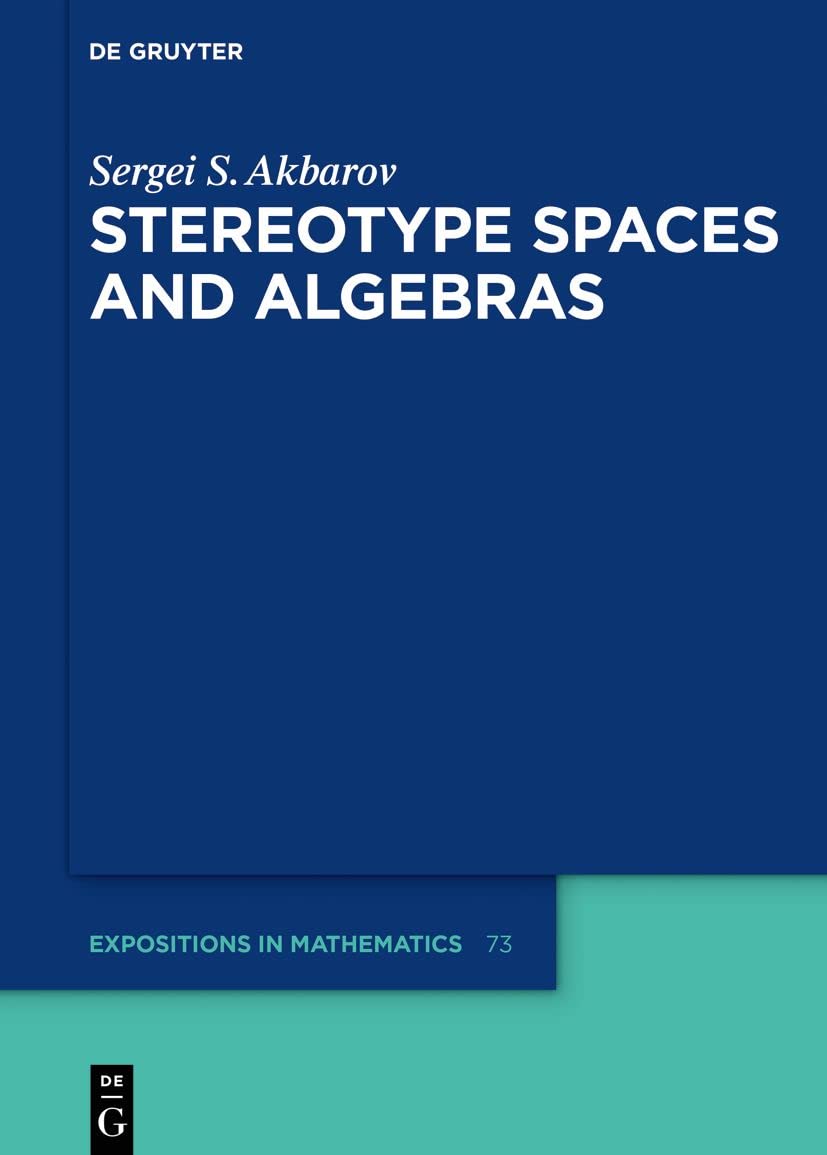
Mathematics
Stereotype Spaces and Algebras: 73 (De Gruyter Expositions in Mathematics, 73)
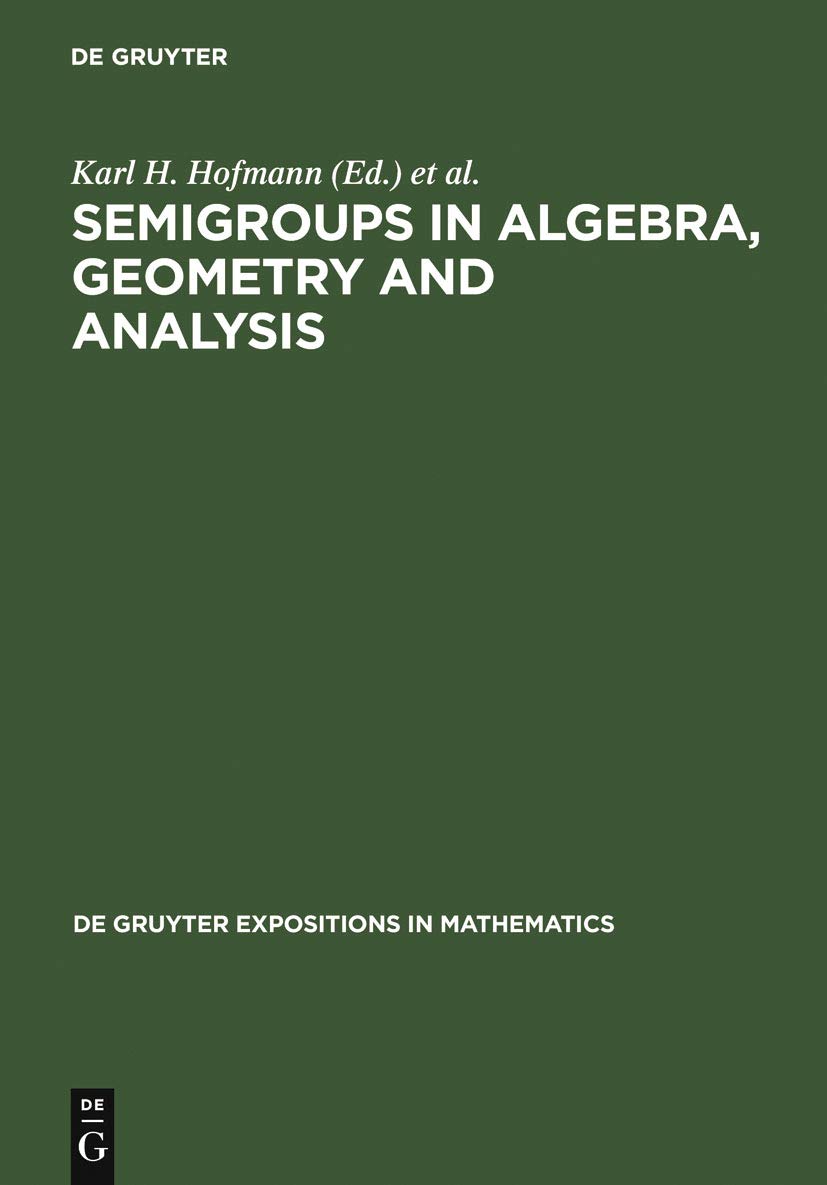
Mathematics
Semigroups in Algebra, Geometry and Analysis: 20 (De Gruyter Expositions in Mathematics, 20)
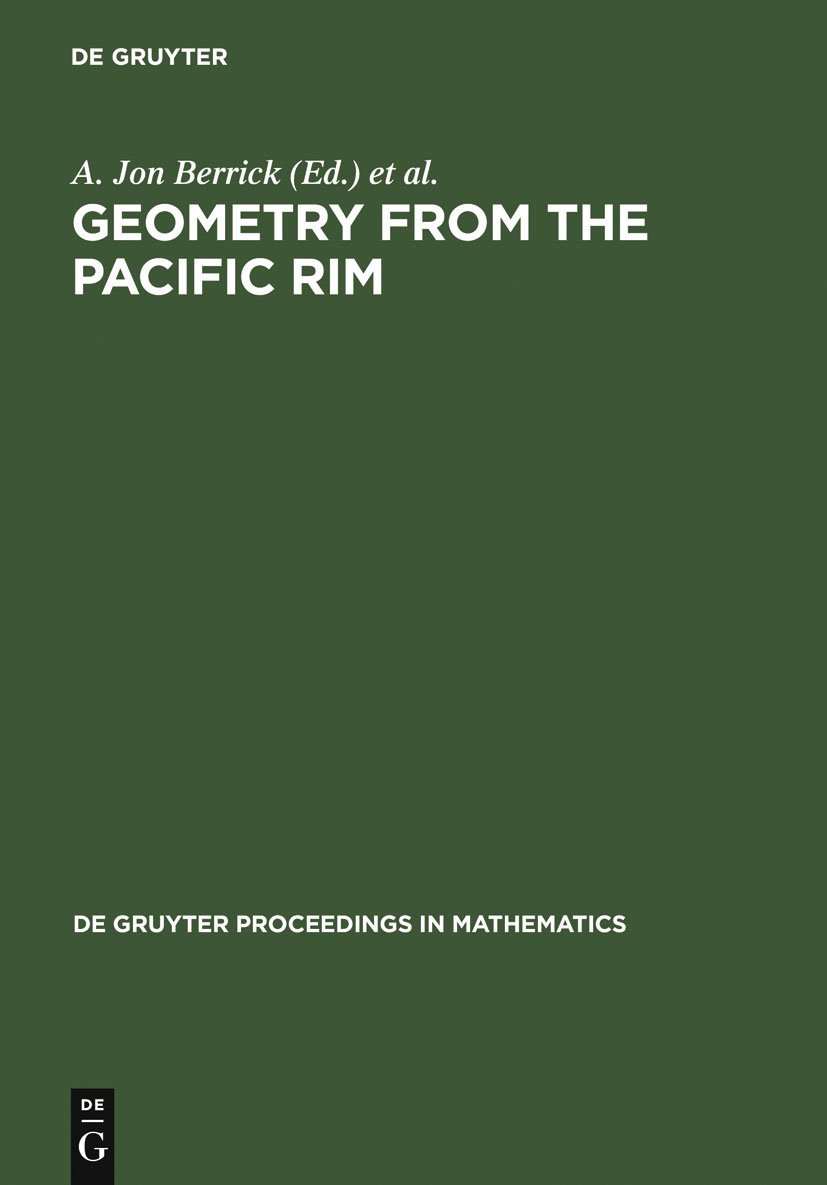
Mathematics
Geometry from the Pacific Rim: Proceedings of the Pacific Rim Geometry Conference held at National University of Singapore, Republic of Singapore, ... 1994 (De Gruyter Proceedings in Mathematics)

Mathematics
First International Tainan-Moscow Algebra Workshop: Proceedings of the International Conference held at National Cheng Kung University Tainan, Taiwan, ... 1994 (De Gruyter Proceedings in Mathematics)

Mathematics
Differential Geometry - Proceedings of the VIII International Colloquium (English, Jesus A. Alvarez Lopez | Eduardo Garcia-Rio)
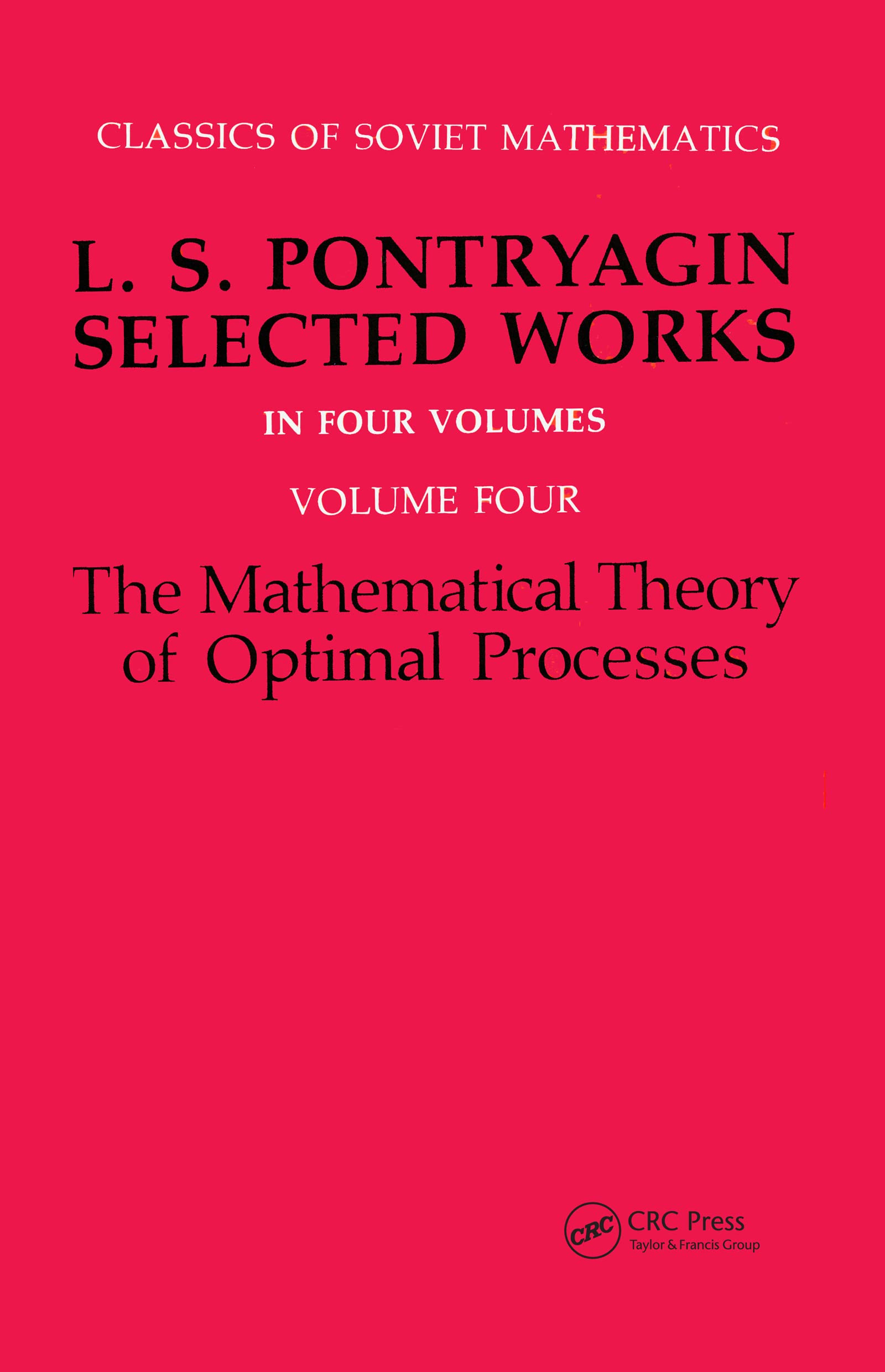
Mathematics
Mathematical Theory of Optimal Processes (Classics of Soviet Mathematics)
Related Products
View All
Science & Mathematics
Squid - Superconducting Quantum Interference Devices and Their Applications: Proceedings of the International Conference on Superconducting Quantum Devices, Berlin-west, October 4-8, 1976

Science & Mathematics
Thermodynamics and Pattern Formation in Biology

Science & Mathematics
The Nature of Mathematics and the Mathematics of Nature by S. Andersson – Mathematics & Science

Science & Mathematics
Linear Algebra | by Stephen Friedberg | Arnold Insel | Lawrence Spence | Pearson | by Stephen Friedberg | Arnold Insel | Lawrence Spence | Pearson | by Stephen Friedberg | Arnold Insel | Lawrence Spence | Pearson | by Stephen Friedberg | Arnold Insel | Lawrence Spence | Pearson | by Stephen Friedberg | Arnold Insel | Lawrence Spence | Pearson | by Stephen Friedberg | Arnold Insel | Lawrence Spence | Pearson | by Stephen Friedberg | Arnold Insel | Lawrence Spence | Pearson | by Stephen Friedberg

Science & Mathematics
University Calculus | by Joel Hass | Christopher Heil | Maurice Weir | Pearson | by Joel Hass | Christopher Heil | Maurice Weir | Pearson | by Joel Hass | Christopher Heil | Maurice Weir | Pearson | by Joel Hass | Christopher Heil | Maurice Weir | Pearson | by Joel Hass | Christopher Heil | Maurice Weir | Pearson | by Joel Hass | Christopher Heil | Maurice Weir | Pearson | by Joel Hass | Christopher Heil | Maurice Weir | Pearson | by Joel Hass | Christopher Heil | Maurice Weir | Pearson | by Joe

Science & Mathematics