
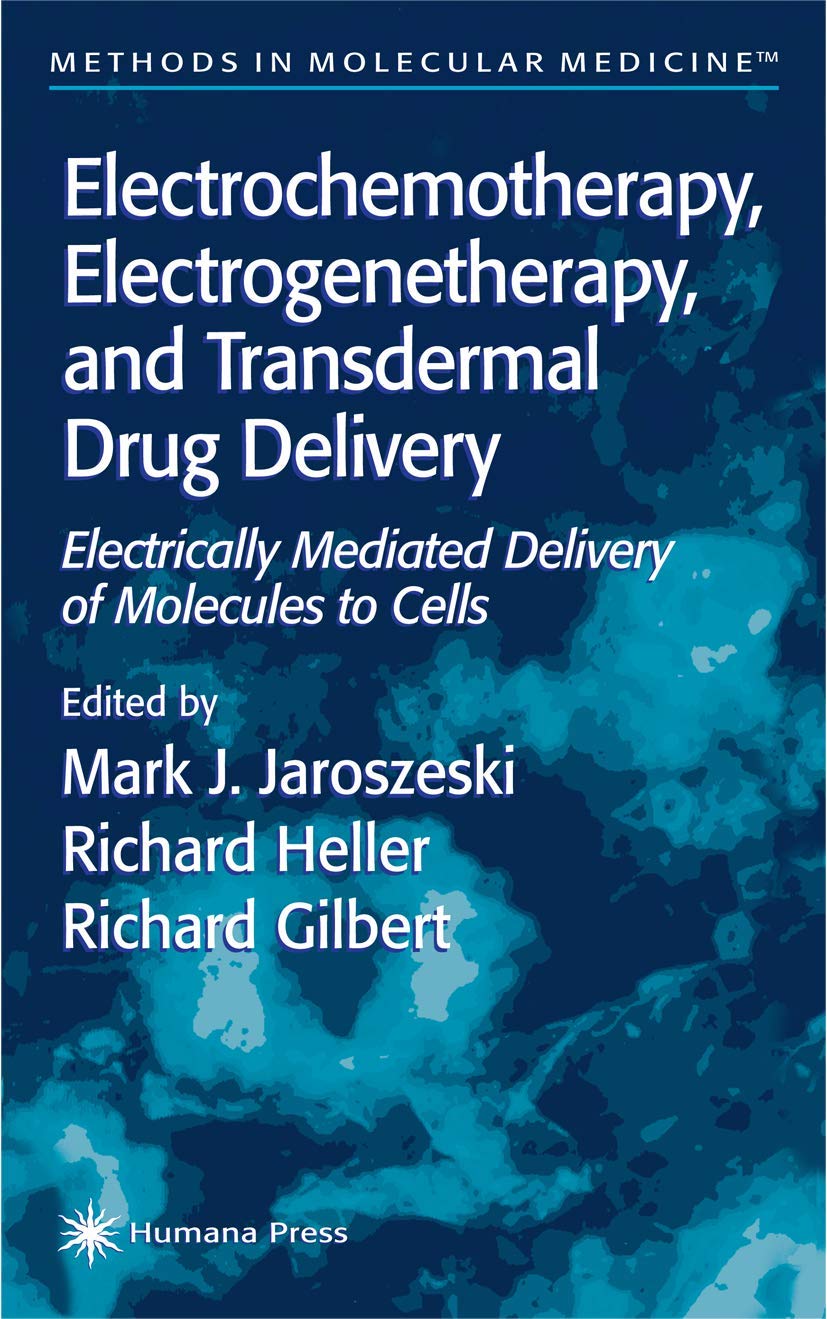
Electrochemotherapy, Electrogenetherapy, and Transdermal Drug Delivery: Electrically Mediated Delivery of Molecules to C
Inclusive of all applicable taxes. FREE shipping on all orders.
Available Offers
- 🚚Free Delivery — Free shipping on all orders
- 💵Cash on Delivery — Pay when your order arrives
- ↩️15-Day Easy Returns — Hassle-free return policy
- 🔒Cash on Delivery — Pay safely when your order arrives
Check Delivery
Product Description
Introduction
In the ever-evolving landscape of biomedical research and therapeutic innovation, the ability to deliver molecules precisely into cells stands as a cornerstone of modern medicine. Electrochemotherapy, Electrogenetherapy, and Transdermal Drug Delivery: Electrically Mediated Delivery of Molecules to Cells offers a comprehensive exploration of how pulsed electric fields are revolutionizing the way drugs, genes, and other therapeutic agents are transported across biological membranes. For Indian students, researchers, and medical professionals seeking to understand cutting-edge techniques in cancer treatment, gene therapy, and drug administration, this book serves as an authoritative guide grounded in rigorous scientific principles.
Book Overview
Published by Humana Press and authored by Mark J. Jaroszeski, this hardcover volume delves into the science of electroporation—the temporary increase in cell membrane permeability induced by controlled electrical pulses. The book systematically covers the fundamental mechanisms, experimental methodologies, and clinical applications of electrically mediated delivery. From in vitro laboratory studies to in vivo therapeutic protocols, the text bridges the gap between basic biophysics and practical medical interventions. It provides a clear framework for understanding how electrochemotherapy enhances the uptake of chemotherapeutic agents in tumors, how electrogenetherapy facilitates DNA transfer for genetic disorders, and how transdermal drug delivery can be optimized using electrical fields.
Key Highlights
- Comprehensive coverage of electroporation principles and their application to drug, gene, and protein delivery
- In-depth discussion of electrochemotherapy for cancer treatment, including clinical trial data and protocols
- Detailed exploration of electrogenetherapy for non-viral gene transfer, a safer alternative to viral vectors
- Practical insights into transdermal delivery systems using electrical enhancement for pain-free administration
- Step-by-step guidance on designing electrodes, pulse parameters, and treatment planning
- Relevant for Indian healthcare challenges, such as affordable cancer therapies and accessible gene treatments
Inside the Book
The book is structured to take readers from foundational concepts to advanced applications. Early chapters introduce the physics of electric fields and cell membrane behavior, explaining how pores form and reseal. Later sections detail specific protocols for electrochemotherapy in skin, liver, and brain cancers, supported by case studies. The chapters on electrogenetherapy cover plasmid DNA delivery, expression analysis, and safety considerations, making it a valuable resource for those working on gene-based vaccines or inherited disease treatments. The transdermal delivery section discusses skin impedance, electrode design, and drug formulation, with practical tips for overcoming barriers in clinical settings. Each chapter includes references to seminal research and experimental data, ensuring the content is evidence-based and current.
Key Topics
- Mechanisms of electroporation and membrane permeabilization
- Electrochemotherapy: principles, equipment, and clinical outcomes
- Electrogenetherapy: gene transfer efficiency and expression kinetics
- Transdermal drug delivery: electrical enhancement techniques and skin models
- Pulse parameters: voltage, duration, frequency, and number of pulses
- Electrode types: needle, plate, and array configurations
- Safety and toxicity considerations for in vivo applications
- Combination therapies: electroporation with immunotherapy and chemotherapy
- Regulatory aspects and ethical considerations in clinical translation
Reader Benefits
This book empowers readers with a deep understanding of how electrical fields can be harnessed for therapeutic delivery. For researchers, it provides reproducible protocols and troubleshooting advice to accelerate lab work. For clinicians, it offers insights into treatment planning and patient selection for electrochemotherapy. For students, it demystifies complex biophysical concepts through clear explanations and illustrative diagrams. The practical focus on device design and parameter optimization helps readers translate theory into real-world applications. Additionally, the emphasis on non-viral gene transfer is particularly relevant for Indian researchers seeking cost-effective and safe alternatives for gene therapy.
Learning Outcomes
By the end of this book, readers will be able to explain the biophysical basis of electroporation and its role in molecule delivery. They will learn to design and execute electrochemotherapy protocols for solid tumors, evaluate gene transfer efficiency using electrogenetherapy, and develop transdermal delivery systems for systemic and local drug administration. Readers will also gain skills in analyzing experimental data, optimizing pulse parameters, and assessing tissue responses. The book prepares learners to contribute to clinical trials, develop new therapeutic devices, and address unmet medical needs in oncology, genetic medicine, and dermatology.
Who Should Read
This book is essential for postgraduate students and researchers in biomedical engineering, biotechnology, pharmacology, and life sciences. It is equally valuable for medical professionals—oncologists, dermatologists, and surgeons—who wish to incorporate electrochemotherapy into their practice. Pharmaceutical scientists working on transdermal patches or gene delivery systems will find the book indispensable. Indian academicians teaching advanced drug delivery or cancer therapy courses can use it as a textbook. Finally, regulatory scientists and policymakers involved in medical device approval will benefit from its coverage of safety and efficacy data.
About the Author
Mark J. Jaroszeski is a renowned expert in the field of electrically mediated delivery, with decades of research experience at the University of South Florida and affiliated institutions. He has contributed extensively to the development of electroporation-based therapies, authoring numerous peer-reviewed articles and patents. His work has been instrumental in translating laboratory discoveries into clinical applications, particularly in cancer treatment. Dr. Jaroszeski's clear writing style and hands-on knowledge make this book a trusted resource for both newcomers and seasoned professionals.
About the Publisher
Humana Press, an imprint of Springer Nature, is a leading publisher of biomedical and life science books. Known for its high-quality reference works and textbooks, Humana has a strong reputation for publishing authoritative content that supports research and education worldwide. Their commitment to rigorous peer review and accessible presentation ensures that this volume meets the highest standards of scientific accuracy and readability. For Indian readers, Humana books are widely available through Bookshops.in, offering a reliable source for advanced academic and clinical literature.
Conclusion
Electrochemotherapy, Electrogenetherapy, and Transdermal Drug Delivery is a definitive resource that captures the transformative potential of electrically mediated molecule delivery. Whether you are a student exploring new frontiers in biotechnology, a researcher seeking reproducible protocols, or a clinician looking to adopt innovative therapies, this book provides the knowledge and tools needed to succeed. By combining fundamental science with practical applications, it equips the Indian biomedical community to address pressing healthcare challenges with cutting-edge solutions. Order your copy from Bookshops.in today and step into the future of targeted therapeutics.
Quick Summary
This book, 'Electrochemotherapy, Electrogenetherapy, and Transdermal Drug Delivery: Electrically Mediated Delivery of Molecules to Cells' by Mark J. Jaroszeski, is a definitive guide for researchers and clinicians exploring the use of electric fields to deliver molecules into cells. It explains the science of electroporation—a temporary increase in cell membrane permeability—and its applications in drug delivery, gene therapy, and transdermal treatments. Readers will learn about pulsed electric field protocols for delivering drugs, DNA, antibodies, proteins, and fluorescent molecules to various cell types. The book is ideal for biomedical engineers, pharmacologists, and oncologists interested in innovative cancer therapies like electrochemotherapy. By purchasing from Bookshops.in, Indian customers get authentic hardcover copies at a great price with fast delivery, making this essential reference accessible for academic and research purposes.
Book Highlights
Book Specifications
| ISBN-13 | 9780896036062 |
| ISBN-10 | 0896036065 |
| Publisher | Humana Press Inc. |
| Language | English |
| Dimensions | 15.6 x 2.87 x 23.39 cm |
| Weight | 889 g |
| Category | Basic Sciences › Pharmacology |
| Genre | Non-fiction |
| Reading Age | Adult |
| Original Language | English |
Frequently Asked Questions
What is electrochemotherapy?
Who is the author of this book?
What topics does the book cover?
Is this book suitable for beginners?
Does the book include practical protocols?
What is electrogenetherapy?
How does transdermal drug delivery work with electricity?
What is the ISBN of this book?
Is this book available in hardcover?
Can this book help in cancer research?
Does the book cover in vitro experiments?
What types of molecules can be delivered using electroporation?
Who is the publisher of this book?
Why should I buy this book from Bookshops.in?
Readers Also Search For
Customers Also Bought

Anatomy
Ultrastructure of the Digestive Tract: 4 (Electron Microscopy in Biology and Medicine)

Anatomy
Ultrastructure of the Connective Tissue Matrix: 3 (Electron Microscopy in Biology and Medicine)

Anatomy
Reproductive Genetics (Royal College of Obstetricians and Gynaecologists Study Group)

Anatomy
Human Gross Anatomy: An Outline Text by Robert J. Leonard – Medical Anatomy

Pharmacology
Mathematical Modeling and Simulation in Enteric Neurobiology

Anatomy
Nature’s Patterns and the Fractional Calculus: 2 (Fractional Calculus in Applied Sciences and Engineering, 2)
Related Products
View All
Pharmacology
Insulin, chemistry, structure, and function of insulin and related hormones: Proceedings of the Second International Insulin Symposium, Aachen, Germany, September 4–7, 1979
Pharmacology
A Handbook of Artificial Intelligence in Drug Delivery (English, Anil K. Philip)

Pharmacology
Plant Microevolution and Conservation in Human-influenced Ecosystems by David Briggs

Pharmacology
A Guide to the Extrapyramidal Side-Effects of Antipsychotic Drugs by D. G. Cunningham Owens
Pharmacology
Progress in Heterocyclic Chemistry: A Critical Review of the 2000 Literature by G. W. Gribble
Pharmacology