
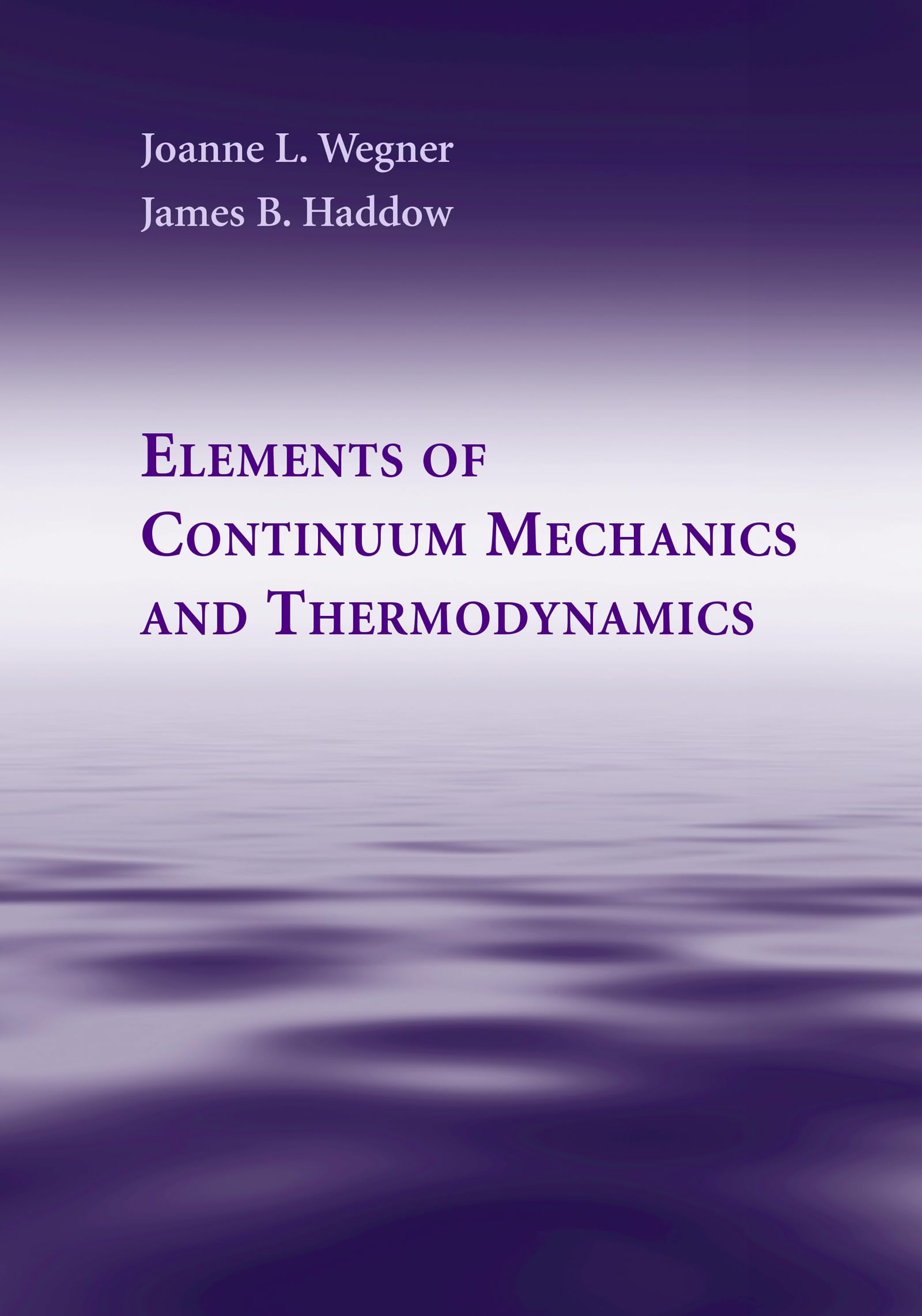
Elements of Continuum Mechanics and Thermodynamics by Joanne L. Wegner – A Foundational Textbook for Engineering and Phy
Inclusive of all applicable taxes. FREE shipping on all orders.
Available Offers
- 🚚Free Delivery — Free shipping on all orders
- 💵Cash on Delivery — Pay when your order arrives
- ↩️15-Day Easy Returns — Hassle-free return policy
- 🔒Cash on Delivery — Pay safely when your order arrives
Check Delivery
Product Description
Introduction
For students and researchers venturing into the rigorous world of solid and fluid mechanics, a clear and modern guide is indispensable. Elements of Continuum Mechanics and Thermodynamics by Joanne L. Wegner offers an integrated, foundational approach to this essential branch of engineering and applied mathematics. Published by Cambridge University Press, this hardcover volume is designed to bridge the gap between classical theory and contemporary applications, particularly those involving microscale phenomena. Whether you are an advanced undergraduate in India or a practicing engineer seeking a deeper understanding, this text equips you with the conceptual tools and computational techniques needed to master the continuum viewpoint.
Book Overview
This comprehensive work presents continuum mechanics not as a collection of isolated topics, but as a unified discipline grounded in the laws of physics. The author systematically develops the fundamental principles—kinematics, stress, conservation laws—and then extends them into the realm of thermodynamics. A standout feature is the dedicated chapter on continuum thermodynamics, which explores entropy production in Newtonian viscous fluid flow and thermoelasticity. The book also emphasizes computer-based problem solving through the symbolic mathematics program Mathematica, making abstract ideas tangible through code and simulation. With numerous examples, exercises, and a focus on both classical and modern contexts, this book serves as a complete resource for self-study or classroom use.
Key Highlights
- Integrated treatment of continuum mechanics and thermodynamics in a single, coherent volume.
- Modern perspective with special attention to microscale and nanoscale applications.
- Dedicated thermodynamics chapter covering entropy production in viscous fluids and thermoelastic solids.
- Computational emphasis using Mathematica to solve and visualize problems.
- Rich pedagogy with numerous end-of-chapter exercises and worked examples.
- Rigorous yet accessible style suitable for advanced undergraduate and graduate students.
Inside the Book
The journey begins with mathematical preliminaries—vectors, tensors, and coordinate systems—ensuring a solid foundation. Subsequent chapters delve into kinematics of deformation, stress analysis, and the fundamental balance laws of mass, momentum, and energy. The book then seamlessly integrates thermodynamic principles, introducing the concepts of entropy, the second law, and constitutive modeling. Special topics include linear elasticity, Newtonian fluids, and thermoelastic coupling. Each concept is illustrated with practical examples, and Mathematica notebooks are referenced throughout to demonstrate how symbolic computation can simplify complex derivations and parametric studies.
Key Topics
- Tensor algebra and calculus in curvilinear coordinates
- Deformation gradient, strain measures, and motion
- Cauchy stress and stress tensors
- Conservation of mass, linear momentum, angular momentum, and energy
- Entropy inequality and the Clausius–Duhem form
- Thermoelasticity: coupled thermal and mechanical response
- Newtonian viscous fluid flow and entropy production
- Constitutive equations for solids and fluids
- Introduction to finite deformation and nonlinear elasticity
Reader Benefits
By working through this book, readers will develop a deep, physical intuition for how materials deform and flow under various forces and temperature changes. The integration of thermodynamics clarifies the irreversible processes that govern real-world behavior, from the damping of vibrations to heat generation in lubricants. The computational component using Mathematica empowers readers to solve problems that would be intractable by hand, preparing them for modern research and industry practice. Moreover, the clear, step-by-step exposition makes challenging topics like tensor calculus and entropy production more approachable, building confidence for advanced study.
Learning Outcomes
- Master the mathematical language of tensors and their application to continuous media.
- Formulate and solve boundary value problems in linear elasticity and fluid mechanics.
- Apply the laws of thermodynamics to analyze energy conversion and dissipation in materials.
- Derive constitutive models that satisfy thermodynamic consistency.
- Use symbolic computation to simulate deformation, stress, and temperature fields.
- Understand the coupling between mechanical and thermal phenomena in solids and fluids.
Who Should Read
This book is ideal for advanced undergraduate and graduate students in mechanical, civil, aerospace, and materials engineering, as well as applied physics and mathematics. It also serves as a valuable reference for researchers and professionals working in solid mechanics, fluid dynamics, geophysics, biomechanics, or any field where the continuous nature of matter is central. Indian students preparing for competitive examinations or pursuing research in IITs, NITs, and other premier institutes will find the rigorous yet practical approach particularly beneficial.
About the Author
Joanne L. Wegner is a respected academic and researcher in the field of continuum mechanics and applied mathematics. With years of teaching experience at the university level, she has crafted this text to reflect both pedagogical clarity and technical depth. Her expertise in integrating computational tools with classical theory is evident throughout the book, making it a valuable resource for modern learners.
About the Publisher
Cambridge University Press is one of the world’s oldest and most prestigious academic publishers. Renowned for its commitment to scholarly excellence, Cambridge University Press brings a legacy of rigorous peer review and high production standards. This hardcover edition reflects that tradition, offering durable binding and clear typesetting suitable for years of study and reference.
Conclusion
Elements of Continuum Mechanics and Thermodynamics is more than a textbook—it is a gateway to understanding the physical world at a fundamental level. By unifying mechanics and thermodynamics with modern computational methods, Joanne L. Wegner has created a resource that will serve students and professionals alike for years to come. Whether you are delving into elasticity, fluid flow, or thermo-mechanical coupling, this book provides the clarity, depth, and tools necessary for success. Add this essential volume to your library and elevate your understanding of continuum physics.
Quick Summary
Elements of Continuum Mechanics and Thermodynamics by Joanne L. Wegner is a comprehensive academic textbook published by Cambridge University Press. It provides a modern, integrated treatment of continuum mechanics and thermodynamics, making it ideal for advanced undergraduate and graduate students in engineering, physics, and applied mathematics. The book covers foundational topics such as stress, strain, conservation laws, and constitutive equations, and includes a dedicated chapter on continuum thermodynamics that explores entropy production in Newtonian viscous fluid flow and thermoelasticity. A standout feature is the use of Mathematica for symbolic computation and examples, bridging theory with practical problem-solving. Readers will gain a deep understanding of how materials and fluids behave under various forces and thermal conditions. This book is particularly valuable for Indian students preparing for higher studies or research in solid and fluid mechanics. Purchasing from Bookshops.in ensures you receive a genuine hardcover copy with fast, reliable delivery across India.
Book Highlights
Book Specifications
| ISBN-13 | 9780521866323 |
| ISBN-10 | 0521866324 |
| Publisher | Cambridge University Press |
| Language | English |
| Dimensions | 18.42 x 1.91 x 25.4 cm |
| Weight | 710 g |
| Category | Engineering Textbooks › Mechanical Engineering |
| Genre | Non-fiction |
| Original Language | English |
Frequently Asked Questions
What is the main focus of this book?
Who is the author of this book?
Is this book suitable for beginners?
Does the book include computational examples?
What topics in thermodynamics are covered?
Is this book used in Indian universities?
Does it cover fluid mechanics?
Are there exercises for practice?
What is the ISBN?
Is the book available in hardcover?
Can I use it for self-study?
Does it require knowledge of Mathematica?
Why buy from Bookshops.in?
Readers Also Search For
Customers Also Bought
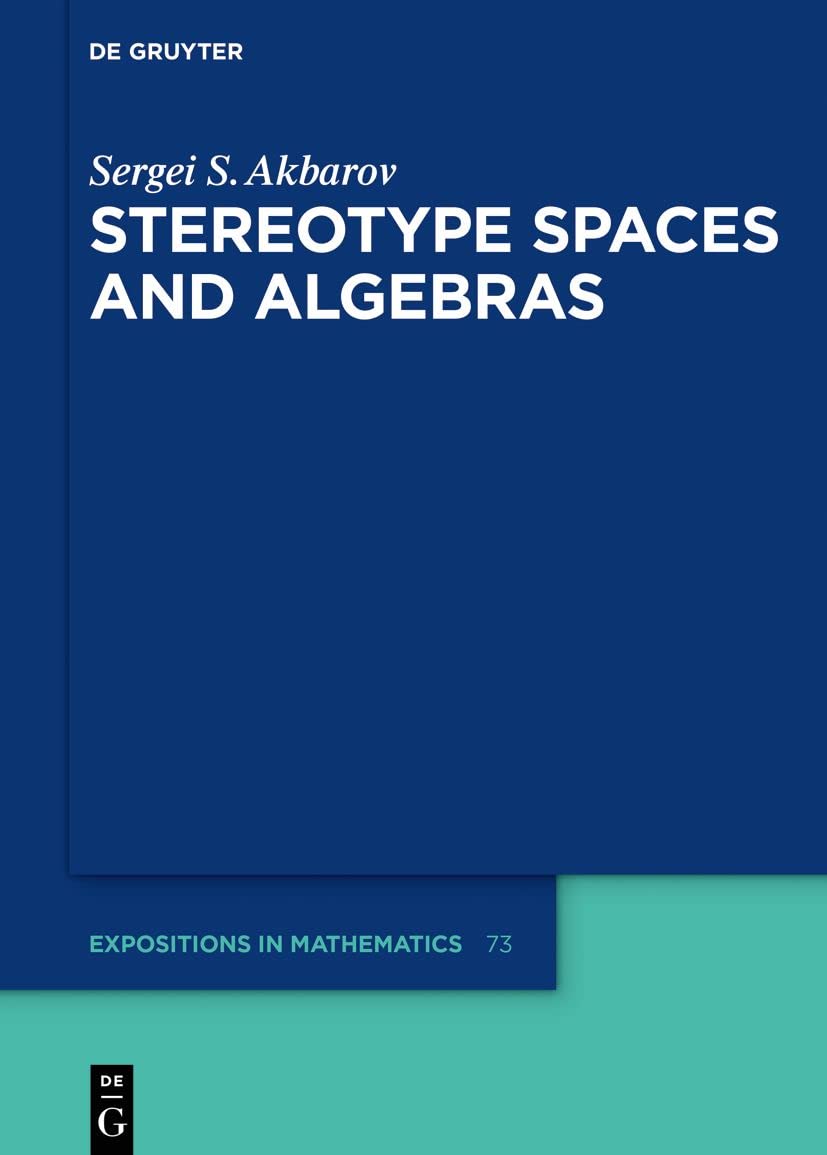
Mathematics
Stereotype Spaces and Algebras: 73 (De Gruyter Expositions in Mathematics, 73)
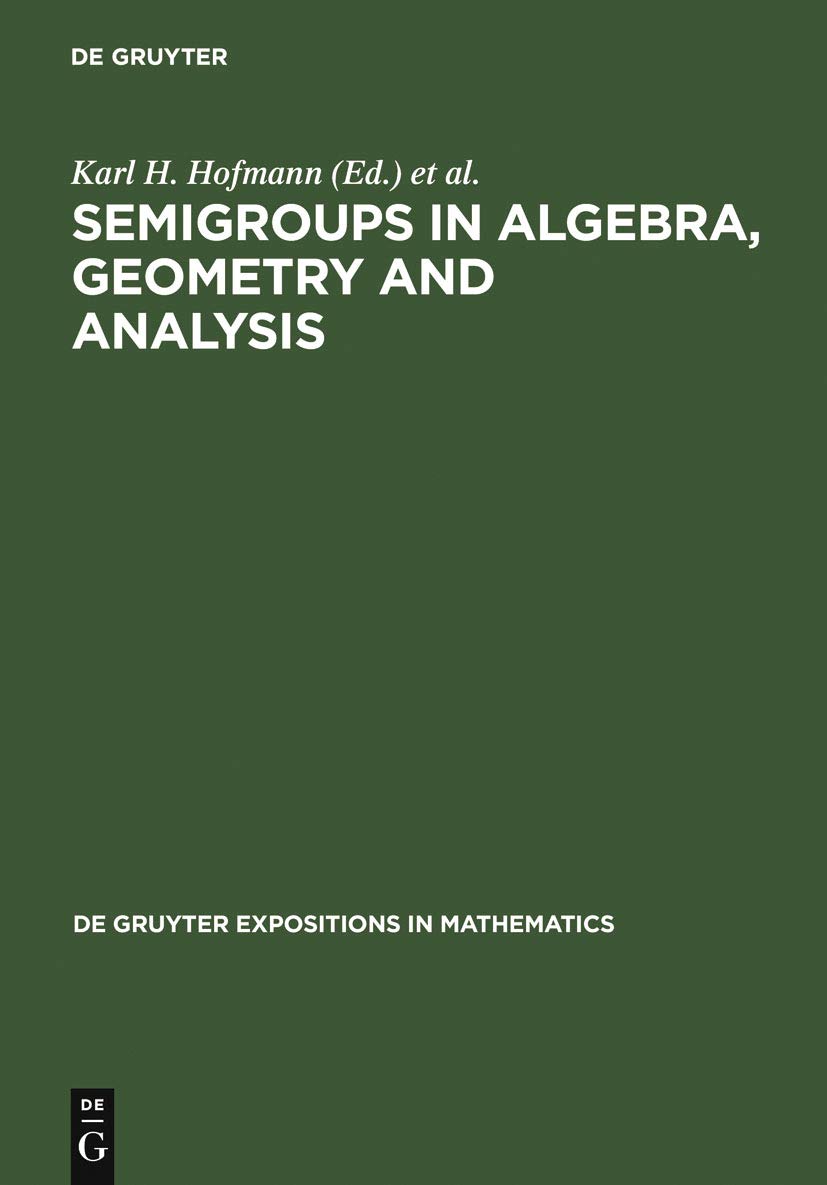
Mathematics
Semigroups in Algebra, Geometry and Analysis: 20 (De Gruyter Expositions in Mathematics, 20)
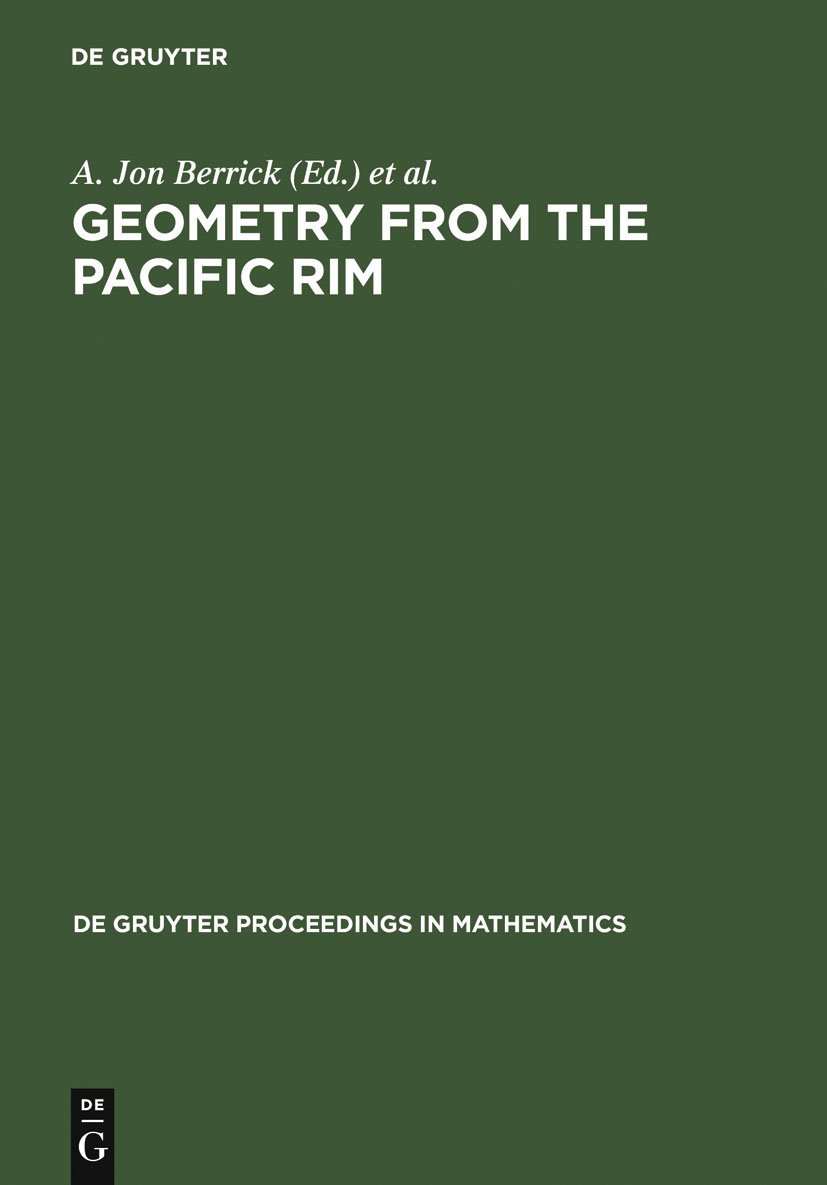
Mathematics
Geometry from the Pacific Rim: Proceedings of the Pacific Rim Geometry Conference held at National University of Singapore, Republic of Singapore, ... 1994 (De Gruyter Proceedings in Mathematics)
Mathematics
First International Tainan-Moscow Algebra Workshop: Proceedings of the International Conference held at National Cheng Kung University Tainan, Taiwan, ... 1994 (De Gruyter Proceedings in Mathematics)
Mathematics
Differential Geometry - Proceedings of the VIII International Colloquium (English, Jesus A. Alvarez Lopez | Eduardo Garcia-Rio)
Mathematics
Mathematical Theory of Optimal Processes (Classics of Soviet Mathematics)
Related Products
View All
Science & Mathematics
Squid - Superconducting Quantum Interference Devices and Their Applications: Proceedings of the International Conference on Superconducting Quantum Devices, Berlin-west, October 4-8, 1976

Science & Mathematics
Thermodynamics and Pattern Formation in Biology
Science & Mathematics
The Nature of Mathematics and the Mathematics of Nature by S. Andersson – Mathematics & Science

Science & Mathematics
Linear Algebra | by Stephen Friedberg | Arnold Insel | Lawrence Spence | Pearson | by Stephen Friedberg | Arnold Insel | Lawrence Spence | Pearson | by Stephen Friedberg | Arnold Insel | Lawrence Spence | Pearson | by Stephen Friedberg | Arnold Insel | Lawrence Spence | Pearson | by Stephen Friedberg | Arnold Insel | Lawrence Spence | Pearson | by Stephen Friedberg | Arnold Insel | Lawrence Spence | Pearson | by Stephen Friedberg | Arnold Insel | Lawrence Spence | Pearson | by Stephen Friedberg
Science & Mathematics
University Calculus | by Joel Hass | Christopher Heil | Maurice Weir | Pearson | by Joel Hass | Christopher Heil | Maurice Weir | Pearson | by Joel Hass | Christopher Heil | Maurice Weir | Pearson | by Joel Hass | Christopher Heil | Maurice Weir | Pearson | by Joel Hass | Christopher Heil | Maurice Weir | Pearson | by Joel Hass | Christopher Heil | Maurice Weir | Pearson | by Joel Hass | Christopher Heil | Maurice Weir | Pearson | by Joel Hass | Christopher Heil | Maurice Weir | Pearson | by Joe

Science & Mathematics