

Eugenics, Human Genetics and Human Failings: The Eugenics Society, Its Source and Its Critics in Britain by Mazumdar Pau
Inclusive of all applicable taxes. FREE shipping on all orders.
Available Offers
- 🚚Free Delivery — Free shipping on all orders
- 💵Cash on Delivery — Pay when your order arrives
- ↩️15-Day Easy Returns — Hassle-free return policy
- 🔒Cash on Delivery — Pay safely when your order arrives
Check Delivery
Product Description
Introduction
In the landscape of modern science, few topics are as provocative and historically significant as the eugenics movement. Mazumdar Pauline’s Eugenics, Human Genetics and Human Failings: The Eugenics Society, Its Source and Its Critics in Britain offers a deeply researched and thought-provoking exploration of how scientific ideas can be shaped by social prejudices and class structures. This hardcover volume, published by Taylor & Francis Ltd, is an essential read for students, researchers, and anyone interested in the intersection of genetics, ideology, and ethics.
Book Overview
This book is a meticulous historical account of the Eugenics Society in Britain, tracing its origins, its key proponents, and the intellectual currents that sustained it. Pauline examines how eugenics was intertwined with early human genetics, and how critics—from scientists to social reformers—challenged its assumptions. Far from a dry academic text, the narrative reveals the human failings behind a movement that sought to ‘improve’ humanity. It is a compelling case study of how science can be co-opted by class bias and political agendas, offering lessons that remain relevant in contemporary debates about genetic engineering and bioethics.
Key Highlights
- Original Research: Draws on extensive archival material from the Eugenics Society and its critics.
- Critical Perspective: Examines how class, race, and social ideology influenced scientific thought in early 20th-century Britain.
- Interdisciplinary Approach: Bridges history of science, sociology, and ethics.
- Authoritative Source: Written by a respected historian of biology and medicine.
Inside the Book
The book is structured to guide readers through the complex web of personalities, institutions, and debates. It begins with the founding of the Eugenics Society and the scientific milieu of the time. Subsequent chapters delve into the work of key figures like Francis Galton and Karl Pearson, as well as lesser-known activists and critics. Pauline does not shy away from the uncomfortable truths—how eugenic ideas were used to justify social inequality and even sterilization policies. At the same time, she highlights the voices of those who resisted, including geneticists like J.B.S. Haldane and Lancelot Hogben, who argued for a more nuanced understanding of heredity.
Key Topics
- The rise of the Eugenics Society in early 20th-century Britain
- Relationship between eugenics and the development of human genetics
- Class bias in scientific research and policy recommendations
- Criticism from within the scientific community and from social reformers
- The decline of eugenics as a mainstream movement
- Moral and ethical implications of genetic determinism
Reader Benefits
This book offers Indian readers a unique opportunity to understand how science and society interact. It encourages critical thinking about how cultural biases can shape research agendas. For students of history, sociology, or genetics, it provides a rich case study that is both intellectually stimulating and morally instructive. The hardcover edition is a durable addition to any academic library, ideal for repeated reference and annotation.
Learning Outcomes
- Understand the historical context of eugenics and its influence on early genetics.
- Identify the social and ideological factors that can distort scientific inquiry.
- Analyze the arguments of both proponents and critics of eugenics.
- Draw parallels between past debates and contemporary issues in bioethics.
- Develop a nuanced perspective on the relationship between science and power.
Who Should Read
- Students of history of science, medicine, and sociology
- Researchers in genetics, bioethics, and public policy
- Educators looking for rigorous yet accessible material on eugenics
- Readers interested in the darker chapters of modern science
- Anyone concerned with how scientific ideas can be misused for social control
About the Author
Mazumdar Pauline is a distinguished historian of science, with a particular focus on the history of biology and medicine. She has held academic positions at leading universities and is known for her meticulous archival research and clear analytical writing. Her work sheds light on how scientific knowledge is produced, contested, and sometimes corrupted by social forces.
About the Publisher
Taylor & Francis Ltd is one of the world’s leading academic publishers, with a long-standing reputation for producing high-quality scholarly works. Their catalogue includes authoritative texts across the sciences, humanities, and social sciences, making them a trusted source for students and researchers globally.
Conclusion
Eugenics, Human Genetics and Human Failings is more than a historical account—it is a cautionary tale about the dangers of allowing ideology to masquerade as science. Pauline’s rigorous scholarship and engaging prose make this book an indispensable resource for anyone seeking to understand the complex legacy of eugenics. For Indian readers, it offers valuable insights into the global history of scientific thought and its entanglement with class and power. Add this hardcover to your collection and enrich your understanding of the human dimensions of genetics.
Quick Summary
Eugenics, Human Genetics and Human Failings: The Eugenics Society, Its Source and Its Critics in Britain by Mazumdar Pauline is a rigorous academic work that dissects the history of the eugenics movement in Britain. The book traces the intellectual and social roots of the Eugenics Society, highlighting key figures such as Francis Galton, Karl Pearson, and R.A. Fisher, while also giving voice to their critics like Lancelot Hogben and J.B.S. Haldane. It explores how scientific ideas about human genetics were deeply intertwined with class ideology and social policy. This volume is ideal for postgraduate students, researchers, and faculty in history of science, sociology, and genetics ethics. Readers will gain a nuanced understanding of how eugenics shaped — and was shaped by — British society, and how these debates resonate in contemporary discussions of genetics and ethics. By purchasing from Bookshops.in, Indian customers receive an authentic hardcover edition with prompt service, supporting a trusted local bookstore.
Book Highlights
Book Specifications
| ISBN-13 | 9780415044240 |
| ISBN-10 | 0415044243 |
| Publisher | Routledge |
| Language | English |
| Dimensions | 14.61 x 2.54 x 22.23 cm |
| Weight | 476 g |
| Country | India |
| Category | Medicine & Health Sciences › Medicine |
| Genre | Non-fiction |
| Reading Age | Adult |
| Original Language | English |
Frequently Asked Questions
What is this book about?
Who is the author?
Is this book suitable for Indian readers?
What is the ISBN?
What format is the book?
What is the price in India?
What is the rating?
Is this book part of a series?
What category does it belong to?
Can I use this book for my research?
Does it cover eugenics outside Britain?
Why buy from Bookshops.in?
Readers Also Search For
Customers Also Bought

Anatomy
Ultrastructure of the Digestive Tract: 4 (Electron Microscopy in Biology and Medicine)

Anatomy
Ultrastructure of the Connective Tissue Matrix: 3 (Electron Microscopy in Biology and Medicine)

Anatomy
Reproductive Genetics (Royal College of Obstetricians and Gynaecologists Study Group)

Anatomy
Human Gross Anatomy: An Outline Text by Robert J. Leonard – Medical Anatomy

Pharmacology
Mathematical Modeling and Simulation in Enteric Neurobiology

Anatomy
Nature’s Patterns and the Fractional Calculus: 2 (Fractional Calculus in Applied Sciences and Engineering, 2)
Related Products
View All
Medicine & Health Sciences
Handbook of Hospitality Strategic Management | by Olsen Michael | Taylor & Francis Ltd | by Olsen Michael | Taylor & Francis Ltd | by Olsen Michael | Taylor & Francis Ltd | by Olsen Michael | Taylor & Francis Ltd | by Olsen Michael | Taylor & Francis Ltd | by Olsen Michael | Taylor & Francis Ltd | by Olsen Michael | Taylor & Francis Ltd | by Olsen Michael | Taylor & Francis Ltd | by Olsen Michael | Taylor & Francis Ltd | by Olsen Michael | Taylor & Francis

Medicine & Health Sciences
Pediatrics on Call | by Charles A. Pohl | Kathleen Bradford | Clara Callahan | McGraw Hill / Medical | by Charles A. Pohl | Kathleen Bradford | Clara Callahan | McGraw Hill / Medical | by Charles A. Pohl | Kathleen Bradford | Clara Callahan | McGraw Hill / Medical | by Charles A. Pohl | Kathleen Bradford | Clara Callahan | McGraw Hill / Medical | by Charles A. Pohl | Kathleen Bradford | Clara Callahan | McGraw Hill / Medical | by Charles A. Pohl | Kathleen Bradford | Clara Callahan | McGraw Hill

Medicine & Health Sciences
The Physician's Guide to Depression and Bipolar Disorders | by Dwight L. Evans | Dennis S. Charney | Lydia Lewis | McGraw Hill / Medical | by Dwight L. Evans | Dennis S. Charney | Lydia Lewis | McGraw Hill / Medical | by Dwight L. Evans | Dennis S. Charney | Lydia Lewis | McGraw Hill / Medical | by Dwight L. Evans | Dennis S. Charney | Lydia Lewis | McGraw Hill / Medical | by Dwight L. Evans | Dennis S. Charney | Lydia Lewis | McGraw Hill / Medical | by Dwight L. Evans | Dennis S. Charney | Lydi
Medicine & Health Sciences
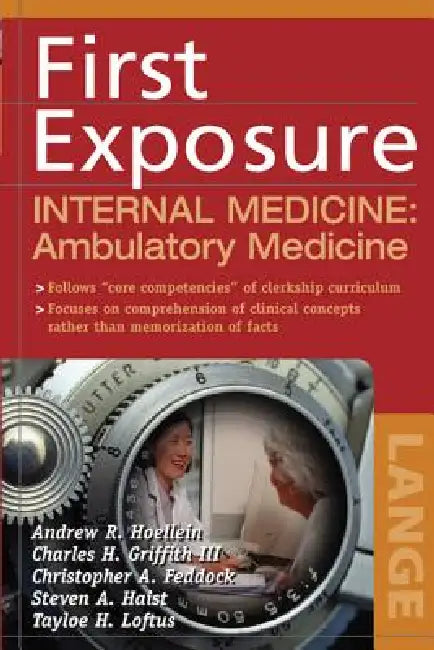
First Exposure to Internal Medicine | by Andrew R. Hoellein | Charles H. Griffith | McGraw Hill / Medical | by Andrew R. Hoellein | Charles H. Griffith | McGraw Hill / Medical | by Andrew R. Hoellein | Charles H. Griffith | McGraw Hill / Medical | by Andrew R. Hoellein | Charles H. Griffith | McGraw Hill / Medical | by Andrew R. Hoellein | Charles H. Griffith | McGraw Hill / Medical | by Andrew R. Hoellein | Charles H. Griffith | McGraw Hill / Medical | by Andrew R. Hoellein | Charles H. Griffit
Medicine & Health Sciences
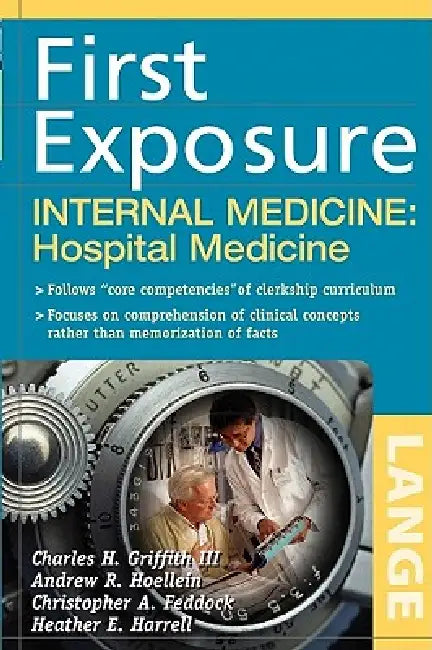
First Exposure to Internal Medicine | by Charles H. Griffith | Andrew R. Hoellein | McGraw Hill / Medical | by Charles H. Griffith | Andrew R. Hoellein | McGraw Hill / Medical | by Charles H. Griffith | Andrew R. Hoellein | McGraw Hill / Medical | by Charles H. Griffith | Andrew R. Hoellein | McGraw Hill / Medical | by Charles H. Griffith | Andrew R. Hoellein | McGraw Hill / Medical | by Charles H. Griffith | Andrew R. Hoellein | McGraw Hill / Medical | by Charles H. Griffith | Andrew R. Hoellei
Medicine & Health Sciences