
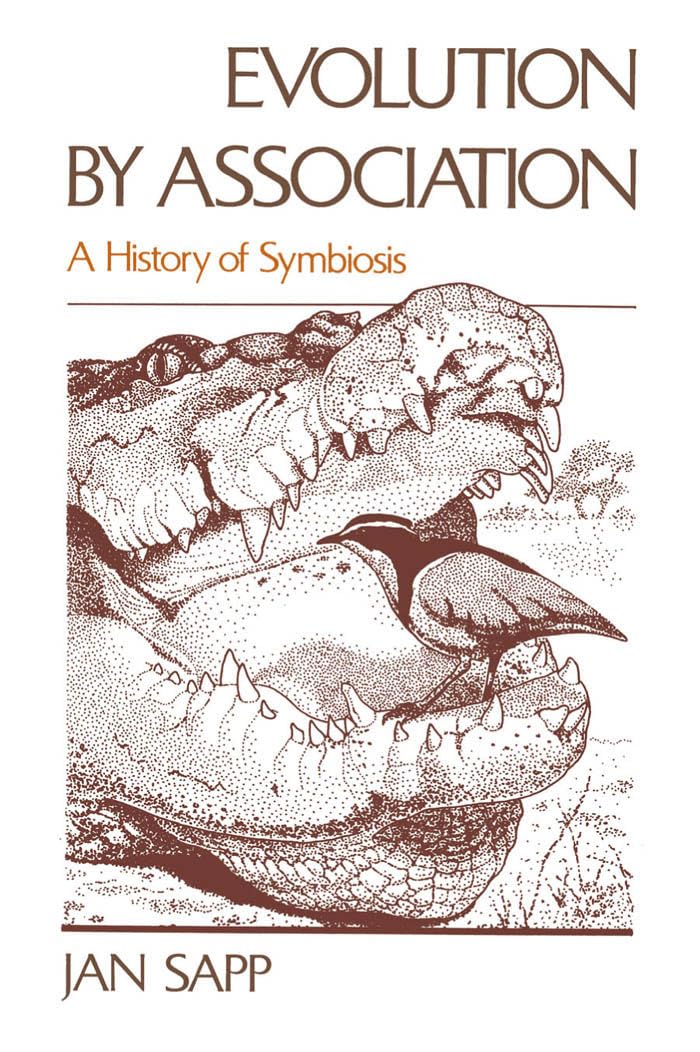
Evolution by Association: A History of Symbiosis by Jan Sapp – A Definitive Account of Symbiotic Theory in Evolutionary
Inclusive of all applicable taxes. FREE shipping on all orders.
Available Offers
- 🚚Free Delivery — Free shipping on all orders
- 💵Cash on Delivery — Pay when your order arrives
- ↩️15-Day Easy Returns — Hassle-free return policy
- 🔒Cash on Delivery — Pay safely when your order arrives
Check Delivery
Product Description
Introduction
In the sprawling landscape of evolutionary biology, few ideas have been as quietly revolutionary as symbiosis—the living together of different species in intimate association. Jan Sapp's Evolution by Association: A History of Symbiosis offers a meticulous and captivating journey through the origins, struggles, and triumphs of this once-heretical concept. For Indian students, researchers, and curious minds, this book is not just a historical account but a lens through which to re-examine the very fabric of life on Earth, from the lichens on our trees to the mitochondria in our cells.
Book Overview
Published by Oxford University Press, this hardcover volume is the first comprehensive history of symbiosis theory. Sapp traces its modest beginnings in the late nineteenth century, when biologists first observed that two distinct organisms could live together in mutual benefit, to its current status as a cornerstone of the life sciences. The book argues that evolution is not solely driven by competition and natural selection, but also by cooperation and merger—a perspective that challenges classical neo-Darwinism. With definitive molecular evidence now showing that mitochondria and chloroplasts evolved from symbiotic bacteria, Sapp’s narrative becomes essential reading for anyone wanting to understand how life’s complexity truly emerged.
Key Highlights
- Pioneering Historical Research: The first in-depth study of symbiosis theory’s evolution as a scientific discipline.
- Challenging Neo-Darwinism: Explores how symbiotic thinking contests the gene-centric view of evolution.
- Molecular Evidence: Connects historical debates to modern discoveries about endosymbiosis.
- Global Scientific Context: Covers contributions from Russian, French, American, and other international researchers.
- Engaging Narrative: Written in an accessible style that balances scholarly depth with readability.
Inside the Book
Jan Sapp takes readers through a rich tapestry of scientific movements, doctrines, and controversies. The book opens with early naturalists who first described lichens as dual organisms, then moves through the work of pioneers like Konstantin Merezhkovsky and Ivan Wallin. Sapp examines the resistance symbiosis faced from mainstream biology, especially during the rise of Mendelian genetics and the Modern Synthesis. Later chapters delve into the molecular revolution, the discovery of endosymbiotic organelles, and the re-emergence of symbiosis as a key framework in ecology, evolution, and microbiology. Each chapter is grounded in primary sources, letters, and interviews, offering an insider’s view of scientific change.
Key Topics
- History of Symbiosis Theory: From the 19th century to the present day.
- Endosymbiosis and Organelle Evolution: How mitochondria and chloroplasts became part of eukaryotic cells.
- Symbiosis and the Modern Synthesis: The tension between cooperative and competitive evolutionary models.
- Lynn Margulis and the Revival: The controversial figure who brought symbiosis back into the spotlight.
- Ecology and Coevolution: Symbiotic relationships in coral reefs, termite guts, and human microbiomes.
Reader Benefits
- Deepen Your Understanding: Gain a nuanced view of how scientific ideas evolve and face resistance.
- Connect Past and Present: See how historical debates shape current research in genomics and microbiology.
- Enhance Critical Thinking: Learn to question dominant paradigms by exploring alternative evolutionary mechanisms.
- Broaden Scientific Horizons: Ideal for those interested in the philosophy and sociology of science.
- Academic Excellence: A trusted reference for writing papers, theses, or preparing lectures.
Learning Outcomes
- Understand the Core Concepts: Define symbiosis, mutualism, commensalism, and parasitism in evolutionary context.
- Trace Historical Developments: Identify key figures and experiments that shaped symbiosis theory.
- Analyze Scientific Controversies: Evaluate arguments for and against symbiosis as a driver of macroevolution.
- Apply Modern Evidence: Relate molecular findings to classic hypotheses about the origin of eukaryotic cells.
- Critique Neo-Darwinism: Discuss the limitations of competition-only models in light of cooperative evolution.
Who Should Read
- Biology Students and Researchers: Especially those in evolutionary biology, microbiology, and ecology.
- Science Historians and Philosophers: Anyone interested in how scientific paradigms shift.
- Indian Academics and Teachers: A valuable resource for university courses on evolution and the history of science.
- Nature Enthusiasts: Readers who love exploring the hidden connections in the natural world.
- Book Clubs and Science Communicators: Those who enjoy discussing big ideas in accessible prose.
About the Author
Jan Sapp is a distinguished historian of biology and professor at York University, Canada. He has written extensively on the history of evolutionary thought, including works on symbiosis, microbial evolution, and the social dimensions of science. His research has been recognized with numerous awards, and he is known for his ability to weave complex scientific narratives into compelling historical stories. Sapp’s deep engagement with primary sources and his balanced treatment of controversial figures make him a trusted guide through the often-tangled history of symbiosis.
About the Publisher
Oxford University Press (OUP) is one of the oldest and most respected academic publishers in the world. With a legacy spanning over 500 years, OUP is renowned for its rigorous editorial standards and commitment to scholarly excellence. This hardcover edition reflects that tradition, featuring high-quality binding, clear typography, and durable construction—perfect for years of reading and reference. For Indian readers, OUP ensures that the content remains relevant and accessible, with distribution networks that reach universities and bookstores across the country.
Conclusion
Evolution by Association is more than a history book—it is a testament to the power of ideas that challenge the status quo. Jan Sapp invites us to see evolution not as a lonely struggle for survival, but as a collaborative dance of life forms merging, adapting, and creating new possibilities. For anyone in India passionate about the life sciences, this book is an indispensable addition to your library. Whether you are a student preparing for competitive exams, a researcher seeking fresh perspectives, or a lifelong learner curious about nature’s hidden partnerships, this volume will inspire and inform. Order your copy from Bookshops.in today and discover the cooperative roots of life itself.
Quick Summary
Evolution by Association: A History of Symbiosis by Jan Sapp is the first comprehensive history of symbiosis theory, tracing its journey from humble beginnings in the late 19th century to its current status as a vital framework in the life sciences. The book argues that 'higher species' often arise from the merger of different organisms living together, a perspective now confirmed by molecular evidence showing that mitochondria and chloroplasts evolved from symbiotic bacteria. Sapp masterfully recounts the scientific movements, key figures, and controversies that shaped this field, challenging many core tenets of classical neo-Darwinism. This hardcover volume is ideal for Indian graduate students, researchers, and science historians who want to understand the alternative evolutionary pathways that symbiosis reveals. Readers will learn about the pioneers like Lynn Margulis, the molecular proof of endosymbiosis, and the philosophical implications for biology. By purchasing from Bookshops.in, you receive a genuine Oxford University Press edition with fast, reliable delivery across India.
Book Highlights
Book Specifications
| ISBN-13 | 9780195088212 |
| ISBN-10 | 0195088212 |
| Publisher | OUP USA |
| Language | English |
| Dimensions | 15.24 x 1.6 x 22.86 cm |
| Weight | 386 g |
| Category | Biology & Life Sciences › Ecology |
| Genre | Non-fiction |
| Original Language | English |
Frequently Asked Questions
What is Evolution by Association about?
Who is the author of this book?
Is this book suitable for Indian students?
Does the book cover molecular evidence for symbiosis?
How does this book challenge neo-Darwinism?
What is the ISBN of Evolution by Association?
Is this book available in hardcover?
Does the book include references to Indian scientists?
What is the price of this book on Bookshops.in?
What language is the book written in?
Can I use this book for my PhD research?
Why should I buy from Bookshops.in?
Readers Also Search For
Customers Also Bought
Mathematics
Stereotype Spaces and Algebras: 73 (De Gruyter Expositions in Mathematics, 73)

Mathematics
Semigroups in Algebra, Geometry and Analysis: 20 (De Gruyter Expositions in Mathematics, 20)

Mathematics
Geometry from the Pacific Rim: Proceedings of the Pacific Rim Geometry Conference held at National University of Singapore, Republic of Singapore, ... 1994 (De Gruyter Proceedings in Mathematics)

Mathematics
First International Tainan-Moscow Algebra Workshop: Proceedings of the International Conference held at National Cheng Kung University Tainan, Taiwan, ... 1994 (De Gruyter Proceedings in Mathematics)
Mathematics
Differential Geometry - Proceedings of the VIII International Colloquium (English, Jesus A. Alvarez Lopez | Eduardo Garcia-Rio)

Mathematics
Mathematical Theory of Optimal Processes (Classics of Soviet Mathematics)
Related Products
View All
Science & Mathematics
Elements of Pelagos Biology: With Focus on the Mediterranean Sea

Science & Mathematics
Squid - Superconducting Quantum Interference Devices and Their Applications: Proceedings of the International Conference on Superconducting Quantum Devices, Berlin-west, October 4-8, 1976

Science & Mathematics
Thermodynamics and Pattern Formation in Biology
Science & Mathematics
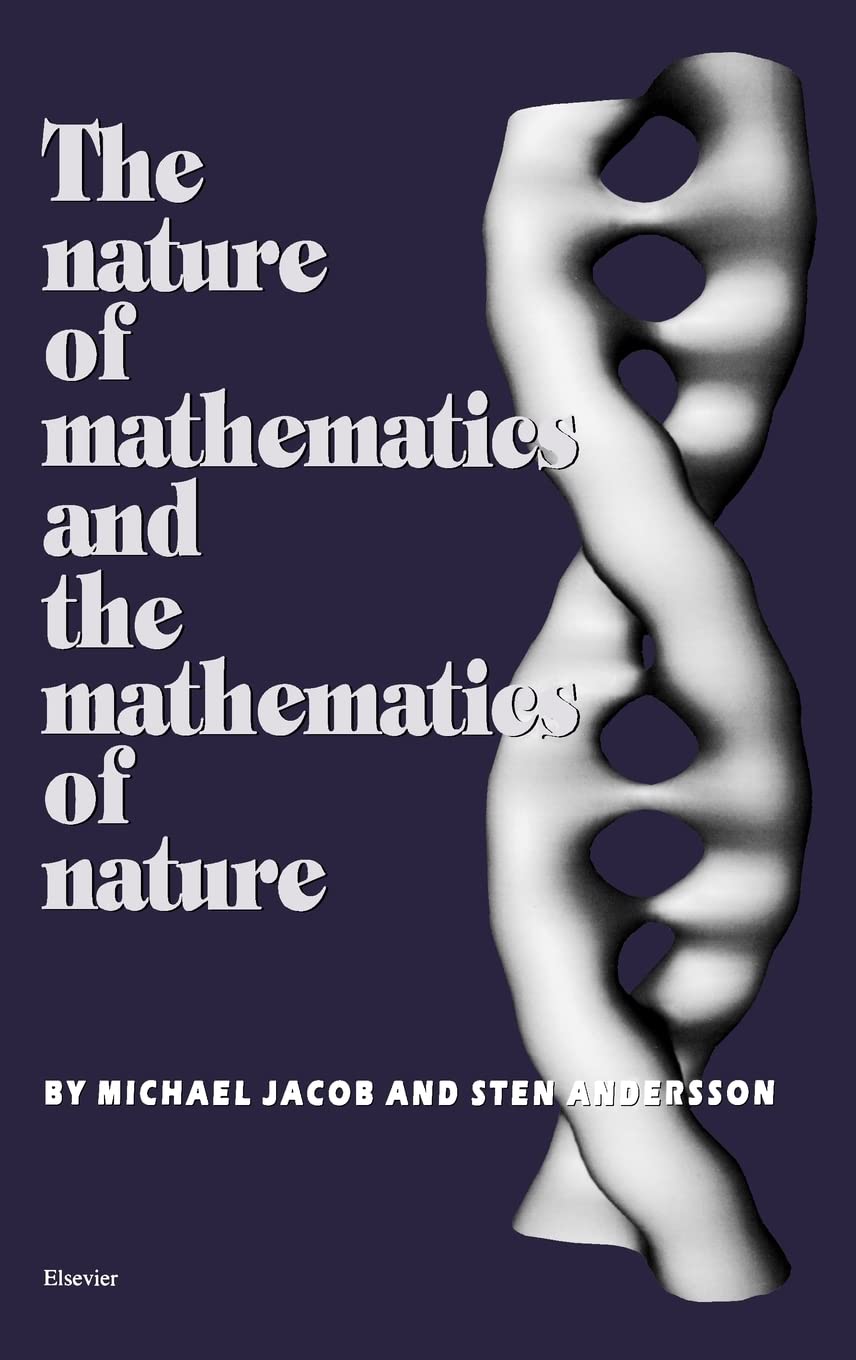
The Nature of Mathematics and the Mathematics of Nature by S. Andersson – Mathematics & Science

Science & Mathematics
Linear Algebra | by Stephen Friedberg | Arnold Insel | Lawrence Spence | Pearson | by Stephen Friedberg | Arnold Insel | Lawrence Spence | Pearson | by Stephen Friedberg | Arnold Insel | Lawrence Spence | Pearson | by Stephen Friedberg | Arnold Insel | Lawrence Spence | Pearson | by Stephen Friedberg | Arnold Insel | Lawrence Spence | Pearson | by Stephen Friedberg | Arnold Insel | Lawrence Spence | Pearson | by Stephen Friedberg | Arnold Insel | Lawrence Spence | Pearson | by Stephen Friedberg

Science & Mathematics