
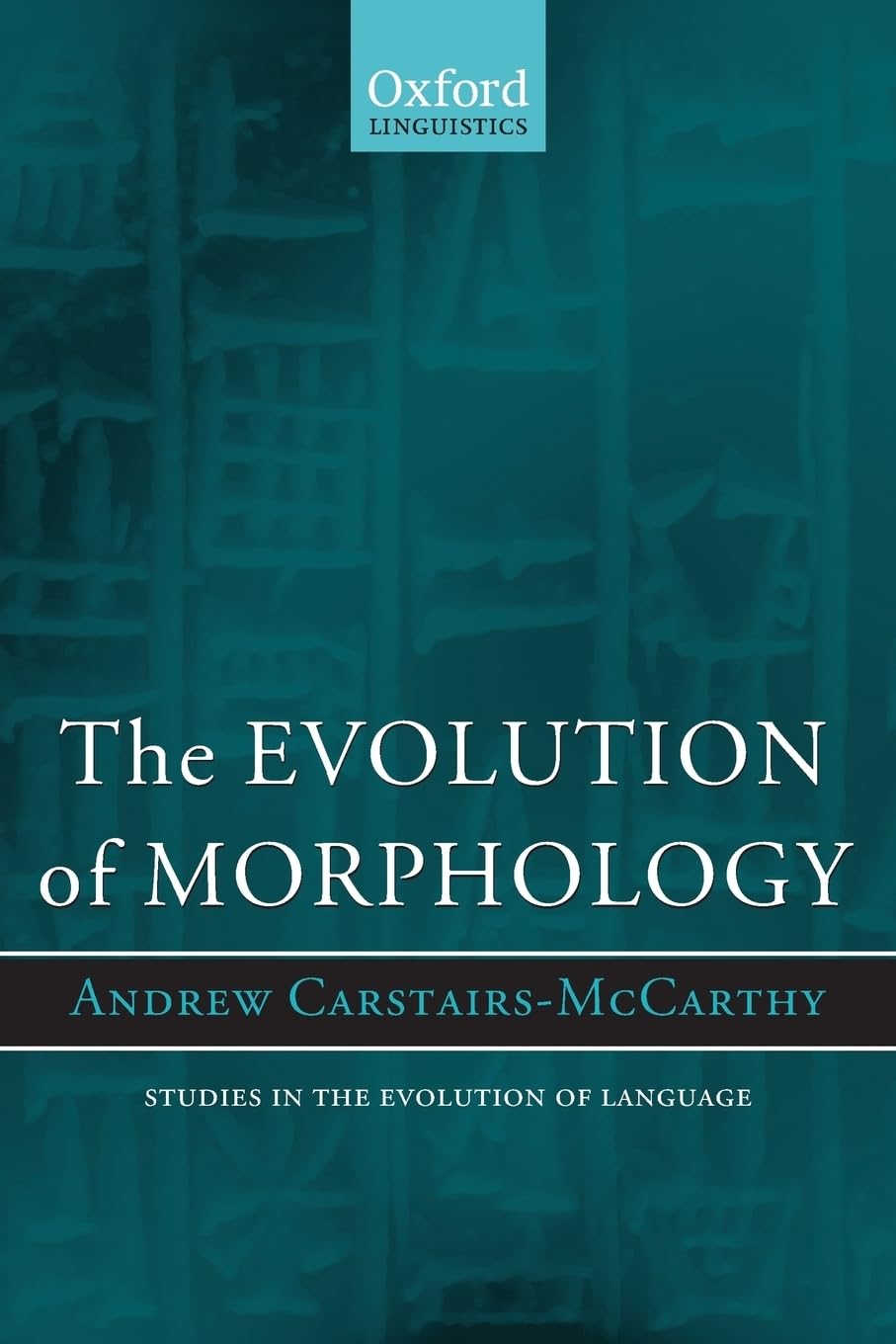
The Evolution of Morphology: Language Design and Grammatical Structure by Andrew Carstairs-McCarthy – A Comprehensive Li
Inclusive of all applicable taxes. FREE shipping on all orders.
Available Offers
- 🚚Free Delivery — Free shipping on all orders
- 💵Cash on Delivery — Pay when your order arrives
- ↩️15-Day Easy Returns — Hassle-free return policy
- 🔒Cash on Delivery — Pay safely when your order arrives
Check Delivery
Product Description
Introduction
Why does human language have grammar in the first place? And why is that grammar often messy, with irregular verbs, quirky plural forms, and baffling exceptions? In The Evolution of Morphology, Andrew Carstairs-McCarthy takes you on a thought-provoking journey through the deep past of language, asking not just how words are built, but why they are built the way they are. This book is a must-read for anyone curious about the origins of language, the nature of human cognition, and the surprising imperfections that make our communication system uniquely human.
Book Overview
Published by OUP Oxford, this hardcover volume challenges the common assumption that language is a perfectly designed tool for communication. Carstairs-McCarthy argues that, in fact, language—especially its morphological component (the structure of words)—shows signs of being less than optimal. By examining the evolution of morphology in the broader context of human evolution and the origins of language, the author demonstrates why conventional explanations for the nature of word structure fall short. He proposes that the 'poor design' features of morphology arise from two key characteristics present in the ancestors of modern humans, offering a fresh and compelling perspective on why our grammar is as complex and irregular as it is.
Key Highlights
- Challenges the 'optimal design' view of language – Argues that morphology is not perfectly adapted for communication.
- Explores the dual organization of grammar – Why syntax and morphology exist as two separate systems.
- Integrates biology and linguistics – Connects the evolution of word structure with human cognitive evolution.
- Critiques mainstream theories – Offers a rigorous evaluation of why natural selection and non-biological constraints cannot fully explain morphological complexity.
- Accessible yet scholarly – Written for advanced students and researchers, but remains engaging for anyone with a serious interest in language.
Inside the Book
The book is structured to first establish the problem: why does morphology exist at all, and why is it so messy? Carstairs-McCarthy begins by examining the concept of 'good design' in biology, using examples from the natural world to frame the discussion. He then turns to language, dissecting the one-form-one-meaning principle and showing how morphology repeatedly violates it. Through detailed analysis, he demonstrates that neither natural selection nor universal grammatical constraints can fully account for the quirks of word formation. Instead, he points to two ancestral traits—likely related to vocal learning and social cognition—that set the stage for the evolution of the complex, and often inefficient, morphological systems we see today.
Key Topics
- The nature of morphological complexity and irregularity
- Evolutionary constraints on language structure
- The relationship between syntax and morphology
- Biological analogies in linguistic evolution
- The one-form-one-meaning principle and its exceptions
- Origins of grammatical categories (tense, number, case, etc.)
- Phonological influences on morphological change
Reader Benefits
- Deepen your understanding of why languages have rules that often seem arbitrary.
- Gain a new perspective on the evolution of human cognition and communication.
- Engage with cutting-edge ideas in evolutionary linguistics without needing a PhD in biology.
- Strengthen your critical thinking about what makes language 'natural' or 'designed'.
- Enrich your academic work – Ideal for essays, research projects, and classroom discussions.
Learning Outcomes
After reading The Evolution of Morphology, you will be able to: critically evaluate the 'optimal design' hypothesis for language; explain why morphology and syntax are distinct but related systems; identify key weaknesses in traditional evolutionary accounts of language; connect biological evolution to linguistic structure; and articulate the role of ancestral traits in shaping modern grammar.
Who Should Read
- Linguistics students – especially those studying morphology, historical linguistics, or language evolution.
- Anthropologists and cognitive scientists – interested in the origins of human communication.
- Philosophy of language enthusiasts – who want to explore the deep questions about why language is the way it is.
- Indian academics and researchers – looking for a rigorous yet accessible text on evolutionary linguistics.
- Curious readers – who love to think about the big picture of human evolution and the quirks of everyday language.
About the Author
Andrew Carstairs-McCarthy is a distinguished linguist and professor emeritus at the University of Canterbury, New Zealand. He is widely recognized for his work on morphology, historical linguistics, and the evolution of language. His previous books, including Allomorphy in Inflexion and Current Morphology, have been influential in shaping modern understanding of word structure. In this book, he brings decades of expertise to bear on one of the most fascinating questions in human science: how did our grammar come to be?
About the Publisher
OUP Oxford is the academic publishing arm of Oxford University, one of the oldest and most respected university presses in the world. With a reputation for excellence in scholarly books, OUP Oxford ensures that every title meets the highest standards of research, clarity, and production quality. This hardcover edition is built to last, making it a valuable addition to any serious reader's library.
Conclusion
The Evolution of Morphology is not just a book about word endings and verb forms; it is a bold rethinking of why language works the way it does. By turning the lens of evolution on the very fabric of grammar, Andrew Carstairs-McCarthy offers insights that will change how you think about language forever. Whether you are a student, a researcher, or simply a lover of ideas, this book will challenge your assumptions and expand your horizons. Order your copy today from Bookshops.in and dive into the fascinating story of how our words came to be.
Quick Summary
The Evolution of Morphology by Andrew Carstairs-McCarthy is a scholarly exploration of how the grammatical structure of words evolved in the context of human language origins. The book challenges the widely held view that language is optimally designed for communication, arguing instead that the existence of two distinct grammatical systems—syntax and morphology—along with widespread morphological complexity, reveals significant design flaws. Carstairs-McCarthy examines these issues through the lenses of natural selection and non-biological constraints, offering a nuanced perspective on why language is structured the way it is. This work is intended for advanced students and researchers in linguistics, cognitive science, and anthropology who seek a deeper understanding of morphological theory and language evolution. Readers will gain critical insights into the interplay between biology and grammar, and learn to evaluate competing hypotheses about the origins of linguistic structure. By purchasing from Bookshops.in, Indian readers receive a high-quality hardcover edition with reliable delivery and customer support.
Book Highlights
Book Specifications
| ISBN-13 | 9780199202683 |
| ISBN-10 | 0199202680 |
| Publisher | Oxford Univ Pr on Demand |
| Language | English |
| Dimensions | 15.6 x 1.7 x 23.39 cm |
| Weight | 431 g |
| Category | Humanities › Language & Linguistics |
| Genre | Non-fiction |
| Original Language | English |
Frequently Asked Questions
What is the main argument of The Evolution of Morphology?
Who is the author of this book?
Is this book suitable for beginners in linguistics?
What topics does the book cover?
Does the book include cross-linguistic examples?
How does this book relate to human evolution?
What is the one-form-one-meaning principle?
Is the book technical?
Does the book discuss natural selection?
Can this book be used as a textbook?
What is the binding of the book?
Where can I buy this book in India?
Readers Also Search For
Customers Also Bought
Mathematics
Stereotype Spaces and Algebras: 73 (De Gruyter Expositions in Mathematics, 73)
Mathematics
Semigroups in Algebra, Geometry and Analysis: 20 (De Gruyter Expositions in Mathematics, 20)
Mathematics
Geometry from the Pacific Rim: Proceedings of the Pacific Rim Geometry Conference held at National University of Singapore, Republic of Singapore, ... 1994 (De Gruyter Proceedings in Mathematics)
Mathematics
First International Tainan-Moscow Algebra Workshop: Proceedings of the International Conference held at National Cheng Kung University Tainan, Taiwan, ... 1994 (De Gruyter Proceedings in Mathematics)
Mathematics
Differential Geometry - Proceedings of the VIII International Colloquium (English, Jesus A. Alvarez Lopez | Eduardo Garcia-Rio)
Mathematics
Mathematical Theory of Optimal Processes (Classics of Soviet Mathematics)
Related Products
View All
Science & Mathematics
Elements of Pelagos Biology: With Focus on the Mediterranean Sea

Science & Mathematics
Squid - Superconducting Quantum Interference Devices and Their Applications: Proceedings of the International Conference on Superconducting Quantum Devices, Berlin-west, October 4-8, 1976
Science & Mathematics
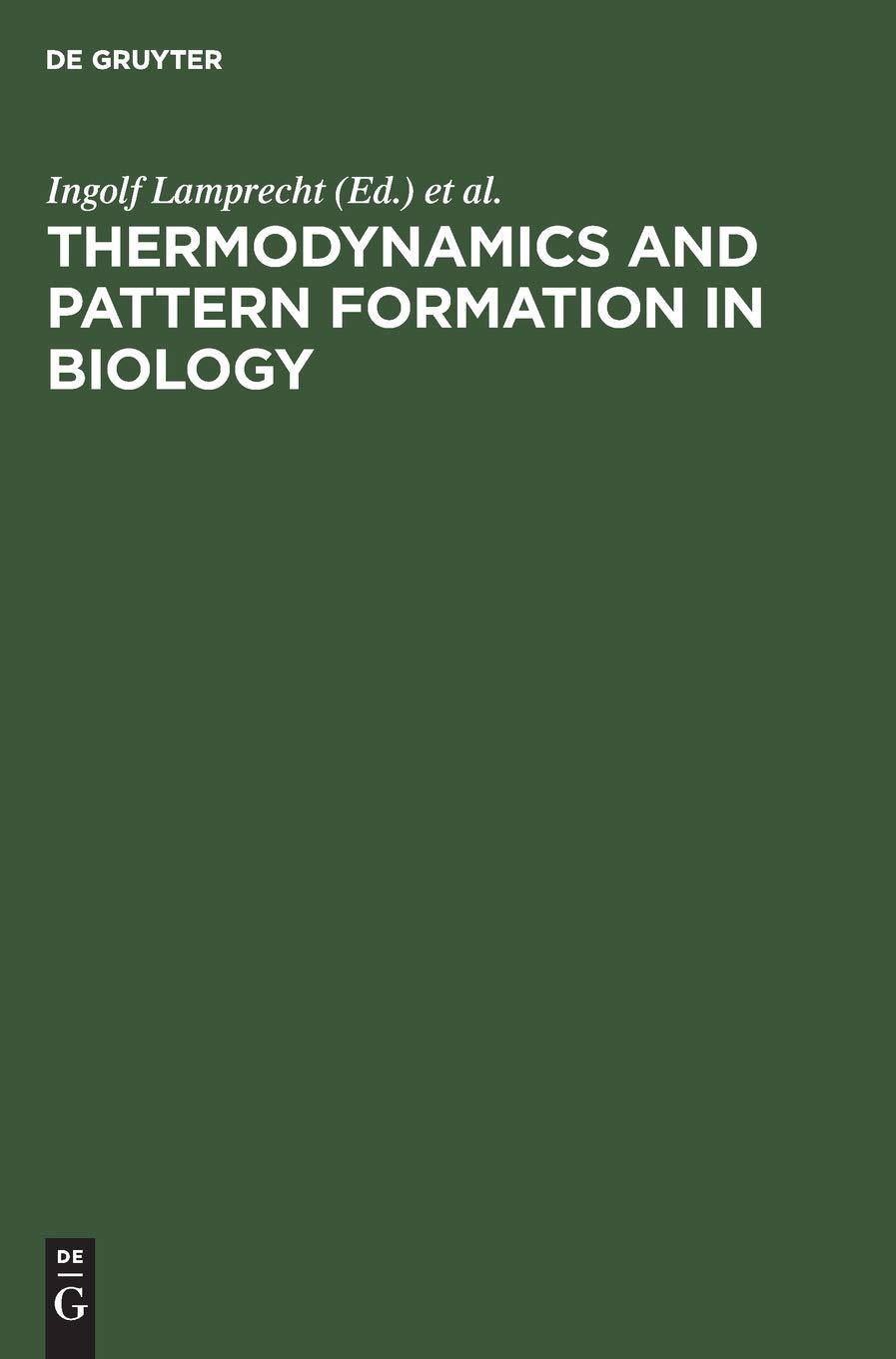
Thermodynamics and Pattern Formation in Biology
Science & Mathematics
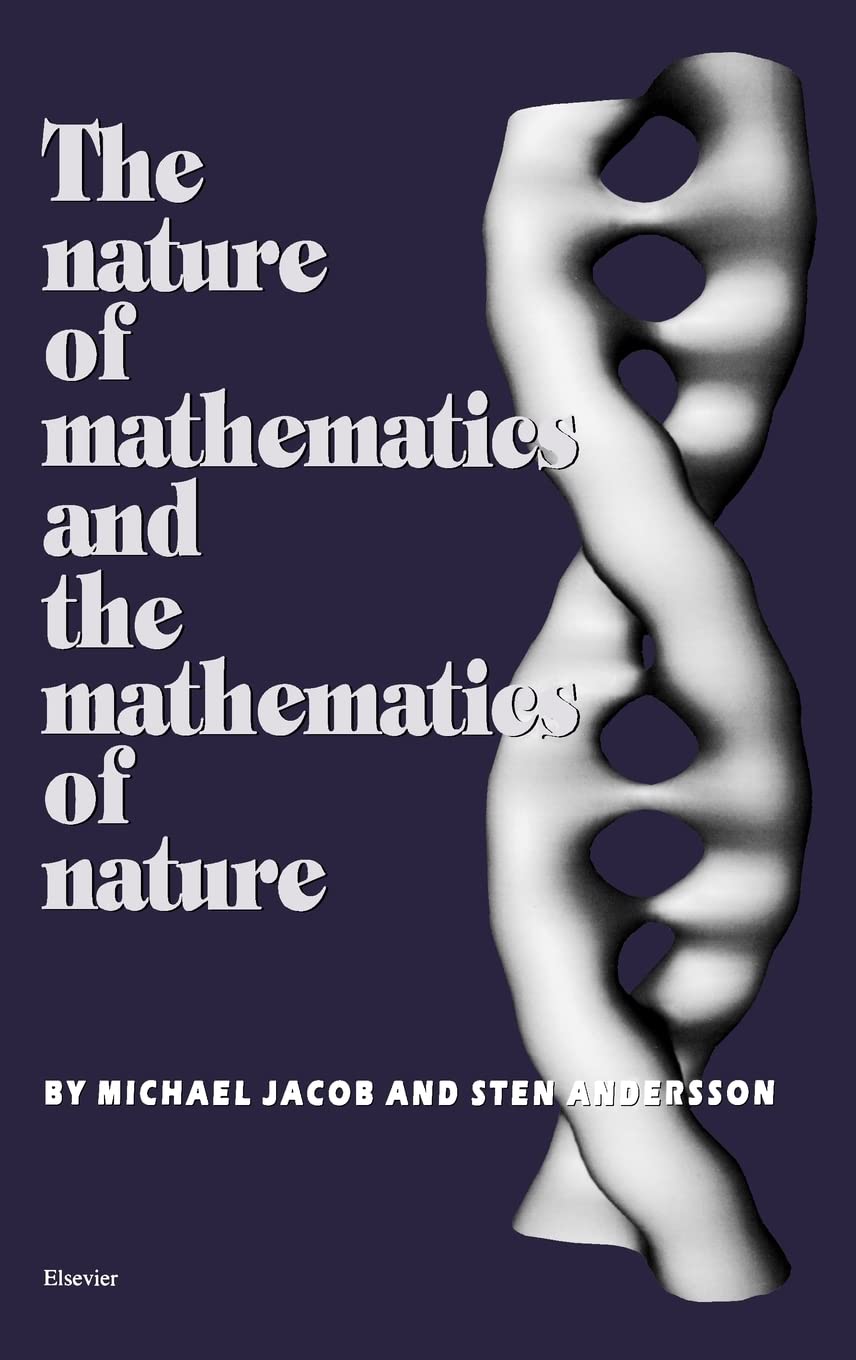
The Nature of Mathematics and the Mathematics of Nature by S. Andersson – Mathematics & Science

Science & Mathematics
Linear Algebra | by Stephen Friedberg | Arnold Insel | Lawrence Spence | Pearson | by Stephen Friedberg | Arnold Insel | Lawrence Spence | Pearson | by Stephen Friedberg | Arnold Insel | Lawrence Spence | Pearson | by Stephen Friedberg | Arnold Insel | Lawrence Spence | Pearson | by Stephen Friedberg | Arnold Insel | Lawrence Spence | Pearson | by Stephen Friedberg | Arnold Insel | Lawrence Spence | Pearson | by Stephen Friedberg | Arnold Insel | Lawrence Spence | Pearson | by Stephen Friedberg
Science & Mathematics