
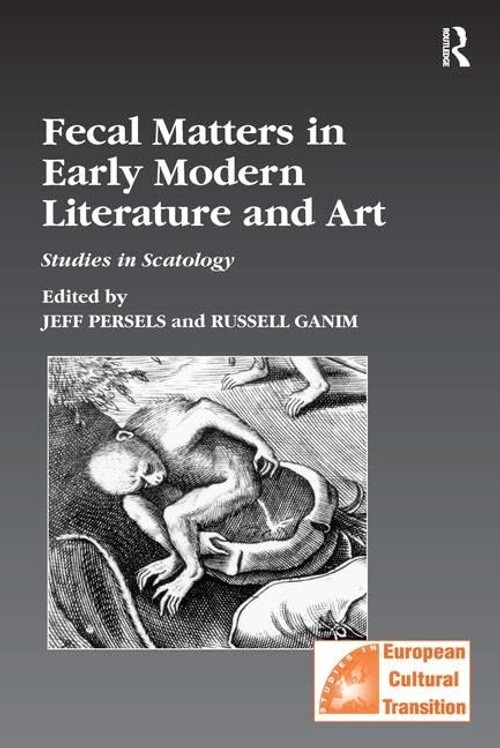
Fecal Matters in Early Modern Literature and Art: Studies in Scatology by Jeff Persels – A Critical Examination of Bodil
Inclusive of all applicable taxes. FREE shipping on all orders.
Available Offers
- 🚚Free Delivery — Free shipping on all orders
- 💵Cash on Delivery — Pay when your order arrives
- ↩️15-Day Easy Returns — Hassle-free return policy
- 🔒Cash on Delivery — Pay safely when your order arrives
Check Delivery
Product Description
Introduction
In the vast landscape of Early Modern European literature and art, few topics have been as deliberately overlooked as the role of scatology. Yet, from Rabelais to Shakespeare, from Bruegel to Bosch, bodily functions were not merely mentioned but celebrated, satirized, and philosophized. Fecal Matters in Early Modern Literature and Art: Studies in Scatology, edited by Jeff Persels and published by Routledge, offers a groundbreaking academic exploration of this neglected but richly significant subject. This hardcover volume invites readers to reconsider the cultural, literary, and artistic weight of excrement, urine, flatus, and vomitus in the Renaissance and beyond.
Book Overview
This collection of essays fills a curious lacuna in scholarly discourse: the relative neglect of scatological rhetoric in Early Modern Europe. The book examines how the process and product of bodily waste elimination were represented, both as objective material reality and as subjective experience. The contributors address the ubiquity of scatological references in works of literature, painting, and drama, arguing that these elements were integral to the period’s understanding of the human condition. Rather than shying away from the topic, the volume confronts it with scholarly rigor, revealing how feces and other waste products served as metaphors for mortality, corruption, fertility, and social hierarchy.
Key Highlights
- Interdisciplinary Approach: Combines literary analysis, art history, and cultural studies to provide a holistic view of scatology in the Early Modern period.
- Diverse Contributors: Features essays from leading scholars who examine works by Rabelais, Swift, Shakespeare, and visual artists like Bruegel and Bosch.
- Original Research: Each chapter presents fresh insights into how bodily waste was used as a rhetorical and artistic trope, challenging modern sensibilities.
- Historical Context: Places scatological references within the broader material culture of Early Modern Europe, where waste management was a daily reality.
- Critical Reappraisal: Reconsiders the last taboo in Western scholarship, arguing for its centrality in understanding Renaissance thought.
Story Themes
The book explores several interconnected themes. First, it examines the materiality of waste—how feces, urine, and other excretions were part of everyday life in cities without modern sanitation, and how this reality shaped literary and artistic expression. Second, the volume investigates scatology as satire, where bodily functions were used to mock authority, religion, and social pretensions. Third, it delves into theological and philosophical dimensions, such as the association of excrement with sin, death, and the fragility of the human body. Finally, the essays consider gender and class, showing how scatological references often reinforced or subverted social hierarchies.
Reader Benefits
- Academic Depth: Gain access to rigorous scholarship that challenges conventional readings of canonical texts and artworks.
- Cultural Insight: Understand how Early Modern Europeans viewed the body, health, and the environment in ways vastly different from today.
- Critical Thinking: Develop a nuanced perspective on why taboo subjects were openly discussed and how they can illuminate historical mindsets.
- Literary Enrichment: Discover new layers of meaning in works by Rabelais, Shakespeare, and other masters, enhancing your appreciation of their genius.
- Art Historical Value: Learn to interpret scatological imagery in paintings and prints, revealing hidden commentaries on politics, religion, and mortality.
Who Should Read
This book is ideal for students and scholars of Early Modern literature, art history, and cultural studies who seek to explore unconventional yet vital topics. It is also valuable for advanced undergraduates and postgraduate researchers looking for fresh theoretical frameworks. Additionally, general readers with an interest in Renaissance history, the history of medicine, or the sociology of taboo will find the essays accessible and thought-provoking. Librarians and collectors of academic works on European culture will consider this a necessary addition to their shelves.
About the Author
Jeff Persels is a distinguished scholar of Early Modern French literature and culture. He has published extensively on Rabelais, Montaigne, and the intersection of literature with medicine and the body. His editorial work has brought together leading voices in the field, making him a key figure in the study of scatological rhetoric. Persels teaches at the University of South Carolina, where he continues to challenge students to confront the less savory aspects of the past with intellectual curiosity.
About the Publisher
Routledge is a world-renowned academic publisher, part of the Taylor & Francis Group. With a history dating back to the 19th century, Routledge is celebrated for its rigorous peer-review process and its commitment to publishing cutting-edge research in the humanities and social sciences. This volume exemplifies their dedication to exploring niche but important topics, ensuring that scholars and students have access to comprehensive, authoritative works.
Conclusion
Fecal Matters in Early Modern Literature and Art: Studies in Scatology is a daring and essential contribution to Renaissance studies. By bringing scatology out of the scholarly shadows, Jeff Persels and his contributors reveal how deeply bodily waste was woven into the fabric of Early Modern life and thought. For anyone seeking to understand the full spectrum of human expression—from the sublime to the scatological—this hardcover volume is an eye-opening and intellectually rewarding read. Add it to your collection today and see the past in a startling new light.
Quick Summary
Fecal Matters in Early Modern Literature and Art: Studies in Scatology, edited by Jeff Persels, is a groundbreaking scholarly collection that examines the pervasive use of bodily waste—feces, urine, flatus, phlegm, and vomitus—as literary and artistic tropes in Early Modern Europe. Unlike modern sensibilities, Renaissance writers and artists freely employed scatological references for satire, moral commentary, and grotesque humor. The volume brings together essays from leading academics who analyze works by Rabelais, Swift, Erasmus, and others, situating scatology within the medical, religious, and social contexts of the time. Readers will gain a deep understanding of how the body and its functions were central to early modern expression, challenging contemporary taboos. This book is ideal for postgraduate students and researchers in English literature, art history, cultural studies, and historical anthropology. By purchasing from Bookshops.in, Indian scholars receive a premium hardcover edition with fast delivery and reliable service, perfect for university libraries and personal collections.
Book Highlights
Book Specifications
| ISBN-13 | 9780754641162 |
| ISBN-10 | 0754641163 |
| Publisher | Ashgate Pub Ltd |
| Language | English |
| Dimensions | 15.88 x 1.91 x 23.5 cm |
| Weight | 476 g |
| Country | India |
| Category | Special Topics › History |
| Genre | Literary Criticism |
| Reading Age | Adult |
| Original Language | English |
Frequently Asked Questions
What is the main subject of this book?
Who edited this collection?
Which authors and artists are discussed?
Is this book suitable for undergraduate students?
Does the book include illustrations?
How does this book relate to Bakhtin's theory?
What time period does 'Early Modern' cover?
Why is this book relevant today?
Can Indian students benefit from this book?
Is this a hardcover or paperback?
Does the book cover Swift's 'Gulliver's Travels'?
Are there any Indian perspectives in this book?
Where can I buy this in India?
Readers Also Search For
Related Products
View All
Literature & Fiction
Shakespeare, Madness, and Music: Scoring Insanity in Cinematic Adaptations
Literature & Fiction
Literary Research and Canadian Literature: Strategies and Sources: 10 (Literary Research: Strategies and Sources, 10)

Literature & Fiction
Crime Fiction and National Identities in the Global Age | by Julie H. Kim | McFarland & Company | by Julie H. Kim | McFarland & Company | by Julie H. Kim | McFarland & Company | by Julie H. Kim | McFarland & Company | by Julie H. Kim | McFarland & Company | by Julie H. Kim | McFarland & Company | by Julie H. Kim | McFarland & Company | by Julie H. Kim | McFarland & Company | by Julie H. Kim | McFarland & Company | by Julie H. Kim | McFarland & Company | by

Literature & Fiction
The Irregular at Magic High School by Tsutomu Sato
Literature & Fiction
Greek Literature and Philosophy (Greek Literature, Volume 6)
Literature & Fiction