

Finite Element and Boundary Element Applications in Quantum Mechanics by Ramdas Ram-Mohan – Numerical Methods for Quantu
Inclusive of all applicable taxes. FREE shipping on all orders.
Available Offers
- 🚚Free Delivery — Free shipping on all orders
- 💵Cash on Delivery — Pay when your order arrives
- ↩️15-Day Easy Returns — Hassle-free return policy
- 🔒Cash on Delivery — Pay safely when your order arrives
Check Delivery
Product Description
Introduction
Quantum mechanics, the bedrock of modern physics, has evolved far beyond textbook problems. Today, researchers and engineers routinely simulate quantum nanoscale devices, explore novel materials, and push the boundaries of computation. Yet, the mathematical complexity of quantum systems often demands advanced computational tools. Finite Element and Boundary Element Applications in Quantum Mechanics by Ramdas Ram-Mohan bridges this gap, offering a rigorous yet accessible guide to applying powerful numerical methods — finite element (FEM) and boundary element (BEM) techniques — to quantum problems. Published by OUP Oxford, this hardcover volume is an indispensable resource for Indian students, physicists, and engineers seeking to master simulation-driven quantum analysis.
Book Overview
This book systematically introduces FEM and BEM, originally developed for engineering, and adapts them to quantum mechanics. Starting from fundamental principles, Ram-Mohan demonstrates how these methods solve Schrödinger’s equation, model potential wells, barriers, and periodic structures, and simulate quantum devices like resonant tunneling diodes and quantum dots. The text blends theory with practical application, making it ideal for both self-study and classroom use. With clear derivations, illustrative examples, and a focus on real-world quantum nanoscale design, this volume equips readers to tackle problems that analytical methods cannot solve.
Key Highlights
- First-of-its-kind integration: Uniquely applies FEM and BEM to quantum mechanics, moving beyond traditional engineering contexts.
- Engineering-to-quantum translation: Adapts proven numerical techniques for quantum wavefunction analysis and eigenvalue problems.
- Device simulation focus: Emphasizes design and simulation of quantum nanoscale devices — essential for cutting-edge research in India’s growing semiconductor and nanotechnology sectors.
- Illustrative examples: Includes worked-out problems ranging from simple potentials to complex heterostructures.
- Authoritative publisher: Published by OUP Oxford, ensuring high editorial and academic standards.
Inside the Book
The book is structured to guide readers from foundational concepts to advanced applications. Early chapters introduce the variational formulation of quantum mechanics and the finite element discretization process. Subsequent chapters cover boundary element methods, time-independent and time-dependent problems, and the treatment of open quantum systems. Special attention is given to band structure calculations, quantum wires, and quantum dots. Each chapter concludes with exercises that reinforce learning, and the appendices provide essential mathematical background, including shape functions and numerical integration schemes.
Key Topics
- Variational principles in quantum mechanics
- Finite element formulation for the Schrödinger equation
- Boundary element methods for quantum scattering
- Eigenvalue problems in 1D, 2D, and 3D
- Simulation of quantum wells, barriers, and superlattices
- Quantum nanoscale device design (resonant tunneling, quantum dots)
- Time-dependent quantum systems
- Band structure engineering for semiconductors
Reader Benefits
Readers gain a dual advantage: a deep understanding of quantum mechanics and practical computational skills. By mastering FEM and BEM, you can simulate systems that are analytically intractable. This book helps you develop intuition for numerical accuracy, mesh design, and convergence. Indian students will find the examples relevant to national research priorities in quantum computing, materials science, and nanoelectronics. The hardcover format ensures durability for frequent reference.
Learning Outcomes
- Understand the mathematical foundations of FEM and BEM in a quantum context
- Implement numerical solutions for the time-independent and time-dependent Schrödinger equations
- Analyze and design quantum nanoscale devices using simulation
- Interpret eigenvalue spectra and wavefunctions from numerical models
- Apply boundary conditions and mesh refinement strategies effectively
- Bridge the gap between theoretical quantum mechanics and computational practice
Who Should Read
This book is ideal for postgraduate students in physics, applied mathematics, and electrical engineering, particularly those specializing in quantum mechanics, computational physics, or nanoelectronics. Researchers in Indian institutes (IITs, IISc, NITs, and central universities) working on quantum device simulation will find it invaluable. Advanced undergraduates with a solid background in quantum mechanics and basic programming will also benefit. Professionals in the semiconductor and nanotechnology industries seeking to upgrade their simulation skills will appreciate the practical focus.
About the Author
Ramdas Ram-Mohan is a distinguished physicist and professor known for his pioneering work in computational quantum mechanics. With decades of experience at the intersection of physics and engineering, he has developed numerical methods that are now standard in quantum device simulation. His clear exposition and pedagogical approach make complex topics accessible, and his research contributions have been recognized internationally. This book reflects his commitment to equipping the next generation of scientists with powerful computational tools.
About the Publisher
Oxford University Press (OUP) is a world-renowned academic publisher with a strong presence in India. OUP Oxford titles are synonymous with rigorous peer review, authoritative content, and high-quality production. This hardcover edition upholds those standards, offering durable binding and crisp typography — ideal for a reference that will be consulted repeatedly. OUP’s commitment to advancing knowledge aligns perfectly with the book’s mission to empower quantum researchers.
Conclusion
Finite Element and Boundary Element Applications in Quantum Mechanics is more than a textbook; it is a gateway to modern quantum simulation. Ramdas Ram-Mohan’s masterful synthesis of engineering methods and quantum theory provides a practical toolkit for anyone serious about understanding and designing quantum systems. Whether you are a student embarking on research or a professional pushing the boundaries of nanoelectronics, this book will elevate your computational capabilities. Order your copy from Bookshops.in today and take a decisive step toward mastering quantum mechanics with numerical power.
Quick Summary
Finite Element and Boundary Element Applications in Quantum Mechanics by Ramdas Ram-Mohan is a comprehensive guide that introduces engineering numerical methods—finite element and boundary element techniques—for solving quantum mechanical problems. Designed for Indian graduate students and researchers, the book starts with a clear, concise introduction and progresses to advanced applications in quantum nanoscale device design and simulation. Readers will learn how to apply FEM and BEM to fundamental quantum systems, including quantum wells and quantum dots, and gain practical skills for computational physics. The author, a leading expert, uses illustrative examples to bridge theory and practice, making complex concepts accessible. This hardcover edition from OUP Oxford is ideal for those pursuing careers in nanotechnology, quantum computing, or computational physics. By purchasing from Bookshops.in, Indian customers benefit from reliable service, competitive pricing, and a trusted platform for academic books.
Book Highlights
Book Specifications
| ISBN-13 | 9780198525226 |
| ISBN-10 | 0198525222 |
| Publisher | Oxford Univ Pr on Demand |
| Language | English |
| Dimensions | 15.24 x 3.58 x 23.5 cm |
| Weight | 862 g |
| Category | Mechanical Engineering › Material Science & Engineering |
| Genre | Non-fiction |
| Reading Age | Adult |
| Original Language | English |
Frequently Asked Questions
What is this book about?
Who is the author?
Is this book suitable for beginners?
Which topics are covered?
Can engineering students use this book?
Is it available in hardcover?
What is the ISBN?
Does it include exercises?
Is this book used in Indian universities?
How is this book different from standard quantum mechanics texts?
What prior knowledge is required?
Can I use it for self-study?
Does it cover boundary element methods in detail?
Where can I buy this book in India?
Readers Also Search For
Customers Also Bought
Mathematics
Stereotype Spaces and Algebras: 73 (De Gruyter Expositions in Mathematics, 73)
Mathematics
Semigroups in Algebra, Geometry and Analysis: 20 (De Gruyter Expositions in Mathematics, 20)
Mathematics
Geometry from the Pacific Rim: Proceedings of the Pacific Rim Geometry Conference held at National University of Singapore, Republic of Singapore, ... 1994 (De Gruyter Proceedings in Mathematics)
Mathematics
First International Tainan-Moscow Algebra Workshop: Proceedings of the International Conference held at National Cheng Kung University Tainan, Taiwan, ... 1994 (De Gruyter Proceedings in Mathematics)
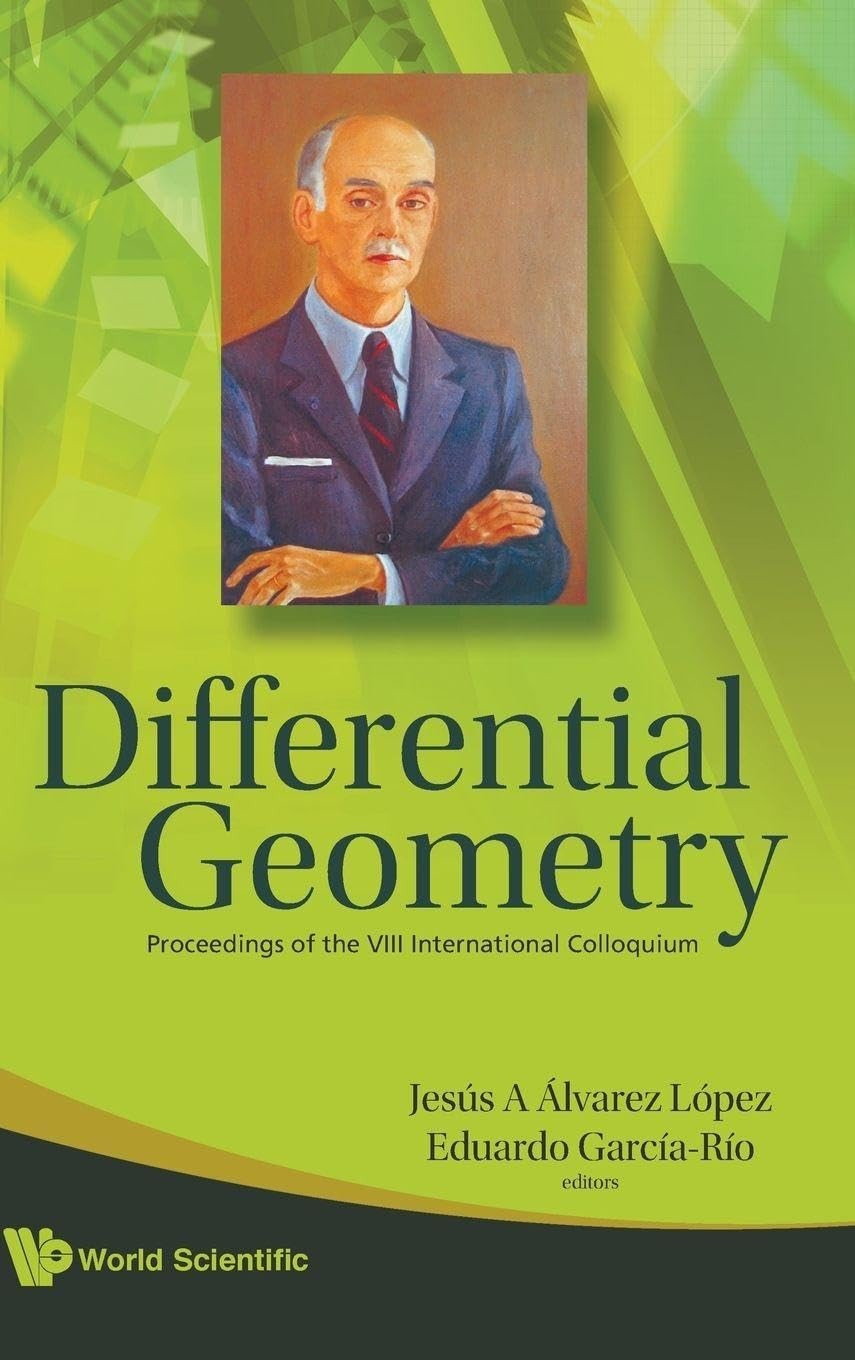
Mathematics
Differential Geometry - Proceedings of the VIII International Colloquium (English, Jesus A. Alvarez Lopez | Eduardo Garcia-Rio)
Mathematics
Mathematical Theory of Optimal Processes (Classics of Soviet Mathematics)
Related Products
View All
Science & Mathematics
Squid - Superconducting Quantum Interference Devices and Their Applications: Proceedings of the International Conference on Superconducting Quantum Devices, Berlin-west, October 4-8, 1976
Science & Mathematics
Thermodynamics and Pattern Formation in Biology
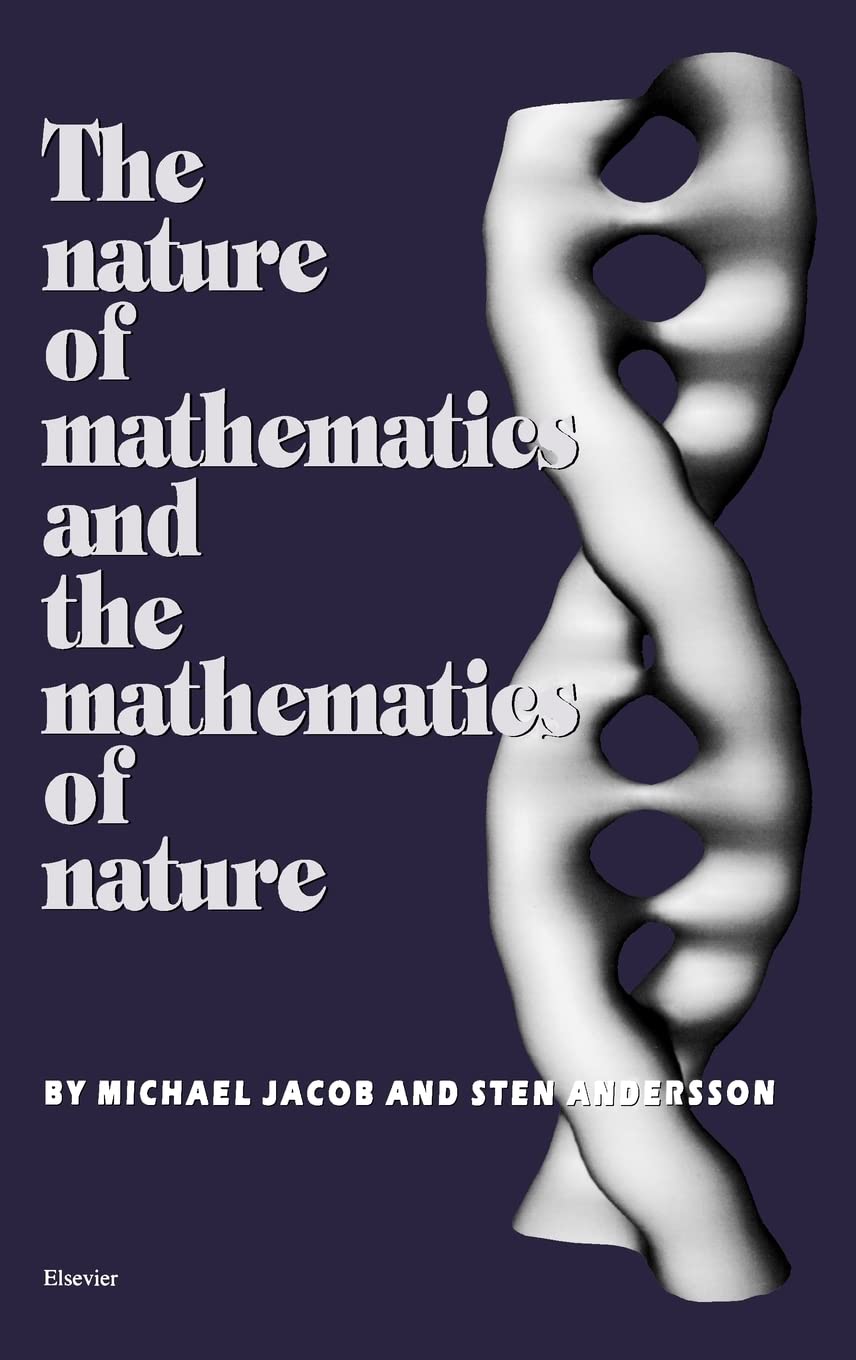
Science & Mathematics
The Nature of Mathematics and the Mathematics of Nature by S. Andersson – Mathematics & Science

Science & Mathematics
Linear Algebra | by Stephen Friedberg | Arnold Insel | Lawrence Spence | Pearson | by Stephen Friedberg | Arnold Insel | Lawrence Spence | Pearson | by Stephen Friedberg | Arnold Insel | Lawrence Spence | Pearson | by Stephen Friedberg | Arnold Insel | Lawrence Spence | Pearson | by Stephen Friedberg | Arnold Insel | Lawrence Spence | Pearson | by Stephen Friedberg | Arnold Insel | Lawrence Spence | Pearson | by Stephen Friedberg | Arnold Insel | Lawrence Spence | Pearson | by Stephen Friedberg
Science & Mathematics
University Calculus | by Joel Hass | Christopher Heil | Maurice Weir | Pearson | by Joel Hass | Christopher Heil | Maurice Weir | Pearson | by Joel Hass | Christopher Heil | Maurice Weir | Pearson | by Joel Hass | Christopher Heil | Maurice Weir | Pearson | by Joel Hass | Christopher Heil | Maurice Weir | Pearson | by Joel Hass | Christopher Heil | Maurice Weir | Pearson | by Joel Hass | Christopher Heil | Maurice Weir | Pearson | by Joel Hass | Christopher Heil | Maurice Weir | Pearson | by Joe

Science & Mathematics