

Genetic Data Analysis II: Methods for Discrete Population Genetic Data by Bruce S. Weir – A Statistical Genetics Textboo
Inclusive of all applicable taxes. FREE shipping on all orders.
Available Offers
- 🚚Free Delivery — Free shipping on all orders
- 💵Cash on Delivery — Pay when your order arrives
- ↩️15-Day Easy Returns — Hassle-free return policy
- 🔒Cash on Delivery — Pay safely when your order arrives
Check Delivery
Product Description
Introduction
For students and researchers navigating the complex world of population genetics, having a reliable mathematical foundation is essential. Genetic Data Analysis II: Methods for Discrete Population Genetic Data by Bruce S. Weir stands as a definitive resource for understanding and applying statistical methods to discrete genetic data. This hardcover edition, published by Sinauer Associates (an imprint of Oxford University Press), builds upon the classic 1990 volume, incorporating user feedback and cutting-edge developments. Whether you are a postgraduate student in India or a practising biologist, this book equips you with the tools to analyse genetic variation with precision.
Book Overview
This second edition retains the rigorous approach of its predecessor while expanding into new territories. The book systematically covers the analysis of discrete genetic data—such as allele frequencies, genotype counts, and molecular markers—using sound statistical principles. With revised chapters, new material on linkage and individual identification, and an enhanced set of exercises, it bridges theory and practical application. The accompanying Windows-based programs (by Paul O. Lewis and Dmitri Zaykin) further empower readers to implement methods directly.
Key Highlights
- Updated Chapter on Phylogeny Reconstruction: Incorporates modern methods for building evolutionary trees.
- New Chapters on Linkage and Individual Identification: Addresses contemporary needs in forensic genetics and genome mapping.
- Expanded Exercises with Solutions: Over 100 problems with worked answers to reinforce learning.
- Comprehensive Reference List: Hundreds of citations to primary literature for deeper study.
- Windows-Based Software Suite: Practical tools for performing analyses covered in the book.
Inside the Book
The text is organised into twelve chapters, each building logically on the previous. Beginning with basic probability and statistics, it moves through gene frequency estimation, Hardy–Weinberg equilibrium testing, linkage disequilibrium, population subdivision, and finally phylogeny reconstruction and individual identification. Every concept is illustrated with real-world examples from human, animal, and plant populations. The writing is clear and mathematical without being opaque, making it accessible to those with a solid undergraduate background in statistics or genetics.
Key Topics
- Probability models for genetic data
- Estimation of allele and genotype frequencies
- Testing for Hardy–Weinberg equilibrium
- Measures of genetic diversity and differentiation
- Linkage disequilibrium and association mapping
- Population structure and F-statistics
- Phylogeny reconstruction methods (parsimony, distance, likelihood)
- Individual identification and forensic applications
Reader Benefits
- Master Statistical Rigour: Move beyond black-box software to understand the mathematics behind genetic analysis.
- Solve Real Problems: Work through exercises that mirror actual research challenges.
- Stay Current: Benefit from the latest methods in phylogenetics and linkage analysis.
- Build a Strong Foundation: Ideal for self-study or as a textbook for advanced courses.
- Practical Implementation: Use the included software to apply methods to your own data.
Learning Outcomes
After studying this book, readers will be able to: estimate genetic parameters from discrete data with confidence; test hypotheses about population genetic processes; interpret measures of population differentiation; construct and evaluate phylogenetic trees; and apply methods for individual identification and parentage analysis. The skills gained are directly transferable to fields such as conservation genetics, plant and animal breeding, human genetics, and evolutionary biology.
Who Should Read
- Graduate Students in genetics, bioinformatics, evolutionary biology, and statistics.
- Researchers in population genetics, conservation biology, and forensic science.
- Lecturers designing courses in genetic data analysis.
- Bioinformatics Professionals seeking a deeper understanding of discrete data methods.
- Indian Students preparing for competitive exams or research in genomics and breeding.
About the Author
Bruce S. Weir is a distinguished geneticist and Professor of Biostatistics at the University of Washington. A pioneer in statistical genetics, he has authored over 300 research articles and several seminal books. His work on F-statistics, population structure, and forensic DNA analysis has shaped modern genetics. Dr. Weir’s ability to communicate complex mathematical ideas with clarity makes this book a trusted companion for learners worldwide.
About the Publisher
Sinauer Associates, an imprint of Oxford University Press, is renowned for publishing high-quality textbooks and reference works in biology and genetics. With a legacy spanning decades, Sinauer titles are known for their authoritative content, rigorous peer review, and exceptional production standards. This partnership ensures that Genetic Data Analysis II meets the highest academic benchmarks.
Conclusion
Genetic Data Analysis II remains an indispensable guide for anyone working with discrete population genetic data. Its blend of theory, practical exercises, and software support makes it a complete learning package. Available now in hardcover from Bookshops.in, this is a long-term investment in your statistical and genetic literacy. Add it to your library today and gain the skills to analyse genetic variation with confidence.
Quick Summary
Genetic Data Analysis II by Bruce S. Weir is a definitive textbook for interpreting discrete population genetic data, published by Sinauer Associates, an imprint of Oxford University Press. Building on the success of the first edition, this revised volume includes updated methods for phylogeny reconstruction, new chapters on linkage analysis and individual identification, and an expanded set of exercises with solutions. The book is designed for graduate students, researchers, and professionals in genetics, bioinformatics, and evolutionary biology who need rigorous statistical tools to analyze genetic variation in populations. Readers will learn to apply techniques for gene flow estimation, genetic distance calculation, population structure analysis, and more. The included Windows-based software by Paul O. Lewis and Dmitri Zaykin provides hands-on practice. Choosing Bookshops.in ensures you receive a genuine hardcover edition with fast delivery across India, backed by excellent customer service and competitive pricing.
Book Highlights
Book Specifications
| ISBN-13 | 9780878939022 |
| ISBN-10 | 0878939024 |
| Publisher | OUP USA |
| Language | English |
| Dimensions | 22.61 x 2.54 x 14.99 cm |
| Weight | 635 g |
| Category | Basic Sciences › Genetics |
| Genre | Non-fiction |
| Original Language | English |
Frequently Asked Questions
What is Genetic Data Analysis II about?
Who is the author of Genetic Data Analysis II?
Does the book include exercises?
Is software included with the book?
What are the new chapters in this edition?
Is this book suitable for beginners?
What is the language of the book?
What is the ISBN-13?
What is the price in India?
Can I use this book for a population genetics course?
Does the book cover phylogeny reconstruction?
What type of genetic data does the book focus on?
Where can I buy this book in India?
Readers Also Search For
Customers Also Bought

Anatomy
Ultrastructure of the Digestive Tract: 4 (Electron Microscopy in Biology and Medicine)

Anatomy
Ultrastructure of the Connective Tissue Matrix: 3 (Electron Microscopy in Biology and Medicine)

Anatomy
Reproductive Genetics (Royal College of Obstetricians and Gynaecologists Study Group)

Anatomy
Human Gross Anatomy: An Outline Text by Robert J. Leonard – Medical Anatomy

Pharmacology
Mathematical Modeling and Simulation in Enteric Neurobiology

Anatomy
Nature’s Patterns and the Fractional Calculus: 2 (Fractional Calculus in Applied Sciences and Engineering, 2)
Related Products
View All
Medicine & Health Sciences
Handbook of Hospitality Strategic Management | by Olsen Michael | Taylor & Francis Ltd | by Olsen Michael | Taylor & Francis Ltd | by Olsen Michael | Taylor & Francis Ltd | by Olsen Michael | Taylor & Francis Ltd | by Olsen Michael | Taylor & Francis Ltd | by Olsen Michael | Taylor & Francis Ltd | by Olsen Michael | Taylor & Francis Ltd | by Olsen Michael | Taylor & Francis Ltd | by Olsen Michael | Taylor & Francis Ltd | by Olsen Michael | Taylor & Francis

Medicine & Health Sciences
Pediatrics on Call | by Charles A. Pohl | Kathleen Bradford | Clara Callahan | McGraw Hill / Medical | by Charles A. Pohl | Kathleen Bradford | Clara Callahan | McGraw Hill / Medical | by Charles A. Pohl | Kathleen Bradford | Clara Callahan | McGraw Hill / Medical | by Charles A. Pohl | Kathleen Bradford | Clara Callahan | McGraw Hill / Medical | by Charles A. Pohl | Kathleen Bradford | Clara Callahan | McGraw Hill / Medical | by Charles A. Pohl | Kathleen Bradford | Clara Callahan | McGraw Hill

Medicine & Health Sciences
The Physician's Guide to Depression and Bipolar Disorders | by Dwight L. Evans | Dennis S. Charney | Lydia Lewis | McGraw Hill / Medical | by Dwight L. Evans | Dennis S. Charney | Lydia Lewis | McGraw Hill / Medical | by Dwight L. Evans | Dennis S. Charney | Lydia Lewis | McGraw Hill / Medical | by Dwight L. Evans | Dennis S. Charney | Lydia Lewis | McGraw Hill / Medical | by Dwight L. Evans | Dennis S. Charney | Lydia Lewis | McGraw Hill / Medical | by Dwight L. Evans | Dennis S. Charney | Lydi
Medicine & Health Sciences
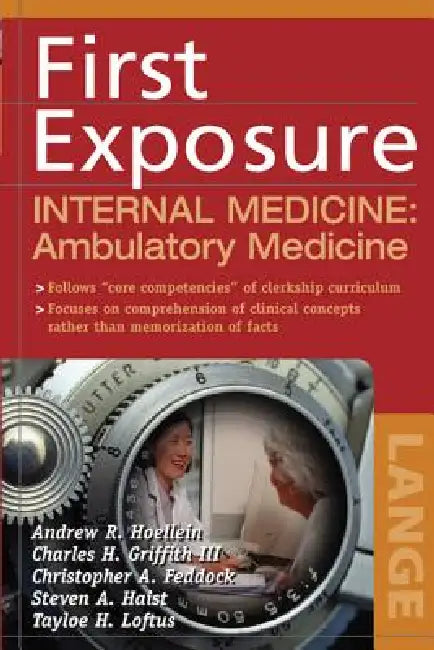
First Exposure to Internal Medicine | by Andrew R. Hoellein | Charles H. Griffith | McGraw Hill / Medical | by Andrew R. Hoellein | Charles H. Griffith | McGraw Hill / Medical | by Andrew R. Hoellein | Charles H. Griffith | McGraw Hill / Medical | by Andrew R. Hoellein | Charles H. Griffith | McGraw Hill / Medical | by Andrew R. Hoellein | Charles H. Griffith | McGraw Hill / Medical | by Andrew R. Hoellein | Charles H. Griffith | McGraw Hill / Medical | by Andrew R. Hoellein | Charles H. Griffit
Medicine & Health Sciences
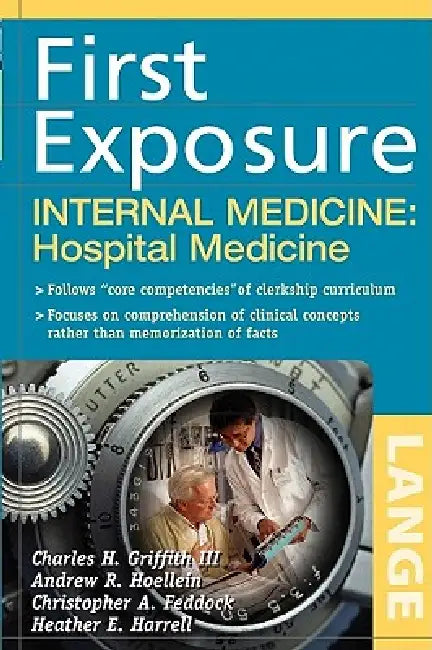
First Exposure to Internal Medicine | by Charles H. Griffith | Andrew R. Hoellein | McGraw Hill / Medical | by Charles H. Griffith | Andrew R. Hoellein | McGraw Hill / Medical | by Charles H. Griffith | Andrew R. Hoellein | McGraw Hill / Medical | by Charles H. Griffith | Andrew R. Hoellein | McGraw Hill / Medical | by Charles H. Griffith | Andrew R. Hoellein | McGraw Hill / Medical | by Charles H. Griffith | Andrew R. Hoellein | McGraw Hill / Medical | by Charles H. Griffith | Andrew R. Hoellei
Medicine & Health Sciences