
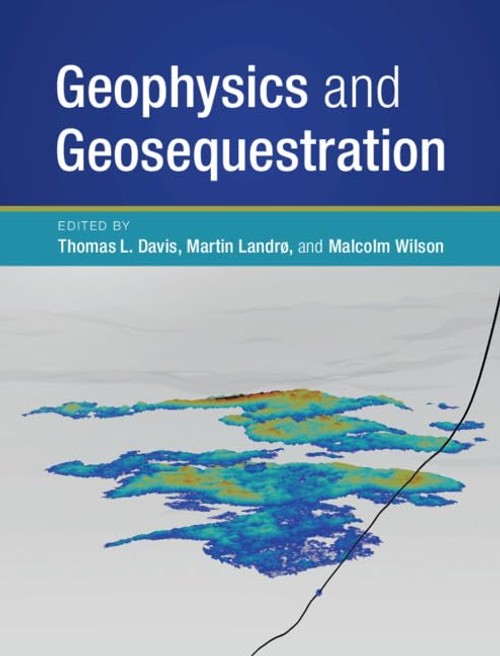
Geophysics and Geosequestration: Advanced Geophysical Monitoring for Carbon Capture and Storage by Thomas L. Davis
Inclusive of all applicable taxes. FREE shipping on all orders.
Available Offers
- 🚚Free Delivery — Free shipping on all orders
- 💵Cash on Delivery — Pay when your order arrives
- ↩️15-Day Easy Returns — Hassle-free return policy
- 🔒Cash on Delivery — Pay safely when your order arrives
Check Delivery
Product Description
Introduction
As the world confronts the urgent challenge of climate change, innovative solutions are more critical than ever. Geophysics and Geosequestration by Thomas L. Davis offers a comprehensive exploration of one of the most promising technologies for reducing atmospheric carbon dioxide: the deep geological storage of CO₂. Published by Cambridge University Press, this hardcover volume is an essential resource for Indian researchers, students, and professionals in earth sciences, environmental engineering, and energy policy. It bridges the gap between theoretical geophysics and real-world carbon management, providing a clear roadmap for monitoring and verifying underground CO₂ plumes.
Book Overview
This authoritative reference delves into the geophysical techniques that make geosequestration safe, predictable, and scalable. The book covers everything from seismic imaging and electromagnetic methods to gravity and subsidence monitoring. It emphasises how these tools help track the movement of injected CO₂, assess storage integrity, and ensure long-term containment. With a strong focus on practical applications, the volume includes detailed case studies from active projects, including the pioneering Sleipner field in Norway, which demonstrates how governments and stakeholders can estimate storage capacity and design projects that meet regulatory standards.
Key Highlights
- Comprehensive coverage of major geophysical techniques for CO₂ plume monitoring
- Real-world case studies from active carbon storage projects around the globe
- Practical insights into estimating storage capacity and ensuring regulatory compliance
- Expert contributions from leading researchers in geophysics and carbon management
- Future outlook on the role of geosequestration in climate change mitigation
Inside the Book
The book is structured to guide readers from fundamental principles to advanced applications. Early chapters introduce the geological and geophysical basis for CO₂ storage, including rock physics, fluid substitution models, and seismic response. Later sections focus on monitoring technologies such as time-lapse seismic surveys, microseismic monitoring, and surface deformation analysis. Each chapter is illustrated with diagrams, data plots, and field examples that clarify complex concepts. The final chapters address challenges like pressure management, leakage detection, and public acceptance, offering a balanced view of the technology's potential and limitations.
Key Topics
- Geophysical monitoring of CO₂ plumes using seismic and non-seismic methods
- Rock physics and fluid substitution for storage reservoir characterisation
- Time-lapse (4D) seismic imaging and interpretation
- Microseismic monitoring and induced seismicity assessment
- Gravity, electromagnetic, and surface deformation techniques
- Storage capacity estimation and risk assessment
- Regulatory frameworks and best practices from global projects
Reader Benefits
Indian readers will find this book particularly valuable as India expands its research into carbon capture and storage (CCS) to meet its net-zero commitments. The practical examples help bridge the gap between academic theory and field implementation. Engineers and geoscientists gain hands-on knowledge of how to design monitoring programs, interpret geophysical data, and communicate results to policymakers. Students benefit from clear explanations of fundamental concepts, while professionals appreciate the up-to-date references and case studies that reflect the latest industry standards.
Learning Outcomes
- Understand the role of geophysics in ensuring safe and permanent CO₂ storage
- Learn to design and interpret time-lapse seismic surveys for plume tracking
- Evaluate different monitoring technologies and select appropriate methods for specific sites
- Assess storage capacity, containment risks, and long-term stability
- Apply lessons from global case studies to Indian geological settings
Who Should Read
This book is ideal for postgraduate students in geophysics, geology, petroleum engineering, and environmental science. It is also a must-have for researchers and professionals working in carbon management, energy transition, and climate policy. Industry practitioners in oil and gas, geothermal energy, and mining will find the monitoring techniques directly applicable to their fields. Government regulators and environmental consultants seeking a deeper understanding of geosequestration will also benefit from its clear, evidence-based approach.
About the Author
Thomas L. Davis is a distinguished geophysicist with decades of experience in seismic imaging and reservoir characterisation. He has contributed extensively to the development of time-lapse seismic methods and their application to carbon storage. His work has been recognised internationally, and he brings both academic rigour and industry insight to this volume. As a professor and researcher, he has mentored numerous students who now lead CCS projects worldwide.
About the Publisher
Cambridge University Press is one of the world's oldest and most respected academic publishers. Known for its rigorous peer-review process and high editorial standards, Cambridge publishes cutting-edge research across all scientific disciplines. This volume continues that tradition, offering a reliable and authoritative source of knowledge for the global scientific community.
Conclusion
Geophysics and Geosequestration is an indispensable guide for anyone serious about understanding and implementing carbon storage technology. It combines theoretical depth with practical wisdom, making it equally useful in the classroom and the field. For Indian readers aiming to contribute to climate change solutions, this book provides the technical foundation needed to turn ambition into action. Order your hardcover copy from Bookshops.in today and join the global effort to build a sustainable future.
Quick Summary
Geophysics and Geosequestration by Thomas L. Davis is a definitive guide to the geophysical monitoring of carbon dioxide storage in deep geological formations. This book systematically covers seismic, gravity, electromagnetic, and borehole geophysical methods used to track CO₂ plume movement, assess caprock integrity, and estimate storage capacity. It features detailed case studies from major CCS projects such as Sleipner and Gorgon, illustrating both successes and remaining challenges. Written for graduate students, researchers, and professionals in geoscience and environmental engineering, the book bridges the gap between geophysics and climate change mitigation. Readers will learn how to design monitoring programs, interpret time-lapse data, and evaluate storage site performance. By purchasing from Bookshops.in, Indian readers gain access to a premium hardcover edition with fast delivery and trusted service. This is an essential resource for anyone involved in carbon capture and storage research or policy in India.
Book Highlights
Book Specifications
| ISBN-13 | 9781107137493 |
| ISBN-10 | 1107137497 |
| Publisher | Cambridge English |
| Language | English |
| Dimensions | 19.05 x 2.54 x 24.77 cm |
| Weight | 960 g |
| Country | India |
| Category | Higher Education Textbooks |
| Genre | Non-fiction |
| Original Language | English |
Frequently Asked Questions
What is geosequestration?
Who is the author of this book?
Which geophysical techniques are covered?
Are there real-world case studies?
Is this book suitable for Indian readers?
What level of expertise is required?
Does the book discuss climate change?
Is this a hardcover edition?
What is the ISBN?
Can I use this for research?
Does it cover Indian CCS projects?
What is the price in INR?
Is this book part of a series?
Readers Also Search For
Customers Also Bought
Mathematics
Stereotype Spaces and Algebras: 73 (De Gruyter Expositions in Mathematics, 73)

Chemistry
Concise Encyclopedia of Biochemistry

Chemistry
Proceedings of the Third USSR - FRG Symposium, Makhachkala (USSR), October 2–6, 1980: 001

Physics
Quantum Theory at the Crossroads by Guido Bacciagaluppi – Quantum Mechanics History
Physics
The Quantum and Cosmic Codes of the Universe

Mathematics
Mathematical Theory of Optimal Processes (Classics of Soviet Mathematics)
Related Products
View All
Science & Mathematics
Squid - Superconducting Quantum Interference Devices and Their Applications: Proceedings of the International Conference on Superconducting Quantum Devices, Berlin-west, October 4-8, 1976

Science & Mathematics
Thermodynamics and Pattern Formation in Biology

Science & Mathematics
The Nature of Mathematics and the Mathematics of Nature by S. Andersson – Mathematics & Science

Science & Mathematics
Linear Algebra | by Stephen Friedberg | Arnold Insel | Lawrence Spence | Pearson | by Stephen Friedberg | Arnold Insel | Lawrence Spence | Pearson | by Stephen Friedberg | Arnold Insel | Lawrence Spence | Pearson | by Stephen Friedberg | Arnold Insel | Lawrence Spence | Pearson | by Stephen Friedberg | Arnold Insel | Lawrence Spence | Pearson | by Stephen Friedberg | Arnold Insel | Lawrence Spence | Pearson | by Stephen Friedberg | Arnold Insel | Lawrence Spence | Pearson | by Stephen Friedberg
Science & Mathematics
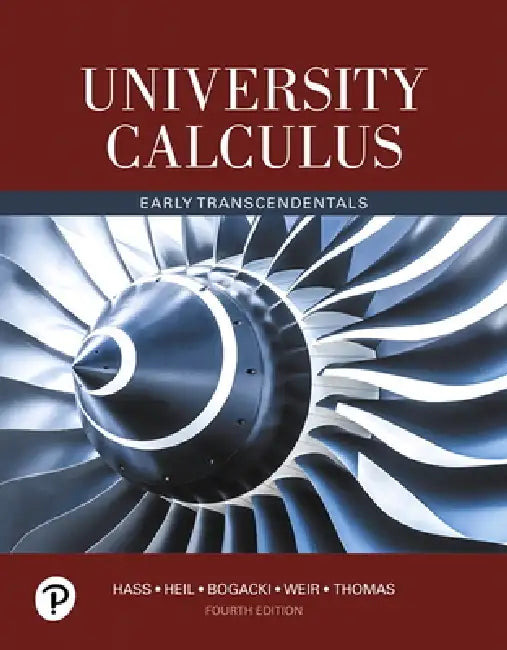
University Calculus | by Joel Hass | Christopher Heil | Maurice Weir | Pearson | by Joel Hass | Christopher Heil | Maurice Weir | Pearson | by Joel Hass | Christopher Heil | Maurice Weir | Pearson | by Joel Hass | Christopher Heil | Maurice Weir | Pearson | by Joel Hass | Christopher Heil | Maurice Weir | Pearson | by Joel Hass | Christopher Heil | Maurice Weir | Pearson | by Joel Hass | Christopher Heil | Maurice Weir | Pearson | by Joel Hass | Christopher Heil | Maurice Weir | Pearson | by Joe

Science & Mathematics