
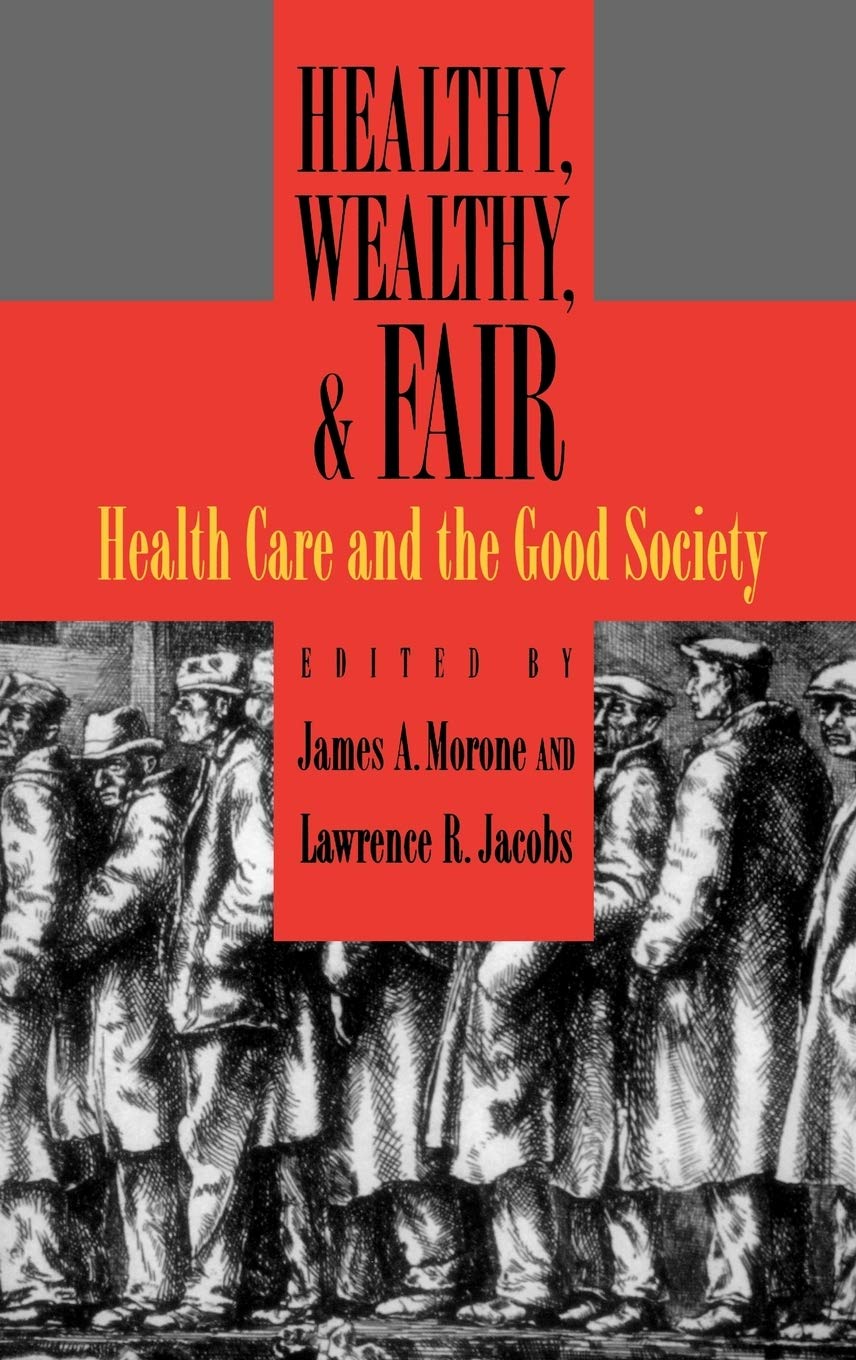
Healthy, Wealthy, and Fair: Health Care and the Good Society by Lawrence R. Jacobs – Understanding Health Disparities an
Inclusive of all applicable taxes. FREE shipping on all orders.
Available Offers
- 🚚Free Delivery — Free shipping on all orders
- 💵Cash on Delivery — Pay when your order arrives
- ↩️15-Day Easy Returns — Hassle-free return policy
- 🔒Cash on Delivery — Pay safely when your order arrives
Check Delivery
Product Description
Introduction
In an era where health is increasingly recognized as a fundamental human right, Healthy, Wealthy, and Fair: Health Care and the Good Society offers a compelling and critical examination of the deep-seated inequities that plague the American healthcare system. Authored by Lawrence R. Jacobs, this hardcover volume from Oxford University Press is not merely a study of policy; it is a moral inquiry into what a just and fair society should provide for its citizens. For Indian readers, students, and policymakers, this book provides a powerful comparative lens through which to understand the intersection of wealth, health, and social justice, drawing lessons that resonate far beyond the United States.
Book Overview
This incisive work brings together a distinguished group of health policy experts to chart the stark disparities in health and wealth that define the American experience. Despite being one of the wealthiest nations on earth, the United States ranks near the bottom among advanced industrial countries in key health indicators such as life expectancy, infant mortality, and adolescent death rates. The book systematically unpacks why these inequities arise, how they persist, and what makes them worse. It argues that growing income inequality, high poverty rates, and inadequate healthcare coverage are not separate issues but interconnected drivers of poor health outcomes. The authors also delve into the corrosive effects of market ideology and political stalemate, which have repeatedly blocked effective and egalitarian solutions.
Key Highlights
- Comparative Analysis: Places American health outcomes in a global context, contrasting them with other advanced industrial nations and even some developing countries.
- Multidisciplinary Approach: Combines insights from economics, political science, public health, and sociology to provide a holistic understanding of health inequities.
- Policy Focus: Offers a sharp critique of market-driven healthcare and explains why government intervention is necessary for achieving fairness.
- Moral Framework: Frames healthcare as a social good, not a commodity, and argues for a vision of a good society that prioritizes the well-being of all citizens.
Inside the Book
The book is structured to guide readers from problem identification to potential solutions. It opens with a stark portrait of America’s health disadvantage, then moves into an analysis of the economic and political forces that perpetuate inequality. Each chapter builds on the last, examining topics such as the role of poverty, the failures of the private insurance market, and the political barriers to reform. The contributors do not shy away from uncomfortable truths, including how racial and class divisions are embedded in the healthcare system. The final sections explore pathways toward a more equitable and effective system, offering ideas that are both visionary and grounded in real-world evidence.
Key Topics
- Health disparities and social determinants of health
- Income inequality and its impact on health outcomes
- The politics of healthcare reform and government stalemate
- Market ideology versus public health approaches
- Comparative health systems and international benchmarks
- Poverty, race, and access to care
- Moral foundations of a good society in healthcare
Reader Benefits
- Gain a deep understanding of why wealthy nations can still have poor health outcomes.
- Learn to critically evaluate the role of markets and government in healthcare.
- Develop a comparative perspective useful for analyzing India’s own healthcare challenges.
- Discover evidence-based arguments for universal health coverage and equity.
- Enhance your ability to engage in informed debates on health policy and social justice.
Learning Outcomes
- Analyze the relationship between economic inequality and population health.
- Identify the political and institutional barriers to healthcare reform.
- Compare the U.S. healthcare system with those of other advanced nations.
- Evaluate the ethical arguments for and against market-based healthcare.
- Articulate a vision for a fair and healthy society based on evidence and moral reasoning.
Who Should Read
This book is essential reading for students and scholars of public health, political science, economics, and law. It is equally valuable for healthcare professionals, policymakers, activists, and anyone concerned with social justice and the future of healthcare. Indian readers—whether in academia, civil society, or the healthcare sector—will find the analysis particularly relevant as India grapples with its own challenges of health equity, rising costs, and the privatization of care. The book serves as both a cautionary tale and a source of inspiration for building a more just system.
About the Author
Lawrence R. Jacobs is a leading scholar of American politics and health policy. He is the Walter F. and Joan Mondale Chair for Political Studies at the University of Minnesota, where he also directs the Center for the Study of Politics and Governance. Jacobs has written extensively on the intersection of public opinion, political institutions, and social policy. His work is known for its rigorous analysis and its commitment to understanding how democratic processes can be harnessed to create a fairer society.
About the Publisher
Oxford University Press is a globally respected academic publisher with a long history of producing authoritative works in the humanities, social sciences, and law. Known for its commitment to scholarly excellence, OUP brings a level of rigor and credibility to every title it publishes. This book is part of their distinguished list in health policy and political science, making it a trusted resource for students, researchers, and practitioners worldwide.
Conclusion
Healthy, Wealthy, and Fair: Health Care and the Good Society is a vital and thought-provoking work that challenges us to rethink the relationship between wealth, health, and justice. It is not just a diagnosis of what is wrong with American healthcare; it is a blueprint for what a good society should aspire to be. For anyone seeking to understand the deep roots of health inequity and the political will required to overcome them, this book is an indispensable guide. Order your hardcover copy from Bookshops.in today and join the conversation about building a healthier, fairer world for all.
Quick Summary
Healthy, Wealthy, and Fair: Health Care and the Good Society by Lawrence R. Jacobs is a critical examination of why the United States, one of the wealthiest nations, ranks poorly in health outcomes. The book brings together a group of distinguished health policy experts to explore the stark disparities in health and wealth. It highlights how growing income inequality, high poverty rates, and inadequate health care coverage contribute to lower life expectancy, higher infant mortality, and elevated adolescent death rates compared to other advanced industrial nations. Readers will learn about the social determinants of health and the policy failures that perpetuate inequity. This book is ideal for public health students, policy makers, and anyone interested in social justice. By purchasing from Bookshops.in, Indian readers gain access to a premium hardcover edition that serves as a valuable academic resource.
Book Highlights
Book Specifications
| ISBN-13 | 9780195170665 |
| ISBN-10 | 0195170660 |
| Publisher | OUP USA |
| Language | English |
| Dimensions | 23.62 x 3.3 x 16 cm |
| Weight | 680 g |
| Category | Administration & Policy › Health Care Delivery |
| Genre | Non-fiction |
| Original Language | English |
Frequently Asked Questions
What is Healthy, Wealthy, and Fair about?
Who is the author of this book?
Is this book relevant for Indian readers?
What topics does the book cover?
Is this book suitable for students?
Does the book compare the US with other countries?
Is this book available in hardcover?
What is the price in India?
Does the book offer policy solutions?
What language is the book in?
Is this a research-based book?
Can I buy this book from Bookshops.in?
Readers Also Search For
Customers Also Bought

Anatomy
Ultrastructure of the Digestive Tract: 4 (Electron Microscopy in Biology and Medicine)

Anatomy
Ultrastructure of the Connective Tissue Matrix: 3 (Electron Microscopy in Biology and Medicine)

Anatomy
Reproductive Genetics (Royal College of Obstetricians and Gynaecologists Study Group)

Anatomy
Human Gross Anatomy: An Outline Text by Robert J. Leonard – Medical Anatomy

Pharmacology
Mathematical Modeling and Simulation in Enteric Neurobiology

Anatomy
Nature’s Patterns and the Fractional Calculus: 2 (Fractional Calculus in Applied Sciences and Engineering, 2)
Related Products
View All
Medicine & Health Sciences
Pediatrics on Call | by Charles A. Pohl | Kathleen Bradford | Clara Callahan | McGraw Hill / Medical | by Charles A. Pohl | Kathleen Bradford | Clara Callahan | McGraw Hill / Medical | by Charles A. Pohl | Kathleen Bradford | Clara Callahan | McGraw Hill / Medical | by Charles A. Pohl | Kathleen Bradford | Clara Callahan | McGraw Hill / Medical | by Charles A. Pohl | Kathleen Bradford | Clara Callahan | McGraw Hill / Medical | by Charles A. Pohl | Kathleen Bradford | Clara Callahan | McGraw Hill

Medicine & Health Sciences
The Physician's Guide to Depression and Bipolar Disorders | by Dwight L. Evans | Dennis S. Charney | Lydia Lewis | McGraw Hill / Medical | by Dwight L. Evans | Dennis S. Charney | Lydia Lewis | McGraw Hill / Medical | by Dwight L. Evans | Dennis S. Charney | Lydia Lewis | McGraw Hill / Medical | by Dwight L. Evans | Dennis S. Charney | Lydia Lewis | McGraw Hill / Medical | by Dwight L. Evans | Dennis S. Charney | Lydia Lewis | McGraw Hill / Medical | by Dwight L. Evans | Dennis S. Charney | Lydi

Medicine & Health Sciences
First Exposure to Internal Medicine | by Andrew R. Hoellein | Charles H. Griffith | McGraw Hill / Medical | by Andrew R. Hoellein | Charles H. Griffith | McGraw Hill / Medical | by Andrew R. Hoellein | Charles H. Griffith | McGraw Hill / Medical | by Andrew R. Hoellein | Charles H. Griffith | McGraw Hill / Medical | by Andrew R. Hoellein | Charles H. Griffith | McGraw Hill / Medical | by Andrew R. Hoellein | Charles H. Griffith | McGraw Hill / Medical | by Andrew R. Hoellein | Charles H. Griffit

Medicine & Health Sciences
First Exposure to Internal Medicine | by Charles H. Griffith | Andrew R. Hoellein | McGraw Hill / Medical | by Charles H. Griffith | Andrew R. Hoellein | McGraw Hill / Medical | by Charles H. Griffith | Andrew R. Hoellein | McGraw Hill / Medical | by Charles H. Griffith | Andrew R. Hoellein | McGraw Hill / Medical | by Charles H. Griffith | Andrew R. Hoellein | McGraw Hill / Medical | by Charles H. Griffith | Andrew R. Hoellein | McGraw Hill / Medical | by Charles H. Griffith | Andrew R. Hoellei

Medicine & Health Sciences
Internal Medicine | by Paul G. Schmitz | Kevin J. Martin | McGraw Hill / Medical | by Paul G. Schmitz | Kevin J. Martin | McGraw Hill / Medical | by Paul G. Schmitz | Kevin J. Martin | McGraw Hill / Medical | by Paul G. Schmitz | Kevin J. Martin | McGraw Hill / Medical | by Paul G. Schmitz | Kevin J. Martin | McGraw Hill / Medical | by Paul G. Schmitz | Kevin J. Martin | McGraw Hill / Medical | by Paul G. Schmitz | Kevin J. Martin | McGraw Hill / Medical | by Paul G. Schmitz | Kevin J. Martin |

Medicine & Health Sciences