
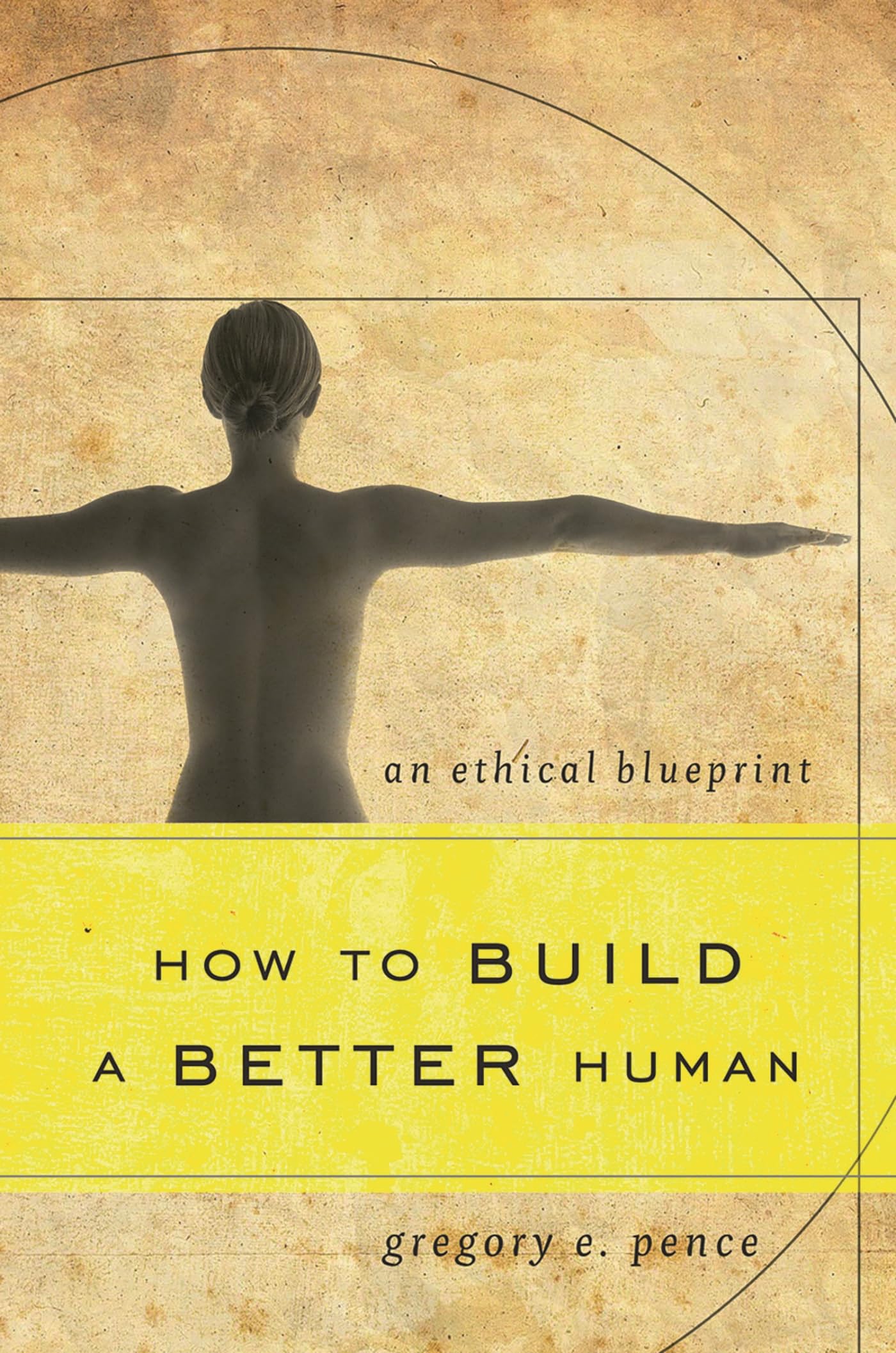
How to Build a Better Human: An Ethical Blueprint by Gregory E. Pence – A Thoughtful Guide to Bioethics and Human Enhanc
Inclusive of all applicable taxes. FREE shipping on all orders.
Available Offers
- 🚚Free Delivery — Free shipping on all orders
- 💵Cash on Delivery — Pay when your order arrives
- ↩️15-Day Easy Returns — Hassle-free return policy
- 🔒Cash on Delivery — Pay safely when your order arrives
Check Delivery
Product Description
Introduction
In an age where science fiction is rapidly becoming science fact, the question of human enhancement is no longer a distant hypothetical. From gene editing to cognitive boosters, the tools to reshape our bodies and minds are here. But how do we use them responsibly? How to Build a Better Human: An Ethical Blueprint by Gregory E. Pence offers a thoughtful, balanced guide to navigating this complex terrain. Written for the curious reader and the serious student alike, this book cuts through the noise of alarmism and hype to present a practical, ethical framework for the future of human improvement.
Book Overview
This hardcover volume from Rowman & Littlefield Publishers is a definitive exploration of bioethics in the age of biotechnology. Pence, a renowned bioethicist, argues that we must move beyond the two dominant narratives: the fearful rejection of all enhancement and the uncritical embrace of every new technology. Instead, he proposes a middle path—one that publicly studies what people are already doing in secret with steroids, nootropics, and cosmetic procedures. The book calls for a transparent, scientifically rigorous approach to using genetics, medicine, and biotechnology to better ourselves, all while respecting ethical boundaries.
Key Highlights
- Balanced Perspective: Avoids both bioconservative alarmism and uncritical techno-optimism, offering a nuanced view.
- Real-World Focus: Examines covert enhancement practices and argues for their open, scientific study.
- Ethical Framework: Provides a clear blueprint for making moral decisions about human enhancement.
- Expert Author: Written by Gregory E. Pence, a leading voice in bioethics with decades of experience.
- Accessible Style: Complex ideas are presented in a straightforward manner suitable for students and general readers.
Inside the Book
Readers will journey through the history of human enhancement, from ancient practices to cutting-edge genetic engineering. Pence dissects controversial topics like designer babies, performance-enhancing drugs in sports, and cosmetic surgery. He also delves into the ethics of using mind-enhancing drugs for academic or professional gain. Each chapter builds on the last, creating a cohesive argument for why we must publicly fund and study these technologies rather than driving them underground. The book is rich with case studies and philosophical analysis, making abstract concepts tangible.
Key Topics
- The ethics of genetic engineering and gene editing (e.g., CRISPR)
- Pharmacological enhancement in sports and academics
- Cosmetic surgery and the pursuit of physical perfection
- The role of bioethics in shaping public policy
- Distinguishing between treatment and enhancement
- The social implications of human augmentation
Reader Benefits
This book empowers you to form your own informed opinion on one of the most pressing issues of our time. You will gain a deeper understanding of the scientific possibilities and ethical pitfalls of human enhancement. It equips you with the tools to critically evaluate news headlines and policy debates. Whether you are a student, a professional, or simply a curious reader, you will come away with a clearer sense of how humanity can navigate the future of biotechnology responsibly.
Learning Outcomes
- Understand the key ethical arguments for and against human enhancement.
- Identify the difference between therapy and enhancement in medical practice.
- Analyze the social and political forces shaping bioethics today.
- Evaluate the risks and benefits of emerging biotechnologies.
- Develop a personal ethical framework for discussing human improvement.
Who Should Read
This book is ideal for students of philosophy, medicine, law, and public policy. It is also a must-read for healthcare professionals, researchers, and anyone interested in the future of human evolution. Indian readers, in particular, will find relevance in discussions about medical ethics, cosmetic surgery trends, and the growing use of cognitive enhancers in competitive environments like exams and workplaces. The book is written in clear English, making it accessible to both undergraduate and postgraduate audiences.
About the Author
Gregory E. Pence is a distinguished professor of philosophy and bioethics at the University of Alabama at Birmingham. He has authored numerous influential books on medical ethics, including Classic Cases in Medical Ethics and Who's Afraid of Human Cloning?. He is a fellow of the Hastings Center and has served on many national bioethics committees. His work is known for its clarity, balance, and willingness to tackle controversial subjects head-on.
About the Publisher
Rowman & Littlefield Publishers is a respected academic and trade publisher based in the United States. They are known for producing high-quality scholarly works in philosophy, political science, and bioethics. This hardcover edition reflects their commitment to durable, well-produced books that stand the test of time—ideal for library and personal collections alike.
Conclusion
How to Build a Better Human: An Ethical Blueprint is more than a book—it is a call to thoughtful action. In a world where technology races ahead of ethics, Gregory E. Pence provides a steady hand. He challenges us to stop hiding from enhancement and instead engage with it openly, wisely, and compassionately. For anyone seeking to understand what it means to be human in the 21st century, this book is an essential read.
Quick Summary
'How to Build a Better Human: An Ethical Blueprint' by Gregory E. Pence is a thought-provoking exploration of the ethical dimensions of human enhancement through genetics, biotechnology, and medicine. The book argues that while these tools offer immense potential for improvement, their use has been hindered by ethical objections and covert, unregulated practices. Pence, a respected bioethicist, calls for a middle path between bioconservative alarmism and uncritical transhumanist enthusiasm. He advocates for public funding and scientific study of enhancements like steroids, cognitive enhancers, and cosmetic surgery. This book is ideal for students of bioethics, medical professionals, researchers, and anyone interested in the future of human evolution. Readers will learn to critically evaluate ethical frameworks and understand the science behind enhancement technologies. By purchasing from Bookshops.in, Indian readers receive an authentic hardcover copy with fast delivery and excellent customer service.
Book Highlights
Book Specifications
| ISBN-13 | 9781442217621 |
| ISBN-10 | 1442217626 |
| Publisher | Rowman & Littlefield Pub Inc |
| Language | English |
| Dimensions | 13.97 x 1.57 x 21.59 cm |
| Weight | 408 g |
| Category | Basic Sciences › Genetics |
| Genre | Non-fiction |
| Reading Age | Adult |
| Original Language | English |
Frequently Asked Questions
What is 'How to Build a Better Human' about?
Who is the author of this book?
Is this book suitable for Indian readers?
What topics does the book cover?
Does the book support or oppose human enhancement?
What is the ISBN of this book?
Is this book available in hardcover?
What is the price of this book?
Can I use this book for academic courses?
Does the book discuss Indian perspectives?
What is the author's background?
Why buy from Bookshops.in?
Readers Also Search For
Customers Also Bought

Anatomy
Ultrastructure of the Digestive Tract: 4 (Electron Microscopy in Biology and Medicine)

Anatomy
Ultrastructure of the Connective Tissue Matrix: 3 (Electron Microscopy in Biology and Medicine)

Anatomy
Reproductive Genetics (Royal College of Obstetricians and Gynaecologists Study Group)

Anatomy
Human Gross Anatomy: An Outline Text by Robert J. Leonard – Medical Anatomy

Pharmacology
Mathematical Modeling and Simulation in Enteric Neurobiology

Anatomy
Nature’s Patterns and the Fractional Calculus: 2 (Fractional Calculus in Applied Sciences and Engineering, 2)
Related Products
View All
Medicine & Health Sciences
Handbook of Hospitality Strategic Management | by Olsen Michael | Taylor & Francis Ltd | by Olsen Michael | Taylor & Francis Ltd | by Olsen Michael | Taylor & Francis Ltd | by Olsen Michael | Taylor & Francis Ltd | by Olsen Michael | Taylor & Francis Ltd | by Olsen Michael | Taylor & Francis Ltd | by Olsen Michael | Taylor & Francis Ltd | by Olsen Michael | Taylor & Francis Ltd | by Olsen Michael | Taylor & Francis Ltd | by Olsen Michael | Taylor & Francis

Medicine & Health Sciences
Pediatrics on Call | by Charles A. Pohl | Kathleen Bradford | Clara Callahan | McGraw Hill / Medical | by Charles A. Pohl | Kathleen Bradford | Clara Callahan | McGraw Hill / Medical | by Charles A. Pohl | Kathleen Bradford | Clara Callahan | McGraw Hill / Medical | by Charles A. Pohl | Kathleen Bradford | Clara Callahan | McGraw Hill / Medical | by Charles A. Pohl | Kathleen Bradford | Clara Callahan | McGraw Hill / Medical | by Charles A. Pohl | Kathleen Bradford | Clara Callahan | McGraw Hill

Medicine & Health Sciences
The Physician's Guide to Depression and Bipolar Disorders | by Dwight L. Evans | Dennis S. Charney | Lydia Lewis | McGraw Hill / Medical | by Dwight L. Evans | Dennis S. Charney | Lydia Lewis | McGraw Hill / Medical | by Dwight L. Evans | Dennis S. Charney | Lydia Lewis | McGraw Hill / Medical | by Dwight L. Evans | Dennis S. Charney | Lydia Lewis | McGraw Hill / Medical | by Dwight L. Evans | Dennis S. Charney | Lydia Lewis | McGraw Hill / Medical | by Dwight L. Evans | Dennis S. Charney | Lydi
Medicine & Health Sciences
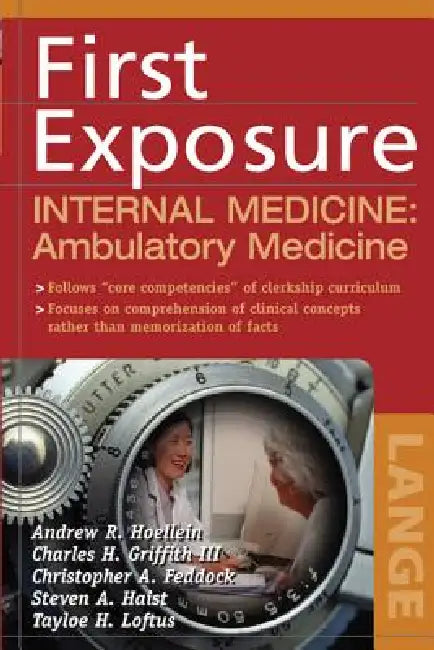
First Exposure to Internal Medicine | by Andrew R. Hoellein | Charles H. Griffith | McGraw Hill / Medical | by Andrew R. Hoellein | Charles H. Griffith | McGraw Hill / Medical | by Andrew R. Hoellein | Charles H. Griffith | McGraw Hill / Medical | by Andrew R. Hoellein | Charles H. Griffith | McGraw Hill / Medical | by Andrew R. Hoellein | Charles H. Griffith | McGraw Hill / Medical | by Andrew R. Hoellein | Charles H. Griffith | McGraw Hill / Medical | by Andrew R. Hoellein | Charles H. Griffit
Medicine & Health Sciences
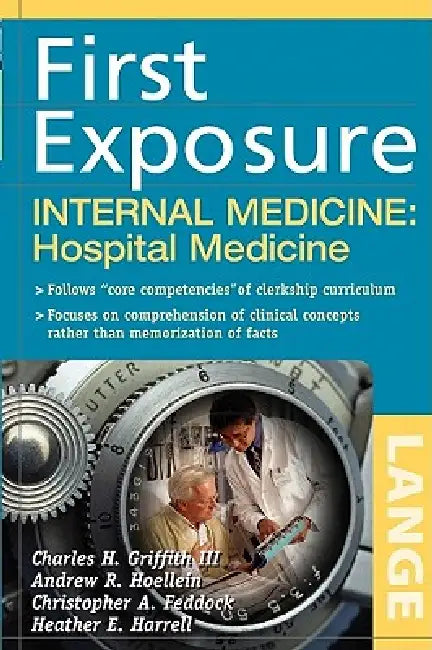
First Exposure to Internal Medicine | by Charles H. Griffith | Andrew R. Hoellein | McGraw Hill / Medical | by Charles H. Griffith | Andrew R. Hoellein | McGraw Hill / Medical | by Charles H. Griffith | Andrew R. Hoellein | McGraw Hill / Medical | by Charles H. Griffith | Andrew R. Hoellein | McGraw Hill / Medical | by Charles H. Griffith | Andrew R. Hoellein | McGraw Hill / Medical | by Charles H. Griffith | Andrew R. Hoellein | McGraw Hill / Medical | by Charles H. Griffith | Andrew R. Hoellei
Medicine & Health Sciences