
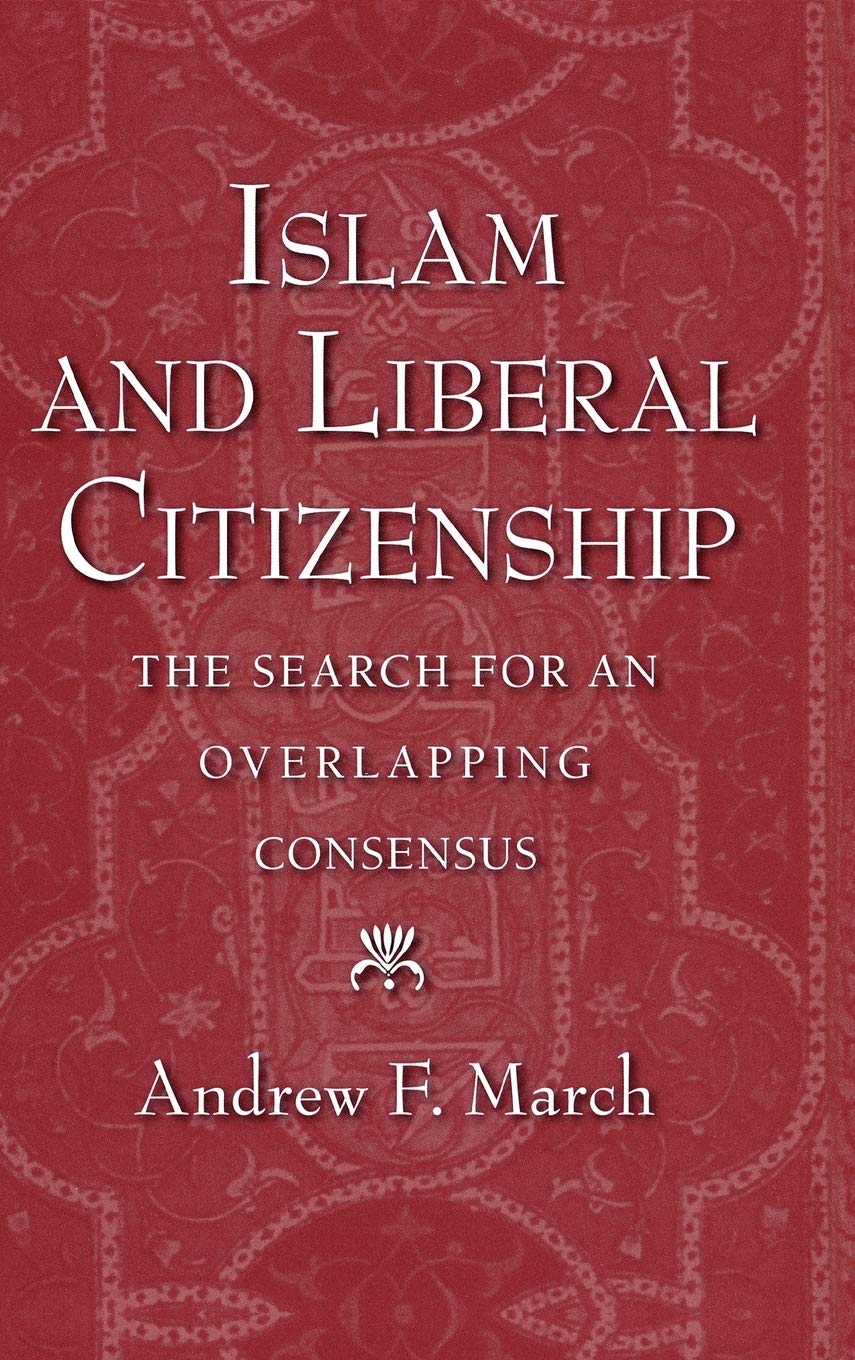
Islam and Liberal Citizenship: The Search for an Overlapping Consensus by Andrew F. March – A Scholarly Analysis of Isla
Inclusive of all applicable taxes. FREE shipping on all orders.
Available Offers
- 🚚Free Delivery — Free shipping on all orders
- 💵Cash on Delivery — Pay when your order arrives
- ↩️15-Day Easy Returns — Hassle-free return policy
- 🔒Cash on Delivery — Pay safely when your order arrives
Check Delivery
Product Description
Introduction
In an age of global migration and deepening pluralism, the question of how devout Muslims can reconcile their faith with the demands of liberal democratic citizenship has never been more urgent. Andrew F. March’s Islam and Liberal Citizenship: The Search for an Overlapping Consensus offers a groundbreaking, rigorously researched answer. This hardcover volume from Oxford University Press is essential reading for Indian students, scholars, and anyone interested in the intersection of Islamic thought and modern political theory.
Book Overview
March challenges both the alarmist view that Islam is inherently incompatible with secular democracy and the isolationist stance that calls for resistance to Western governance. Instead, he draws on classical Islamic jurisprudence—works from medieval scholars—to build a compelling case that liberal citizenship can be embraced from within an authentically Islamic framework. The book engages deeply with John Rawls’s concept of “overlapping consensus,” showing that Muslims can affirm liberal political values not despite their faith, but because of its internal resources.
Key Highlights
- Original synthesis of Rawlsian political liberalism and classical Islamic legal theory
- Relies on medieval fatwas and fiqh to demonstrate indigenous arguments for civic loyalty
- Addresses contemporary controversies around citizenship, loyalty, and religious law in plural societies
- Written with clarity for both specialists and general readers interested in religion and politics
- Oxford University Press publication ensures academic rigor and authoritative scholarship
Inside the Book
The book is structured around key questions: Can a Muslim accept a non-Islamic legal system? Is it permissible to fight for a non-Muslim state? How should Muslims view non-Muslims as political equals? March navigates these issues through meticulous analysis of Islamic sources, from the Quran and Hadith to the works of al-Ghazali, Ibn Taymiyya, and others. He shows that Islamic law contains doctrines of contractual obligation, public good, and peace that provide strong grounds for accepting liberal citizenship.
Key Topics
- Political liberalism and Islamic ethics
- The concept of overlapping consensus in a multi-faith society
- Islamic jurisprudence on loyalty to non-Muslim states
- Treaties, covenants, and the ethics of political obligation
- Religious pluralism and the limits of secular authority
- Comparative political theory between Islam and the West
Reader Benefits
Indian readers, living in one of the world’s most diverse democracies, will find this book particularly valuable. It offers a nuanced perspective that moves beyond simplistic binaries of “Islam vs. modernity.” Whether you are a student of political science, a theologian, or a policy analyst, this book equips you with intellectual tools to understand how religious traditions can adapt to liberal institutions without compromising their core beliefs.
Learning Outcomes
- Understand the philosophical foundations of liberal citizenship from an Islamic vantage point
- Learn how classical Islamic jurists argued for political obedience and coexistence
- Grasp the Rawlsian framework of overlapping consensus and its application to religious diversity
- Develop critical insights into debates on secularism, sharia, and citizenship in India and beyond
- Appreciate the internal diversity of Islamic thought on governance and civic duty
Who Should Read
This book is ideal for university students in political science, Islamic studies, philosophy, and law. It is equally relevant for religious scholars, interfaith dialogue practitioners, journalists covering religion and politics, and any educated reader curious about how faith and democracy can coexist. It makes a thoughtful addition to the library of anyone interested in comparative political theory or Indian secularism.
About the Author
Andrew F. March is a professor of political science at the University of Massachusetts Amherst and a leading scholar in Islamic political thought. He has published extensively on the ethics of war, citizenship, and religious pluralism in Islam. His work is known for combining deep textual knowledge of Islamic jurisprudence with rigorous analytical philosophy, making him a unique voice in contemporary debates.
About the Publisher
Oxford University Press (OUP) is one of the most prestigious academic publishers in the world, with a history spanning over five centuries. Known for its commitment to scholarly excellence, OUP publishes works that shape intellectual discourse across disciplines. This volume reflects their dedication to publishing cutting-edge research that bridges cultures and traditions.
Conclusion
Islam and Liberal Citizenship: The Search for an Overlapping Consensus is not just a book—it is a vital resource for building bridges in a divided world. By showing that Islamic tradition itself provides resources for embracing liberal democratic norms, Andrew F. March offers hope for a genuinely inclusive pluralism. Order your hardcover copy from Bookshops.in today and add this transformative work to your collection.
Quick Summary
Islam and Liberal Citizenship: The Search for an Overlapping Consensus by Andrew F. March is a groundbreaking scholarly work that bridges Islamic jurisprudence and liberal democratic theory. March challenges the common assumption that Islam and secular democracy are inherently incompatible. By drawing on medieval Islamic legal texts and the political philosophy of John Rawls, he demonstrates that Muslims can find authentically Islamic reasons to embrace the duties and rights of citizenship in a liberal state. The book is ideal for students of political science, Islamic studies, and comparative philosophy, as well as for anyone interested in interfaith dialogue and multiculturalism. Readers will learn how concepts like public reason, political obligation, and religious tolerance have deep roots in Islamic tradition. This Oxford University Press hardcover is a must-have for academic libraries and serious readers. Order your copy from Bookshops.in, India's premium online bookstore, and add this essential volume to your collection.
Book Highlights
Book Specifications
| ISBN-13 | 9780195330960 |
| ISBN-10 | 019533096X |
| Publisher | Oxford University Press |
| Language | English |
| Dimensions | 15.49 x 3.3 x 23.37 cm |
| Weight | 658 g |
| Country | India |
| Category | Religion & Spirituality › Islam |
| Genre | Non-fiction |
| Reading Age | Adult |
| Original Language | English |
Frequently Asked Questions
What is the main argument of Islam and Liberal Citizenship?
Who is the author Andrew F. March?
Is this book suitable for beginners in Islamic studies?
Does the book support the idea of an Islamic state?
How does the book engage with John Rawls?
Which publisher released this book?
Is this book only for Muslims?
Does the book address contemporary issues like terrorism?
What is the binding type of this edition?
What is the ISBN-13 of this book?
Can I use this book for a university course?
Does the book include a bibliography?
How is this book different from other books on Islam and democracy?
Readers Also Search For
Customers Also Bought
Islam
Spiritual Economies (English, Daromir Rudnyckyj)

Islam
Who Is Allah? (English, Bruce B. Lawrence)
Islam
Fiqh Us-Sunnah: Funerals and Diggers by Al-Sayyid Sabiq – Islamic Funeral Guide

Christianity
Genetics (English, Thomas a. Shannon | Mark P. Aulisio | Françoise Baylis)

Christianity
The Past of Jesus in the Gospels by Eugene E. Lemcio – Biblical Studies

Hinduism